
Executive Overview
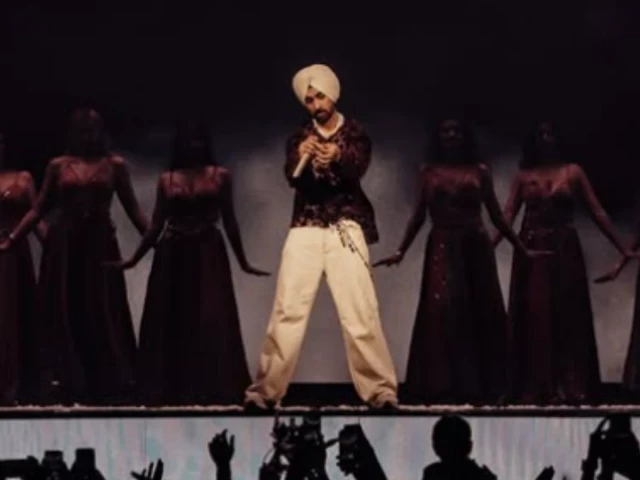
On September 12, Punjabi music superstar Diljit Dosanjh stepped onto the iconic stage of London’s Wembley Stadium, rewriting the history books for South Asian artists worldwide. Headlining the legendary venue as part of his record-setting Aura World Tour, Dosanjh performed before an electrifying crowd estimated by his production team at a staggering 90,000 attendees. This landmark event was not merely a concert; it was a cultural watershed moment that underscored the unstoppable global ascent of Punjabi music, transcending geographical borders and linguistic barriers to fill one of the most prestigious arenas in Western entertainment.
Amidst an evening packed with high-energy anthems, dazzling visual production, and roaring fan adoration, the defining highlight of the night arrived in the form of a stripped-down, deeply emotive tribute. Dosanjh delivered a mesmerizing rendition of Saanso Ki Maala, the timeless devotional masterpiece originally popularized by the legendary Pakistani qawwal maestro, Ustad Nusrat Fateh Ali Khan. Stripping away the heavy synths and high-tempo beats, Dosanjh relied entirely on his raw vocal power and the inherent spiritual core of the composition. The stadium transformed into a sea of twinkling phone lights, capturing a moment of profound cross-border and cross-cultural unity that quickly went viral across global digital platforms.
Beyond the music, the London concert served as a platform for major announcements and a continuation of Dosanjh’s subtle yet impactful bridging of cultural divides. Midway through the set, the artist electrified the crowd by announcing the next major milestone of his tour: a massive homecoming-style stadium show at Ahmedabad’s Narendra Modi Stadium on November 21, charming the audience by delivering part of the announcement in fluent Gujarati.
Read Also
This latest triumph builds upon a series of boundary-pushing artistic choices, including his recent high-profile onstage collaboration with Pakistani actor Hania Aamir during a previous London appearance—a partnership that spilled over onto the silver screen with Sardaar Ji 3, despite encountering regulatory roadblocks in Indian cinemas. As Dosanjh transitions from his triumphant European run back toward the subcontinental leg of his tour, his trajectory remains a masterclass in soft power, artistic autonomy, and global commercial viability.
Detailed Chronology: The London Milestone and Ahmedabad Reveal
Setting the Stage at Wembley Stadium
The build-up to September 12 had been palpable for months. Industry insiders and fans alike recognized the historical weight of the booking. Wembley Stadium has long been the crucible of global rock and pop royalty—hosting legendary acts from Queen and Madonna to Taylor Swift and Coldplay. For a regional language artist from South Asia to headline the venue on this scale was a seismic shift in the global music economy.
As the sun set over North London, the doors of Wembley opened to a swelling sea of diversity. Fans of varying generations, ethnicities, and cultural backgrounds flooded the concourses, draped in traditional Punjabi attire blended with modern streetwear—a visual representation of Dosanjh’s expansive demographic reach.
When Dosanjh finally emerged from the stage lifts, clad in his signature avant-garde high-fashion turban and bespoke outerwear, the decibel levels inside the stadium reached historic highs. The initial segment of the show leaned heavily on the high-octane bangers that have defined his recent discography, utilizing state-of-the-art pyrotechnics, laser choreography, and dynamic LED screens that translated the vibrant energy of Punjab to the British capital.
The Turning Point: Saanso Ki Maala
While the pyrotechnics and dance tracks kept the adrenaline pumping, it was the quieter, more intimate moments of the concert that cemented the night in musical lore. Roughly an hour into the set, the thumping basslines receded, and the stadium lights dimmed. Dosanjh walked to the edge of the catwalk, flanked by only a few acoustic instrumentalists.
Introducing the song with deep reverence, he launched into Saanso Ki Maala Pehroon Naam Hari Ka. Originally immortalized by Nusrat Fateh Ali Khan, the track is a monumental test of vocal control and emotional delivery. Dosanjh honored the qawwali legend’s legacy while stamping the performance with his own distinct modern-traditional sensibility.
The stadium instantly shifted. In unison, tens of thousands of audience members drew their smartphones, turning the cavernous bowl of Wembley into a starlit galaxy. There were no heavy beats to mosh to; instead, the 90,000-strong crowd sang along in near-perfect harmony. Within minutes of the final note echoing out, user-generated clips of the performance began flooding TikTok, Instagram Reels, and X (formerly Twitter). The raw vulnerability of the performance shattered the perception of Dosanjh solely as a party-starter, proving his mastery as a nuanced, emotive vocalist capable of invoking deep spiritual introspection on a massive global platform.
The Ahmedabad Announcement
Capitalizing on the electric momentum in the room, Dosanjh paused the musical proceedings to address his global congregation directly. Transitioning smoothly from English to Punjabi, he thanked the UK capital for its historic turnout before pivoting toward his next major destination.
With cinematic flair, Dosanjh announced that the Aura World Tour would officially touch down at Ahmedabad’s Narendra Modi Stadium—the largest cricket stadium in the world—on November 21. In a move that immediately endeared him to local audiences and demonstrated his hyper-localized marketing acumen, Dosanjh delivered a significant portion of the announcement in Gujarati. The cultural nod sent shockwaves through both the stadium and social media feeds, setting the stage for what promises to be one of the largest concert spectacles in Indian history later this year.
Supporting Context & Metrics: The Economics of Dosanjh’s Global Appeal
Quantifying the Wembley Phenomenon
To understand the magnitude of Diljit Dosanjh’s Wembley headlining act, one must examine the metrics driving his current career peak. While concert promoters and artist management teams frequently project optimistic attendance figures, independent venue estimates and ticket-sale velocity reports place the Wembley audience at a remarkable 90,000 people.
This figure places Dosanjh in an elite tier of international touring acts. Filling a stadium of this magnitude requires more than regional popularity; it demands a cross-generational, cross-diasphoric pull. The economic impact extends far beyond ticket sales. Local London businesses, hospitality sectors, and transit networks experienced a notable surge in revenue over the concert weekend, driven by out-of-town travelers and international tourists who flew into the UK specifically for the event.
The Cross-Border Artistic Dialogue
Dosanjh’s artistic choices in London cannot be viewed in a vacuum. His decision to perform Saanso Ki Maala—a foundational pillar of South Asian classical and devotional music shared across the India-Pakistan border—is part of a broader, consistent pattern of cultural diplomacy.
This ethos was recently highlighted during another London concert earlier in the touring cycle, where Dosanjh invited Pakistani actress and superstar Hania Aamir onto the stage. The cross-border duet moment sent shockwaves through the entertainment industry, symbolizing the unifying power of art in regions frequently fractured by geopolitical tensions.
The chemistry witnessed on stage quickly translated to the cinematic realm, with the duo starring alongside each other in Sardaar Ji 3. Although the film faced regulatory hurdles and a subsequent release blockade in certain Indian theatrical circuits, the collaboration itself signaled a fearless commitment to artistic collaboration. Dosanjh’s subsequent public praise of Aamir’s professionalism on set further cemented his reputation as an artist who prioritizes creative integrity and human connection over bureaucratic boundaries.
The Evolution of Touring: From Dil-Luminati to Aura
The Aura World Tour serves as the spiritual and commercial successor to Dosanjh’s massively successful Dil-Luminati tour of late 2024. The Dil-Luminati run redefined what was thought possible for regional Indian music tours, selling out arenas across North America, Europe, and India. Stops included a memorable performance in Ahmedabad during that previous circuit, establishing a deeply loyal and rapidly expanding consumer base in the region.
However, the Aura tour represents an evolutionary leap in production value, artistic ambition, and global visibility. By systematically targeting iconic Western venues like Wembley—and pairing them with high-capacity domestic anchors like the Narendra Modi Stadium—Dosanjh’s team is executing a masterclass in global music positioning. They are successfully bypassing the traditional Bollywood bottleneck, proving that Punjabi language content can stand entirely on its own economic and cultural merits on the world stage.
Official Statements and Industry Reception
Reflections from the Camp
While official press statements following the Wembley triumph remained focused on gratitude and collective celebration, sources close to Dosanjh’s management team emphasized the rigorous planning required to pull off an event of this scale.
"Diljit is not just performing music; he is carrying the heritage, language, and heartbeat of Punjab to corners of the world that previously had very little exposure to our art," noted a senior production coordinator associated with the Aura World Tour. "Wembley was a milestone, yes, but it is part of a much larger blueprint. Every note sung, every lyric delivered, is done with the intention of building a permanent, global bridge for South Asian culture."
Critical Acclaim and Cultural Commentary
Global music critics and cultural commentators have been quick to dissect the cultural significance of Dosanjh’s recent run. Mainstream Western outlets, which historically marginalized non-English touring acts, have increasingly taken notice of his ability to sell out major venues without altering his linguistic identity or diluting his cultural aesthetic.
Ethnomusicologists point to his rendition of Saanso Ki Maala as a textbook example of modern heritage preservation. By taking a complex Sufi-infused devotional classic and presenting it in a modern stadium format, Dosanjh bridges the gap between traditional purists and contemporary pop consumers. He introduces historical musical canons to younger demographics who might otherwise never engage with classical qawwali traditions.
Furthermore, industry analysts have praised his strategic utilization of digital media. By encouraging the organic sharing of raw, unedited acoustic moments—such as the phone-light-lit Wembley performance—Dosanjh fosters an intimate, parasocial bond with his fanbase. This grassroots digital amplification acts as a powerful counterbalance to traditional PR campaigns, ensuring his performances remain part of the global cultural conversation long after the house lights come up.
Future Outlook: The Road Ahead for the Aura World Tour
The Ahmedabad Showdown and Domestic Leg
With the European leg of the Aura World Tour concluding on a historic high note at Wembley, all eyes now turn toward the Indian subcontinental leg. The centerpiece of this upcoming phase is the confirmed November 21 performance at the Narendra Modi Stadium in Ahmedabad.
Given the sheer capacity of the venue—capable of holding well over 100,000 spectators—logistical preparations are already underway to ensure a seamless fan experience. While official ticketing details, partner sponsors, and supporting act lineups for the Ahmedabad show and the broader Indian tour dates were yet to be fully announced at the time of writing, market demand is expected to shatter previous records. Ticket-buying traffic is projected to mirror, if not exceed, the unprecedented virtual queues seen during the launch of the Dil-Luminati tour.
Redefining the Ceiling for South Asian Artists
Diljit Dosanjh’s journey from regional Punjabi cinema and local folk circuits to headlining Wembley Stadium offers a blueprint for the future of global music. He has systematically dismantled the myth that international crossover success requires linguistic assimilation or Western stylistic adoption. By remaining fiercely authentic—singing exclusively in Punjabi, wearing his turban with pride, and seamlessly incorporating traditional instrumentation alongside modern club beats—he has forced the global music industry to adapt to him.
As the Aura World Tour prepares to descend upon Ahmedabad this November and continues charting its global path, the broader implications are profound. Dosanjh is not merely filling stadiums; he is expanding the geopolitical and cultural boundaries of what South Asian art can achieve. For the global Punjabi diaspora, and for regional artists watching from the wings, the message echoing out from Wembley Stadium is crystal clear: the global stage is no longer an exclusive club—it is open, welcoming, and forever changed.




Comments
Facebook App ID not configured. Please add it in the Customizer.