The contemporary literary landscape is undergoing a structural evolution, driven by the intersection of digital curation, social media tastemaking, and traditional publishing. At the center of this cultural shift is Stacey Yu, a London-based former literary scout turned digital critic, who built a dedicated following through incisive analysis of neglected classics, translated fiction, and prose-stylist masterworks on TikTok. With the publication of her debut novel, Kitten, Yu transitions from observer to creator, delivering a work of fiction that dissects post-graduate aimlessness, social alienation, and the delicate nature of human-animal connections.
Kitten centers on Katie, a driftless recent college graduate navigating the treacherous waters of early adulthood. Plagued by an acute sense of social dislocation and an unarticulated grief over her fading relationship with her mother, Katie accompanies her wealthy boyfriend, James, to his family’s coastal retreat in New England. There, amidst an environment defined by unearned privilege and understated social codes, Katie becomes intensely focused on Silver—a distinctively self-possessed, swimming cat owned by James’s family.
Rather than veering into thriller tropes or heavy-handed symbolism, Yu utilizes this preoccupation to map the psychological terrain of emotional transference, socioeconomic disjunction, and the awkward transition out of childhood. In a extensive dialogue with literary journalist Amulya Tadimety for Electric Literature, Yu discussed the mechanics of debut publishing, the class dynamics embedded in physical geography, and the disparate influences—ranging from Mary Gaitskill to Yorgos Lanthimos—that shaped her narrative voice.
Before emerging as a novelist, Stacey Yu operated behind the scenes of the publishing industry as a reader for a London-based literary scout. This professional background offered her an insider’s view of international rights, manuscript evaluation, and editorial positioning. Seeking an outlet to discuss works that fell outside standard commercial trends, Yu began posting short-form videos on TikTok, cultivating a niche community focused on stylistic rigor, translated literature, and forgotten mid-century classics.
Her online persona stood out for its resistance to superficial trends, focusing instead on structural craft and sentence-level execution. This analytical focus established her as an influential tastemaker within the digital book space, setting expectations high when she announced her own transition into original fiction.
Drafting and Constructing the Narrative
The conceptual origin of Kitten began not as an investigation into pet-owner psychology, but as an exploration of developmental stasis—specifically, the reluctance of young adults to step into an uncertain future.
Phase I: Voice and Character Foundations. Yu initially conceived Katie as a spikier, darker protagonist. As drafting progressed, Yu tempered this harshness, drawing inspiration from the naive yet acutely observational tone of Elif Batuman’s narrators (The Idiot, Either/Or). The character evolved into an endearing, socially off-kilter young woman whose earnestness repeatedly disrupts social norms.
Phase II: Integrating Class and Regionality. Drawing on her own roots in California and her subsequent move to the UK, Yu embedded subtle class friction into the plot. Katie’s Southern, non-wealthy background serves as an invisible barrier between her and the coastal elites she inhabits space with, exacerbating her sense of displacement.
Phase III: The Structural Catalyst of the Animal. Yu introduced Silver, the ocean-swimming cat, as a focal point for Katie’s unaddressed desire to be parented. The cat became a lens through which Katie could navigate complex interpersonal dynamics without the threat of immediate judgment.
Deconstructing the Publishing Process
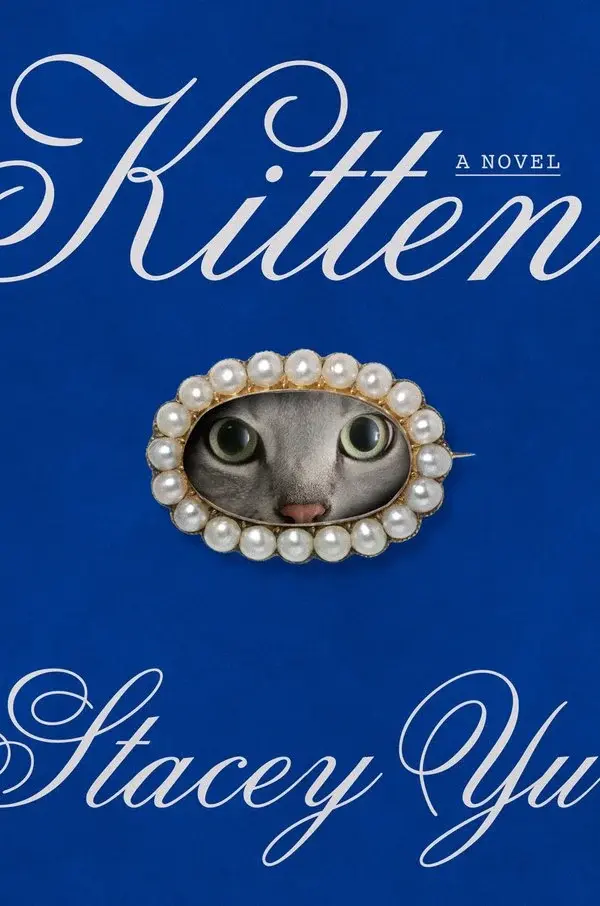
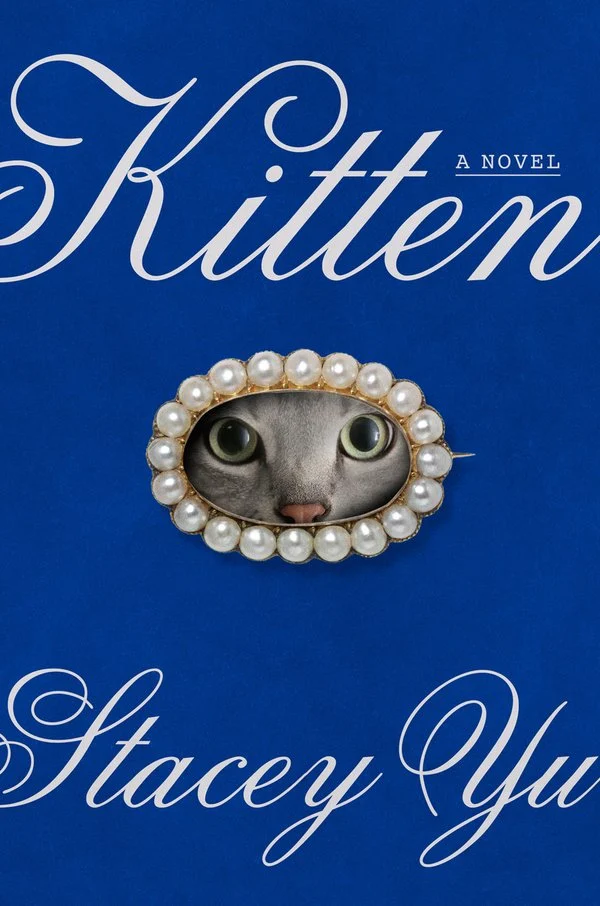
In keeping with her educational approach to social media, Yu documented the journey of releasing her debut novel for her online community. She created viral content detailing the cover design process, manuscript revisions, and author-publisher mechanics. By pulling back the curtain on the industry, Yu demystified the path from finished draft to retail shelf, demonstrating how thoughtful cover design acts as an aesthetic extension of a book’s central themes.
Kitten examines how class operates as an invisible, isolating force in contemporary American life. While race and gender are frequently discussed in cultural discourse, economic background remains a subtle, omnipresent driver of social anxiety. Yu places Katie—a Southern woman of modest means—into "Holm," an exclusive New England seaside town populated by generational wealth.
+----------------------------------------------------------------------------------+
|                     CLASS & SPATIAL DYNAMICS IN 'KITTEN'                         |
+------------------+----------------------------------+----------------------------+
| Character/Space  | Background & Position            | Relationship to Space/Sea  |
+------------------+----------------------------------+----------------------------+
| Katie            | Southern, non-monied, adrift     | Cannot swim; alienated     |
| James            | Coastal elite, generational wealth| Skilled swimmer; comfortable|
| Silver (Cat)     | Unbound by human hierarchy       | Swims effortlessly in ocean|
| Holm (Setting)   | Exclusive New England beach town | Symbol of insular privilege|
+------------------+----------------------------------+----------------------------+
Katie’s inability to swim mirrors her inability to smoothly enter adulthood or assimilate into her boyfriend’s social milieu. In contrast, James learned to swim as a child, reflecting the effortless ease conferred by privilege. Silver, unbound by human social hierarchies, navigates the water effortlessly—making her an object of intense admiration for Katie.
The Mechanics of Emotional Transference
A key psychological element of Kitten is the concept of non-human emotional transference. Drawing parallels to Mary Gaitskill’s memoir Lost Cat and Marlen Haushofer’s survival novel The Wall, Yu illustrates how caring for an animal allows individuals to process unresolved human grief.
Katie’s fixation on Silver stems from a deep longing to restore the maternal bond she shared with her mother during childhood. By assuming a quasi-parental role over Silver, Katie attempts to re-enact and heal her own childhood emotional needs.
       [Unresolved Maternal Longing]
                     │
                     ▼
       [Social Alienation in New Enclave]
                     │
                     ▼
 [Fixation on Silver (Non-Human Conduit)]
                     │
                     ▼
  [Re-enactment of Care & Self-Actualization]
Digital vs. Verbal Modes of Communication
The novel contrasts different forms of dialogue to highlight the difficulty of authentic human connection:
Text Messaging: Highly curated, sharp, and reflective of true intent (e.g., the snarky, barbed text exchanges with the character Lou).
Verbal Dialogue: Awkward, indirect, and weighed down by social self-preservation (e.g., strained conversations between Katie and James).
One-Sided Animal Dialogue: Unfiltered, sincere, and emotionally vulnerable (e.g., Katie talking to Silver).
Official Statements & Critical Commentary
During her conversation with Amulya Tadimety, Stacey Yu offered several key insights into her creative process, literary philosophy, and structural choices.
On Demystifying the Publishing Process and Cover Art
Addressing the strong response to her behind-the-scenes publishing videos, Yu noted the public’s appetite for industry transparency:
"I didn’t realize that people would be so interested in the nuts and bolts of the process, but that’s kind of how I got myself online anyway… When I first started making videos, they were about a job that I had back then, when I was reading for a literary scout. I didn’t realize that people would be so interested in a job that they didn’t know about, but they are."
On the role of book design as a thematic prelude:
"The cover also is a way to talk about the book, because it’s not separate from the themes and the feeling of the book itself. In fact, a good cover is meant to build on that. The old adage of not judging a book by its cover doesn’t really run true anymore, because there’s so much thought that designers put behind a cover and the way that it extends the language and the atmosphere of the books."
On Maternal Longing and Human-Animal Transference
Yu detailed how the relationship between Katie and Silver grew out of a desire to explore the transition out of childhood:
"At first, I wanted to write about childhood and leaving childhood and the reluctance that a young person might have in stepping into the rest of their life. My main character, Katie, is so ill-prepared for what she sees as her adult self and the rest of her life that she wants to go back. She wants to stop time.
"And that’s all connected, ultimately, to her wanting to recreate a love that she is familiar with: the love when she and her mother were still close. When I started writing more, I realized the reason she misses childhood is because she misses her mother… An animal is a living creature who needs love and care, and needs also to be parented in a way, just in a different way. So I thought it was a great experiment for my character to be a quasi-parent when she herself just wants to be parented."
+--------------------------------------------------------------------------------+
|                        KEY LITERARY INFLUENCES ON 'KITTEN'                     |
+-----------------------+---------------------+----------------------------------+
| Author / Creator      | Work                | Key Influence on Yu's Craft      |
+-----------------------+---------------------+----------------------------------+
| Mary Gaitskill        | Lost Cat            | Animal as springboard for grief  |
| Marlen Haushofer      | The Wall            | Animal bonds amidst isolation    |
| Elif Batuman          | The Idiot / Either/Or| Naive narrator, observational wit |
| Yorgos Lanthimos      | Poor Things (Film)  | Extreme, absurd adult development|
| Jenny Zhang           | My Baby First Birthday| Blunt, unvarnished prose style  |
+-----------------------+---------------------+----------------------------------+
On the Dual Nature of Water and Spatial Aesthetics
Reflecting on the ocean setting and its symbolic weight, Yu pointed to her own shift from California coastal culture to the cooler English seaside:
"Mythology and folklore always cement the ocean as this great mother, but it’s also a place of great danger. You can literally die! And it’s not just the sea. People drown in swimming pools; people drown in bathtubs. Water feels both very healing and violent.
"The book was always playing within these extremes of total safety, childhood, and the violence of adulthood… Silver is a natural swimmer; she doesn’t struggle at all. James learned how to swim when he was a kid, and Katie never did."
On Unconventional Artistic Influences
Yu revealed how cinema and raw poetry helped shape the book’s psychological landscape:
"When I was drafting Kitten, I went to see the movie Poor Things and I just left it feeling completely electrified… The main character is a baby in a woman’s body. And it just plays with the drama of becoming alive, of growing up, but sped up… I kind of want Kitten to capture the absurdity, but also the meaningfulness, of being naive and caught between childhood and adulthood.
"I was just revisiting this poetry collection, My Baby First Birthday by Jenny Zhang… Her writing is always just so gross and beautiful at the same time… It reminded me to squash the impulse to make my writing beautiful, and just to make it clear and powerful instead."
Future Outlook
The release of Kitten marks an important milestone in the ongoing convergence of digital book culture and traditional publishing. Stacey Yu’s journey from literary scout and social media critic to published novelist demonstrates how online platforms can serve as fertile ground for serious literary craft, rather than just commercial promotion.
+-------------------------------------------------------------------------------+
|                       INDUSTRY IMPACT & FUTURE TRAJECTORY                      |
+-------------------------------------------------------------------------------+
| 1. Evolution of Digital Critics to Novelists                                  |
|    - Demonstrates that social media platforms can incubate refined,           |
|      craft-focused literary fiction.                                          |
|                                                                               |
| 2. Expansion of "Detached Protagonist" Archetypes                             |
|    - Contributes a nuanced entry to contemporary 21st-century female-led      |
|      narratives, focusing on class rather than pure existential nihilism.     |
|                                                                               |
| 3. Industry Push for Publishing Transparency                                  |
|    - Signals a growing demand from readers to understand cover design,        |
|      editorial decisions, and rights acquisitions behind the scenes.          |
+-------------------------------------------------------------------------------+
As Kitten reaches readers, it stands out for its stylistic restraint, psychological clarity, and subtle commentary on class and emotional attachment. By using an unconventional bond between a lonely young woman and a swimming cat, Yu offers a thoughtful examination of the friction inherent in growing up. Her debut establishes her as a distinct voice in contemporary fiction, proving that the bridge between reading literature and writing it can produce compelling art.






Comments
Facebook App ID not configured. Please add it in the Customizer.