
In the autumn of 1942, military trucks rattled across the dusty terrain of the Kathiawar Peninsula in Western India, carrying a group of exhausted, malnourished children whose young lives had already been upended by the cataclysms of World War II. Emerging from the back of the vehicles—many barefoot, clad in rags, and blinking against the harsh tropical sun—were young Polish refugees, some as young as two years old. They were the survivors of brutal Soviet labor camps in Siberia, wrenched from their homeland following the dual 1939 Nazi and Soviet invasions of Poland.
Waiting to greet them at the gates of a coastal settlement in the princely state of Nawanagar was Maharaja Digvijaysinhji Ranjitsinhji Jadeja. In a historic act of geopolitical defiance and profound humanitarian grace, the Indian ruler offered a sanctuary to nearly 1,000 Polish orphans and children when international allies hesitated, financial burdens loomed large, and wartime starvation gripped the subcontinent. Addressing the traumatized youngsters, the maharaja delivered a timeless promise: "Do not consider yourselves orphans. You are now Nawanagaris, and I am Bapu, the father of all the people of Nawanagar, so also yours."
/https://tf-cmsv2-smithsonianmag-media.s3.amazonaws.com/filer_public/58/32/5832ce16-54a9-4a80-8f03-98ca18988ffb/gettyimages-961804192.jpg)
Decades later, the legacy of the "Good Maharaja" endures as a testament to cross-cultural empathy and moral leadership. This comprehensive report details the harrowing origins of the children’s exile, the political labyrinth of wartime alliances, the pioneering sanctuary established at Balachadi, and the modern international recognition preserving this extraordinary historical chapter.
Read Also
Detailed Chronology
1. The Partition and Desolation of Poland (1939–1940)
The modern tragedy of these children began on September 1, 1939, when Nazi Germany launched a devastating blitzkrieg invasion of Poland from the west. Just sixteen days later, the Soviet Union completed a lethal pincer movement by invading Poland from the east, fulfilling the secret protocols of the Molotov-Ribbentrop Pact.
/https://tf-cmsv2-smithsonianmag-media.s3.amazonaws.com/filer_public/58/32/5832ce16-54a9-4a80-8f03-98ca18988ffb/gettyimages-961804192.jpg)
In February 1940, the Soviet regime initiated mass deportations targeting Poland’s intelligentsia, military families, civil servants, and educators—groups Moscow deemed "socially dangerous." An estimated 320,000 to 500,000 Polish citizens were packed into unheated cattle cars and transported under subzero conditions to grueling labor camps (gulags) across Siberia and Kazakhstan. Countless deportees, particularly the elderly and very young, perished en route from freezing temperatures, malnutrition, and disease.
2. The Turn of the Tide and the Exodus to Iran (1941–1942)
The geopolitical landscape shifted dramatically in June 1941 when Adolf Hitler broke the nonaggression pact and invaded the Soviet Union via Operation Barbarossa. Suddenly thrust into an uneasy alliance with the Western Allies, Joseph Stalin signed the Sikorski-Mayski Agreement in July 1941, granting an amnesty to imprisoned Polish nationals and authorizing the formation of a Polish army on Soviet soil.
/https://tf-cmsv2-smithsonianmag-media.s3.amazonaws.com/filer_public/ae/6d/ae6d6f67-eeb6-452b-976e-2726706eb5d6/service-pnp-fsa-8d29000-8d29600-8d29620v.jpg)
As severe food shortages within the Soviet Union threatened the liberated prisoners, tens of thousands of Polish refugees—predominantly women and children—were evacuated through Turkmenistan to Allied-occupied Iran. However, Tehran was merely a temporary waypoint. The Polish government-in-exile, operating out of London, urgently sought permanent or semi-permanent refuge for the wave of displaced civilians, focusing its hopes on the British Empire.
3. The Sanctuary of Nawanagar (1942)
When the British Foreign Office proposed relocating the sick, traumatized Polish children to British India, local officials balked. They cited profound financial liabilities regarding the children’s heavy medical needs—many suffered from typhus, tuberculosis, dysentery, and advanced malnutrition—alongside compounding fears of domestic strain. India was already hurtling toward catastrophic localized food crises, most notably the devastating Bengal famine of 1943–1944, which ultimately claimed upwards of three million lives.

Amid this bureaucratic paralysis, Maharaja Digvijaysinhji Ranjitsinhji Jadeja—then serving as India’s representative in London’s Imperial War Cabinet—stepped forward. Exercising his sovereign autonomy as the ruler of Nawanagar, a semi-independent princely state insulated from the direct administration of the British Raj, the maharaja issued a direct invitation. He would personally finance and host the Polish children, bypassing hesitant British and Indian colonial authorities. "If God has sent me these children, it is my duty to care for them," he famously declared.
Supporting Context & Metrics
The establishment of the Balachadi camp represented a masterclass in compassionate logistics. Built near the maharaja’s summer palace on the Kathiawar Peninsula, the settlement was structured to foster community, dignity, and normalcy amidst global chaos.
/https://tf-cmsv2-smithsonianmag-media.s3.amazonaws.com/filer_public/dc/03/dc033d6f-145f-45fb-b015-4b3e0de43a21/jam-shri-digvijaysinhji-ranjitsinhji-jadeja-maharaja-jam-saheb-of-nawanagar.jpg)
- Demographics of Rescue: Over the course of the war, between 600 and 1,000 young Polish refugees passed through the Balachadi camp. The vast majority were children between the ages of 2 and 15, including a small cohort of young Polish Jews who later journeyed onward to Mandatory Palestine.
- Infrastructure and Education: The camp featured dozens of elongated barracks, kitchens, a library, a Catholic church, and a school housed in the maharaja’s personal guesthouse. Evacuated Polish teachers resumed classes, using handwritten textbooks copied painstakingly by older students when official supplies ran short.
- Cultural Integration: To bridge the culinary gap for children unaccustomed to fiery South Asian spices, Nawanagar cooks were specially trained to prepare milder dishes. The camp maintained vibrant scouting troops, religious services, theatrical performances, and athletic leagues. When proper sports equipment was scarce, the children famously constructed soccer balls out of collected boys’ socks.
- Postwar Resettlement: Following the conclusion of World War II, the emergence of a Soviet-backed communist regime in Poland threatened the orphans with forced repatriation. To protect them, the maharaja, alongside camp leaders and British liaison officers, legally adopted the children through Nawanagar court proceedings, ensuring they retained the legal protection needed to resettle safely in nations like the United Kingdom, Canada, Australia, and the United States.
Official Statements & Historical Testimonies
The profound human impact of the maharaja’s intervention is preserved through the vivid recollections of those who lived it, alongside modern diplomatic appraisals:
- Princess Harshad Kumari (Daughter of Maharaja Digvijaysinhji): Reflecting on the arrival of the first transport, the princess recalled, "They looked so miserable, and their clothes hung about their frames. And this was their state, we were told, after they had been fed and cared for at transit camps along the way."
- Wiesław Stypuła (Camp Survivor): Recalling the camaraderie and athletic triumphs at Balachadi, Stypuła noted the maharaja’s enthusiastic support during local sporting events: "The maharaja would sit in a deep armchair, clap and applaud us. And when we won the final match 2-1, he applauded for us, not his own team."
- Karolina Rybka (Refugee Survivor, speaking to CBC News in 2019): Summarizing the precariousness of their plight, Rybka observed, "Nobody wanted us. I have no idea what would have happened to us, a thousand kids. The war was everywhere… He saved our lives."
- Anu Radha (Documentary Filmmaker, A Little Poland in India): Highlighting the political courage behind the rescue, Radha emphasized, "Obviously, the British were very upset that he didn’t ask for their permission. But he told them, ‘It’s my money. Where I spend it is my affair, and I don’t have to ask anybody.’"
Future Outlook & Modern Legacy
For decades following Maharaja Digvijaysinhji’s death in 1966, his remarkable humanitarian crusade remained largely absent from mainstream global histories, preserved primarily within the oral traditions of the aging survivors and academic monographs such as Anuradha Bhattacharjee’s seminal text, The Second Homeland: Polish Refugees in India.
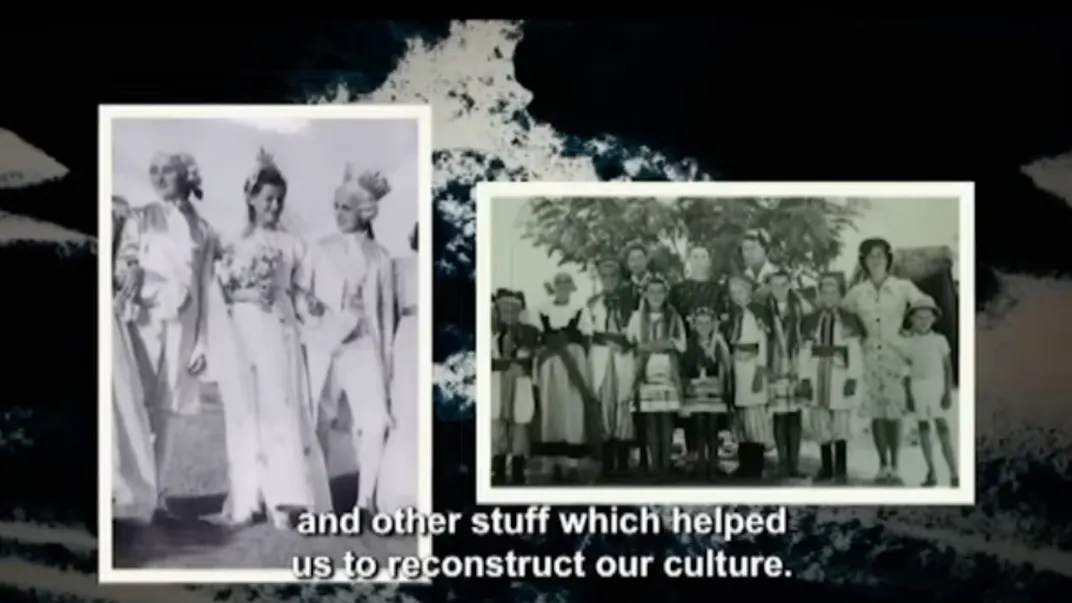
However, 21st-century diplomacy and documentary filmmaking have successfully restored this narrative to the global consciousness. Anu Radha’s 2013 documentary, alongside extensive archival projects by Polish and Indian institutions, has introduced generations of modern citizens to the story of Balachadi.
In Poland, the legacy of the "Good Maharaja" is now firmly cemented in civic life. Warsaw honors his memory through Good Maharaja Square and a network of schools named in his honor. In 2011, the Polish government posthumously awarded Digvijaysinhji the Commander’s Cross of the Order of Merit of the Republic of Poland. Furthermore, high-level diplomatic visits—such as Indian Prime Minister Narendra Modi’s commemoration of the maharaja’s monument in Warsaw—underscore how a historical act of localized compassion continues to anchor strong bilateral ties between contemporary Poland and India.
/https://tf-cmsv2-smithsonianmag-media.s3.amazonaws.com/filer_public/26/22/26224428-2728-4238-819f-15e0ca30a692/polish_child_refugees_and_war_orphans_in_india_1941.jpg)
Ultimately, the sanctuary at Nawanagar stands as an enduring historical beacon: a reminder that even in an era defined by total war, state-sponsored deportation, and institutional apathy, individual moral courage possesses the power to rewrite the destiny of nations.


Comments
Facebook App ID not configured. Please add it in the Customizer.