As the United States approaches the milestone of its 250th anniversary, historians continue to unearth lost chapters from the crucible of the American Revolution. For generations, the narrative of American espionage in the autumn of 1776 has been defined by a single tragic figure: Nathan Hale. The young Connecticut schoolteacher who volunteered to gather intelligence for General George Washington famously met his end on the gallows, immortalized (albeit likely apocryphally) by his final lament that he regretted having only one life to lose for his country.
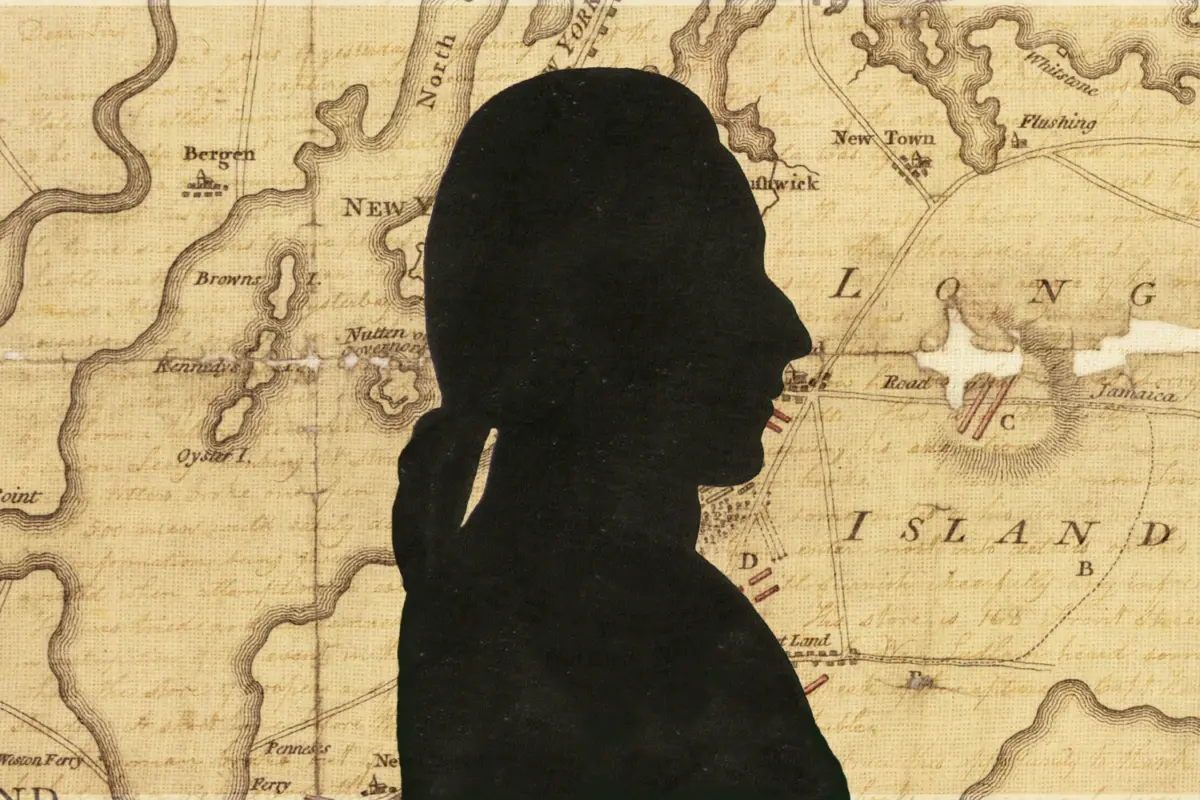
Yet, historical memory is often selective. Newly examined archives housed at the Center for Brooklyn History reveal that Hale was not alone in his perilous undertaking. At the very same moment Hale crossed into British-occupied territory on Long Island, another young man from Connecticut—17-year-old David Maltbie—embarked on a remarkably similar clandestine mission. Unlike Hale, who was captured and executed within days of deploying, Maltbie successfully infiltrated enemy lines, blended seamlessly into an occupied community, and transmitted vital military intelligence back to the patriot command.
Maltbie’s long-obscured story, brought to light through 19th-century correspondence discovered by historian Claire Bellerjeau, shatters the simplistic view of early Revolutionary intelligence gathering as a series of isolated failures. Instead, Maltbie’s daring exploits, subsequent escape from the shadow of the gallows, and later service as a whaleboat raider and legislator offer a profound window into the grassroots mechanics of the American war effort. This special report examines the mechanics of Maltbie’s espionage, the historical context that necessitated his mission, and what his forgotten journey reveals about the birth of American intelligence.
Detailed Chronology: From Schoolroom Cover to Revolutionary Operative
The Intelligence Vacuum of 1776
The genesis of David Maltbie’s mission lies in the catastrophic defeat suffered by the Continental Army at the Battle of Brooklyn in late August 1776. The loss delivered a crushing psychological and strategic blow to General George Washington. Both New York City and the sprawling, resource-rich expanse of Long Island fell firmly under British control, where they would remain for the duration of the conflict.
For Washington, the loss of the Port of New York—with its critical access to inland waterways and Atlantic shipping lanes—was devastating. Furthermore, the agrarian abundance of Long Island ensured that the occupying British forces could provision their troops indefinitely. Operating from across the Long Island Sound in Connecticut, patriot forces stared across a watery barrier at territory that felt tantalizingly close yet utterly impregnable.
Desperate for reliable intelligence regarding British troop strengths, billeting plans, and fortification layouts, Washington authorized the formation of an elite reconnaissance unit under the command of Colonel Thomas Knowlton. Known as "Knowlton’s Rangers," this precursor to modern American special operations was tasked with shedding uniforms, crossing enemy lines, and smuggling intelligence back to the mainland. Nathan Hale was among the volunteers drawn from the Continental ranks to serve in this high-risk capacity.
Parallel Missions: Hale and Maltbie
In September 1776, 21-year-old Nathan Hale slipped into the Huntington area of Long Island, adopting the precarious cover story of a Dutch schoolteacher searching for employment. Simultaneously, 17-year-old David Maltbie crossed the Long Island Sound from Stamford, landing roughly seven miles to the west in Oyster Bay. Maltbie assumed an identical persona, posing as a traveling schoolmaster.
While Hale’s mission unraveled almost immediately due to heightened British suspicion and counter-intelligence measures, Maltbie maintained a remarkably low profile. Utilizing the guise of corresponding with friends and family back home in Connecticut, Maltbie penned detailed missives outlining British troop movements, unit sizes, and defensive configurations gleaned from daily observations and conversations with sympathetic locals.
Maltbie’s intelligence assessments were notably astute. As autumn chilled into winter and the British army formalized its winter quartering plans on Long Island, Maltbie grew convinced that a targeted American counter-offensive could succeed. In accounts preserved decades later, he reportedly argued that a modest force of just 500 men could successfully dislodge the British garrison in his sector if the Continental command could spare the troops.
Betrayal, Imprisonment, and Death Row
Maltbie routed his intelligence reports across the Sound via an elderly courier named Seely, who regularly rowed between Stamford and Oyster Bay. However, the sheer volume of one-way correspondence eventually aroused the courier’s suspicions. Breaking protocol, Seely opened one of Maltbie’s dispatches and immediately recognized the explicit military intelligence contained within.
Because Seely was a staunch loyalist, he bypassed the patriot network entirely, delivering the incriminating documents directly to British authorities. A rapid manhunt ensued. Although Maltbie attempted to flee by boat across the Sound as authorities closed in, he was intercepted, arrested, and subjected to a swift military trial that found him guilty of espionage.
Maltbie was incarcerated in a makeshift guardhouse in Oyster Bay—a building historically utilized as a local bakehouse. Sentenced to death by hanging, the teenager awaited his execution inside the damp, rudimentary cell. During this grim interlude, Maltbie was visited by 10-year-old Elizabeth Wooden, whose father had been a pre-war friend of the young prisoner. Because the British jailers viewed a young girl as entirely nonthreatening, Wooden was permitted to smuggle food to the condemned spy.
In a dramatic twist of fate, just hours before his scheduled execution, Maltbie executed a daring breakout, smashing out of his confinement and fleeing into the freezing New York countryside. Decades later, historical correspondence revealed a supreme irony: Maltbie had actually been granted a reprieve by British authorities, though he remained completely unaware of this executive clemency at the time of his desperate escape.
Continued Service and Later Operations
Maltbie’s flight from Oyster Bay did not mark the end of his contributions to the patriot cause. On December 18, 1776, he formally enlisted in the Continental Army’s Ninth Connecticut Regiment, though his initial infantry service was relatively brief. By 1781, Maltbie had pivoted to irregular warfare, commanding a crew of whaleboats. These aggressive amphibious units launched daring nighttime raids across the Sound, capturing British supply vessels and seizing assets from prominent Long Island loyalists.
By the winter of 1782–1783, as the Revolutionary War drew toward its diplomatic conclusion, Maltbie appears to have resumed intelligence-gathering operations in Manhattan. On New Year’s Day 1783, he was captured by British forces in New York City alongside an alleged female accomplice, Libbey Stigney. Charged with robbery under false pretenses and suspected of espionage, Maltbie was cast into the infamous Provost Prison in lower Manhattan.
The Provost Prison was a nightmare of colonial incarceration. Inmates were packed into squalid, overcrowded rooms, subjected to physical abuse, and forced to survive on putrid water and spoiled rations. Maltbie stood trial in February 1783. While the court focused exclusively on the robbery allegations—mysteriously dropping or ignoring the accompanying espionage charges—Maltbie mounted a persuasive defense and secured an outright acquittal. The Treaty of Paris, signed in September 1783, officially ended the war six months later.
Post-War Life and Legacy
Following the cessation of hostilities, Maltbie returned to civilian life in Connecticut. In 1784, he auctioned off an 80-ton schooner under mysterious circumstances and transitioned into commerce, establishing himself as a prominent merchant dealing in animal skins and furs by 1791.
Maltbie’s civic standing grew rapidly in the post-war decades. In 1795, he was elected to represent Stamford in the Connecticut legislature, subsequently serving as a municipal justice of the peace alongside his former military commander, Colonel Charles Webb. David Maltbie passed away in 1807 at the age of 48 and was laid to rest in Stamford’s North Street Cemetery. His extraordinary wartime exploits faded from public consciousness, preserved only in the fading memories of Elizabeth Wooden and tucked away in dusty archival collections until modern historians brought them to light.
Supporting Context & Metrics
To fully appreciate the weight of David Maltbie’s historical recovery, one must examine the broader intelligence landscape of the American Revolution and the archival mechanisms that kept his story hidden for nearly 250 years.
The Archival Discovery: The narrative of David Maltbie was reconstructed from an 1846 letter written by Ebenezer Seeley (brother-in-law of legendary Culper Spy Ring operative Robert Townsend) to pioneering local historian Henry Onderdonk Jr. Seeley had interviewed Elizabeth Wooden—then an elderly woman recounting her childhood memories of smuggling food to Maltbie in his Oyster Bay bakehouse prison.
The Scale of Early Intelligence Operations: Historian Alexander Rose notes that early American intelligence operations in 1776 were characterized by an absolute lack of institutional infrastructure. Unlike the highly structured Culper Spy Ring—which operated successfully from 1778 to 1783 utilizing dead drops, invisible ink, and numeric cipher codes—operatives like Hale and Maltbie were entirely untrained civilian volunteers operating without logistical backstops.
The Evolution of Washington’s Spy Networks: The high casualty and capture rate among 1776 volunteer operatives (including Hale’s execution and Maltbie’s narrow escape) directly influenced George Washington’s tactical evolution. Recognizing that localized, ad-hoc espionage was unsustainable, Washington authorized Major Benjamin Tallmadge to construct a professional, multi-tiered civilian intelligence network that ultimately shielded its agents far more effectively than the lone-wolf missions of 1776.
Official Statements & Expert Analysis
The unearthing of David Maltbie’s dossier has generated significant commentary within the community of Revolutionary War historians and genealogists:
"Maltbie’s story is significant because it helps reveal the extent of Washington’s intelligence efforts in the early stages of the war. Lesser-known spies like Maltbie, almost without exception, were untrained volunteers lacking any support or logistics structure when they were behind enemy lines. Their collective experiences and repeated failures vividly demonstrated to Washington that he needed to somehow build a long-term, viable network of civilian agents in New York and on Long Island."
— Alexander Rose, author of Washington’s Spies: The Story of America’s First Spy Ring
"New information about the Revolution and the actions of Nathan Hale and the lesser-known but luckier Long Island spy David Maltbie broadens our understanding of the conflict and its implications."
— Bill Bleyer, author of George Washington’s Long Island Spy Ring
"The resurfacing of Maltbie’s story is nothing short of electrifying. Even within our own family, knowledge of his espionage during the Revolution had been lost over time and was unknown. His story can teach us all about the values this nation was founded on and self-sacrifice for a cause greater than us. It is important to celebrate stories like his and remember that this nation was founded on the backs of everyday men and women to whom we owe a great debt."
— Margo Williams, fifth-great-great-niece of David Maltbie
Future Outlook & Historical Implications
As historians, genealogists, and institutions prepare for the United States Semiquincentennial in 2026, the recovery of David Maltbie’s narrative serves as a vital reminder that the American founding was not driven solely by iconic pantheon figures whose words were meticulously recorded for posterity. Rather, the architecture of American independence was propped up by thousands of ordinary citizens—teenagers, schoolteachers, merchants, and mariners—who absorbed immense personal risk in the shadows of occupied towns.
The scholarly work conducted by researchers like Claire Bellerjeau demonstrates that local archives, forgotten probate files, and 19th-century epistolary collections still hold transformative secrets. Just as Paul Revere’s midnight ride was shared by unsung compatriots like William Dawes and Samuel Prescott, Nathan Hale’s tragic martyrdom is now productively counterbalanced by the survival, grit, and operational success of David Maltbie.
By restoring Maltbie to his rightful place in the historical record, contemporary scholarship broadens our comprehension of the American Revolution—transforming it from a static monument of textbook legends into a vibrant, deeply human story of everyday resilience, espionage, and survival against astronomical odds.

/https://tf-cmsv2-smithsonianmag-media.s3.amazonaws.com/filer_public/9a/30/9a3074ea-bdcc-4d5f-ad2a-a80bc49a6f8a/david-maltbie.png)
/https://tf-cmsv2-smithsonianmag-media.s3.amazonaws.com/filer_public/9a/30/9a3074ea-bdcc-4d5f-ad2a-a80bc49a6f8a/david-maltbie.png)
/https://tf-cmsv2-smithsonianmag-media.s3.amazonaws.com/filer_public/ae/8d/ae8d136d-9c1a-46b6-99d2-08f6959e7f2e/letter-to-onderdonk.png)
/https://tf-cmsv2-smithsonianmag-media.s3.amazonaws.com/filer_public/a8/02/a8025f86-fc49-42fa-9711-1b6256dbd150/nathan_hale.png)
/https://tf-cmsv2-smithsonianmag-media.s3.amazonaws.com/filer_public/49/20/4920d563-3edf-498f-b2c8-b7fa0fd309e9/elizabeth_wooden_gravestone_ob_2.jpeg)
/https://tf-cmsv2-smithsonianmag-media.s3.amazonaws.com/filer_public/e4/8a/e48ab426-f781-4cea-b218-dd03122d93db/map-of-oyster-bay_f811336.jpg)
/https://tf-cmsv2-smithsonianmag-media.s3.amazonaws.com/filer_public/2e/07/2e07a4b9-3f68-422d-b00b-3d3cc4ec660d/default_5.jpg)




Comments
Facebook App ID not configured. Please add it in the Customizer.