
Executive Overview
The intersection of artistic expression, administrative jurisdiction, and state censorship in Pakistan has once again been cast into the spotlight. In a decisive ruling delivered on Friday, a constitutional bench of the Sindh High Court (SHC) directed the Sindh Board of Film Censors (SBFC) to revisit its controversial decision regarding the critically acclaimed feature film Ghost School. The court has instructed the provincial board to conduct a fresh hearing involving all stakeholders and issue a reasoned, definitive verdict within a strict two-week window.
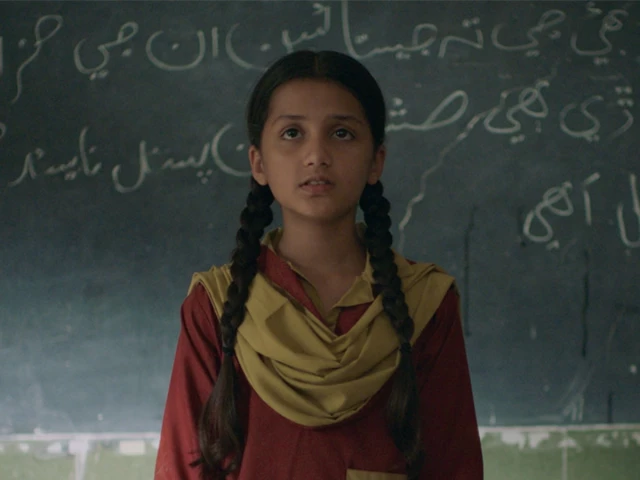
Directed by Seemab Gul and produced by Muhammad Yousuf Rehman, Ghost School is a poignant cinematic exploration set against the backdrop of rural Sindh. The narrative centers on a ten-year-old girl who courageously challenges pervasive local myths and institutional failures regarding a supposedly haunted school in her village. Despite receiving international critical acclaim—including a prestigious Best Director win at the UK Asian Film Festival in May and a notable premiere as a nominee at the Toronto International Film Festival—the film hit a bureaucratic wall at home. On July 9, the SBFC abruptly barred its screening across cinemas in Sindh, the very province where the film was conceptualized, financed, and shot.
The filmmakers, represented by Advocate Mirza Moiz Baig, filed a constitutional petition under Article 199 of the Constitution of Pakistan, challenging the provincial board’s veto as arbitrary, legally unfounded, and violative of fundamental rights. During the high-stakes proceedings, a two-member bench comprising Justice Adnanul Karim Memon and Justice Muhammad Jafar Raza did not hold back its critique of the censor board’s opaque methodologies. Questioning the rationale behind withholding clearance, the bench pointedly asked whether the film contained literal, supernatural "ghosts" that necessitated a ban, while severely reprimanding board officials for attempting to withhold internal deliberations from the judiciary.
Read Also
This case transcends the fate of a single independent film; it has ignited a broader national discourse concerning the decentralization of cultural administration, the arbitrary application of the Sindh Motion Pictures Act, 2011, and the persistent friction between federal and provincial regulatory bodies in Pakistan’s evolving creative landscape.
Detailed Chronology of the Legal and Cinematic Battle
The journey of Ghost School from international red carpets to the corridors of the Sindh High Court highlights the bureaucratic hurdles often faced by independent filmmakers in Pakistan.
International Triumph and Domestic Roadblocks
Earlier this year, Ghost School emerged as a beacon of contemporary Pakistani independent cinema. Its nuanced storytelling and striking visual representation of rural Sindh earned it global recognition. In May, director Seemab Gul clinched the Best Director accolade at the UK Asian Film Festival. This triumph was quickly followed by an official screening nomination at the prestigious Toronto International Film Festival (TIFF), cementing the film’s status as a vital piece of modern South Asian art.
However, while international audiences lauded the film’s social commentary and artistic merit, its domestic reception proved starkly polarized. On July 9, the Sindh Board of Film Censors issued an outright prohibition on the theatrical screening of Ghost School within the province of Sindh. The sudden ban came without prior warning, show-cause notices, or public justification, leaving the creators blindsided.
Escalation to the Sindh High Court
Refusing to let the film be silenced in its home province, directors Seemab Gul and Muhammad Yousuf Rehman approached the Sindh High Court, invoking Article 199 of the Constitution. Their legal team challenged the SBFC’s prohibition as an unconstitutional infringement on freedom of speech and expression, as protected under Article 19 of the Constitution of Pakistan.
The petition was assigned to a constitutional bench comprising Justice Adnanul Karim Memon and Justice Muhammad Jafar Raza. From the outset, the bench scrutinized the legal standing of the SBFC’s decision, contrasting it with approvals granted by other regulatory bodies across the country.
During the arguments, Advocate Mirza Moiz Baig presented a compelling paradox to the court: Ghost School had already secured formal clearance from the federal government and, crucially, had been approved for screening in cantonment areas across Karachi. Furthermore, the Central Board of Film Censors (CBFC) and the Punjab Film Censor Board had raised no objections to its public exhibition.
"The film will be presented on big screens in cantonment areas of Karachi, but has been barred from screening in areas administered by the Sindh government," Advocate Baig argued, highlighting a glaring jurisdictional contradiction that allowed the film to be viewed by audiences in federal enclaves while denying it to citizens under the direct administrative purview of the Sindh government.
The Judiciary Intervenes
As the hearing progressed, the SHC bench pressed Sindh Board of Film Censors Secretary Adil Ahmed for a clear, legally sound explanation behind the censorship order. The exchange quickly turned tense as the secretary attempted to evade direct answers, claiming that the decision was collective and that details could not be immediately disclosed to the bench.
Displaying visible displeasure, Justice Adnanul Karim Memon rebuked the secretary for adopting an evasive posture. "You cannot hide things from the court," Justice Memon warned, emphasizing that state functionaries are obligated to assist the judiciary with transparency and candor. The judge issued a stern ultimatum: if the board persisted in concealing the substantive grounds for its censorship, the court would rule in favor of the petitioners and set aside the ban entirely.
Facing judicial scrutiny, Secretary Ahmed requested time to submit a formal, comprehensive response from the board. Recognizing the need for administrative due process while safeguarding artistic rights, the court concluded the hearing by directing the SBFC to reopen the matter, hear all concerned parties afresh, and issue a reasoned decision within two weeks.
Supporting Context & Legal Metrics
The legal challenge mounted by the creators of Ghost School is anchored firmly in the statutory limits prescribed by provincial legislation. Understanding the controversy requires a granular look at the legal framework governing film censorship in Sindh.
The Sindh Motion Pictures Act, 2011
Under the framework of the 18th Amendment to the Constitution of Pakistan, film censorship was devolved from the federal government to the provinces. Consequently, the province of Sindh enacted the Sindh Motion Pictures Act, 2011, establishing the SBFC as the sole authority responsible for licensing films for public exhibition within its territorial jurisdiction.
However, the discretionary powers of the SBFC are not absolute. They are strictly circumscribed by Section 6(1) of the Act. According to this statutory provision, a certificate for the public exhibition of a film can only be refused if the content falls under a very narrow, exhaustively defined set of exceptions. Specifically, a film can be barred only if it is deemed:
- Prejudicial to the glory of Islam;
- Prejudicial to the integrity, security, or defense of Pakistan or any part thereof;
- Prejudicial to friendly relations with foreign states;
- Harmful to public order, decency, or morality; or
- Amounting to the commission of, or incitement to, an offense.
Constitutional Alignment and Free Speech
Advocate Mirza Moiz Baig argued before the SHC that these statutory grounds mirror the exact parameters of reasonable restrictions placed on freedom of speech under Article 19 of the Constitution of Pakistan.
The core legal argument rests on the assertion that Ghost School does not violate any of these high thresholds. The film does not incite violence, undermine national security, or offend religious sensitivities. Instead, it tackles systemic educational neglect and social myths—themes that are vital for public discourse. By censoring the film without demonstrating how it breaches Section 6(1) of the 2011 Act, the SBFC exceeded its legal mandate, transforming a regulatory body into an arbitrary censor of artistic thought.
Furthermore, the legal petition highlighted a fundamental breach of natural justice: the filmmakers were denied a show-cause notice and were never afforded an opportunity to defend their work or address the board’s concerns prior to the issuance of the ban. This procedural lapse forms a cornerstone of the petitioners’ challenge against the SBFC’s July 9 directive.
Official Statements and Stakeholder Perspectives
The Ghost School controversy has catalyzed a fierce debate among filmmakers, legal experts, and civil society actors regarding the state of creative freedom in Pakistan.
The Filmmakers’ Stance
For creators Seemab Gul and Muhammad Yousuf Rehman, the provincial ban represents an unjustified obstacle to storytelling that addresses grassroots realities in Pakistan. By setting their narrative in a Sindhi village, the filmmakers sought to highlight real infrastructural and social challenges through the innocent, inquiring eyes of a child.
In public statements following the SHC hearing, legal representatives underscored the absurdity of a situation where a film celebrating regional culture and social inquiry is welcomed internationally and permitted in federal jurisdictions, yet suppressed in the very soil that inspired it. The filmmakers maintain that artistic works dealing with social critique must be protected from bureaucratic overreach and subjective censorship.
The Censor Board’s Position
The Sindh Board of Film Censors has maintained a defensive posture throughout the judicial proceedings. Represented by Secretary Adil Ahmed, the board has insisted that its decisions are made collectively and in accordance with institutional procedures. However, the board’s initial reluctance to articulate specific, legally defensible reasons for the ban during the court hearing exposed systemic vulnerabilities in how censorship decisions are vetted and justified.
Critics and media analysts point out that provincial censor boards in Pakistan frequently rely on vague, catch-all justifications—such as "undermining cultural norms"—when suppressing independent cinema that challenges the status quo or exposes institutional decay, even when such themes are handled with artistic sensitivity.
The Judiciary’s Stand
The remarks made by Justice Adnanul Karim Memon and Justice Muhammad Jafar Raza signal a growing judicial impatience with arbitrary administrative actions. By demanding transparency and warning against the suppression of facts within a courtroom, the SHC has reaffirmed the principle that executive and regulatory bodies must be held accountable to the rule of law. The court’s insistence that the SBFC must hear the filmmakers afresh ensures that administrative bodies cannot bypass natural justice without facing legal consequences.
Future Outlook: Implications for Pakistani Cinema
The impending verdict from the Sindh Board of Film Censors, mandated by the SHC to be delivered within two weeks, carries profound implications for the future of independent filmmaking in Pakistan.
1. Setting a Legal Precedent
If the SBFC is compelled by the high court to overturn its ban—or if the SHC ultimately strikes down the censorship order—it will establish a powerful legal precedent. It will signal to provincial regulators that censorship decisions cannot be issued arbitrarily or in a vacuum, and that any restriction on artistic expression must rigorously satisfy the narrow statutory definitions outlined in the Sindh Motion Pictures Act, 2011.
2. The Decentralization Dilemma
The case also exposes the structural fractures resulting from the devolution of media regulation. With federal authorities, the Central Board of Film Censors, the Punjab Film Censor Board, and the SBFC operating under disparate criteria, filmmakers face a fragmented domestic market. A film cleared in Islamabad and Lahore can be abruptly blocked in Karachi, creating severe financial and logistical uncertainties for producers. Resolving this jurisdictional discord is critical for the sustainable growth of Pakistan’s film industry.
3. Fostering Creative Resilience
Despite ongoing regulatory battles, the resilience demonstrated by the creators of Ghost School highlights the maturation of Pakistan’s parallel cinema movement. Independent directors are increasingly willing to challenge state censorship through constitutional means, establishing a legal roadmap for future artists facing similar suppression.
As the two-week countdown set by the Sindh High Court begins, all eyes remain fixed on the SBFC. Whether the board will choose to embrace artistic freedom or double down on bureaucratic obstructionism will soon be revealed. Regardless of the immediate outcome, the legal battle over Ghost School has already carved out a significant chapter in the ongoing struggle for freedom of expression in Pakistani cinema.




Comments
Facebook App ID not configured. Please add it in the Customizer.