
Executive Overview
The global explosion of artificial intelligence (AI) has birthed an unprecedented infrastructure crisis. Driven by a voracious appetite for computational power, high-performance computing clusters—commonly known as data centers—have become the physical manifestations of the digital age. Yet, their terrestrial expansion faces an increasingly hostile environment. Strangled by 12-year backlogs to connect to overloaded national power grids, choked by a lack of specialized electrical equipment, and besieged by a fierce populist backlash over water depletion and power consumption, tech giants are hitting a brick wall on Earth.
Enter a radical, science-fiction-turned-corporate-strategy: launching hyperscale AI data centers into Earth’s orbit.
Spurred by regulatory blocks in communities like Tucson, Arizona—where local officials recently rejected a massive Amazon-backed facility over water scarcity concerns—major technology conglomerates including Google, Meta, and SpaceX are actively pursuing orbital infrastructure. By leveraging the vacuum of space, these companies hope to tap into an uninterrupted, limitless supply of solar energy while bypassing the arduous zoning battles, environmental protests, and community resistance plaguing terra firma.
Read Also
However, moving the AI revolution to the cosmos is not without immense friction. Aerospace engineers, astronomers, and economists warn of staggering financial costs, severe space debris hazards, and the permanent transformation of our shared night sky into a constellation of artificial monuments to corporate compute. This investigative report examines how the battle lines between local communities and Big Tech are driving the multi-billion-dollar race to build data centers in space, and whether this celestial pivot will truly solve our terrestrial woes or simply export them out of reach.
Detailed Chronology: From Desert Deadlocks to Orbital Blueprints
The friction between local municipalities and the architects of the AI boom reached a pivotal boiling point last summer in Tucson, Arizona. Facing severe regional droughts and dwindling supplies from the Colorado River, Tucson City Councilmember Nikki Lee made an unusual plea during a tense zoning vote. Pointing out the massive water footprint of a proposed 290-acre hyperscale facility known as Project Blue, Lee drew a hard line against the development.
"We need to put data centers where they belong," Lee declared to her constituents, "and we don’t think data centers belong in the desert."
The Tucson City Council ultimately rejected Project Blue’s attempts to plug into local utilities. Shortly thereafter, Amazon Web Services—identified through local records as the secretive force behind the project—withdrew entirely.
The collapse of Project Blue mirrored a broader, nationwide phenomenon. Across the United States, from the suburbs of New Jersey to rural Virginia, local tax-payers and municipal leaders are pushing back against data centers that threaten local water tables and drive up residential utility bills.

Recognizing that terrestrial expansion is increasingly untenable, the aerospace and tech sectors pivoted upward with remarkable speed:
- Late Last Year: Google published a comprehensive technical study positing that falling rocket launch costs could make space-based infrastructure cost-competitive with terrestrial centers within the decade.
- Early Spring: Reports intensified regarding Meta and Google exploring space-based systems to beam energy and process workloads away from crowded earthly grids.
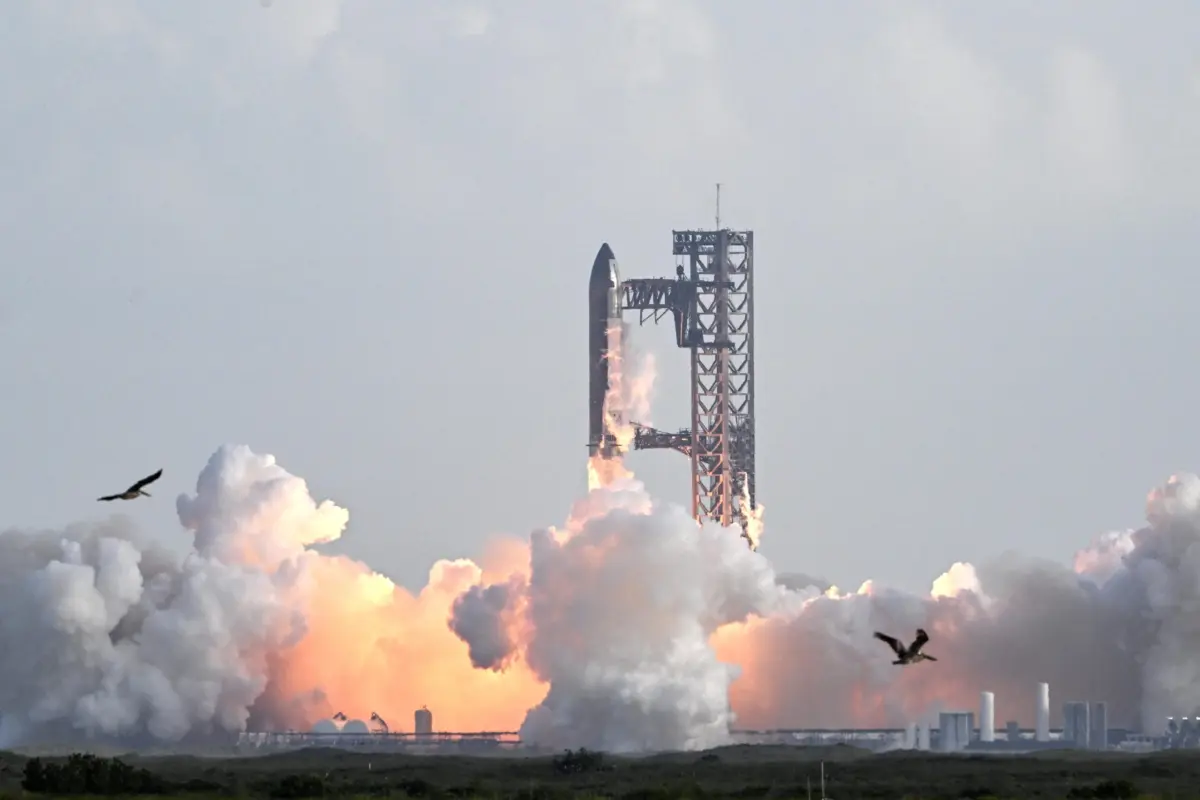
- This Summer: SpaceX executed a massive initial public offering (IPO) predicated heavily on a future fleet of orbital data centers designed to fuel the AI economy by the late 2020s, with ambitions to harvest up to 100 gigawatts of solar power annually.
- Immediately Following Tucson: In the wake of the Project Blue defeat, Blue Origin—the aerospace venture founded by Jeff Bezos—filed regulatory plans to position tens of thousands of future data centers directly into orbit.
Supporting Context & Metrics: The Physics and Economics of Orbital Compute
To understand why multi-trillion-dollar corporations are willing to risk billions on orbital data centers, one must examine the staggering economic and physical constraints of building them on Earth.
The Terrestrial Bottleneck
- Grid Backlogs: Connecting a major data center to the U.S. electrical grid routinely takes up to a decade, severely inhibiting the rapid deployment of large language models (LLMs).
- Power Consumption: Modern AI compute facilities require gigawatts of power. SpaceX’s stated goal of harnessing 100 gigawatts in orbit represents roughly one-fifth of the entire electricity consumption of the United States in a single year.
- Public Backlash: Communities near major hubs—such as Loudoun County, Virginia, which hosts more data centers than anywhere else on earth—are increasingly vocal about grid instability and skyrocketing energy costs for residents.
The Cosmic Calculus
While space offers an endless expanse of unfiltered solar radiation, the engineering and economic hurdles are astronomical.
According to an analysis by aerospace engineer Andrew McCalip, constructing a one-gigawatt data center on Earth costs approximately $16 billion. By contrast, building a comparable facility in low-Earth orbit would carry an estimated price tag of $51.5 billion.
Furthermore, the physical challenges are immense:
- Cooling: Without an atmosphere to conduct heat, orbital data centers would require massive, football-field-sized heat radiators to dissipate thermal energy.
- Assembly: Because a hyperscale data center would rival the International Space Station in scale, it cannot be launched in one piece; it would require complex, robotic assembly in a vacuum.
- Maintenance: Cosmic radiation bombards delicate silicon circuitry constantly. If a component fails in orbit, sending a human technician is practically impossible.
- Space Debris: Introducing millions of new satellites—when current low-Earth orbit contains fewer than 20,000 objects—drastically heightens the risk of catastrophic "Kessler syndrome" collisions, potentially knocking out critical GPS, communication, and weather satellites.
Official Statements and Expert Perspectives
The debate over space-based data centers has sharply divided engineers, policymakers, and astronomers, exposing deep fractures over the future of technological stewardship.
Jason Aspiotis, a leading space systems engineer and startup founder, points out that the challenges are fundamentally financial rather than physical. "They’re not breaking any rules of physics. Yes, there are going to be engineering challenges, but they are all solvable with enough time and money," Aspiotis notes. "The gray area is, well, what about the economics?"
Others emphasize that the types of data processed in space will likely differ significantly from consumer-facing AI applications. Sven Bilén, a professor of aerospace engineering at Penn State, suggests that initial orbital processing will target data generated directly in space. "Early orbital data centers will probably be processing data from space, like spatial imaging satellites or weather satellites, as opposed to, you know, cat videos or AI-generated reality TV slop."

Meanwhile, local policymakers grappling with the immediate impacts of data center construction remain skeptical. David Reid, a member of Virginia’s House of Delegates representing data-center-heavy Loudoun County, dismissed the concept outright during recent community forums.
"I believe this is, for lack of a better term, fictional nonsense," Reid said, arguing that the narrative of space-based solutions is simply "creating a distraction from the fact that local officials here on Earth still need to make better zoning decisions."
Astronomers have also sounded the alarm over the visual pollution of the night sky. John Barentine, an astronomer and night-sky environmental advocate, warns of a future where artificial lights outnumber the stars. "Will humanity notice if there are fewer stars in the sky? Well, not so much right now given light pollution," Barentine explains. "But what if they’re replaced by these artificial stars in the night sky? Is that the point at which people will say, ‘Wait a minute, we don’t want this’?"
Future Outlook: Escaping Earthly Gravity
As tech conglomerates push ahead with their cosmic ambitions, the broader societal implications remain deeply unsettling.
If companies like SpaceX, Blue Origin, and Google succeed in shifting a meaningful portion of AI compute to the stars, it will fundamentally alter our relationship with the cosmos. However, it will do little to fix the structural inequalities left behind on terra firma. Energy bills for ordinary citizens will likely remain elevated due to degraded local grid infrastructure. Housing crises, public transit deficits, and underfunded public services will persist, potentially exacerbated as capital, resources, and untaxed corporate revenues literally rocket out of our reach.
Ultimately, the race to build data centers in space serves as a striking metaphor for modern technological development. When confronted with democratic pushback, environmental degradation, and resource scarcity on Earth, Big Tech’s answer is not to fix the broken system, but to transcend it entirely—leaving the rest of us behind to grapple with the terrestrial fallout under a sky forever altered by the glow of corporate servers.





Comments
Facebook App ID not configured. Please add it in the Customizer.