
Executive Overview
Jakarta is a city of relentless motion, a colossal chess board of hypercapitalist ambition built over ancient marshlands, unmappable jalan tikus (“rat lanes”), and overlapping layers of colonial and post-colonial history. To comprehend the Indonesian capital is to understand a dynamic convergence of contradictions: towering monoliths of global capital rising above dense neighborhoods, the rhythmic cadence of the azan slicing through urban sleaze, and the unyielding resilience of a citizenry marked by generational trauma and fierce artistic resistance.
In this sprawling, tentacling megalopolis—extending outward through the hyper-developed sprawl of Jabodetabek (Jakarta-Bogor-Depok-Tangerang-Bekasi)—culture is not static; it is kinetic, alive in the languages of the archipelago, the rhythmic din of street vendors, and the communal intimacy of public transit.
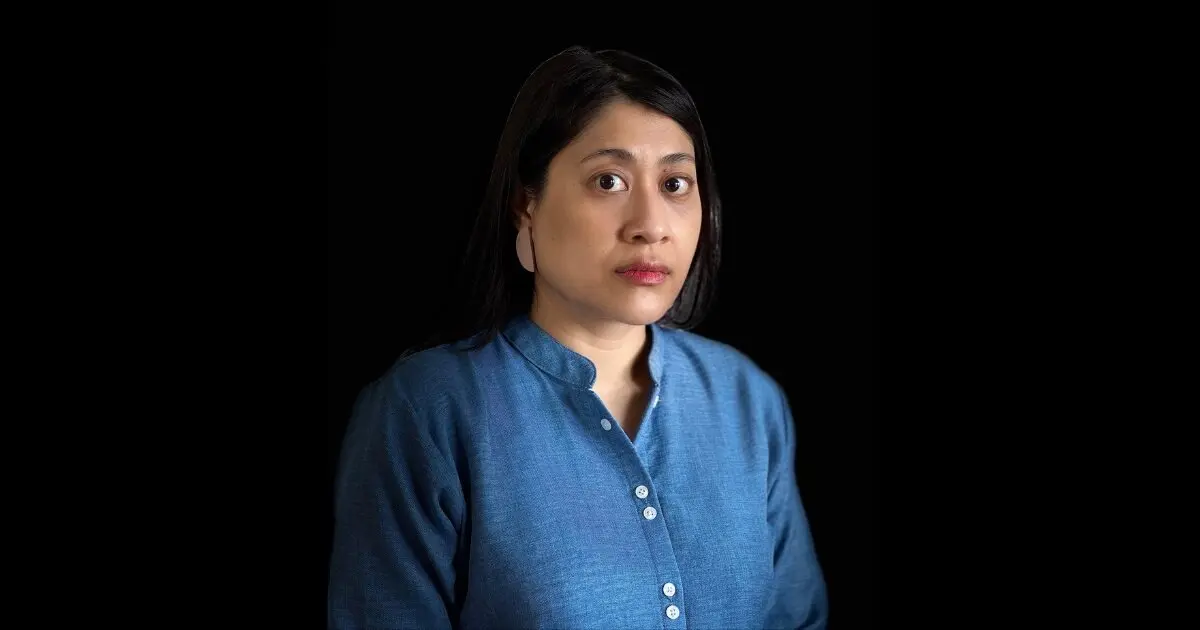
In an extensive exploration of the city’s psychological and physical topography, UK-based Indonesian writer, artist, and scholar Khairani Barokka unpacks the complex identity of her hometown. Through the lenses of disability justice, anti-colonial praxis, and profound personal memory, Barokka reveals a city defined by its messy emotions, fiery activism, and the persistent ghosts of historical violence. From the silenced narratives of the 1965–66 genocide under the Western-backed Soeharto military dictatorship to the ongoing struggles against the commercial gentrification of historic cultural hubs like Taman Ismail Marzuki (TIM), Jakarta remains a crucible of endurance. This article investigates the structural, cultural, and psychological dimensions of Jakarta through Barokka’s insights, examining how motion, memory, and marginalization shape one of Southeast Asia’s most vital urban landscapes.
Read Also
Detailed Chronology: Layers of Memory, Trauma, and Artistic Resistance
To understand modern Jakarta requires tracing a harrowing lineage of state-sponsored violence, collective silence, and subversion. The city’s contemporary fabric cannot be separated from the historical fracture points of the twentieth century.
The Shadow of 1965–66
The formative political memory of modern Jakarta is inextricably bound to the 1965–66 anti-communist genocide and the subsequent rise of General Soeharto’s New Order regime. Backed by Western powers, the military dictatorship orchestrated the mass slaughter of hundreds of thousands of alleged communists, leftists, and intellectuals, casting a long, terrified shadow over generations of Indonesians.
Barokka notes the acute psychological toll this era exacted on her elders, who were forced into subterfuge, holding their breath and writing their freedoms in code. Worse still, survivors were coerced into an intergenerational gaslighting campaign: they were forced to deny to their own children that mass murder had ever occurred, perpetuating a state-sanctioned amnesia. Yet, resistance persisted beneath the surface. Artists and intellectuals who experienced unspeakable horrors consistently forged channels of expression, establishing a legacy of underground creation that continues to define Jakarta’s avant-garde.
The Evolution of Public Transit and Kinetic Memory
Before the arrival of the modern MRT system, Jakarta’s identity was forged in the purgatory of its traffic—spent hour after hour in motion across a shape-shifting urban layout. The city’s history is chronicled through its vehicles. From the cycle rickshaws (becak) that populated the streets in Barokka’s youth—vehicles that were eventually banned from the city center—to motor-taxis (ojek), buses, and shared minivans (bemo and bajaj), the enclosed, moving spaces of Jakarta’s transit networks have long served as incubators of collective life.
Within these cramped, moving compartments, social friction, humor, and relationship-building take place. Traversing the city’s arteries over days, weeks, and years allows residents to witness the relentless erasure and rebuilding of neighborhoods, cementing a continuous, evolving form of nostalgia.
The Fight for Taman Ismail Marzuki (TIM)
In the cultural sphere, the recent battles over the "commercial revitalization" of the Taman Ismail Marzuki (TIM) cultural complex mark a critical chronological flashpoint. For generations, TIM has served as the sacred ground of Jakartans across the arts—hosting plays, poetry readings, film screenings, art exhibitions, and the late-night intellectual discourse of its legendary food courts. Encompassing the Jakarta Arts Institute (IKJ) and the Jakarta Planetarium, TIM represents an animus where the stars and the damp earth of the metropolis feed each other creatively.
Recent months have seen coordinated demonstrations by artists, actors, and writers protesting the city administration’s plans for commercial development within the complex. Activists argue that these modernization initiatives threaten to sanitize and commodify a historic sanctuary, jeopardizing the fragile ecosystem of independent Indonesian art.
Supporting Context & Metrics: Infrastructure, Disability, and Culinary Geographies
The Invisible Majority: Disability Justice in Jakarta
Despite the hyper-visible frenzy of the city’s economic hubs, D/deaf and disabled communities face systemic marginalization within Jakarta’s built environment. Barokka highlights that disabled individuals—including those whose conditions do not bear the visible markers recognized by abled society—are ubiquitous across the metropolis.
However, city infrastructure and public attitudes remain severely lagging, with accessibility shifts happening at an agonizingly glacial pace. Beneath the modern concrete lies an enduring ethos of indigenous disability justice cultures, urging communities to survive structural discrimination through mutual aid, resilience, and radical care.
The Culinary Cartography of Padang Restaurants
Food in Jakarta serves as a geopolitical map of the broader archipelago. For the Minang (Padang) diaspora, the traditional Padang restaurant acts as a cultural anchor. Under the watchful gaze of illustrated icons shaped like the traditional rumah gadang (Minangkabau traditional houses), these eateries present a masterclass in kinetic service.
Plates are artfully stacked in glass display windows and later fanned out across the diner’s table by waitstaff whose movements evoke the sanctity of the plate dance (tari piring). The unique economic and social contract of the Padang restaurant—where patrons are charged exclusively for the specific plates from which they have eaten—exemplifies the communal yet organized spirit woven into the city’s culinary life.
Trans-Archipelagic Identity: Inside and Outside Jakarta
While Jakarta is often characterized as a monolithic, hypercapitalist beast, it is fundamentally porous. The Greater Jakarta area (Jabodetabek) sprawls outward in tentacular fashion, swallowing surrounding provinces and blurring the boundaries between urban center and periphery.
Homegrown Jakartans—the native Betawi people—alongside migrants representing over 700 cultures and languages from across the Indonesian archipelago, constantly renegotiate what it means to be an "insider" or "outsider." As Barokka observes through the lens of local idiom, Begitulah kotaku (“Such is my city”): an unpredictable morass where boundaries dissolve, and the cultural DNA of the entire nation is relentlessly remixed.
Official Statements & Artistic Manifestos
The cultural discourse surrounding Jakarta is increasingly anchored by voices calling for the decolonization of art, literature, and spatial politics. Khairani Barokka’s multi-disciplinary output—spanning poetry, visual art, and speculative nonfiction—serves as an ongoing manifesto against historical erasure.
In her fourteen-year art project and subsequent book, Annah, Infinite (Tilted Axis Press, 2025), Barokka confronts the legacy of colonial exoticization. Inspired by the black-and-white photographs of Javanese girlhood kept by her late grandmother in her Jakarta bedroom, the work directly subverts Paul Gauguin’s vile exoticization in the painting Annah la Javanaise. The chapter "Nightmares of 1965" functions both as a historical testament to the collective holding of breath under state terror and as an exploration of how nervous systems process ancestral trauma through art.
Furthermore, Barokka’s body of work—including Indigenous Species, Ultimatum Orangutan (shortlisted for the 2022 Barbellion Prize), and her 2024 collection amuk (longlisted for the 2025 Jhalak Prize)—champions disability justice as anti-colonial praxis. By framing access as translation, her practice challenges international literary and artistic spaces to recognize the radical vulnerabilities and aesthetic innovations emerging from the Global South.
Future Outlook: Navigating the Crossroads of Development and Preservation
As Jakarta hurtles deeper into the twenty-first century, it faces a compounding series of existential challenges: unchecked commercial gentrification, infrastructural inequality for disabled citizens, environmental degradation, and the systematic erasure of historical memory in favor of corporate development.
The ongoing friction between artists and municipal authorities over cultural spaces like Taman Ismail Marzuki serves as a bellwether for the city’s soul. If urban planners continue to prioritize sterile commercialization over community-led preservation, Jakarta risks losing the very kinetic, messy soul that makes it a global epicenter of artistic resistance.
Yet, as Barokka’s reflections demonstrate, the city’s resilience does not reside in concrete or capital, but in its people. From the slang unfurling on chaotic street corners to the intergenerational transmission of counter-narratives by writers such as Ziggy Zezsyazeoviennazabrizkie, Intan Paramaditha, Cyntha Hariadi, and Hanna Fransisca, Jakarta’s intellectual and creative vanguard refuses to be silenced.
Ultimately, Jakarta remains a game of chess where the rules are constantly being rewritten by those who inhabit its margins. It is a metropolis of living heartbreaks and unyielding persistence—a place where residents continue to love a city that might destroy them, while brilliantly tricking it into laughing with them along the way.




Comments
Facebook App ID not configured. Please add it in the Customizer.