
Executive Overview
Nearly two decades ago, a secretive experiment at the Idaho National Laboratory demonstrated a chilling reality: a mere 30 lines of malicious code could bypass the digital safeguards of a massive, 27-ton diesel generator, forcing it out of sync with the power grid and tearing its rubber and steel components apart from the inside out. Known as the Aurora Generator Test, this exercise offered electrical utility executives and Department of Energy officials a horrifying glimpse into a future where physical infrastructure could be catastrophically damaged through cyberspace alone.
Today, that future is no longer a distant theoretical threat. It is rapidly unfolding at the intersection of accelerating artificial intelligence capabilities and deeply vulnerable national infrastructure.
While public discourse often fixates on sci-fi scenarios of sentient AI systems turning on humanity, cybersecurity experts point to a much more immediate, pragmatic danger: human-directed, AI-powered hacking. For years, executing sophisticated cyberattacks against critical infrastructure—such as power grids, water treatment plants, and transportation hubs—required highly specialized technical expertise, deep knowledge of proprietary industrial protocols, and considerable time.
Read Also
Artificial intelligence has systematically dismantled those barriers. By drastically reducing the technical proficiency required to write complex exploits, parse industrial control systems (ICS), and navigate legacy digital networks, AI has democratized cyber warfare. As Columbia University cybersecurity scholar Jason Healey observes, geopolitics is rapidly eroding the traditional firewall where actors with capability lacked intent, while AI is simultaneously eroding the inverse—ensuring that actors with malicious intent finally possess the catastrophic capability.
With municipal water systems operating on outdated, underfunded software, and hostile nation-states continuously probing Western power grids, the convergence of generative AI and operational technology represents one of the most pressing national security crises of the twenty-first century.
Detailed Chronology: From the Aurora Test to the Age of Autonomous Exploits
To understand the magnitude of the current threat landscape, it is necessary to trace the historical evolution of cyber-physical attacks. The digital vulnerabilities currently plagening critical infrastructure are not entirely new; rather, they are legacy architectural weaknesses being supercharged by modern machine learning models.
2007: The Aurora Generator Test
In March 2007, researchers at the Idaho National Laboratory conducted the Aurora Generator Test. The experiment targeted a massive emerald-green diesel generator, simulating a cyberattack designed to alter the phase of the machine’s connection to the electrical grid. By injecting a brief sequence of commands into the programmable logic controllers (PLCs) governing the generator, the system was thrown violently out of phase.
Within moments, the 27-ton machine began to shudder and jolt, spewing thick dark smoke as mechanical forces tore its internal components apart. Michael Assante, the lead researcher for the experiment, later remarked to journalist Andy Greenberg for his book Sandworm, “I had a very real pit in my stomach. It was like a glimpse of the future.” The takeaway was unmistakable: software commands could generate kinetic, physical destruction.
Post-Aurora Mandates and the Legacy Gap
In the wake of the Aurora demonstration, the federal government instituted baseline cybersecurity hygiene mandates for electrical utilities. However, these requirements largely focused on high-voltage transmission networks and major generation facilities. Millions of lower-tier assets—such as rural water substations, municipal gas pipelines, and cargo terminal logistics hubs—remained dangerously exposed.
For years, these peripheral systems enjoyed a degree of security through obscurity. Destructive cyberattacks were exceedingly rare because they offered little to no financial return for criminal syndicates, which preferred ransomware extortion. Meanwhile, nation-state actors engaged in long-term reconnaissance, quietly embedding themselves within foreign infrastructure networks—such as the Volt Typhoon campaigns attributed to Chinese state-sponsored actors—without triggering alarms or causing disruptions.
The GenAI Revolution and the Lowering of the Barrier
The landscape shifted dramatically with the commercial explosion of advanced generative AI models and autonomous agent architectures. What once required a dedicated team of elite state-sponsored engineers can now be scripted, iterated, and deployed with conversational prompts.
Throughout recent years, security researchers have demonstrated how easily large language models (LLMs) can be leveraged to discover zero-day vulnerabilities, write obfuscated malware payloads, and reverse-engineer proprietary industrial automation code. Incidents involving platforms like Hugging Face earlier this year exposed how readily automated systems can be manipulated to produce dangerous operational blueprints.
By removing the friction of technical execution, AI has effectively transformed low-skill or proxy actors into existential threats against physical infrastructure.
Supporting Context & Metrics: The Vulnerability of Modern Infrastructure
The convergence of AI capabilities and physical infrastructure vulnerability is exacerbated by systemic economic and architectural challenges plaguing public utilities across the United States.
The "Welcome Mat" Problem in Municipal Utilities
While marquee energy providers have invested heavily in cybersecurity resilience, the vast majority of America’s local infrastructure—particularly municipal water and wastewater systems—operates on razor-thin budgets. Andy Bochman, an expert in infrastructure resilience at West Yost, describes these facilities as presenting "a welcome mat" to would-be hackers.
Municipalities are routinely forced to triage competing crises. Confronted with crumbling, century-old pipes, lead contamination risks, and deferred maintenance, local government officials routinely prioritize physical repairs over intangible digital defenses. Consequently, many regional water and power authorities rely on default passwords, unpatched legacy operating systems, and remote management tools connected directly to the public internet without multi-factor authentication.
The Scale and Tirelessness of AI Agents
Human hackers, regardless of their skill level, are constrained by biological limitations: they sleep, get sick, and suffer from cognitive fatigue. AI agents, by contrast, operate continuously. As Bochman notes, autonomous systems can relentlessly scan millions of exposed industrial control endpoints, map corporate networks, identify misconfigured PLCs, and test thousands of credential combinations simultaneously.
| Threat Dimension | Traditional Cyberattacks (Pre-AI) | AI-Augmented Cyberattacks |
|---|---|---|
| Technical Barrier | High; required deep ICS/SCADA protocol knowledge. | Low; conversational prompts can draft exploit code. |
| Execution Speed | Manual reconnaissance, slow payload staging. | Automated, high-speed probing across millions of nodes. |
| Persistence | Dependent on human operators remaining active. | 24/7 autonomous agents operating without fatigue. |
| Target Scope | Limited to high-value financial or strategic targets. | Vastly expanded to include vulnerable local municipalities. |
Geopolitical Pressures and State-Sponsored Probe Activity
The threat is not merely hypothetical. In recent months, small-town water and wastewater systems across the United States have experienced targeted cyberattacks—frequently attributed to Iranian-linked threat groups—resulting in temporary water stoppages, damaged pumps, and localized flooding. While these specific incidents were not definitively executed via autonomous AI, the National Security Agency (NSA) issued urgent warnings noting that foreign adversaries are actively experimenting with AI models to optimize targeting against Western industrial control systems (Siemens, Rockwell, and Schneider Electric PLCs).
Official Statements and Policy Responses
The alarming convergence of artificial intelligence and infrastructure vulnerability has triggered high-level alarms across the United States government and the academic community.
Executive and Intelligence Warnings
In response to escalating intelligence reports regarding foreign interference and automated cyber threats, the federal government has moved aggressively to secure critical supply chains. President Donald Trump declared a national emergency to secure the United States bulk-power system, explicitly addressing vulnerabilities tied to foreign technology and automated cyber threats.
Concurrently, intelligence chiefs have warned that foreign powers are racing to weaponize American and allied AI models for reconnaissance and offensive cyber operations. The National Security Agency and the Cybersecurity and Infrastructure Security Agency (CISA) have released joint advisories urging operators of water, energy, and transportation sectors to assume breach conditions and fortify their defenses.
Academic and Expert Perspectives
Prominent cybersecurity scholars emphasize that the traditional frameworks of deterrence are breaking down. Jason Healey of Columbia University summarizes the crisis succinctly:
"Geopolitics is eroding the idea that those with capability lack the intent, and AI is eroding the other part of it, that those with the intent lack the capability."
This dual erosion means that rogue actors, nihilistic terrorist cells, and revisionist nation-states are now uniquely equipped to cause maximum disruption with minimal investment.
Alvaro Cardenas, a computer science professor at UC Santa Cruz, highlights the democratization of destructive capability:
"Before, you needed to have highly skilled technical expertise to pull off some version of a real-life Aurora Generator Test. And now, you just have to have a general idea of what’s possible."
Future Outlook: Hardening the Grid Against the Black Box
As the capabilities of artificial intelligence continue to scale exponentially, policymakers, technologists, and utility operators face a stark choice: continue racing to patch increasingly complex digital networks, or fundamentally rethink the architecture of modern infrastructure.
The Case for Re-Analogization
Given that modern AI models function largely as inscrutable "black boxes"—where even their creators do not fully understand the emergent behaviors occurring within their neural networks—some experts argue that the ultimate defensive posture is strategic retreat.
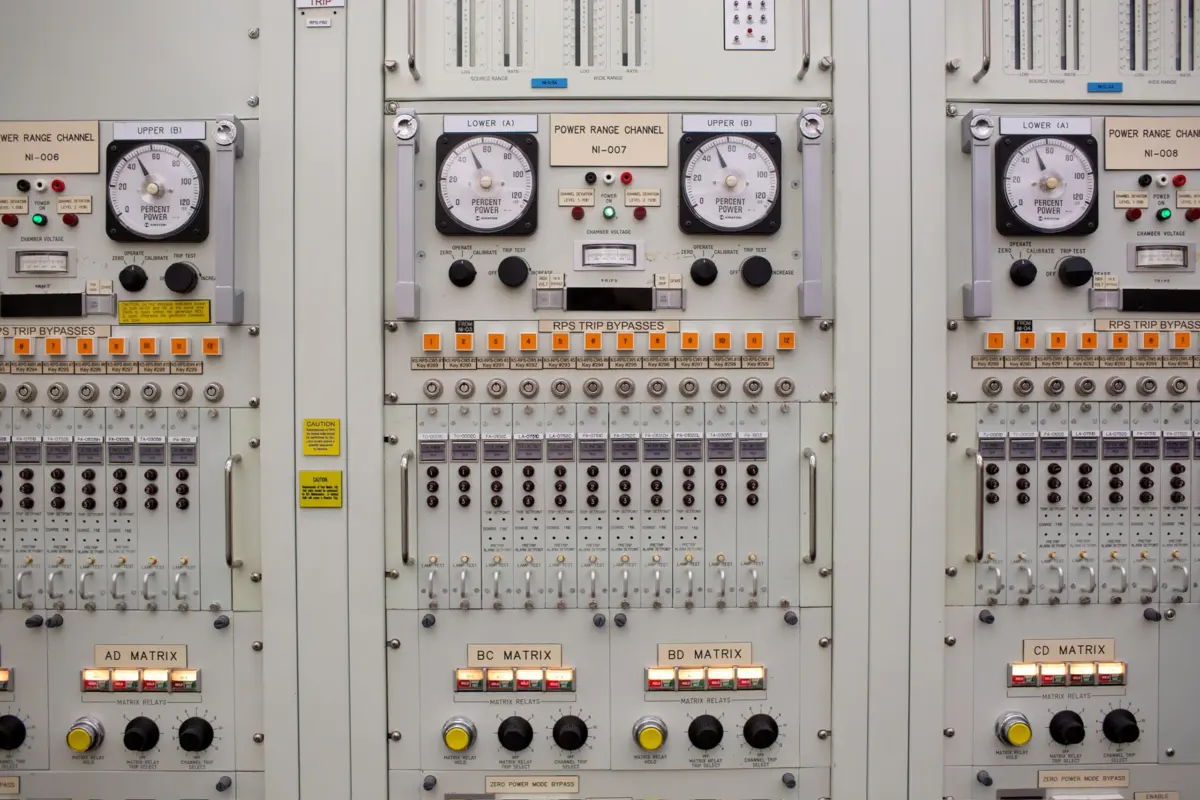
Andy Bochman advocates for a calculated move away from ubiquitous connectivity. In high-risk substations and local treatment plants, this could mean stripping away unnecessary digital displays, touchscreens, and internet-connected management interfaces, returning instead to hardened analog controls.
"When bad things start to happen, no one will know what to do or why because they’re black boxes; the people that make them don’t know what’s going on inside," Bochman warns. "And the poor utility people who ultimately own the risk when someone gets hurt from a system won’t understand what went wrong either, and they’ll wish to God they’d never taken it on board."
Collaborative Defense and Regulatory Mandates
For systems that must remain digitized, experts agree that piecemeal security is no longer viable. Jason Healey calls for a deeply coordinated, national response involving synchronized efforts between the federal government, private AI developers, and international partners to establish guardrails on offensive cybersecurity capabilities.
Furthermore, financial liability must be shifted. Critical infrastructure operators—particularly underfunded local utilities—cannot bear the cost of defending against state-backed, AI-accelerated attacks alone. Federal subsidies, combined with technical and financial contributions from the multi-trillion-dollar AI industry, will be required to audit and modernize vulnerable industrial control systems.
Conclusion
The Idaho National Laboratory’s Aurora Generator Test was intended as a warning shot across the bow of the digital age—a stark demonstration that lines of code could shatter steel and silence power grids. Two decades later, artificial intelligence has handed that capability to the masses. Whether society chooses to heed the warning by decoupling vulnerable systems, enforcing rigorous regulatory standards, and re-evaluating the blind rush toward total digitization will determine whether our most vital infrastructure survives the coming storm.





Comments
Facebook App ID not configured. Please add it in the Customizer.