
Executive Overview
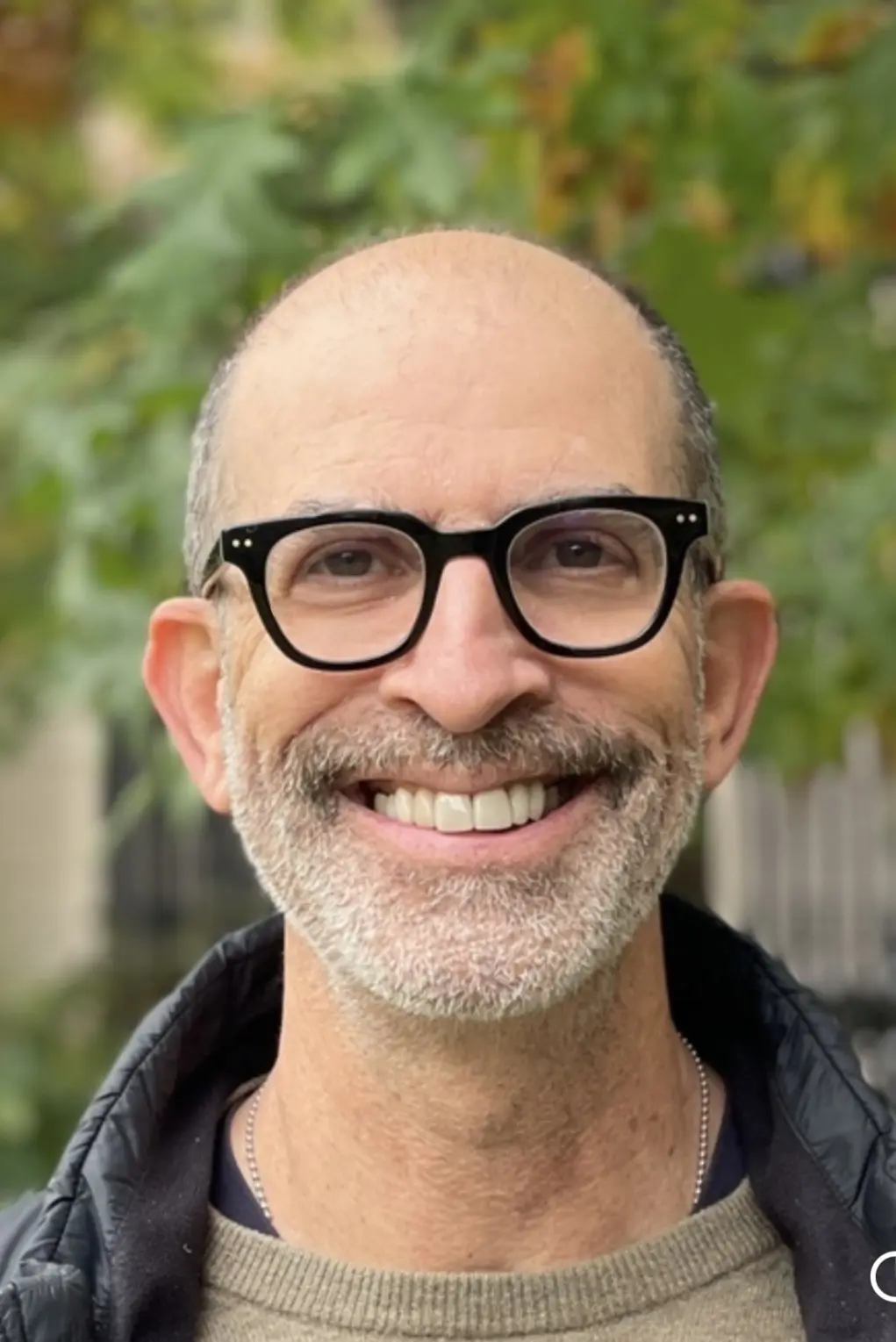
For a decade, comedy writer Douglas Abeles spent his weekends shaping the satirical pulse of America as a writer and producer for Saturday Night Live’s "Weekend Update," collaborating closely with luminaries like Tina Fey, Amy Poehler, Jimmy Fallon, and Seth Meyers. His career was defined by rapid-fire wit, topical timing, and a distinct ability to find humor in the machinery of modern life. However, a catastrophic medical event in June 2021 irrevocably altered the trajectory of both his life and his relationship with his own mind.
Stricken by a stroke at the age of sixty-two, Abeles was forced to navigate the labyrinthine recovery process of short-term memory loss, visual impairment, and cognitive rebuilding. In his widely acclaimed, Perkoff Prize finalist essay, "Deep Background"—published in The Missouri Review’s online-only prose anthology, BLAST—Abeles recounts a surreal second act: working as a background actor ("Lumon Worker #99") on the second season of the Apple TV+ dystopian workplace thriller Severance.
Through this profound journalistic and literary lens, Abeles explores a poignant metaphor: the accidental symmetry between surviving a stroke and starring as a background extra in a series about corporate-induced dissociation. Both experiences force an individual to confront the erosion of memory, the fragmentation of self, and the arduous path toward forging a new definition of personal wholeness.
Read Also
Detailed Chronology: From the Bathroom Floor to the Set of Lumon Industries
June 6, 2021: The Stroke
The medical emergency did not arrive with cinematic drama; rather, it enveloped Abeles quietly and systematically. Standing alone in his Manhattan apartment bathroom, meticulously trimming his beard, he experienced an abrupt wave of vertigo. The room dissolved into a centrifugal blur, his peripheral vision shrinking like a vintage cathode-ray tube television blinking off into a single point of light before plunging into absolute darkness.
Exercising a surreal, sober instinct for self-preservation, Abeles dropped to his knees, bracing against the sink to protect his head from striking the tub. With lingering comedic discipline, he even paused to close the toilet seat lid to spare anyone the undignified spectacle of passing away in a manner reminiscent of Elvis Presley. When consciousness flickered back, he realized he was in crisis. A call to his nineteen-year-old son, Bennett, and a subsequent 9-1-1 dispatch initiated a high-stakes emergency response.
Emergency Care and Discovering the Root Cause
At New York-Presbyterian Hospital, a young, serious-faced physician requested consent to administer tissue plasminogen activator (TPA)—a high-risk, clot-busting pharmaceutical agent capable of halting brain damage or, conversely, proving fatal. Abeles consented instantly.
Subsequent neurological evaluations revealed the biological culprits behind the episode:
- MTHFR Gene Mutation: A somewhat rare genetic variation that thickens the blood, predisposing the vascular system to clotting and revealing evidence of prior, undetected minor strokes.
- Patent Foramen Oval (PFO): A congenital hole in the heart that permitted thickened blood to pool and backwash, subsequently launching a clot toward the base of his brain.
- Visual Field Deficit: Permanent loss of the upper right quadrant of vision in both eyes.
The Return to Work and the Frustration of Memory
As Abeles attempted to reclaim his writing career—notably working on a dark comedy aptly titled The Obituary Writer—his short-term memory deficits proved punishing. A brief stint drafting complex O-1 legal immigration letters for an attorney friend resulted in a workstation festooned with colorful Post-it notes resembling an exotic bird’s plumage. Unable to retain the technical nuances of the job, Abeles was eventually let go, prompting a friend to suggest a radical alternative: background acting in film and television.
The Severance Set at Bell Labs
Trading his writer’s desk for a background actor’s call sheet, Abeles found himself boarding a 6:00 a.m. production bus in Manhattan bound for the modernist Bell Labs building in Holmdel, New Jersey—the real-world architectural marvel serving as the sinister headquarters of Lumon Industries in Severance.
Adorned in a conservative business suit reminiscent of a 1960 Richard Nixon campaign volunteer, outfitted with a laminated Lumon ID badge bearing his actual photograph, and sharing space with fellow extras ranging from former correctional officers to professional photographers, Abeles stood on his marks under the direction of Ben Stiller. Walking through the soaring, four-story atrium, Abeles experienced a quiet epiphany: his neurological reality mirrored the very premise of the show he was inhabiting.
Supporting Context & Metrics: The Anatomy of a Stroke and Modern Media Metaphors
The intersection of Abeles’s personal narrative and the fictional universe of Severance highlights broader societal conversations surrounding brain health, cognitive endurance, and the modern corporate landscape.
| Analytical Dimension | Clinical / Production Reality | Literary Metaphor in "Deep Background" |
|---|---|---|
| Memory Retention | Short-term memory deficits caused by focal ischemia and vascular blockage. | The "severance" chip that divides work and personal consciousness at Lumon Industries. |
| Workplace Demands | Inability to sustain fast-paced legal drafting or multi-step professional tasks. | The baffling matrix of numbers in Lumon’s Macrodata Refinement Department. |
| Identity Preservation | Using daily New York Times crossword puzzles to test cognitive integrity. | Seeking a post-stroke definition of wholeness that incorporates neurological limitations. |
| Coping Mechanisms | Physical, vestibular, occupational, and cognitive rehabilitation therapies. | Accepting disorientation, relinquishing anger, and embracing the new "self." |
The Sociological Weight of Background Work
Background acting is frequently romanticized as a stepping stone for aspiring actors, but for individuals navigating major life disruptions, trauma, or neurological recovery, it offers a distinct psychological sanctuary. As Abeles notes, it is one of the few professions where the core job requirement is simply "standing around." For a mind recovering from the cascading effects of a stroke, the low-stakes environment eliminates the cognitive friction that renders traditional employment overwhelming.
Official Statements and Literary Reception
The publication of "Deep Background" in The Missouri Review’s BLAST anthology has drawn widespread critical praise for its raw vulnerability, intellectual rigor, and stylistic polish.
"Douglas Abeles transforms personal medical trauma into a brilliant, multi-layered meditation on what it means to lose pieces of oneself and continue walking anyway. ‘Deep Background’ demonstrates that true literary artistry can bridge the gap between late-night television satire and the profound quiet of neurological recovery."
— Editorial Review, The Missouri Review
Critics have particularly lauded Abeles for avoiding sentimentality, instead deploying his trademark deadpan wit to dissect the absurdities of medical protocols, corporate design, and the humbling indignities of rehabilitation. By juxtaposing the sterile, hyper-controlled corporate aesthetics of Lumon Industries with the chaotic, unscripted reality of surviving a stroke, the essay achieves a rare synthesis of cultural criticism and memoir.
Future Outlook: Redefining Wholeness After Neurological Trauma
For Douglas Abeles, the journey through stroke recovery remains an ongoing evolution rather than a neatly resolved narrative arc. The PFO heart-closure procedure and rigorous physical and cognitive therapies have stabilized his health, but the permanent loss of visual field and intermittent memory hurdles serve as daily reminders of his medical event.
Yet, as he describes in the closing moments of his essay—walking through a blinding shaft of sunlight in the Bell Labs atrium—the ultimate victory lies not in magically reclaiming his pre-stroke identity, but in welcoming an expanded definition of self.
As streaming audiences tune into subsequent seasons of Severance to watch characters grapple with manufactured amnesia, viewers would do well to remember the real-world stories unfolding just beneath the surface of the frame. Writers like Abeles remind us that resilience is not about erasing our scars, but learning how to navigate the light and shadow with grace, humor, and an unyielding commitment to living fully in the present.





Comments
Facebook App ID not configured. Please add it in the Customizer.