
Executive Overview
In a dramatic shift that stunned political observers and sent ripples through the core of the British establishment, the United Kingdom’s House of Commons has decisively rejected an assisted suicide bill, voting it down 286 to 270. The vote represents a profound about-face for a legislative body that, just over two years prior, had enthusiastically ushered the same proposal through its initial stages with a comfortable majority of 55 votes.
The defeat of the legislation was not the result of a sudden partisan realignment, but rather the culmination of an exhaustive, bruising, and uniquely British constitutional exercise. Propelled initially by a wave of expensive public relations, high-minded rhetoric surrounding "bodily autonomy," and a generalized spirit of progressive goodwill, the bill was subjected to the rigorous, forensic scrutiny of the House of Lords and an increasingly skeptical House of Commons.
As experts, medical professionals, and lawmakers began to pull back the conceptual layers of the proposal, what initially appeared to be a straightforward humanitarian reform began to reveal darker, systemic implications. Critics exposed profound vulnerabilities regarding the coercion of the vulnerable, the dangers facing individuals suffering from unaddressed clinical depression or abusive domestic environments, and the catastrophic moral hazard of offering state-sanctioned death to citizens failed by a crumbling health and social care infrastructure.
Read Also
This comprehensive investigative report examines the timeline of the debate, the pivotal moments of doubt—typified by the public conversion of lawmakers like Labour MP Janet Daby—the stark admissions of the bill’s architects, and the enduring resilience of parliamentary institutions that ultimately prevented what many feared would be an irreversible legislative tragedy.
Detailed Chronology: From Early Optimism to Parliamentary Reversal
June 2025: The Initial Surge and the Seeds of Doubt
The legislative journey began in earnest in June 2025, when Janet Daby, the Labour Member of Parliament for Lewisham East, joined 313 of her colleagues in voting to pass an assisted suicide bill through the House of Commons. At the time, the vote was celebrated by proponents as a historic stride toward modernizing British social policy.
Yet, for Daby, the victory immediately curdled. Within days, she began suffering from recurring nightmares—disturbing visions of death and dying that disrupted her sleep and weighed heavily on her conscience. These visceral reactions were soon compounded by a deeply personal recollection: a friend diagnosed with HIV and AIDS decades earlier, who had faced a bleak prognosis and longed for a swift, assisted exit, only to live long enough to see breakthrough antiretroviral therapies emerge. That friend went on to build a meaningful, decent life.
Daby realized with mounting horror that individuals matching that exact profile—those experiencing temporary despair or treatable crises before finding medical and psychological lifelines—stood to be swallowed permanently by a state-administered suicide service. She had voted to endanger the very people the welfare state was designed to protect. But in the immediate aftermath of the June vote, it appeared too late to reverse course.
Late 2025 – Early 2026: The House of Lords Intervenes
Salvation, constitutionally speaking, arrived via the upper chamber. While the House of Commons counts former family practitioners among its medical authorities, the House of Lords boasts individuals who have helmed royal medical colleges or served as chief executives of the National Health Service (NHS). Appointed rather than elected, many assumed the Lords would simply rubber-stamp a measure bearing the imprimatur of the people’s representatives. Instead, they proved entirely unpersuadable.
Over an intensive period in late 2025 and early 2026, House of Lords committees subjected the bill to relentless scrutiny, calling upon preeminent medical, legal, and sociological experts.
- The Royal College of Psychiatrists warned committees that individuals suffering from clinical depression would find themselves aided by the state in ending their lives, without adequate inquiry into whether their underlying psychological needs were being met.
- Coercion experts testified that victims of severe domestic abuse and psychological terrorization by partners could easily be steered toward assisted death.
- Social welfare advocates demonstrated that individuals falling through the cracks of Britain’s rickety health and social care systems would inevitably have state-facilitated suicide presented as a viable, cost-effective alternative to comprehensive care.
Despite the persistent chant of "bodily autonomy" and "right to choose" from proponents, the framework began to look less like progressive reform and more like institutional abandonment.
The Falconer Admissions
The fragility of the bill’s philosophical foundations was laid bare by its chief champion, Lord Falconer—the last prominent figure of the Tony Blair political circle still occupying a central role in British politics. When pressed on whether people might opt for an assisted death purely because they were impoverished, Falconer conceded that if they met broad medical criteria, it was "their choice." When asked if the same applied to those unable to access proper palliative care, he admitted it was a pity, but asserted that lawmakers "have to give everybody this choice on the basis of the way the world is for them."
To constitutional scholars, this stance was philosophically naive regarding the coercive nature of systemic poverty and lacking infrastructure; to practical politicians, it sounded entirely disconnected from reality. Consequently, the Lords refused to pass the bill in its current form. An indignant MP reintroduced the measure to the House of Commons, setting the stage for an unprecedented political reckoning and offering Janet Daby her second chance.
The Final Showdown: July 2027
Over two years of fierce back-and-forth, public hearings, and bitter parliamentary exchanges, the initial majority of 55 in favor of the bill steadily eroded. As the final vote approached, support collapsed entirely.
On the day of the vote, 286 MPs voted down the legislation, while 270 supported it. Crucially, a significant number of lawmakers who had previously backed the bill chose to abstain or stay away entirely. A smaller cohort, led by Daby, actively switched sides to oppose the measure. Notably, not a single MP switched their vote from opposition to support. The argument had been decisively lost.
Supporting Context & Metrics
The protracted debate over assisted suicide in the United Kingdom unfolded against a backdrop of severe systemic strain within public services and a unique institutional framework.
The State of Public Infrastructure
- Health and Social Care Crises: The debate occurred while the NHS and Britain’s social care networks faced unprecedented backlogs, funding deficits, and severe staffing shortages. Critics repeatedly emphasized that introducing a low-cost alternative to long-term palliative care created a perverse economic incentive for a cash-strapped state.
- The Legislative Shift:
- Initial Vote (June 2025): 314 votes in favor, 259 votes against (Majority: +55 for the bill).
- Final Vote: 270 votes in favor, 286 votes against (Deficit: -16 against the bill).
- Net Shift: A 71-vote swing against the legislation over a 24-month period.
Comparative International Context
While nations such as Canada, Switzerland, and several U.S. states have enacted various forms of assisted dying or medical aid in dying (MAID), none have subjected the mechanics of such a regime to the forensic, multi-year cross-examination witnessed in the British Parliament. The unique friction between the elected Commons and the expert-laden Lords forced a level of legislative self-correction rarely observed in modern Western democracies.
Official Statements and Rhetorical Battlegrounds
The polarization of the debate was encapsulated by the stark divergence in language used by proponents and opponents of the bill.
Lord Falconer, Architect of the Bill (in defense of access amidst systemic failure):
"If they meet the broad medical criteria, it is their choice… We have to give everybody this choice on the basis of the way the world is for them."
Jess Phillips, Prominent Labour MP (acknowledging NHS shortcomings during debate):
"Of course the NHS isn’t in a fit enough state… but you cannot stop progress happening."
Opposing Parliamentarians (synthesized critique from committee findings):
When hospices face closure, care homes are defunded, and disabled citizens report feeling systemic pressure to relieve the financial burden on families and the state, an assisted suicide framework ceases to be an expression of freedom. Instead, it transforms into a reflection of societal failure.
Future Outlook
The decisive defeat of the assisted suicide bill marks the end of a turbulent chapter in British legislative history, but it is unlikely to permanently close the book on the debate surrounding end-of-life choices in the UK.
Immediate Political Fallout
For the Labour government and Parliament at large, the immediate aftermath will require addressing the underlying social conditions that fueled the controversy. The debate exposed deep public anxiety regarding the degradation of palliative care, the isolation of the elderly and disabled, and the operational capacity of the National Health Service. Lawmakers who championed the bill must now contend with the reality that the British public—and a newly awakened parliament—remains deeply wary of granting the state the authority to facilitate the termination of life while foundational welfare and medical systems remain fragile.
Institutional Resilience
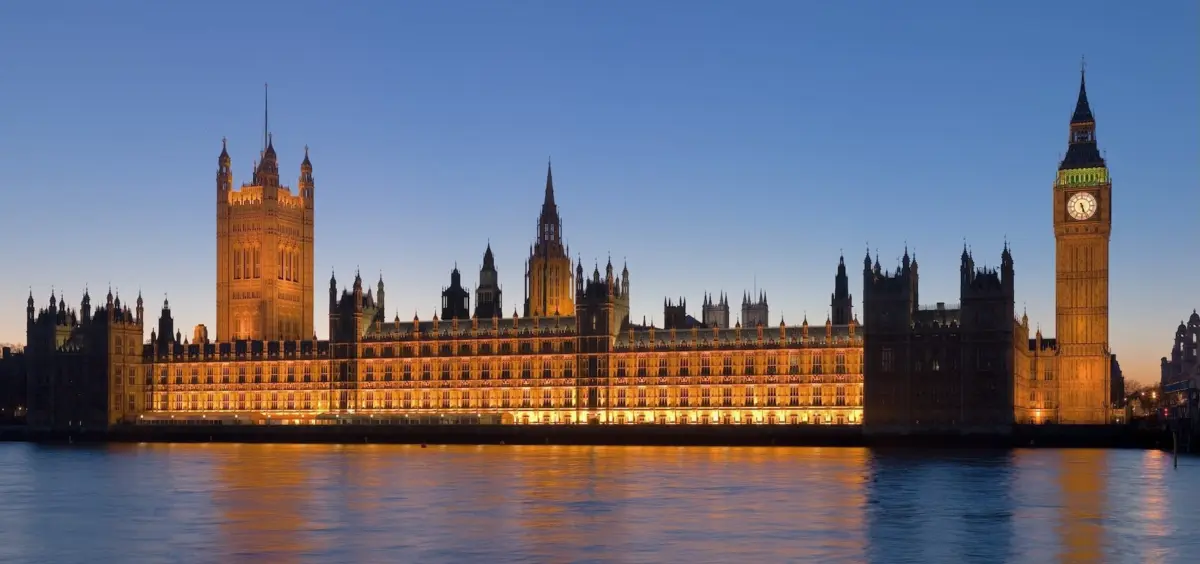
Beyond the immediate policy implications, the episode serves as a powerful testament to the durability of Britain’s bicameral constitutional architecture. While the physical structure of the Palace of Westminster crumbles toward the Thames—requiring multi-billion-pound renovations that a strained national budget can ill afford—the procedural machinery of parliament demonstrated its enduring value.
Through endless committees, rigorous formal debates, and the invaluable friction between an impassioned, representative House of Commons and an uncompromising, expert-led House of Lords, the legislature successfully metabolized a profoundly complex moral question. In an era marked by democratic disillusionment and rapid, often unreflective policy trends, Britain’s parliamentary machinery proved capable of halting a historic mistake, vindicating the institution’s fundamental purpose: sober, deliberate, and protective governance.





Comments
Facebook App ID not configured. Please add it in the Customizer.