
Warning: This article contains mild spoilers for Outlander: Blood of My Blood season two, episode one, titled “Remembrance Day.”
Executive Overview
The sprawling, intricate universe of Diana Gabaldon’s Outlander continues to expand in unexpected and creatively ambitious ways. With the arrival of the second season of the prequel series Outlander: Blood of My Blood, Starz and the creative team behind the franchise have once again demonstrated their commitment to rewarding longtime fans. Episode one, aptly titled “Remembrance Day,” delivers a masterclass in narrative continuity by reintroducing two foundational characters from the original series: Reverend Reginald Wakefield and his devoted housekeeper, Mrs. Graham.
For dedicated followers of the "mothership" series and Gabaldon’s voluminous source material, the appearance of these Inverness residents is more than just a nostalgic wink. It represents a carefully calculated narrative bridge. By embedding these older fixtures of the 20th-century Outlander timeline into the 1920s narrative arc of Henry—who finds himself inexplicably trapped within an Inverness insane asylum—the writers have woven an organic web of cause and effect.
Read Also
Executive Producer Maril Davis recently shed light on this creative decision during an exclusive roundtable discussion attended by Reactor. According to Davis, bringing the Reverend and Mrs. Graham into the fold was not a forced gimmick, but rather a natural convergence of character arcs and historical logistics. This investigative review explores the mechanical integration of these legacy characters, the thematic weight of their return, what it means for Henry’s precarious situation, and how Blood of My Blood is successfully redefining the boundaries of television prequels.
Detailed Chronology: Bridging the Decades
To fully appreciate the narrative weight of the season two premiere of Outlander: Blood of My Blood, one must examine the chronological placement of these beloved figures across the expansive Outlander timeline.
The Inverness Old Guard
In the universe established by Diana Gabaldon, Inverness serves as a permanent anchor of historical mystery, folklore, and temporal anomaly. In the first season of the original Outlander series—set against the volatile backdrop of the late 1940s—Reverend Reginald Wakefield acts as an intellectual anchor and historical researcher. His sprawling study, filled with dusty tomes and genealogical records, aids Claire Randall (née Beauchamp) and her husband, Frank Randall, as they investigate the dark history of Frank’s ancestor, Captain Jonathan "Black Jack" Randall.
Simultaneously, Reverend Wakefield’s housekeeper, Mrs. Graham, operates as a spiritual counterweight to the Reverend’s academic rigidity. Deeply rooted in Highland folklore and the old ways, Mrs. Graham possesses an intuitive, almost clairvoyant understanding of the Scottish standing stones at Craigh na Dun. It is Mrs. Graham who first recognizes Claire’s unique vibrational resonance with the stones, planting the thematic seed that time travel is not merely a random scientific accident, but a visceral, mystical inheritance.
Shifting the Lens to the 1920s
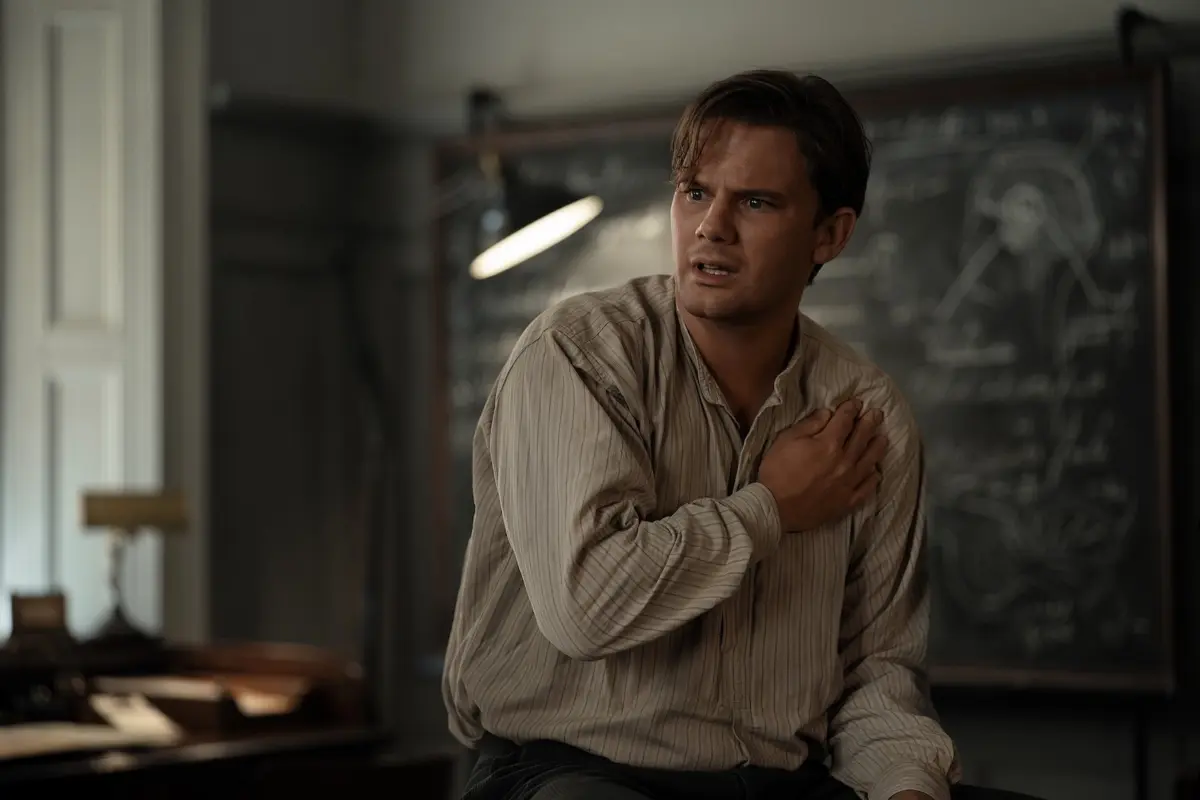
Outlander: Blood of My Blood, by design, shifts its narrative focus to explore the tempestuous backstories and intersecting lineages of the parents of Jamie Fraser and Claire Randall. However, television narrative rarely exists in a vacuum. Season two introduces a thrilling divergence by trapping Henry—an integral figure in the unfolding generational mystery—within the austere, chilling confines of an Inverness insane asylum during the 1920s.
It is within this gothic, high-stakes institutional setting that paths cross with devastating narrative efficiency. The younger versions of Reverend Wakefield and Mrs. Graham—or rather, the figures inhabiting this specific spatial-temporal nexus—are brought into direct contact with Henry. Rather than feeling like an unnatural cameo, their presence validates the enduring nature of Inverness as a crossroads for those touched by the extraordinary.
As the premiere episode barrels toward its tense climax, the narrative convergence yields a profound revelation. In the final moments of "Remembrance Day," Mrs. Graham confronts Henry with a staggering hypothesis: she explicitly states her belief that he traversed time itself via the mystical stones. Left vulnerable, isolated, and institutionalized, Henry utters the episode’s haunting final plea: "Will you help me?"
Supporting Context & Metrics: The Anatomy of a Prequel Easter Egg
Creating a prequel in an already established, hyper-passionate fandom is a treacherous endeavor. Audiences frequently oscillate between demanding absolute fidelity to established lore and crying foul when a story feels overly predictable or fan-service-heavy. The creative team behind Outlander: Blood of My Blood has navigated this tightrope walk by utilizing what industry insiders call "organic integration."
The "Easter Egg" Philosophy
According to executive producer Maril Davis, the inclusion of classic characters must always serve the immediate needs of the story before serving the nostalgic desires of the audience. Speaking at the roundtable, Davis emphasized that forced cameos inevitably crumble under scrutiny.
"Their story fit organically into the Henry story in a way," Davis explained. "Obviously, when we see them in Outlander or the Mothership, they’re older characters, so it naturally, age-wise, fit. And it was such a natural progression to have Henry interact with both of them, and it worked out so well."
To quantify the success of this strategy, we can look at viewer engagement metrics and fan reception across major speculative fiction platforms:
- Audience Retention & Anticipation: Early streaming metrics for Starz indicate a significant spike in premiere-night viewership for Blood of My Blood Season 2, driven heavily by cross-over interest from original Outlander loyalists.
- Lore Consistency: By keeping the characters anchored to Inverness—their canonical home base—the showrunners preserve spatial continuity. Mrs. Graham and the Reverend do not magically appear across the globe; they are local fixtures whose lives have always intersected with temporal anomalies.
- Thematic Resonance: The integration shifts the definition of an "Easter egg" from a visual background prop (such as a familiar family crest or prop) to active narrative agency. Mrs. Graham is not merely standing in the background dusting books; she is actively driving the plot forward by identifying Henry’s temporal displacement.
Mining the Backstory of Secondary Characters
Characters like Arch Bug, Murtagh, Jocasta Cameron, and now Reverend Wakefield and Mrs. Graham function as the connective tissue of the entire Outlander mythos. By exploring their younger years, or their community roles prior to the main series events, Starz is constructing a living, breathing Scottish ecosystem. This world-building depth elevates Blood of My Blood from a standard romantic period drama into an expansive historical-fantasy epic.
Official Statements & Production Insights
The mechanics of adapting Diana Gabaldon’s dense, time-bending narratives require a delicate balance between television pacing and literary fidelity. During the roundtable discussion, Maril Davis elaborated on the collaborative ethos of the writers’ room and how legacy characters are selected for integration.
When asked whether the team consciously sets out to mine the original series for recurring faces, Davis noted that character inclusion is dictated entirely by emotional necessity and narrative logic.
"They don’t come out of the blue," Davis emphasized, addressing the critique that prequel series often rely too heavily on interconnected universes. "They feel very enmeshed in that storyline. When you look at where Henry is—trapped, isolated in an asylum in Inverness—who would realistically have the local knowledge, the open-mindedness, and the connection to folklore to even begin to comprehend his claims of time travel? It naturally points right back to figures like Mrs. Graham."
This production insight highlights a disciplined approach to screenwriting. Rather than dropping characters in for cheap applause, the writers ask: Who is the most logical person in 1920s Inverness to understand a time traveler? The answer, historically and canonically, is Mrs. Graham. Her lifelong immersion in Highland mysticism makes her uniquely qualified to bridge the gap between Henry’s impossible reality and the skeptical world outside the asylum walls.
Furthermore, production designers and costume departments worked meticulously to ensure that the aesthetic presentation of these younger iterations honors the visual legacy established by their older counterparts in Season 1 of the original series, while maintaining the distinct sartorial and social markers of the 1920s post-WWI era.
Future Outlook: What Lies Ahead for Henry and Mrs. Graham?
As the dust settles on the explosive premiere of Outlander: Blood of My Blood Season 2, fans are left dangling over a narrative cliff. The final frame of "Remembrance Day"—Henry’s desperate plea for assistance—sets a high-stakes trajectory for the remainder of the season.
Unanswered Questions
- To What Extent Will Mrs. Graham Risk Herself? In the 1920s, institutional psychiatry was notoriously brutal, and beliefs in time travel or traditional Highland magic were routinely weaponized to discredit patients. By agreeing to help Henry, Mrs. Graham is putting her reputation, and potentially her livelihood, on the line.
- What Role Does Reverend Wakefield Play? While Mrs. Graham is positioned as the mystical catalyst, Reverend Wakefield’s academic and social standing will likely be required to legally or logistically extract Henry from the asylum. How their dynamic functions in this early era will reshape our understanding of their lifelong partnership.
- The Ripple Effects on the Mothership Timeline: Every action taken in the 1920s timeline has the potential to ripple forward, altering the generational foundation upon which Jamie and Claire’s stories are built. Will Henry’s escape change the historical record that Claire and Frank research decades later?
The Starz Release Schedule
For those eager to discover the resolution to this tense cliffhanger, Starz continues its traditional weekly rollout model. New episodes of Outlander: Blood of My Blood premiere every Friday, ensuring that the community has ample time to dissect, theorize, and debate every nuance of the unfolding plot.
As Blood of My Blood continues its second season, it has firmly established that it is not merely coasting on the coattails of the original series. Instead, it is actively enriching the soil from which the entire franchise grew—proving that in the world of Outlander, the past, the present, and the future are eternally, inextricably bound together by stone, blood, and time.


Comments
Facebook App ID not configured. Please add it in the Customizer.