
Executive Overview
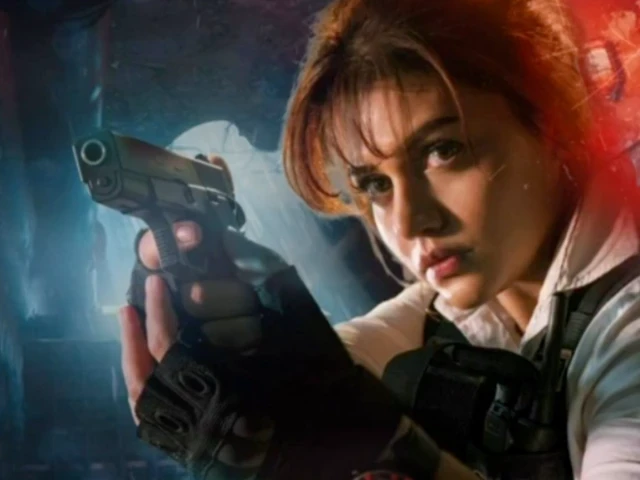
In an era where South Asian cinema and television have long been dominated by conventional melodramas and rigid aesthetic expectations, prominent Pakistani actor Zara Noor Abbas is sparking a much-needed cultural conversation about body image, representation, and the evolution of female characters on screen. Reflecting on her rigorous work in the upcoming high-octane anthology film Sheroes—specifically in its pulse-pounding action segment, Gear Up—Abbas has opened up about overcoming personal insecurities regarding her physique during production.
Shooting the project at a time when she weighed 12 kilograms more than her current weight, the celebrated actor initially grappled with intense self-consciousness about her appearance and wardrobe choices. However, through a transformative collaboration with director Saqib Khan, Abbas learned to challenge narrow industry standards that dictate how an action heroine must look. Rather than forcing her into a standardized mold, Khan recognized that her authentic, powerful build was precisely what the character needed to project genuine grit and authority.
This pivotal creative experience has not only redefined Abbas’s relationship with her own body but has also catalyzed a broader personal and professional evolution. By stepping into the shoes of a gritty, no-nonsense police officer executing high-speed car chases, high-stakes bomb disposals, and dramatic motorbike entries, Abbas is actively dismantling the persistent myth that physical strength and emotional resilience are reserved for male protagonists or women of a specific, hyper-lean silhouette.
Read Also
Today, this cinematic pivot has ignited a lasting passion for physically demanding roles. Far from being a one-off venture into the action genre, Abbas’s journey on Gear Up has propelled her into a grueling daily regimen of mixed martial arts (MMA), street fighting, and rigorous pre-dawn conditioning. As Sheroes prepares to captivate audiences with its multi-faceted portrayal of women from disparate walks of life, Abbas’s candid revelations offer a timely blueprint for redefining female empowerment, authentic representation, and body neutrality in modern storytelling.
Detailed Chronology: From Hesitation to Hard-Hitting Action
The genesis of Zara Noor Abbas’s journey into the action genre began long before the cameras started rolling on Gear Up, yet the most profound psychological and physical transformations occurred directly on set. When production commenced, Abbas found herself navigating a transitional phase in her personal life and physical fitness, carrying 12 kilograms more than her baseline weight during her previous television and film outings.
Initially, this discrepancy between her current physique and the traditionally airbrushed expectations of screen performers triggered deep-seated industry conditioning. In a revealing interview with Arab News, Abbas detailed the heavy psychological friction she experienced during early costume fittings and script read-throughs. The actor admitted to feeling a powerful sense of inhibition, agonizing over how her costumes would fit and whether her physical frame would translate favorably on high-definition cinema cameras.
The turning point arrived during an intimate, candid discussion with director Saqib Khan. Overwhelmed by self-doubt, Abbas voiced her anxieties directly to the filmmaker, cautioning him that her body type would fail to meet conventional visual standards for a leading action protagonist. Khan’s response, however, challenged the actor’s deeply ingrained negative self-talk. Rejecting the notion that action cinema requires a singular, size-zero aesthetic, Khan assured Abbas that her robust build was an asset, not a liability. He affirmed that her physical presence communicated the exact kind of grounded authority, grounded weight, and authenticity necessary to make a believable police officer.
Empowered by this validation, Abbas leaned fully into the physical demands of the character. Gear Up required her to abandon traditional comfort zones and immerse herself in high-adrenaline scenarios. Rather than relying entirely on stunt doubles, Abbas threw herself into demanding physical sequences, navigating high-speed vehicle pursuits, navigating tense bomb-disposal protocols, and executing dramatic entrances on heavy motorbikes.
The completion of Gear Up marked a watershed moment in Abbas’s career. The experience permanently altered her perception of physical capability. No longer content with the passive emotional endurance often relegated to domestic television dramas, Abbas emerged from the production with an insatiable appetite for aggressive physical storytelling. This momentum has since translated into a disciplined, unyielding training schedule, where the actor wakes up before dawn to master the art of combat, proving that her brush with the action genre was not a temporary departure, but the dawn of an entirely new artistic chapter.
Supporting Context & Metrics: The Anatomy of ‘Sheroes’ and the Industry Landscape
To fully appreciate the cultural significance of Zara Noor Abbas’s role in Gear Up, it is essential to examine the architectural framework of the parent project, Sheroes. Conceived as a multi-narrative anthology film, Sheroes brings together three distinct cinematic vignettes, each helmed by prominent Pakistani actors portraying women navigating vastly different operational spheres and societal pressures.
- Gear Up: Directed by Saqib Khan and starring Zara Noor Abbas, this segment centers on law enforcement, tactical maneuvers, and high-stakes survival. Abbas plays a dedicated police officer navigating dangerous urban criminal landscapes, breaking away from the weeping, emotionally constrained archetypes frequently found in South Asian television serials (dramas).
- Artist: Directed and conceptualized to explore creative intensity, this segment features acclaimed actor Kinza Hashmi. Artist delves into the psychological underpinnings, emotional volatility, and societal barriers faced by women in the creative arts, presenting a complex psychological portrait.
- Punch: Headlined by versatile performer Ushna Shah, this final segment rounds out the anthology’s thematic focus on resilience, visceral conflict, and personal reclamation.
The timing of Sheroes is particularly critical within the broader context of Pakistan’s media ecosystem. Historically, Pakistani television dramas—while globally celebrated for their poignant storytelling, strong narrative writing, and deeply emotional family dramas—have struggled to invest heavily in the action and thriller genres. More importantly, when physical action or heroic narratives are deployed, they almost universally default to male leads. Female characters are traditionally assigned roles defined by domestic sacrifice, romance, and passive endurance.
Furthermore, the South Asian entertainment industry has long propagated restrictive beauty standards. The pressure on female performers to maintain a "size zero" silhouette has been an open secret, often dictating casting choices, brand endorsements, and public reception. By openly addressing her 12-kilogram weight differential and refusing to apologize for her natural, powerful build, Zara Noor Abbas is directly confronting these toxic industry benchmarks.
Statistically and culturally, the inclusion of diverse body types in demanding action roles marks a vital step toward body neutrality and realistic representation. When audiences—particularly young women and girls—witness an actor who looks like a real, multi-dimensional human being executing tactical maneuvers and commanding authority on screen, it fundamentally shifts their perception of what power looks like. Sheroes does not merely offer three interconnected stories about women; it presents a structural challenge to the limitations imposed on female performers across the subcontinent, establishing a new commercial and artistic baseline for character-driven cinema.
Official Statements & Industry Perspectives
The discourse surrounding Zara Noor Abbas’s physical and professional evolution has resonated deeply across the entertainment sector, prompting widespread praise from critics, collaborators, and fans alike. The synergy between Abbas and director Saqib Khan serves as a prime example of how visionary direction can liberate actors from the psychological shackles of conventional beauty standards.
Reflecting on her pivotal conversations with Khan, Abbas emphasized the transformative nature of collaborative trust in creative direction:
"When I shot for that film, I was 12kgs higher than what I am right now. And I did feel that there was a certain inhibition to my body. I was really reluctant about what to wear… I was like, ‘No, Saqib, you don’t understand. This is not going to look good on my body.’ He was like, ‘No, you don’t understand. You look at your body in a very negative way. From where I am seeing, I think you are fit for the role, and I want someone who looks like this and who has a build like this.’"
This exchange highlights a systemic issue within casting processes, where actors—particularly women—internalize public scrutiny to the point of second-guessing their professional suitability. Khan’s intervention underscores the responsibility directors hold in cultivating safe, empowering environments that prioritize character authenticity over superficial perfectionism.
Expanding on the socio-cultural implications of body diversity in media, Abbas articulated a powerful manifesto for representation:
"Not everyone can be a size zero and look a certain size. No, women have different bodies, and we are telling different stories from different ethnicities."
This sentiment strikes at the heart of contemporary global discussions regarding inclusivity in film. By acknowledging that heroism and physical capability transcend uniform aesthetic standards, Abbas is championing a more inclusive cinematic landscape.
Moreover, Abbas has been vocal about the systemic limitations imposed on female characters within traditional television formats, contrasting them sharply with the liberating potential of action cinema:
"In dramas, we are not able to show our physical strength. As characters, we do not show the emotional resilience, persistence, and perseverance that women have. But I really wanted to project a role where I could look badass."
This desire to project authentic "badassery" is not rooted in superficial toughness, but in a holistic embodiment of female strength that marries emotional tenacity with raw physical capability. Industry analysts note that these statements reflect a growing fatigue among contemporary actors who are eager to shed the confines of repetitive scripts and explore dynamic, multi-genre storytelling that mirrors the complexities of modern womanhood.
Future Outlook: The Rise of the Action Heroine and Abbas’s Next Chapter
The ripple effects of Gear Up and the broader Sheroes anthology extend far beyond the immediate box-office prospects of a single film. For Zara Noor Abbas, this project has served as a professional crucible, burning away old limitations and forging an entirely new career trajectory. No longer satisfied with the boundaries of conventional romantic leads and domestic melodrama, Abbas is actively carving out a niche for herself within the burgeoning action ecosystem of regional and international cinema.
Looking ahead, Abbas has made no secret of her ambitions within the genre. In her post-film interviews, she articulated a clear vision for her future roles:
"I think I’d like to take up roles around the spy verse and the police and the cool cop verse."
This ambition is backed by concrete, unrelenting action. Moving beyond the simulated combat of the film set, Abbas has committed herself to a punishing, lifestyle-altering daily training regimen designed to build authentic athletic prowess. Providing a glimpse into her current daily routine, the actor shared:
"As we speak, I am also training for a new role. I wake up at 7 in the morning. From 7 to 12, I train for that. Then I go to my work on a drama set. I am also doing MMA right now and learning street fighting. I am really liking this whole dimension of my new self."
This five-hour daily commitment—balancing rigorous martial arts training, street-fighting techniques, and early-morning conditioning alongside traditional drama serial commitments—demonstrates a profound level of dedication. It signals to directors, producers, and casting agents that Abbas is not merely dabbling in a trendy genre, but is transforming herself into a bonafide, stunt-capable action star.
The implications for the broader South Asian film industry are profound. As audiences increasingly demand content that challenges archaic tropes, the success of projects like Sheroes and the physical dedication of actors like Zara Noor Abbas pave the way for a new sub-genre of gritty, female-led action thrillers. If her current training regimen is any indication, Abbas is not only ready for her next cinematic mission—she is leading a quiet revolution that will redefine what it means to be a leading lady in South Asian cinema for generations to come.



Comments
Facebook App ID not configured. Please add it in the Customizer.