
Executive Overview
The architecture of Western higher education is currently undergoing a profound structural and moral crisis, exposed by a confluence of high-profile scandals, ideological compliance, and administrative cowardice. In recent months, the fault lines running through elite academia—stretching from the historic halls of the University of Cambridge to the progressive liberal arts redoubts of Maine—have burst into public view. At the center of this turmoil is a dangerous intersection between aggressive Diversity, Equity, and Inclusion (DEI) mandates, systemic administrative opportunism, and the erosion of rigorous academic standards.
The tragic fall of Professor Jason Arday at Cambridge University, coupled with the disillusioned resignation of Professor Tyler Austin Harper from Bates College, offers a searing indictment of modern institutional culture. Together, these parallel narratives reveal how elite universities have transformed from sanctuaries of rigorous intellectual inquiry into performative theaters of identity politics. Within these spaces, rigorous peer review, objective meritocracy, and intellectual diversity have been systematically displaced by a "woke" caste system. In this new paradigm, individuals are frequently elevated not for their scholarly achievements, but for their utility as sacred objects in a broader progressive crusade.
This investigative report examines the mechanics of this institutional decay. By analyzing the Arday and Harper affairs, this piece explores how institutional enablers, systemic self-censorship, and top-down ideological monomania have compromised the integrity of higher learning on both sides of the Atlantic—leaving behind hollowed-out institutions incapable of defending their own stated convictions.
Read Also
Detailed Chronology: From Appointment to Collapse
The Rise and Fall of Jason Arday at Cambridge
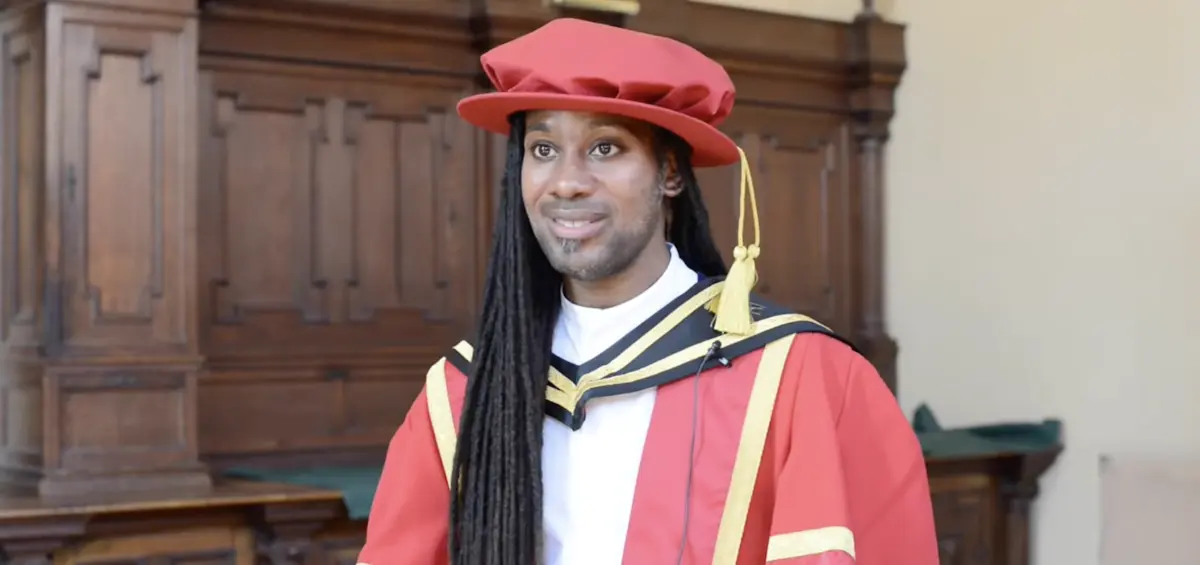
The foundational shockwave of this crisis broke in early August, centering on the meteoric career and sudden downfall of Jason Arday. Appointed to a prestigious professorship at Cambridge University in 2023, Arday had been heralded by university leadership as a crowning achievement in their stated commitment to righting historical racial injustices and achieving substantive demographic diversity.
However, beneath the celebratory press releases lay a deeply compromised reality. Arday was soon exposed by investigative journalists and academic experts as a serial plagiarist, fabulist, and academic fraud. Faced with irrefutable documentation of widespread plagiarism in his doctoral thesis and fabricated personal histories—including elaborate claims of severe childhood disabilities designed to maximize his appeal to progressive benefactors—Arday resigned on August 5. One week later, he tragically committed suicide.
The timeline of his protection by the British establishment reveals a systemic refusal to police academic integrity when shielded by identity politics:
- Initial Warnings (Post-2023 Appointment): Independent academics and journalists began identifying glaring irregularities in Arday’s publications and doctoral thesis. Rather than launching internal audits, university officials stonewalled inquiries.
- The Suppression of Inquiries: When investigative journalists prepared exposés, legal mechanisms were deployed to kill the stories. Arday weaponized the legal and administrative apparatus, filing police reports for racial harassment against inquiring journalists and lodging racism complaints against scholars who scrutinized his publication record.
- Institutional Complicity: Major institutions, including Cambridge and the university that originally awarded Arday his doctorate, routinely dismissed charges of academic misconduct. Allies within Cambridge issued open letters framing investigative scrutiny as "systematic attempts to erase Black scholarship," effectively weaponizing progressive pieties to immunize fraud.
The Disillusionment of Tyler Austin Harper at Bates College
Parallel to the turbulence at Cambridge, the American liberal arts landscape was rocked by the public departure of Tyler Austin Harper. Hired in 2020 in the wake of the social upheavals following the death of George Floyd, Harper entered Bates College—an elite institution in Maine with a proud abolitionist history—with cautious optimism regarding the goals of inclusive education.
Over the next several years, however, Harper’s direct observations of faculty search committees and administrative overreach shattered his faith in the academic model. His experiential timeline outlines the descent:
- The 2020 Mandates: College leadership pressed for sweeping curricular overhauls, culminating in the mandatory "Race, Power, Privilege, and Colonialism" (RPPC) graduation requirement across all majors.
- The Discovery of "Woke Jim Crow": Serving on hiring committees, Harper observed firsthand that traditional standards of academic promise and scholarly output were frequently subordinated to identity-first metrics, creating a bifurcated standard for candidates.
- Tokenization: Harper found himself pigeonholed into administrative committees dealing exclusively with minority affairs, realizing he was viewed not as a peer in a community of scholars, but as an indispensable token.
- Resignation (2025): Growing weary of an intellectual and moral climate he characterized as intellectually bankrupt, Harper resigned his faculty position.
- The Sudden Retreat: Shortly after his departure, as broader political and financial pressures mounted against institutional DEI initiatives, Bates College leadership abruptly counseled faculty to suspend the RPPC requirement—the very initiative they had previously deemed an absolute moral imperative.
Supporting Context & Metrics: The Architecture of Ideological Compliance
To understand how individuals like Arday and Harper could navigate—and ultimately be consumed by—these academic ecosystems, one must examine the systemic pressures governing modern university culture.
The Economics of Performative Virtue
In the contemporary higher education market, institutional prestige is increasingly decoupled from traditional metrics of academic rigor, research output, or pedagogical excellence. Instead, institutional survival and funding are closely tied to compliance with diversity indexes, public relations narratives, and ESG (Environmental, Social, and Governance) frameworks.
Universities operate as massive corporate entities where senior leadership teams are incentivized to mitigate reputational risk through visible, quantifiable demonstrations of progressive alignment. In this environment, a profile like Arday’s—representing a convergence of intersectional categories—was treated as a priceless institutional asset. His entrepreneurial ability to recognize and exploit this institutional hunger for validation allowed him to bypass standard peer-review filters. As noted by observers close to the situation, Arday was ultimately a pawn whose profound ambition was enabled, rather than checked, by sycophantic administrators desperate for symbolic victories.
The Culture of Fear and Self-Censorship
The complicity of academic common rooms in both the UK and the US speaks to a pervasive culture of fear. In faculty lounges across elite institutions, private skepticism regarding lowered standards, administrative bloat, and ideological litmus tests is rampant. Yet, public dissent carries severe professional penalties.
Academics who attempt to uphold traditional standards of empirical verification and objective merit face marginalization, administrative harassment, or professional ruin—as evidenced by colleagues who dared to audit Arday’s work only to face suspension or institutional blacklisting. Consequently, a collective agreement to maintain the narrative supplants the pursuit of truth, reducing universities to echoes of administrative orthodoxy.
Official Statements and Institutional Reactions
The official responses from academic leadership in the wake of these controversies have laid bare a deep-seated institutional hypocrisy.
- Cambridge University’s Guarded Silence: In the wake of Arday’s resignation and subsequent death, official communications from Cambridge have been characterized by extreme caution. Public pronouncements have sought to navigate the tragedy while carefully avoiding any acknowledgment of the systemic failures that allowed academic fraud to persist at the highest levels of the institution. Privately, however, faculty members have expressed shock at how deeply institutional self-preservation superseded academic vetting.
- Bates College and the RPPC Retrenchment: The rapid pivot by Bates College administrators regarding the RPPC curriculum highlighted a profound lack of institutional courage. Having spent years insisting that the curriculum was an uncompromisable moral necessity essential for the survival of the college’s values, leadership capitulated the moment external political and financial headwinds shifted.
- Critiques from Within: Voices like Heidi Mirza, a former graduate school adviser to Arday, noted the tragic vulnerability of individuals caught within institutional tokenization schemes, observing that ambition frequently blinds rising scholars to how they are being utilized as pawns by bureaucratic establishments. Similarly, Tyler Austin Harper’s public confessions in The Atlantic underscored a broader disillusionment among minority scholars who refuse to accept patronizing standards that ultimately degrade the value of their authentic achievements.
Future Outlook: Reclaiming the University
The intertwined crises at Cambridge and Bates College serve as a critical inflection point for global higher education. They demonstrate that the unchecked expansion of ideological bureaucracy does not serve the marginalized groups it purports to protect; rather, it degrades institutional standards, corrupts academic integrity, and victimizes both the frauds who exploit it and the honest scholars caught in its wake.
Reforming higher education will require a courageous return to foundational principles:
- Restoration of Meritocratic Standards: Academic appointments, tenure tracks, and curricular designs must be anchored strictly to peer-reviewed excellence, rigorous intellectual capability, and objective evaluation, free from ideological interventions.
- Decapitation of Administrative Monomania: As both Harper and external observers have noted, the primary drivers of ideological excess are rarely the students, but rather risk-averse senior leadership teams. Governing boards must reclaim oversight, holding executives accountable for academic quality rather than public relations metrics.
- Protection for Dissent: Universities must dismantle the bureaucratic mechanisms that punish heterodox thought and inquiry. Protecting whistleblowers who expose academic fraud or ideological overreach is essential for restoring public trust.
Unless governing bodies and academic faculties summon the institutional spine to purge performative tokenism and administrative cowardice, the ivory tower will continue its descent into irrelevance—leaving behind hollowed-out institutions that sacrificed their primary mandate at the altar of transient political expediency.




Comments
Facebook App ID not configured. Please add it in the Customizer.