
Executive Overview
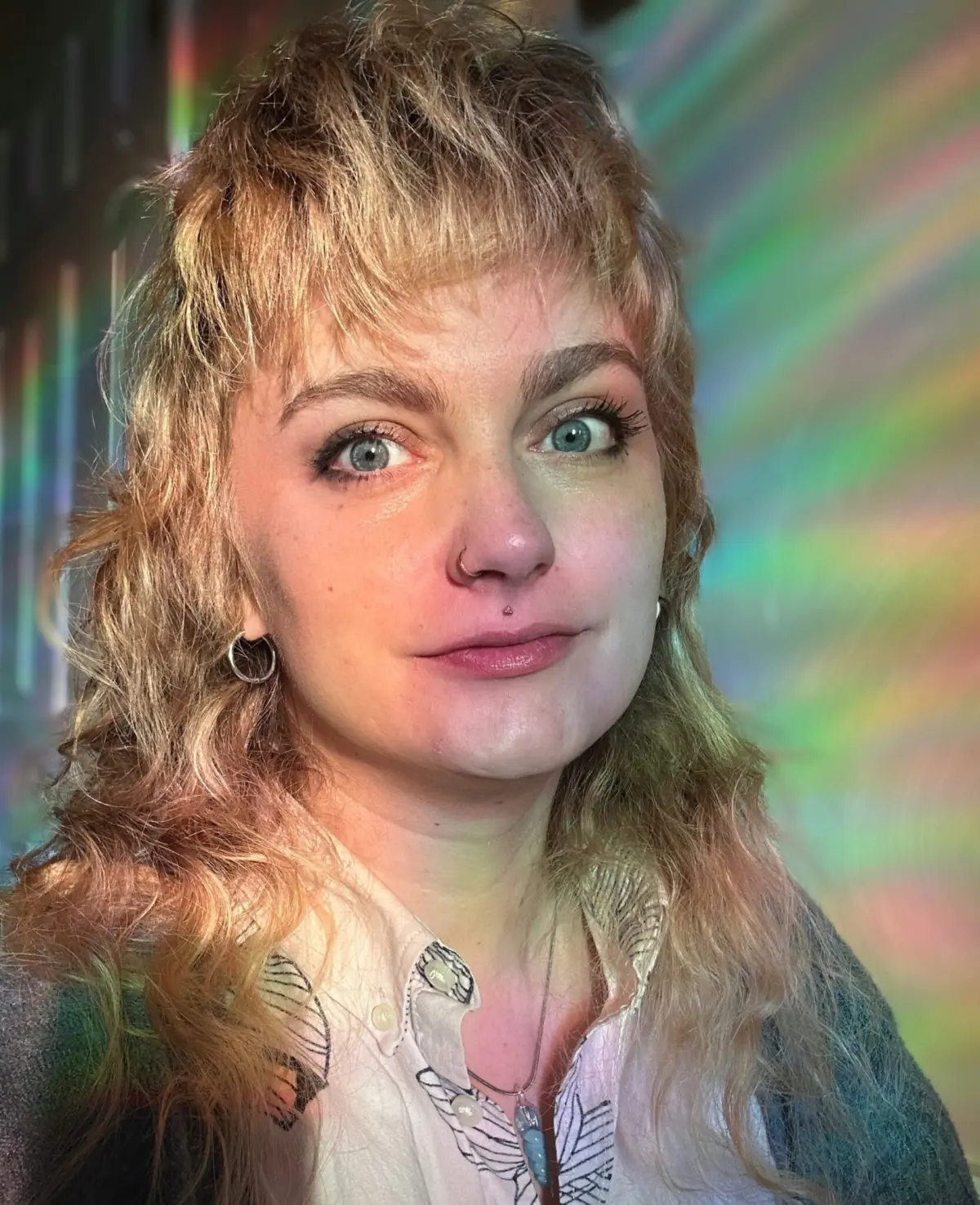
In an era dominated by rapid digital consumption and ephemeral media, contemporary poetry continues to serve as a vital repository for the complex intersections of identity, systemic vulnerability, and enduring love. On September 21, 2026, the literary community turned its attention to the mountains of Virginia, where poet David Eileen was named the recipient of the prestigious Poem of the Week honor for the work “Sonnet with Beautiful Lies.” Published amidst a turbulent sociopolitical landscape for queer and transgender individuals, the poem acts as both a deeply intimate portrait of domestic partnership and a fierce act of political defiance.
Eileen—a writer living and writing from a rural Virginia homestead alongside a partner and an overabundance of tomato plants—has built a reputation for crafting lyric poetry that addresses the raw edges of contemporary existence. Their work has previously graced the pages of esteemed publications including The Atlantic, Black Warrior Review, and Prairie Schooner. However, "Sonnet with Beautiful Lies" represents a crystallization of Eileen’s artistic vision: a formal exploration of aging within a marginalized body, the omnipresence of systemic threat, and the stubborn, revolutionary insistence on a shared future.
This feature-length investigative profile examines the architecture of Eileen’s prize-winning sonnet, situating the work within the broader context of contemporary American queer poetry. By unpacking the poem’s structural choices, exploring the author’s incisive commentary on the dual anxieties of physical aging and gender-based violence, and assessing the mechanics of the "beautiful lie," this article offers a comprehensive exploration of why this piece has resonated so profoundly with critics and readers alike.
Read Also
Detailed Chronology & Literary Context
To fully appreciate the cultural weight of "Sonnet with Beautiful Lies," one must trace the trajectory of David Eileen’s emergence within the contemporary American literary canon. Eileen’s poetic voice has steadily developed through years of rigorous craft, balancing the demands of traditional forms—such as the sonnet—with the unfiltered realities of contemporary trans and queer life.
The Path to the Virginia Mountains
Eileen’s relocation to the mountains of Virginia marked a distinct shift in their creative output. Surrounded by the quiet rhythms of rural life, yet deeply attuned to the national sociopolitical climate targeting trans and nonbinary individuals, Eileen’s poetry began to synthesize the pastoral with the urgent. The domestic sphere—symbolized in authorial notes by a shared life with a sweetheart and an unruly garden of tomato plants—became a staging ground for resilience.
Over the preceding years, Eileen’s publications in journals like The Atlantic and Prairie Schooner established them as a writer capable of navigating high-register lyricism without sacrificing emotional accessibility. Their digital footprint, anchored by an electronic newsletter ("e-pistle") distributed via their personal website, cultivated a dedicated readership that values direct, unfiltered engagement with the author’s creative process.
The Announcement of September 21, 2026
The selection of "Sonnet with Beautiful Lies" as Poem of the Week on September 21, 2026, brought renewed focus to Eileen’s body of work. The announcement served as a critical touchstone for literary enthusiasts tracking how contemporary poets are utilizing constrained forms to address unconstrained modern anxieties. Rather than retreating into abstraction, Eileen utilized the fourteen-line framework of the sonnet to construct a container capable of holding complex, overlapping fears: the inevitability of the aging process, the mechanics of bodily preservation through hormone replacement therapy and skincare, and the ever-present shadow of systemic violence against queer bodies.
Supporting Context, Textual Analysis, & Metrics
Deconstructing "Sonnet with Beautiful Lies"
The poem itself operates as a masterclass in tonal shifting, subverting traditional romantic tropes while leaning heavily into the visceral realities of shared endurance.
We should not reify each other; there’s naught divine between us
& anyway, that human form of yours put down in stone would only
intimidate museum patrons for forever. Scare off donors.
From the opening lines, Eileen establishes a deliberate anti-pastoral tone. There is no neoclassical elevation of the beloved here; instead, the speaker acknowledges the gritty, human reality of physical existence. The reference to museum patrons and scared donors injects a dose of wry, domestic humor that grounds the metaphysical speculation into tangible, mundane spaces.
As the poem progresses, the speaker weaves together the physical markers of aging with the deep history of a shared life:
There’s nothing
left to remember: we already grew old together. You knew each of my thoughts
before they turned silver. We had the best arguments: character development,
comic relief, repetition that deepened our themes.
Here, Eileen uses meta-narrative framing ("character development," "comic relief") to view a long-term relationship through the lens of literary artifice. This self-awareness highlights the constructed nature of memory and shared narrative, suggesting that love—much like a poem or a novel—requires active revision, stamina, and thematic cohesion.
The emotional core of the work deepens as the speaker confronts bodily transformation:
I did not panic when I saw
gray setting in because I saw yours falling out of braids right next to mine
& anyway, that was a lifetime ago, my hand paper over yours now. Our age
spots match.
The visual symmetry of aging—gray hair falling from braids, matching age spots—transforms the fear of growing old into a shared sanctuary. The metaphor of the hand as "paper over yours" evokes both fragility and tactile continuity; paper is easily torn, yet it records history, holds ink, and accumulates creases over time.
The Central Metaphor: Wine, Light, and Purpose
Perhaps the most striking figurative language in the poem emerges in the middle movement:
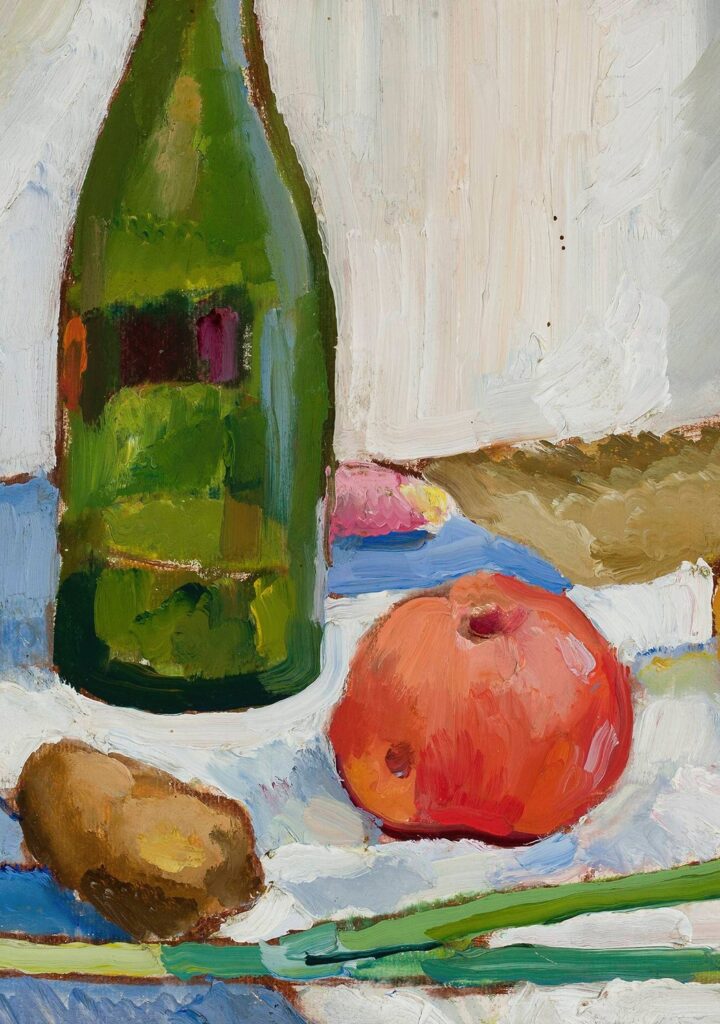
I know you remember each moment we shared just as each drop
of wine remembers the green of the dark bottle, then all the light coming
through the convex crystal vista it rocked up & down before it met you.
This extended metaphor bridges the inanimate with the deeply sentient. Wine does not merely contain history; it preserves the environment of its creation—the vineyard, the sun, the glass bottle, the turbulent journey of transit. By extension, the lovers’ shared past is preserved within their physical forms.
The poem concludes with a powerful, pragmatic resolution:
In our lifetime,
there was purpose & I knew it. It felt like the tongue in my shoe or the tongue
in my mouth: perfectly functional. Easy to ignore but when bent wrong,
just the worst pain of my life. I always knelt down quick to fix it.
Moving from cosmic wine-vistas to the visceral annoyance of a misaligned shoe tongue, Eileen anchors purpose not in grand ideological pursuits, but in bodily maintenance and attentive care. Purpose is immediate, tactile, and requires constant, humble attention ("I always knelt down quick to fix it").
Authorial Intent & Sociopolitical Realities
In the author’s note accompanying the publication, Eileen provides a frank, illuminating breakdown of the psychological landscape that birthed "Sonnet with Beautiful Lies." The commentary moves far beyond standard artistic statements, offering an unvarnished look at the intersection of queer identity, bodily anxiety, and systemic vulnerability.
The Compounding Anxieties of Aging and Marginalization
Eileen writes: "If everyone’s afraid to age, that fear is expressed uniquely through every person who feels it. Layer that fear, then, with the fear of violence that I’m worried over every day: physical violence that targets trans & queer people, the violence of erasure that threatens even our peaceful survivors."
This dual consciousness—navigating the universal human terror of bodily decline while simultaneously guarding against targeted hostility—defines the lived experience of millions of trans and queer individuals. Eileen makes this abstract vulnerability startlingly concrete by detailing their domestic routines: applying retinol at night after hormone shots, studying the mirror for new lines, and calculating the safety of public restrooms even within cultural spaces like museums.
The Rigid Form as a Container for Hope
The choice of the sonnet form is far from accidental. Eileen notes that "the rigid form of a sonnet shores up my stubborn insistence on what none of us are promised: companionship & time to deepen it fearlessly."
In a world where trans and queer futures are actively legislated against and threatened by social violence, choosing a fourteen-line architectural cage becomes an act of radical reclamation. The form provides boundaries, but within those boundaries, the poet builds an emotional shelter.
The Nature of the "Beautiful Lie"
Addressing the poem’s title directly, Eileen reflects on the closing lines: "It ends with a beautiful lie that is really a half-truth: there have been times when (maybe after hesitation) I have reached down deep to adjust a bent-up sense of purpose. I felt better afterward, like if I’m really to be given the rest of my life, I won’t have to dread living it."
This admission reframes the poem’s title. The "beautiful lies" we tell ourselves—and each other—are not necessarily deceptions meant to mislead, but rather imaginative survival mechanisms. They are the conscious decisions to construct purpose, to care for one’s physical vessel, and to look toward an unassured future with stubborn, defiant hope.
Future Outlook: The Evolution of Trans Poetics
The recognition of David Eileen’s work highlights a broader, encouraging shift within the contemporary literary establishment. Editors and prize committees are increasingly recognizing that poetry addressing the granular, lived realities of marginalized bodies holds profound universal resonance.
As Eileen continues their work in the mountains of Virginia—tending to tomato plants, corresponding with readers via their electronic e-pistles, and preparing future publications—their trajectory points toward an exciting horizon for American verse. The integration of formal technical mastery with unflinching political and personal honesty ensures that Eileen’s voice will remain a defining fixture of 21st-century lyricism.
For readers, scholars, and aspiring writers, "Sonnet with Beautiful Lies" stands as a testament to the power of art to metabolize fear into beauty. In an unpredictable world, Eileen reminds us that purpose can be adjusted, love can be preserved like wine within a dark bottle, and the act of growing old together can be approached not with dread, but as a hard-won, beautiful triumph.





Comments
Facebook App ID not configured. Please add it in the Customizer.