

Executive Overview
In the landscape of contemporary American poetry, few works manage to capture the quiet, devastating intersection of familial duty, chronic illness, and existential rage with the precision found in Christine Marshall’s work. On September 14, 2026, Marshall’s striking poem "Ataxia"—a 2026 Perkoff Prize finalist—was officially named the Poem of the Week.
Addressing a degenerative neurological condition that remains largely misunderstood by the public, the poem serves as both a personal elegy and an explosive confrontation with grief. Marshall, a widely published poet and educator based in Charlotte, North Carolina, uses "Ataxia" to examine the psychological and physical toll of caregiving. Through vivid metaphors comparing familial obligation to the burdened neck of a work animal and divine weight to storm clouds tipping the scales at a million pounds, the poem strips away romanticized notions of suffering. Instead, it offers an unvarnished look at the helpless fury of watching a parent diminish under the heavy, silent march of an unknown disease.
Detailed Chronology & Literary Context
The journey of "Ataxia" to its current recognition reflects Christine Marshall’s steady and respected trajectory within the American literary canon. Over the years, Marshall’s poems and essays have earned critical acclaim, appearing in prestigious publications such as Best American Poetry, Agni, The Missouri Review, Poetry Daily, and The Sun.
Read Also
Her poetic career reached significant milestones with the publication of her debut poetry collection, Match (Unicorn Press, 2018), and her sophomore book, Night Halves (Gunpowder Press, 2026). Written and published during a period of deep personal and creative output, Night Halves establishes Marshall as a voice unafraid to interrogate the darker, more fractured edges of human relationships.
The timeline of "Ataxia" spans years of quiet observation and emotional processing. As Marshall notes, the piece was born from the raw reality of watching her father battle a rare neurological disorder. The poem was recognized as a finalist for the prestigious 2026 Perkoff Prize—an accolade that honors work exploring the themes of health, medicine, and the human body. Its selection as Poem of the Week by The Missouri Review further cements its place as a vital piece of contemporary literature addressing illness and caregiving.
Supporting Context & Metrics: The Anatomy of "Ataxia"
To understand the resonance of Marshall’s poem, one must examine the specific mechanics and metaphors that drive its narrative. Ataxia is not a single disease, but a group of disorders that affect coordination, balance, and speech. Because it lacks the cultural visibility of conditions like ALS or Parkinson’s disease, caregivers and patients often find themselves performing an exhausting double labor: managing the physical symptoms while continuously explaining the diagnosis to an uncomprehending world.
Marshall opens the poem by confronting this exact isolation:
Ataxia is a disease nobody knows, so I compare your illness
to ALS or Parkinson’s, more familiar.
Familiar, rooted in “family.” Family,
basket of water hanging from a mule’s neck.
The etymological pivot—connecting the familiarity of a disease to the concept of "family," and subsequently to a beast of burden—establishes the central tension of the text. The burden is heavy, shifting, and prone to spilling. Yet, unlike mythological tragedies where characters face grand, operatic downfalls, the reality of degenerative illness lacks the catharsis of classic literature. As Marshall observes, referencing classical scholar Edith Hamilton: “There are no martyrs in Edith Hamilton. / There’s murder, incest, rape—outrage / moves rather than seething, bitter stew.”
The poem expertly shifts between conversational vulnerability and sudden, violent flashes of internal weather. The sleeplessness of the caregiver—spanning six grueling years—manifests as atmospheric pressure: “Do you know clouds can weigh one million pounds? / It’s been six years since I’ve had a good night’s sleep.”
When dialogue enters the poem, it highlights the heartbreaking humility of the father, who apologizes for being “such a dud” while struggling to articulate his thoughts. This humility contrasts sharply with the narrator’s internal explosion of raw, unfiltered frustration:
Not Fucking hell. Not
What did I do to deserve this?
I wonder if your faith has expired, disease
immobilized your love of God.
Fucking hell. I’m so angry
I could spit lightning, weep clouds.
By the time the poem concludes, the initial metaphor of the burdened animal transforms into a cosmic equation. The weight of divine absence and earthly suffering merge, leaving the reader suspended in the profound, exhausting reality of endurance: “God weighs a million pounds / and is hanging like family around my neck.”
Official Statements & Author’s Insights
Reflecting on the inspiration behind the piece, Christine Marshall provided vital context regarding the emotional landscape of the work:
"Ataxia is a little-known neurological disorder that impairs coordination, balance, and speech. This poem explores the fury and heartbreak of watching my beloved father struggle with the disease, and the complex reality of family dynamics."
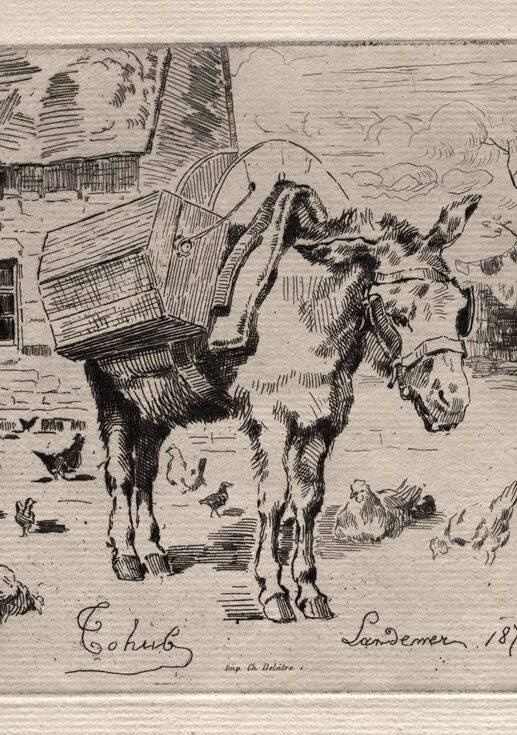
The poem’s publication is accompanied by historical and visual resonance, featuring The Mule, Marie-Jeanne (1872) by French artist Félix Hilaire Buhot as its title image. The visual pairing underscores the central motif of enduring, uncomplaining labor, subtly dialoguing with the text’s exploration of endurance and physical weight.
Literary critics and editors have praised the selection for its unflinching honesty. In a cultural moment where caregiving is frequently sanitized or framed purely through the lens of inspirational perseverance, Marshall’s work provides a necessary counter-narrative. It validates the anger, resentment, exhaustion, and deep, enduring love that coexist in the rooms where chronic illness is managed day in and day out.
Future Outlook
As Night Halves continues to find its readership following its 2026 release, and with "Ataxia" drawing widespread acclaim as a Perkoff Prize finalist, Christine Marshall’s contributions to American letters are receiving the heightened attention they deserve. Balancing her work as an educator and writer in Charlotte, North Carolina, Marshall remains an essential voice for those navigating the intersection of bodily fragility and emotional resilience.
The recognition of "Ataxia" as Poem of the Week signals a broader cultural appetite for literature that refuses to look away from chronic illness. As readers continue to engage with Marshall’s poetry, works like "Ataxia" will undoubtedly serve as touchstones for empathy, offering language to those who grapple with the invisible weights carried by families every single day.





Comments
Facebook App ID not configured. Please add it in the Customizer.