

Executive Overview
In an era where the average youth spends four to six hours daily immersed in digital environments, the boundaries separating verified reporting, subjective opinion, and covert advertising have dissolved. According to a landmark study highlighted by the School Library Journal, modern teens struggle fundamentally to distinguish hard news from sponsored content and ideological commentary. This cognitive vulnerability is not merely an educational hurdle; it represents a profound systemic threat to civic engagement and democratic participation.
When the primary conduits of information are algorithmic feeds engineered for engagement rather than accuracy, misinformation spreads with staggering velocity. False narratives travel up to six times faster on platforms like X (formerly Twitter) than verified accounts of factual events. To combat this erosion of shared reality, educators, parents, and policymakers must champion intentional media literacy instruction. Equipping the next generation with critical thinking tools—the foundational skepticism required to question, evaluate, and investigate information—is no longer optional. It is the defining civic imperative of the twenty-first century.
Detailed Chronology: The Evolution of False Narratives and Media Manipulation
To understand the contemporary crisis of mis- and disinformation, one must recognize that fake news is not a novel byproduct of the internet age. Throughout history, the manipulation of public perception has served as a powerful tool for political and economic gain.
Read Also

- The Revolutionary Eras (18th Century): Long before the digital landscape existed, deceptive reporting played a central role during the French and American Revolutionary Wars. Propaganda pamphlets and exaggerated broadsheets were deployed strategically to demonize adversaries and rally popular support.
- The 1914 Logging Camp Marketing Stunt: In 1914, an advertising manager for an American logging camp popularized the myth of Paul Bunyan. Designed to mythologize industrial clear-cutting operations, this tall tale successfully sanitized the environmental devastation of old-growth forests and masked the displacement of Indigenous populations, proving how commercial storytelling could distort historical realities.
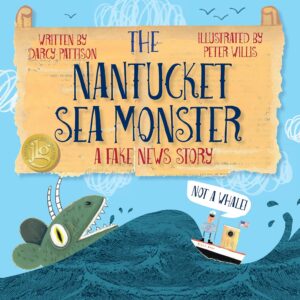
- The 1937 Nantucket Sea Monster Hoax: On August 7, 1937, headlines blared across American newspapers detailing the emergence of a terrifying sea monster off the coast of Nantucket. For two weeks, the sensational story dominated public attention. On August 21, the truth emerged: it was a calculated publicity stunt orchestrated to drive traffic and free marketing for the Macy’s Thanksgiving Day Parade, demonstrating how sensationalism directly translates to financial profit.
- The 1934 Loch Ness Monster Photograph: The publication of a deceptively framed photograph in London’s Daily Mail on April 14, 1934, created a global sensation. The image was orchestrated to rescue a struggling loch-side hotel business from declining tourism. Despite being exposed as a hoax decades later, approximately one in four Scottish residents still harbor belief in the monster today—a testament to the enduring power of visual deception.
- The 2016 Digital Turning Point: While the term "fake news" gained mainstream ubiquity during the 2016 U.S. Presidential Election, it crystallized a terrifying new reality: decentralized digital platforms could weaponize misinformation on a mass scale, outpacing traditional journalistic fact-checking models.
Supporting Context & Metrics: Defining the Information Landscape
Navigating today’s infosphere requires a precise taxonomy of deception. Media literacy frameworks categorize false and misleading information into distinct operational types:
- Misinformation: Inaccurate information spread unwittingly, without any malicious intent to deceive.
- Disinformation: Deliberately fabricated falsehoods engineered and disseminated with the explicit intent to deceive or manipulate (closely tied to propaganda).
- Mal-information: Information rooted in partial truths but weaponized—often through decontextualization or exaggeration—to attack individuals, organizations, or nations.
- Fake News: A broad umbrella term for content engineered to mislead, manipulate, or sow public doubt, often overlapping with clickbait and propaganda.
- Clickbait: Sensationalized, deceptive headlines designed purely to maximize digital traffic and advertising revenue.
- Propaganda: Systematically crafted information designed specifically to manipulate public opinion and sway ideological alignment.
The Role of Literature and Historical Awareness in Critical Thinking
Children’s and young adult literature increasingly addresses these themes, serving as a mirror to contemporary struggles with truth, censorship, and identity.

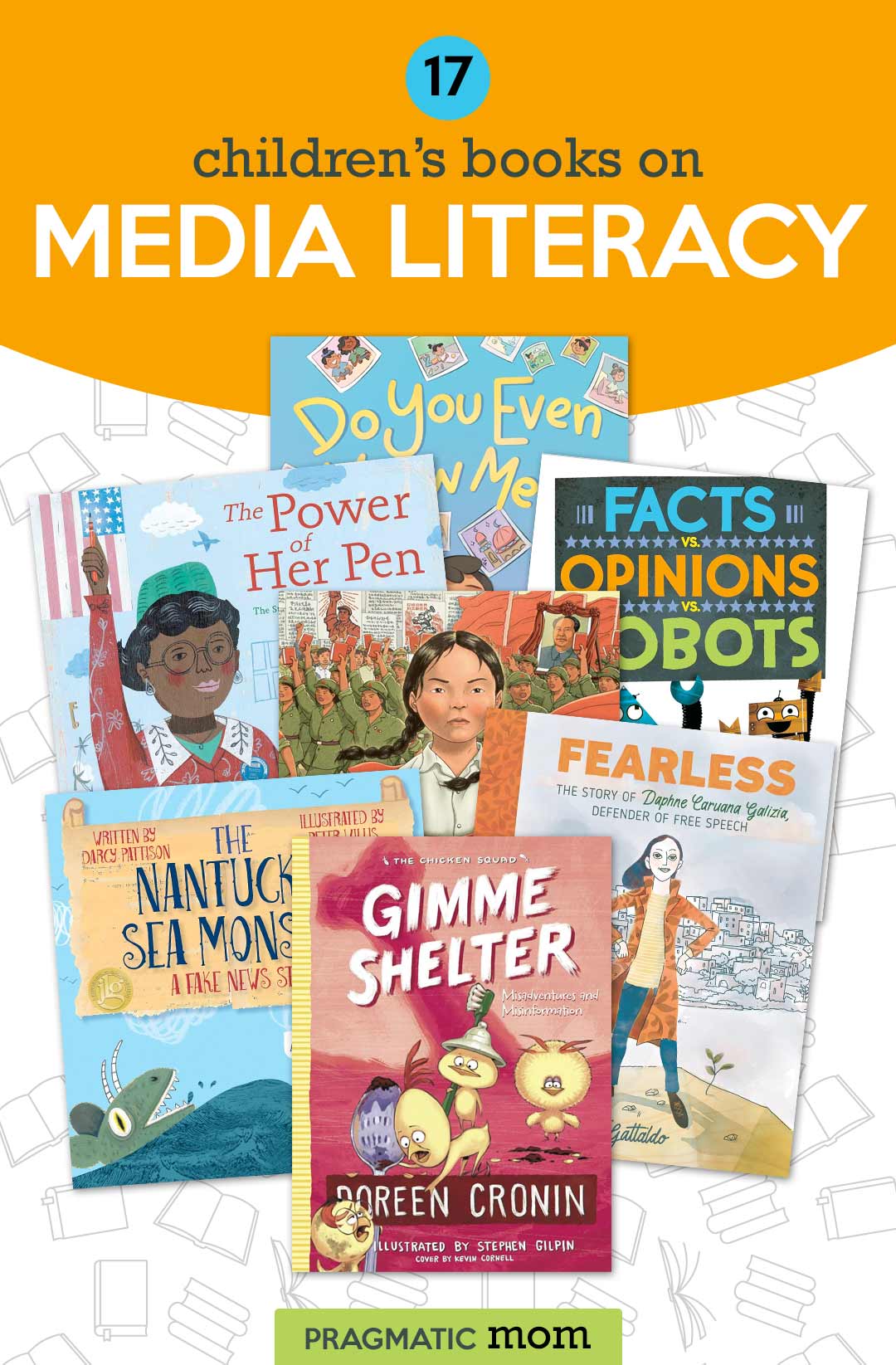
- Identity and Stereotyping: In Reem Faruqi’s picture book Do You Even Know Me?, young Salma witnesses a distressed TV reporter repeatedly misusing the term "Muslim," which subsequently fuels offline bullying at school. This illustrates how media framing directly translates into real-world prejudice and interpersonal harm.
- Systemic Erasure and History: Christy Mihaly’s America’s Founding Myths … And What Really Happened explores how nations cling to sanitized founding narratives—such as the myth of an "unpopulated wilderness"—to obscure the histories of over 1,000 distinct Native Nations, demonstrating how institutional myth-making protects established power dynamics.
- Censorship and Ideological Control: Amy Sarig King’s middle-grade novel Attack of the Black Triangles examines modern book censorship, showing how ideological gatekeeping attempts to restrict young minds from confronting uncomfortable historical truths.
Official Statements and Pedagogical Guidance
Educational authorities and child advocacy organizations emphasize that media literacy must be integrated across interdisciplinary curricula. According to guidelines from Common Sense Media, educators and parents should cultivate an investigative mindset by training youth to ask probing questions:
- Who created this message, and what is their underlying motive?
- What visual or linguistic techniques are being used to capture my attention or trigger an emotional response?
- Whose perspective or voice is conspicuously absent from this narrative?
As noted by library and information science experts, marginalized communities—including people of color, the LGBTQIA+ community, women, individuals with disabilities, and Indigenous populations—are frequently omitted from mainstream news coverage. When entire demographics are overlooked, public understanding suffers, paving the way for institutional blind spots and systemic misinformation (as vividly explored during the 1980s AIDS epidemic in Ami Polonsky’s World Made of Glass).

Actionable Frameworks: Fact-Checking Tools and Interactive Resources
Combating the tide of digital falsehoods requires active intervention rather than passive consumption. Educators and parents can leverage a robust suite of free, globally recognized fact-checking platforms to evaluate questionable claims:

- FactCheck.org – A nonpartisan project monitoring factual accuracy in American politics.
- Google Fact Check Explorer – A comprehensive database allowing users to search verified fact-checks from authoritative global sources.
- Rumor Guard – An initiative empowering consumers to assess viral claims and decode misinformation.
- Snopes – The definitive online reference resource for debunking urban legends, hoaxes, and digital myths.
Gamified Media Literacy
To make critical thinking training engaging for youth, several interactive platforms use gamification to inoculate users against manipulation:

- iCivics Education: NewsFeed Defenders places students in the role of digital newsroom editors to filter credible reporting from viral noise.
- Rand Corporation: Factitious challenges players to assess whether real-world articles are legitimate journalism, satire, or fabrication.
- Bad News / Harmony Square: Simulation games that teach players how disinformation campaigns are engineered from the inside out, building psychological resistance to manipulation.
- Spot the Troll: An interactive quiz designed by media literacy experts to help users identify deceptive bot and troll accounts across social media networks.
Future Outlook: Preparing Students for Civic Engagement
The future of democratic integrity depends heavily on whether educational institutions can successfully transition media literacy from an elective concept to a core literacy requirement. As artificial intelligence simplifies the generation of hyper-realistic deepfake photos, synthetic audio, and automated propaganda, the difficulty of separating fact from fiction will multiply exponentially.

Classroom kits like Read Your World’s Beyond Screens: Teaching Kids to Think Critically in a Digital World provide essential blueprints for this educational evolution. By fostering deep skepticism, teaching systematic verification techniques, and elevating diverse historical perspectives—much like pioneering Black press journalist Ethel L. Payne did when she challenged mainstream omissions—we empower the next generation.

Ultimately, teaching youth to question the stories they consume is not merely an exercise in academic rigor; it is the ultimate safeguard for an informed, equitable, and democratic society.





Comments
Facebook App ID not configured. Please add it in the Customizer.