
Executive Overview
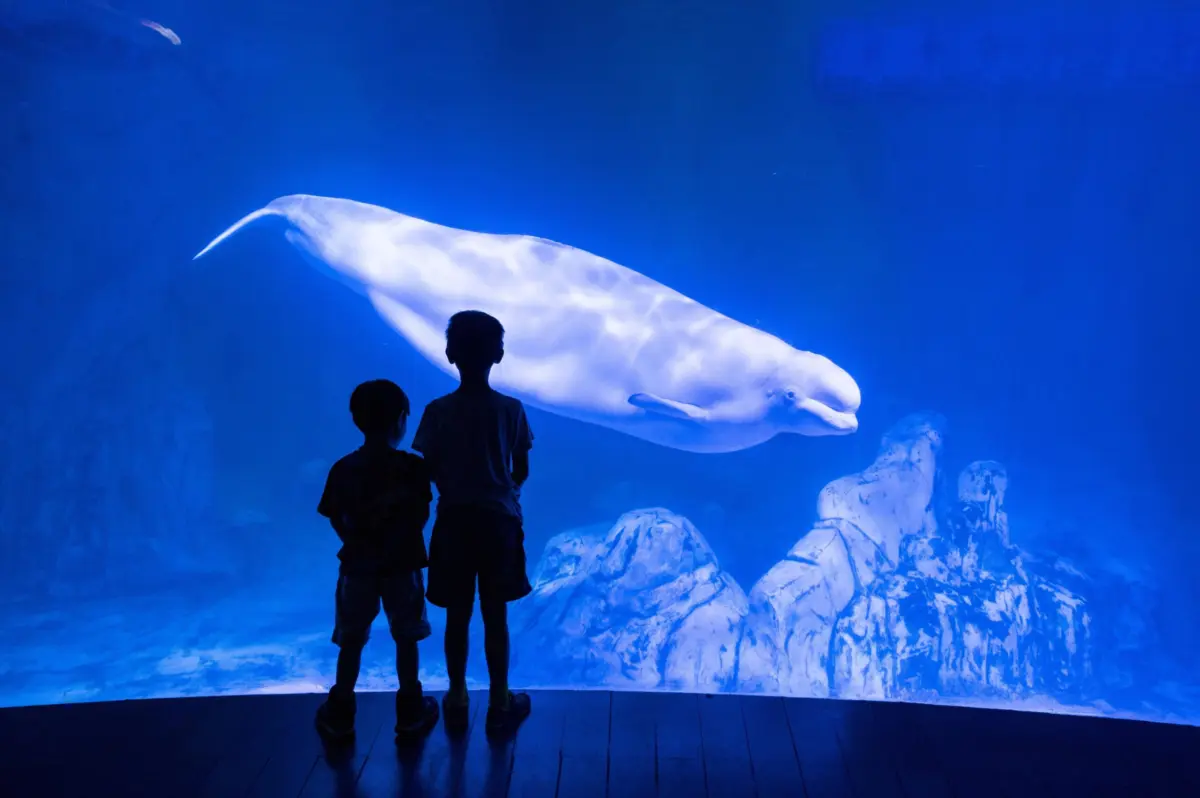
In the span of just four weeks, one of the premier marine institutions in the United States—Chicago’s acclaimed Shedd Aquarium—has experienced an unprecedented and devastating loss: the deaths of four beluga whales. This grim milestone has sent shockwaves through the marine biology community, reigniting an intense, deeply polarized debate regarding the ethics of keeping cetaceans in captivity.
The most recent casualty, a 26-year-old female beluga named Osiris, passed away yesterday, plunging the institution into mourning and raising urgent questions regarding the viability of relocating distressed marine mammals. Osiris was part of a high-profile, complex international rescue operation that successfully airlifted dozens of marine mammals out of a scandal-plagued Canadian amusement park earlier this year. However, her death—following closely behind three other belugas from the same rescue cohort—highlights the fragile, perilous nature of captive transitions, even within state-of-the-art, heavily resourced facilities.
This unfolding tragedy compels a broader, long-overdue reckoning. For decades, traditional aquariums and zoos have successfully marketed themselves as dual-purpose institutions: vibrant tourist attractions that double as critical outposts for wildlife conservation, public education, and scientific research. Yet, as the mortality rates of these rescued animals demonstrate, the actual cost of captivity often falls heaviest on the animals themselves.
Read Also
As animal welfare advocates, marine scientists, and the public grapple with these successive deaths, the central question remains: Are modern aquariums truly serving the best interests of the wildlife they house, or is it time to radically reimagine how humanity cares for displaced marine mammals?
Detailed Chronology: The Fall and Flight of the Marineland Diaspora
To understand the current crisis at the Shedd Aquarium, one must look north to the controversial closure of Marineland in Niagara Falls, Canada. For years, the once-popular theme park faced mounting public scrutiny, regulatory investigations, and intense criticism from animal rights organizations over the conditions of its captive marine life.
By 2024, the situation at Marineland had reached a breaking point, prompting a massive rescue and relocation initiative. Rescuers and marine mammal experts undertook the monumental task of rehoming a displaced population consisting of four dolphins and 30 beluga whales—a group now widely referred to in conservation circles as the "Marineland diaspora."
The logistics of moving apex marine mammals across international borders are staggering. This past summer, a coalition of veterinarians, logistics experts, and government officials executed a meticulously planned transfer. The operation required custom-built, padded shipping containers, a heavy police-escorted convoy to navigate highways, and a specially chartered cargo plane to transport the belugas to their new homes in premier marine parks and aquariums across the United States and Spain.
At the time, the successful landing of the flights was celebrated as a triumph of international cooperation and animal rescue. Yet, marine biologists and animal behaviorists cautioned that the physical transport was only the first hurdle. The psychological and physiological toll of adapting to entirely new water systems, social structures, and environments would prove to be an uphill battle.
Those warnings tragically materialized in late August and September. The cascade of deaths began with 34-year-old Beethoven, a long-term resident of the Shedd Aquarium whose death marked the onset of the crisis. Shortly thereafter, two members of the recent Canadian rescue contingent—20-year-old Rain and 23-year-old Peekachu—passed away. The sequence culminated with the death of 26-year-old Osiris yesterday. In less than a month, four whales perished at a single institution, casting a dark shadow over what was once heralded as a triumphant rescue mission.
Supporting Context & Metrics: The Complex Economics and Realities of Modern Zoos
The deaths at Shedd do not exist in a vacuum; they serve as a flashpoint for an ongoing philosophical battle over the existence of zoos and aquariums. Defenders of these institutions argue that facilities like the Shedd Aquarium—operating under the banner of conservation and education—play an irreplaceable role in fostering human connection with the natural world.
Proponents typically point to three foundational pillars of modern zoological institutions:
- Financial Contributions to Conservation: Accredited zoos and aquariums generate substantial revenue, a portion of which is funneled directly into field conservation projects around the globe. According to the latest available industry data from 2022, a single coalition of accredited North American zoos and aquariums poured more than a quarter of a billion dollars into global habitat preservation and wildlife research projects.
- Species Reintroduction Programs: While rare, some institutions participate in breeding and recovery programs designed to bolster dwindling wild populations of endangered or threatened species.
- Public Education and Empathy Building: By bringing urban and landlocked populations face-to-face with exotic wildlife, aquariums aim to inspire a lifelong appreciation for aquatic ecosystems. The Shedd Aquarium’s institutional motto, "For Love of Waterkind," encapsulates this ethos.
However, critics and independent researchers argue that these noble missions are frequently undermined by hard empirical realities. When scrutinized closely, the actual metrics supporting the conservation and educational value of captivity begin to fracture:
- The Reintroduction Myth: The successful reintroduction of large marine mammals—particularly cetaceans born or raised in captivity—back into the wild is exceedingly rare. The behavioral conditioning, social structures, and specialized health needs of captive whales make rehabilitation for open-ocean survival virtually impossible in most cases.
- The Limited Impact of Tourism: Numerous sociological and psychological surveys of zoo and aquarium visitors indicate that passively viewing a wild animal behind glass or within a controlled pool rarely translates into sustained behavioral changes, political activism, or significant personal contributions to environmental stewardship.
- The Psychological Toll: For highly intelligent, social, and mobile species like beluga whales—which routinely swim vast distances in the open ocean—confinement to artificial pools, regardless of advanced filtration systems and enrichment programs, can induce chronic stress, stereotypical behaviors, and suppressed immune systems.
Official Statements and Institutional Responses
In the wake of Osiris’s death, the leadership at the Shedd Aquarium has moved quickly to address public concern while maintaining transparency about the rigorous veterinary efforts employed behind the scenes.
In a formal blog post dedicated to remembering Osiris, the aquarium emphasized that all four of the recently deceased belugas—including the rescue cohort from Marineland—were under constant, 24-hour observation. They were receiving intensive, specialized medical care tailored to the unique challenges of their transition.
"Our veterinary and animal care teams worked tirelessly around the clock to provide the highest standard of specialized support for Osiris, Rain, Peekachu, and Beethoven," representatives from the Shedd Aquarium stated. "The physical and psychological adaptation of rescued marine mammals is fraught with complex physiological variables. We are deeply devastated by these losses and are fully committed to conducting comprehensive, multi-disciplinary post-mortem examinations to determine the exact underlying medical causes for each of these deaths."
Independent veterinary pathologists and marine mammal welfare specialists have been brought in to assist with the ongoing investigations. Preliminary reviews suggest that the stress of the historic relocation, combined with underlying health vulnerabilities common among whales sourced from substandard facilities, may have played a synergistic role in compromising their immune responses. However, definitive conclusions await the final pathology reports.
Future Outlook: Toward a Humane Alternative for Marine Mammals
The tragedy at Shedd Aquarium forces a profound ethical dilemma for society: If traditional aquariums and zoos present acute welfare risks to large cetaceans, what is the viable alternative?
Even if the global community immediately ceased all wild captures—a practice largely outlawed or phased out in many developed nations—there would still be thousands of marine mammals alive today that are injured, orphaned, born into captivity, or entirely dependent on human intervention for survival. Releasing them directly into the open ocean is often a death sentence.
Recognizing this gap between captivity and conservation, innovative solutions are beginning to emerge. Chief among them is the development of coastal sanctuaries—protected, semi-natural marine environments designed specifically for "retired" or rescued whales.
Organizations like the Whale Sanctuary Project are currently spearheading efforts to construct large-scale, fenced-off ocean bays—such as an ambitious 110-acre coastal sanctuary site currently under development in Nova Scotia. These facilities aim to provide cetaceans with real tidal currents, natural ocean flora and fauna, and expansive swimming areas, all while maintaining the safety of human-provided medical oversight and feeding programs.
However, the realization of these sanctuaries is moving at a frustratingly slow pace due to immense regulatory hurdles, funding requirements, and engineering complexities. Until such coastal alternatives become widely accessible, the burden falls heavily on the shoulders of the public and consumers.
Ultimately, individuals must weigh the stated educational and conservation benefits of traditional aquariums against the undeniable physiological and psychological tolls endured by the animals housed within them. As we navigate this era of ecological awakening, the deaths of Osiris, Rain, Peekachu, and Beethoven must not be swept aside as mere statistical anomalies. Instead, they should serve as a catalyst for a compassionate, evidence-based transformation in how humanity stewards the most vulnerable creatures of the deep.





Comments
Facebook App ID not configured. Please add it in the Customizer.