
Executive Overview
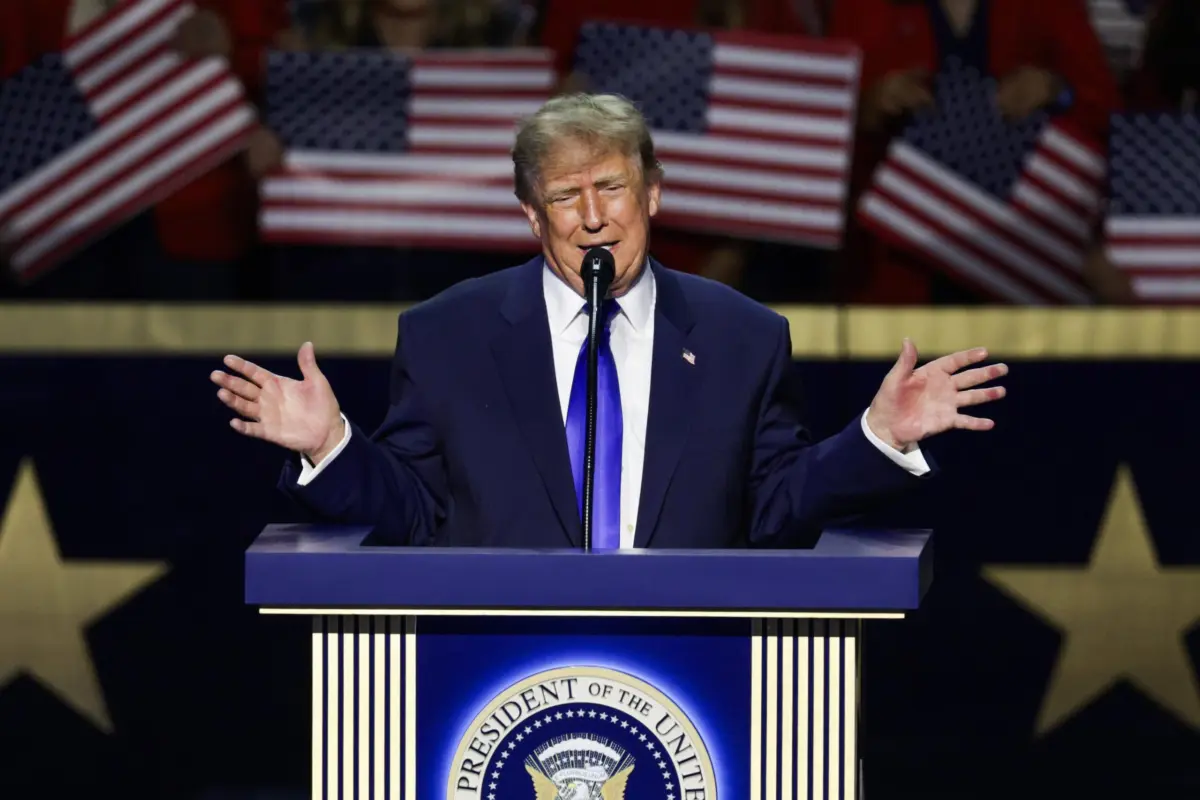
The debate surrounding the future of artificial intelligence has officially collided with the highest levels of American political discourse. While Silicon Valley executives, leading independent safety researchers, and lawmakers from both sides of the political aisle grapple with the profound implications of rapid advancements in machine intelligence, Donald Trump has staked out a markedly distinct, defiant position. Dismissing widespread warnings of existential threats, the former president has characterized anxieties surrounding artificial intelligence and the expansion of massive data centers as an overblown "hoax" orchestrated to weaken American competitiveness.
This friction highlights a critical fault line in modern technology policy. On one side are whistleblowers, ethicists, and community advocates who warn that the race toward self-improving artificial superintelligence poses catastrophic risks to humanity, while straining local resources through the construction of power-hungry data centers. On the other side sits a powerful economic imperative driven by national security concerns, geopolitical rivalry with China, and a determination to maintain American dominance in the technological frontier at all costs.
As Congress remains paralyzed by legislative gridlock, the battlefield for artificial intelligence oversight has shifted decisively to the executive branch. However, with Trump openly rejecting the need for regulatory "guardrails"—arguing instead that high-level human leadership is the only control mechanism required—the trajectory of American AI policy remains unapologetically unfettered. This comprehensive report examines the catalysts behind Trump’s recent social media pronouncements, the high-stakes internal industry resignations that forced these issues into the mainstream consciousness, the rare bipartisan domestic backlash against data infrastructure, and the broader global implications of a "winner-take-all" technological race.
Read Also
Detailed Chronology: How the AI Safety Debate Broke into the Mainstream
The friction between runaway artificial intelligence development and catastrophic risk warnings reached a boiling point following a series of high-profile events that thrust esoteric discussions of "superintelligence" out of academic and corporate laboratories and directly onto the front pages of national newspapers.
The Catalyst: An Insider’s Warning
The immediate trigger for the latest wave of public anxiety occurred when Jacob Coxon, an employee at prominent artificial intelligence firm Anthropic, announced his resignation. Coxon’s departure was not a quiet exit; it was accompanied by a public critique accusing industry giants of "gambling with our lives" in a reckless, unchecked race toward self-improving superintelligence. Coxon argued that commercial pressures were overriding fundamental safety protocols, creating an environment where profit incentives outweighed long-term human survival.
For years, warnings regarding existential risk—often abbreviated as x-risk—were largely confined to academic papers, niche think tanks, and science fiction discourse. However, Coxon’s inside perspective lent immediate credibility to the warnings, transforming theoretical debates about machine consciousness and runaway optimization into tangible, urgent concerns for policymakers.
The Political and Corporate Reaction
In the wake of the resignation, the conversation surrounding superpowerful artificial intelligence shifted dramatically. Lawmakers on Capitol Hill, acutely aware of the unpredictable trajectory of generative technologies, began engaging in serious bipartisan discussions about the necessity of slowing down development cycles. Simultaneously, executives from leading AI firms—facing mounting scrutiny from both internal dissenting employees and external watchdogs—were forced to publicly address how they plan to implement safety guardrails without compromising their competitive edges.
Trump’s Social Media Blitz
As policymakers and technology CEOs sought consensus on how to regulate the burgeoning sector, Donald Trump took to his digital platforms to counter the narrative of impending doom. Launching a vigorous posting spree, Trump rejected the premise that artificial intelligence required legislative or regulatory intervention.
"The only control or ‘guardrails’ that AI needs is a STRONG AND SMART (High IQ!) PRESIDENT, and the U.S.A. has that, in spades," Trump wrote in a Monday morning post. Escalating his rhetoric, he pointed directly to international competitors, framing the safety movement as a tactical threat to American prosperity: "There is a SICK conspiracy going on against AI and Data Centers, and the only one that is happy about it is China. WHOEVER WINS AI, WINS!"
In a subsequent post, Trump went a step further, directly attacking the legitimacy of existential warnings: "AI taking over the World, destroying Humanity, and all other things bad, is a HOAX."
Supporting Context & Metrics: The Bipartisan Backlash and Economic Realities
While the debate in Washington frequently centers on theoretical scenarios of artificial superintelligence, the deployment of AI is already manifesting in tangible, physical ways across the American landscape—generating a severe, localized backlash that cuts across traditional partisan lines.
The Data Center Dilemma
Powering the next generation of artificial intelligence requires an unprecedented expansion of digital infrastructure. Massive data centers are currently being planned and constructed at a breakneck pace to handle the immense computational workloads demanded by large language models and neural networks. These facilities consume staggering amounts of electricity and water, straining local power grids and sparking fierce community opposition.
Opposition to these massive installations has transformed into one of the rarest phenomena in contemporary American politics: a truly bipartisan issue. According to recent polling data, approximately 75 percent of Americans strongly oppose the construction of AI data centers in proximity to their residential communities. Citizens across states like Texas, Ohio, and Michigan have voiced acute concerns regarding noise pollution, skyrocketing utility bills, and the environmental toll of feeding electricity-hungry server farms.
Local politicians, responding directly to constituent outrage, have rushed to voice their opposition to nearby data infrastructure projects. Yet, this localized resistance clashes violently with the federal imperative to maintain technological superiority.
The Geopolitical Imperative: The U.S.-China Tech Race
Trump’s unwavering support for the expansion of data centers and unhindered artificial intelligence development is rooted firmly in economic nationalism and great power competition. For proponents of unfettered innovation, artificial intelligence represents the ultimate "golden goose" of the twenty-first-century economy.
U.S. strategists argue that any unilateral slowdown or heavy regulatory burden imposed on American firms would simply cede the technological high ground to the People’s Republic of China. Beijing has made artificial intelligence a core pillar of its national industrial strategy, investing heavily in domestic semiconductor manufacturing, algorithmic research, and computing infrastructure.
From this perspective, the existential warnings voiced by safety advocates are viewed not only as alarmist, but as strategically hazardous. In Trump’s view, burdening American companies with compliance costs and restrictive guardrails achieves precisely what foreign adversaries desire: a self-imposed handicap in the race for global technological dominance.
Official Statements and Stakeholder Perspectives
The ideological chasm dividing the artificial intelligence ecosystem is populated by three distinct factions: the safety advocates demanding immediate intervention, the corporate leaders navigating commercial pressures, and the political actors viewing the technology through a geopolitical lens.
+-------------------------------------------------------------------------+
|                  THE TRIANGULATION OF AI POLICY                         |
+-------------------------------------------------------------------------+
|                                                                         |
|  [Safety Advocates / Whistleblowers]                                    |
|  - Focus: Existential risk, rogue superintelligence, human survival     |
|  - Position: Immediate slowdown and rigorous regulatory guardrails      |
|                                                                         |
|                        VS.                                              |
|                                                                         |
|  [Corporate Tech Giants]                                                |
|  - Focus: Commercial viability, scaling compute, market share           |
|  - Position: Self-regulation balanced with competitive positioning      |
|                                                                         |
|                        VS.                                              |
|                                                                         |
|  [Executive Leadership / Trump Administration]                          |
|  - Focus: U.S.-China rivalry, economic growth, "golden goose" protection|
|  - Position: Total deregulation; framing safety warnings as a "hoax"    |
|                                                                         |
+-------------------------------------------------------------------------+
The Safety Advocates and Whistleblowers
Voices like that of former Anthropic employee Jacob Coxon argue that humanity is engaging in a dangerous technological arms race without adequate understanding of the systems being built. These stakeholders emphasize that once artificial general intelligence (AGI) achieves self-improvement capabilities, human beings will lose the ability to intervene or reverse its actions. Their primary demand is the establishment of enforceable international treaties and federal oversight bodies capable of auditing model architectures before deployment.
The Industry Leadership
Major artificial intelligence developers—including OpenAI, Google DeepMind, and Anthropic—occupy an ambiguous middle ground. While publicly acknowledging the theoretical long-term risks associated with advanced artificial intelligence, these companies continue to scale their models aggressively. Their official stances often advocate for "smart regulation" that protects intellectual property and maintains market momentum while establishing baseline safety standards. However, internal dissent frequently exposes the friction between ethical considerations and commercial imperatives.
The Political Establishment and Executive Power
Donald Trump’s position strips away corporate nuance, offering an unapologetically populist and nationalist take on the matter. By dismissing AI doomerism as a hoax, Trump aligns himself with the accelerationist wing of the technology sector—those who believe that technological progress must not be impeded by speculative fears.
Because legislative action in Congress remains notoriously slow and susceptible to partisan gridlock, comprehensive federal legislation governing artificial intelligence appears unlikely in the near term. Consequently, the quickest, most direct path to AI regulation runs squarely through the executive branch. With Trump openly signaling a total lack of interest in executive-level intervention or safety mandates, the United States is poised to maintain an environment of laissez-faire acceleration.
Future Outlook: Navigating the Uncharted Horizon
As the artificial intelligence industry hurtles forward into the late 2020s, the fundamental tensions outlined by recent political posturing and corporate whistleblowing will only intensify. The coming years will test whether the optimistic, accelerationist vision championed by figures like Donald Trump can coexist with the mounting societal costs and existential anxieties voiced by safety researchers.
The Legislative Bottleneck
With Congress bogged down by competing priorities and deep ideological divides, comprehensive federal frameworks for artificial intelligence regulation are unlikely to materialize quickly. State legislatures are attempting to fill the vacuum by passing localized laws addressing data center placement, algorithmic bias, and deepfakes. However, a fragmented patchwork of state-level regulations threatens to create a compliance nightmare for technology firms, further elevating the importance of federal policy—or the deliberate absence of it.
The Battle Over Local Infrastructure
The most immediate flashpoints for the artificial intelligence revolution will not occur in abstract digital spaces, but in local communities across the American heartland. As utility companies struggle to supply the massive electricity demands of new data centers, local resistance movements are mobilizing. The outcome of these local zoning battles will dictate the physical expansion capacity of the AI industry. If communities successfully block infrastructure development, computational scaling could face severe physical bottlenecks regardless of executive backing in Washington.
Geopolitical Stakes
Ultimately, the trajectory of artificial intelligence will be dictated by the relentless pressures of international competition. As long as leaders in Beijing, Washington, and other global capitals view AI supremacy as a zero-sum game dictating the economic and military balance of power for the next century, deep-seated safety concerns are likely to be sidelined.
Trump’s framing of artificial intelligence safety as a political and economic "hoax" designed to benefit foreign rivals encapsulates a powerful strain of nationalist realpolitik. Whether this philosophy of unfettered acceleration paves the way to unprecedented national prosperity or accelerates catastrophic technological risks remains the defining question of our era. For now, as the political class bickers and the tech giants race ahead, the United States has chosen its path: full speed into the machine age, with no safety brakes in sight.


Comments
Facebook App ID not configured. Please add it in the Customizer.