

The Greater Caribbean—a dynamic expanse encompassing the islands of the Caribbean Sea, the eastern seaboard of Central America, the southern shores of North America, and the northern coast of South America—has long defied simple geopolitical categorization. Bound by artificial political borders and shaped by starkly diverse linguistic, racial, and cultural trajectories, the region nonetheless shares an overarching, deeply felt historical architecture. As cultural theorist Paul Gilroy famously observed, these nations and territories are bound together by "shared experiences": the systemic historical abduction of millions from Africa, the harrowing trauma of the Middle Passage, and the enduring legacies of chattel slavery and abolition.
These collective ruptures inspired literary scholar Antonio Benítez Rojo to conceptualize the region as "the repeating island"—a dynamic, ever-shifting cultural matrix where historical echoes continually resurface in new forms. Embracing a pan-Caribbean perspective that intentionally transcends the rigid linguistic legacies of European imperialism, a landmark new literary and critical showcase brings to the fore the vibrant tapestry of Creole literature originating across the Caribbean Basin.
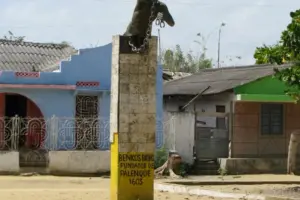
Featuring stories, poems, novel excerpts, and critical essays translated from English-, French-, and Spanish-based Creoles, this curated collection serves a vital dual purpose: it grants much-needed visibility to marginalized languages through their own autochthonous texts, while meticulously mapping their striking thematic similarities and nuanced local differences. Alongside these translations—which are presented with their original texts—the initiative features critical scholarship, such as an exploration of the monument dedicated to the legendary maroon leader Benkos Biohó in San Basilio de Colombia. This analysis unpacks the complex friction points between collective memory, official history, and the pursuit of true liberation within a unique Palenquero-speaking community.
Read Also
Detailed Chronology & Historical Evolution
The Postmodern Shift and the Rise of Postcolonial Discourse
For centuries, European intellectual traditions imposed a rigid, monocultural framework of universalism that marginalized non-Western epistemologies. However, a profound "crisis of authority" in European discourse during the late 20th century shattered this intellectual monopoly. The advent of postmodernity provoked deep-seated skepticism toward Western epistemic and linguistic paradigms, paving the way for a revolutionary reassessment of global diversity, cultural hybridization, and syncretism.
This evolving intellectual landscape provided critical tools for reinterpreting the postcolonial Caribbean. In this context, Caribbean literature emerged as a transcultural vehicle that negotiates between multiple worlds, actively dismantling traditional Western dogmas centered around notions of purity, essentiality, and absolute authenticity. By blending the profound trauma of the colonial past with the realities of the Americas, Caribbean texts empower communities to reconstruct a sense of selfhood that human trafficking and colonial hegemony sought to erase.
Milestones in Creole Reclamation and Recognition
The journey of Creole languages—born historically as instruments of both desperate survival and active resistance—has been marked by systemic stigmatization, followed by modern academic and global vindication. Key historical milestones illustrate this long-fought struggle for cultural and linguistic autonomy:
- 1985: Martinican writer Raphaël Confiant publishes Bitako-a, breaking a monumental barrier by releasing the first-ever novel written entirely in Martinican Creole.
- 1989: Confiant, alongside Jean Bernabé and Patrick Chamoiseau, publishes Éloge de la créolité (In Praise of Creoleness), a foundational manifesto defending Creole identity, language, and culture against the homogenizing forces of assimilation.
- 2005: UNESCO officially recognizes San Basilio de Palenque in Colombia—founded by escaped African slaves as one of the first free towns in the Americas—as a Masterpiece of the Oral and Intangible Heritage of Humanity, marking a watershed moment for Hispanic-based Creole recognition.
- 1991 & Beyond: Constitutional reforms in nations such as Colombia formally enshrine regional Creoles as official languages, beginning a slow and often contentious integration of marginalized linguistic systems into national legal frameworks.
Supporting Context & Literary Contributions
Hispanophone Creoles and Oral Histories: "Catalina Loango"
The showcase opens with profound roots in Hispanophone Creole tradition through "Catalina Loango," an oral history transcribed within the illustrated ethnographic volume Chitieno lengua ku ma kuendo: hablemos Palenquero a través del cuento (2011). Compiled by Bernardino Pérez Miranda—a renowned author, translator, educator, and specialist in Spanish-Palenquero bilingualism based in San Basilio de Palenque—the text adapts a traditional lumbalú (a sacred "dance of death" chant).
The narrative offers an esoterically coded, utopian reversal of the Middle Passage. Through the symbolism of the protagonist’s name, "Loango"—historically a primary embarkation point for enslaved individuals departing from the Congo basin—the chant encodes a spiritual and cultural return to the African homeland.
Spatial Economies of Violence: "A Maroon Monument"
Complementing the linguistic recovery of Palenque, researcher Ludmila Ferrari offers a penetrating photo essay entitled "A Maroon Monument." Ferrari investigates the spatial economies of violence in Latin America by examining the physical processes of construction, demolition, and architectural decay.
Her analysis focuses on the statue of maroon leader Benkos Biohó in San Basilio de Palenque, arguing that its initial artistic conception remained trapped within the visual grammar of slavery and orthodox Western sculptural standards. Over time, however, the local community subverted this artistic intent. Through collective alterations, the inhabitants transformed the monument into a living space of symbolic dispute. Ferrari concludes that monuments to maroon resistance cannot remain monolithic or stable; rather, they must remain multiple, open, and fluid, tethered to an everyday, community-driven experience of liberty that transcends the simplistic slave-master dichotomy.
Linguistic Tensions in the Raizal Archipelago: "Kriol Soldier"
The geopolitical and linguistic fractures of modern nation-states are brought into sharp relief through the work of Emiliana Bernard-Stephenson. A distinguished member of the Raizal community from the Caribbean islands of San Andrés, Providencia, and Santa Catalina—as well as a veteran journalist, writer, educator, feminist, and Colombia’s ambassador to Jamaica—Bernard-Stephenson contributes her powerful poem "Kriol Soldier."
The poem serves as an unyielding defense of San Andrés–Providencia Creole (Kriol), her mother tongue. It exposes the acute linguistic and social tensions between the islands’ indigenous English-based Creole and Spanish—the latter imposed administratively following the islands’ integration into Colombian national sovereignty during the twentieth century.
Historically subjected to institutionalized linguistic and racial discrimination, Creole exists today in a state of diglossia alongside Spanish. Although the Colombian Constitution of 1991 officially recognized the islands’ Creole as a protected language as part of a broader national turn toward multiculturalism, the daily friction between state language policy and grassroots identity persists.
The Poetics of Subversion: Jean D’Amérique’s Lullabies
Haitian poet, dramaturg, novelist, and rapper Jean D’Amérique contributes "Poem for Children with Trouble Sleeping," a striking piece that uses the cadence and innocence of a lullaby to mask a biting critique of Haiti’s brutal political machinery.
Employing profound irony, D’Amérique generates a deliberate chasm between the literal interpretation of the text and its devastating socio-political subtext. The resulting contrast starkly juxtaposes the intrinsic vulnerability and innocence of childhood against the merciless machinery of a modern state that routinely treats human lives as disposable economic capital.
Anticolonial Foundations: Raphaël Confiant’s Martinican Legacy
Martinican author Raphaël Confiant—a towering figure in contemporary Caribbean literature and a pioneer of the ecological and anticolonial movements—is represented in the collection by an exclusive excerpt from his unpublished novel Galfétè Mò (Galfétè is dead).
Confiant’s expansive literary output has continually mirrored the rich oral traditions of Martinique and the French-based Creole born on colonial sugar plantations. Operating alongside standard administrative French, Martinican Creole finds in Confiant’s work a fierce champion. His presentation of Galfétè Mò offers readers a visceral, unvarnished portrait of the hyper-exploitative economic machinery that defined plantation life in the French Antilles.
Official Statements & Critical Perspectives
Academic and institutional consensus surrounding the publication emphasizes the paradigm shift occurring within global literary studies:
"Creole literatures are ultimately the supersyncretic result of a dialogue between elements arising from African, European, and Asian ethnicities, cultures, languages, and religions. These elements coexist in an oscillating relationship of appropriation and rejection that generates its own new American-born byproducts."
— Editorial Commentary, Pan-Caribbean Literary Review
Scholars stress that traditional, nation-bound literary canons are no longer adequate for addressing the transnational realities of the Greater Caribbean. By prioritizing texts written from within Creole linguistic frameworks, contemporary criticism seeks to reverse centuries of colonial epistemic violence.
Furthermore, international recognitions—such as UNESCO’s designation of San Basilio de Palenque—are viewed by cultural advocates not merely as symbolic accolades, but as vital legal and political leverage points for protecting endangered indigenous languages against ongoing linguistic imperialism.
Future Outlook & Ongoing Challenges
As the Greater Caribbean navigates the complexities of the twenty-first century, the revival and institutional integration of Creole languages face both unprecedented opportunities and persistent systemic threats.
Key Trajectories Moving Forward:
- Educational Integration: Grassroots educators and linguists continue to lobby for the comprehensive expansion of bilingual education programs—such as Spanish-Palenquero and English-Kriol frameworks—ensuring that younger generations learn to read and write in their mother tongues.
- Digital and Media Preservation: Digital archiving initiatives are increasingly vital in capturing fading oral histories, traditional lumbalú chants, and regional poetry before living repositories pass away.
- Policy and Legal Enforcement: While constitutional reforms in countries like Colombia have improved the formal status of minority languages, translating these legal mandates into adequate funding, public media representation, and administrative support remains a central battleground for regional activists.
- Transnational Solidarity: Projects uniting Francophone, Anglophone, and Hispanophone Creole communities foster a unified pan-Caribbean front, proving that the "repeating island" continues to generate resilient, interconnected cultural futures rooted in shared historical memory and creative defiance.


Comments
Facebook App ID not configured. Please add it in the Customizer.