
Executive Overview
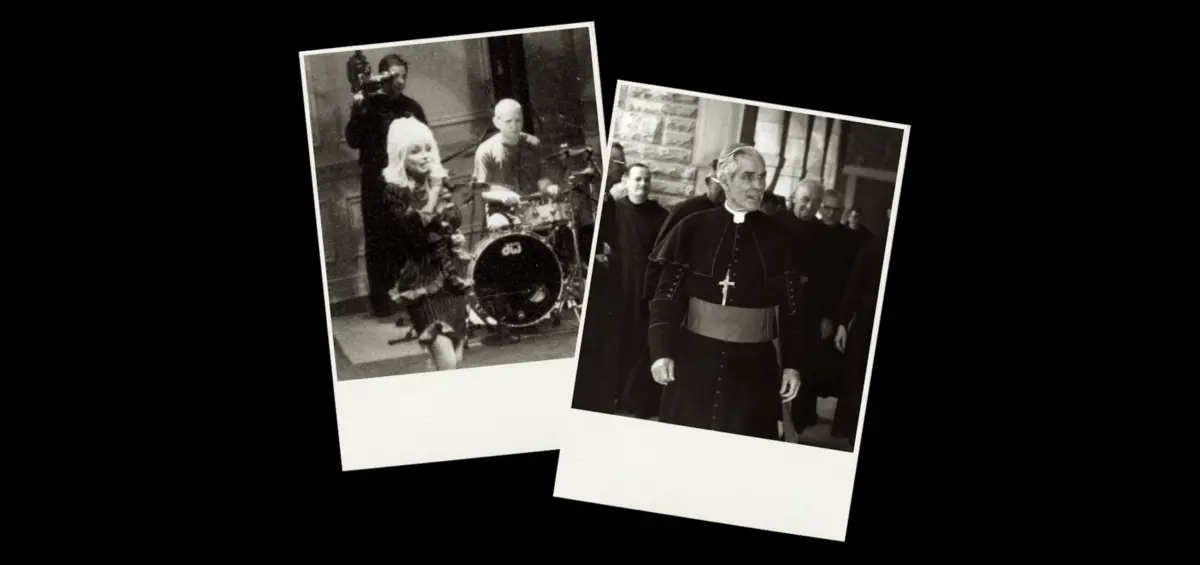
In the sprawling landscape of American mass entertainment, few figures have managed to weave explicit religious conviction into the fabric of popular culture without alienating the secular mainstream. Even fewer have achieved this with the universal acclaim, charm, and longevity of two seemingly disparate cultural icons: Dolly Parton, the queen of country music and creator of Dollywood, and Fulton Sheen, the charismatic Catholic bishop who captivated millions on television during the mid-20th century.
Though they operated in wildly different spheres—Parton favored rhinestones, cascading wigs, and secular stages, while Sheen wore a pectoral cross, a Roman collar, and utilized a blackboard to dissect the seven deadly sins—both understood the theatricality of the human spirit. They mastered the art of the public persona, employing high-contrast presentation to communicate deeply held Christian truths. As America collectively mourns the passing of Parton and Fulton Sheen is formally beatified in St. Louis, the cultural resonance between these two giants of faith and entertainment demands a closer examination.
This article explores the intersecting paths of Parton and Sheen, analyzing how their unique blend of showmanship, unflagging generosity, and theological clarity allowed them to transcend the increasingly polarized cultural divides of their respective eras. By refusing to confuse authenticity with informality, and by leading with joy rather than grievance, both figures redefined what it meant to be a public Christian personality in America.
Read Also
Detailed Chronology: Two Lives in the Public Eye
To understand how a Pentecostal-raised Appalachian singer-songwriter and an intellectual Catholic prelate arrived at a similar pinnacle of cultural affection, it is instructive to trace the chronological milestones of their parallel ascents.
The Mid-Century Television Phenomenon: Fulton Sheen
- 1952: Fulton Sheen launches his weekly television program, Life Is Worth Living, on the fledgling DuMont television network. Pitted against cultural juggernauts Milton Berle ("Uncle Miltie") and Frank Sinatra, Sheen is immediately cast as the ultimate underdog.
- 1952–1953: Utilizing his trademark theatricality—pacing the stage, sweeping his cape, and utilizing a blackboard—Sheen addresses complex moral, spiritual, and geopolitical crises. Within months, his audience swells to millions, generating sacks of fan mail that rival the volume received by Hollywood A-listers.
- 1953: Sheen is awarded the Emmy for Most Outstanding Personality, playfully thanking his "four writers: Matthew, Mark, Luke, and John." He also appears on the cover of Time magazine, cementing his status as a mainstream media titan.
- 1950s–1960s: As national director of the Society for the Propagation of the Faith, Sheen raises unprecedented sums for global missions, funneling the income from his television contracts directly into humanitarian and evangelical efforts while navigating ecclesiastical politics.
The Rise of a Country Music Icon: Dolly Parton
- 1946–1960s: Born in the Smoky Mountains of East Tennessee into a deeply religious family, Parton grows up singing in the little Pentecostal church where her grandfather preaches. She moves to Nashville after graduating high school in 1964 to pursue a career in music.
- 1967–1974: Parton achieves widespread fame as the co-star and vocal partner of Porter Wagoner on his syndicated television show. Following an acrimonious professional parting, she launches a phenomenally successful solo career, writing and recording anthems like "Jolene" and "I Will Always Love You."
- 1986: Parton opens Dollywood in Pigeon Forge, Tennessee, transforming her home region into a major economic hub and entertainment empire while infusing her business ventures with regional pride and familial warmth.
- 1995: Parton launches the Imagination Library, a visionary literacy program that eventually distributes hundreds of millions of free books to children worldwide, reflecting her lifelong commitment to public charity.
- Decades Following: Parton solidifies her status as an untouchable American treasure, seamlessly bridging generational, political, and cultural divides through self-deprecating humor, musical versatility, and transparent faith.
Supporting Context & Metrics: Bridging the Divide
The success of both Parton and Sheen in commercial media defies the modern assumption that religious conviction is inherently polarizing. In an era where public discourse is frequently fractured into warring ideological camps, both figures achieved rare cross-demographic appeal.
The Metrics of Reach and Influence
| Metric / Indicator | Fulton Sheen (Life Is Worth Living) | Dolly Parton (Music & Philanthropy) |
|---|---|---|
| Primary Medium | Broadcast Television (DuMont / ABC) | Recorded Music, Film, Live Performance |
| Peak Audience Size | Millions of weekly viewers (rivaling top secular shows) | Hundreds of millions of records sold globally |
| Accolades | Emmy Award for Most Outstanding Personality, Time Cover | 11 Grammy Awards (out of 50+ nominations), Kennedy Center Honors |
| Humanitarian Impact | Millions raised for global missions via the Society for the Propagation of the Faith | Hundreds of millions of books distributed via the Imagination Library; extensive disaster relief funding |
| Core Presentation Style | Intellectual rigor wrapped in dramatic, theatrical flair | Self-deprecating humor paired with accessible Appalachian warmth |
The Power of Self-Mockery and Joy
Neither Parton nor Sheen attempted to conceal their beliefs, yet neither used their platform to bludgeon their audiences. Sheen spoke plainly on sin, confession, communism, and psychoanalysis, yet he did so with an infectious, visible delight in being alive. When competing with Milton Berle—who dubbed himself "Uncle Miltie"—Sheen cheekily adopted the moniker "Uncle Fultie" and quipped that they both worked for the same boss (noting Berle’s sponsor, Texaco, versus his own "Chief in the Sky").
Similarly, Parton leaned into her heavily stylized image with legendary wit, famously remarking, "It costs a lot of money to look this cheap." This self-mockery served as a powerful defense against pomposity. It signaled to the audience that while their artistry was carefully crafted, their humanity was genuine. Crucially, their humor was born from a sense of spiritual freedom; they did not take themselves too seriously because they understood they were not the center of the story.
Official Statements and Institutional Recognition
The enduring legacies of Parton and Sheen have been marked by significant public acknowledgments from cultural, civic, and religious institutions.
The Beatification of Fulton Sheen
The formal advancement of Fulton Sheen toward sainthood by the Roman Catholic Church underscores his profound institutional impact. Church officials in St. Louis and Rome have highlighted his tireless commitment to evangelization, his mastery of modern media, and his radical generosity. Despite facing bureaucratic headwinds and ecclesiastical friction during his lifetime—notably from figures like Cardinal Francis Spellman—Sheen’s reputation for heroic virtue has ultimately prevailed within the ecclesiastical framework.
Tributes to Dolly Parton
Following her passing, tributes poured in from across the political, artistic, and religious spectrum. The announcement of her death by her family captured the essence of her public persona:
"Dolly has lived in the light and is in the arms of Jesus."
Civic leaders, fellow musicians, and fans alike noted that Parton’s public life was a masterclass in grace. Whether forgiving past professional slights—such as her reconciliation with Porter Wagoner—or quietly funding medical research and educational initiatives, Parton demonstrated that faith could translate seamlessly into civic responsibility without the need for partisan posturing.
Future Outlook: The Blueprint for Authentic Witness
As the cultural landscape continues to grapple with fragmentation, hostility, and the weaponization of identity, the parallel legacies of Dolly Parton and Fulton Sheen offer a compelling roadmap for public witness.
- Credibility Over Scolding: The phenomenon of Parton and Sheen proves that the American public is not inherently hostile to explicit Christian witness; rather, it rejects scolding certainty devoid of charity. Credibility is earned not merely by declaring true things, but by embodying the joy, generosity, and courage those truths are meant to produce.
- Rejecting Grievance: Both figures consciously chose not to be possessed by personal or ideological grievances. By maintaining a posture of generosity and refusing to treat the audience as an enemy, they demonstrated that art and faith can invite participation rather than demand submission.
- The Integration of Art and Conviction: As new generations of artists and public intellectuals navigate the complexities of faith in the public square, the Parton-Sheen paradigm remains a gold standard. It demonstrates that rigorous conviction and universal charm are not mutually exclusive.
In an age desperately searching for authenticity beneath layers of artifice, the rhinestone-clad songbird from Appalachia and the cape-wearing bishop from Illinois remind us that when faith is paired with genuine joy and radical charity, people are always glad to see it coming.




Comments
Facebook App ID not configured. Please add it in the Customizer.