
Executive Overview
In contemporary public life, the intersection of political power, financial self-dealing, and institutional hypocrisy has formed what observers have increasingly termed a "fraud economy." This pervasive ecosystem extends far beyond partisan boundaries, weaving together the monetization of executive office, the erosion of academic integrity, and a broader cultural collapse of institutional trust.
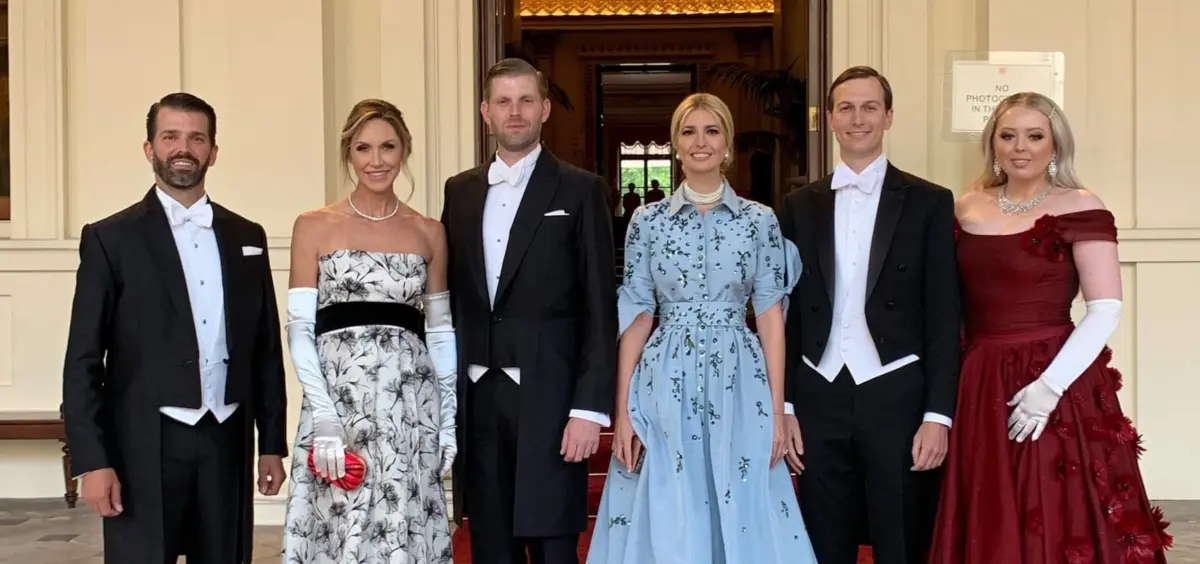
At the center of this dynamic is a profound moral crisis characterized by a transactional worldview where principles are routinely subordinated to self-aggrandizement. Whether examining the Trump family’s aggressive commercialization of executive access—highlighted by massive foreign investments in ventures like World Liberty Financial—or exploring elite higher education institutions where mandatory compliance rituals sit side-by-side with high-stakes admissions scandals and research fabrication, the underlying message delivered to the public is uniform: the system is for sale, and adherence to performative pieties is simply the cost of entry.
This investigative review examines the structural rot undermining American institutions. By tracing the monetization of political proximity, analyzing the institutional decay within elite universities as documented by recent scholarship, and evaluating the societal toll of widespread public deception, this report sheds light on a system where public trust has been systematically liquidated for private gain. Repairing this deep-seated institutional rot will require a fundamental realignment of political and cultural incentives, demanding leaders who prioritize honor and integrity over transactional wealth accumulation.
Read Also
Detailed Chronology: Key Milestones in the Institutionalization of Conflict
To understand the current architecture of institutional self-dealing, it is necessary to trace how political proximity and elite impunity have evolved over the past decade. The normalization of transactional governance and academic corner-cutting did not happen overnight; it is the product of a gradual erosion of boundaries between public trust and private enrichment.
- November 2016: Following the initial election of Donald Trump, political commentators began drawing stark parallels regarding the involvement of presidential family members in commercial ventures. Observers noted that the blurring of lines between state power and private enterprise threatened to degrade democratic norms permanently.
- 2019: The "Varsity Blues" college admissions scandal exposed the staggering depths of the higher education fraud economy. Wealthy parents utilized shell companies, standardized test cheating, and fabricated athletic credentials—funneling millions of dollars through third parties—to secure elite university admissions for their children, proving that access to America’s top academic institutions could be directly purchased.
- 2020–2021: The COVID-19 pandemic accelerated public cynicism. Federal health officials, political figures, and mainstream media outlets frequently shifted messaging regarding viral transmission risks and vaccine efficacies. These inconsistencies, often driven by political expediency rather than objective epidemiological data, inflicted severe, lasting damage on public trust in scientific and governmental authorities.
- Early 2023: Investigative reporting spotlighted severe data manipulation and research integrity issues in scientific papers co-authored by Stanford University President Marc Tessier-Lavigne. The ensuing controversy revealed how academic leadership could be entangled with private biotech commercial interests, ultimately leading to Tessier-Lavigne’s resignation from the university presidency while retaining his tenured professorship.
- Late 2023: Harvard University President Claudine Gay faced intense national scrutiny following a disastrous congressional testimony regarding antisemitism on campus, which quickly unspooled into widespread revelations of plagiarism in her published academic work. Her subsequent resignation cemented her status as a symbol of the contradictions surrounding affirmative action and elite appointments.
- Early 2024: Revelations surfaced detailing a massive $500 million investment by powerful political and financial figures from Abu Dhabi and the United Arab Emirates into World Liberty Financial, a cryptocurrency venture spearheaded by the Trump family. This capital infusion reignited intense bipartisan debate over foreign influence and whether America’s foreign policy in the Middle East was effectively being monetized.
- October 2025: Stanford University quietly discontinued its mandatory land acknowledgements for campus social events—a minor procedural shift that nevertheless highlighted the gradual rollback of mandatory, performative loyalty oaths that had long characterized elite administrative compliance culture.
Supporting Context & Metrics: The Architecture of the Fraud Economy
The normalization of ethical compromises across government, academia, and corporate sectors is sustained by structural incentives that reward cynicism. When citizens observe that rules are enforced selectively—punishing ordinary infractions while insulating elites from meaningful consequences—the cultural defense that "everybody does it" becomes deeply entrenched.
The Monetization of Political Proximity
The modern political landscape has increasingly facilitated the conversion of public influence into private capital. In the case of the Trump family enterprises, critics have repeatedly pointed out the inherent conflicts of interest generated by accepting massive foreign capital infusions while holding or pursuing executive authority. When foreign sovereign wealth funds and ultra-wealthy investors pour hundreds of millions of dollars into family-run commercial and cryptocurrency ventures, it creates an unavoidable appearance—if not a direct reality—of purchased access. This dynamic forces a critical question for democratic governance: Can an administration maintain an uncompromised foreign policy when its inner circle stands to reap immense financial windfalls from foreign state-linked actors?
The Academic Industrial Complex
This transactional mindset is not confined to Washington; it is aggressively cultivated within the nation’s most prestigious universities. In his analysis of Theo Baker’s accounting of student life at Stanford University (How to Rule the World: An Education in Power at Stanford University), journalist Christian Parenti outlines a pervasive "culture of fraud."
For years, student organizations and fraternity party organizers were subjected to mandatory administrative rituals—such as reciting legalistic consent policies and institutional land acknowledgements—as a prerequisite for event approval. While framed as progressive pieties, these rituals function as loyalty oaths. They teach ambitious young people a corrosive lesson: institutional survival and success require the public recitation of statements that participants know to be performative and hollow.
This cultural conditioning is reinforced by high-stakes financial realities. The "Varsity Blues" scandal, in which families paid millions to bypass meritocratic hurdles, demonstrated that the institutional gates of elite universities are permeable to wealth. Furthermore, the handling of scientific research integrity cases—such as the retention of tenured status and the immediate venture capital backing for disgraced institutional leaders—signals that elite networks protect their own, regardless of ethical breaches.
Official Statements and Institutional Responses
As these controversies have unfolded, official reactions from institutional leadership have largely oscillated between defensive minimization and institutional deflection.
Representatives for political figures entangled in foreign investment controversies have consistently defended their commercial ventures as legitimate private-sector activities, asserting that international business operations do not compromise policy-making integrity. Supporters argue that such enterprises operate within legal frameworks and that criticisms are politically motivated attempts to delegitimize populist governance.
In the academic sphere, institutional boards and trustees have frequently sought to balance public accountability with institutional self-preservation. Following independent reviews into academic misconduct allegations, governing bodies have often drawn narrow distinctions between systemic data manipulation and personal research misconduct. For instance, committees investigating former Stanford leadership concluded that while significant flaws existed in published scientific literature, top administrators could not reasonably be expected to detect every instance of data fabrication—an administrative defense that critics argue sets a dangerously low standard of executive responsibility.
Similarly, responses to executive leadership crises at institutions like Harvard emphasized the immense institutional pressures surrounding diversity mandates and governance compliance. Defenders of these appointments argued that administrative choices reflected broader historical commitments, while critics maintained that lowering academic and professional standards for high-profile positions inevitably degrades institutional credibility and invites public cynicism.
Future Outlook: Rebuilding Institutional Integrity
The pervasive cynicism generated by the "fraud economy" poses a long-term threat to the stability of American democratic and civic institutions. When citizens conclude that every tier of leadership—from the executive branch to university lecture halls—is driven entirely by self-aggrandizement, the moral foundation of public service collapses.
Addressing this institutional decay will require far more than superficial regulatory adjustments or reactive public relations campaigns. True reform demands a cultural and political reckoning:
- Strict Enforcement of Ethical Boundaries: Future administrations and legislative bodies must enact airtight prohibitions against the monetization of political office by immediate family members and political appointees, ensuring that foreign and domestic capital cannot be leveraged to influence state policy.
- Restoring Merit and Transparency in Academia: Universities must dismantle performative bureaucratic rituals and administrative bloat, returning to uncompromising standards of academic rigor, open debate, and genuine intellectual merit rather than compliance-driven theater.
- Cultural Recommitment to Honor: Ultimately, repairing the institutional rot requires cultivating a new generation of leadership that actively rejects the "everybody does it" ethos. Restoring public trust demands figures in both public and private life who demonstrate through consistent action that honor, transparency, and integrity are more valuable than transactional wealth.
Without these foundational changes, public cynicism will continue to deepen, leaving democratic and educational institutions increasingly vulnerable to exploitation, corruption, and irreversible moral erosion.




Comments
Facebook App ID not configured. Please add it in the Customizer.