
Executive Overview
As the United States barrels toward the 2026 midterm election cycle, political scientists, campaign strategists, and voters alike are staring down what is projected to be the most expensive election sequence in the nation’s history. Candidates across the political spectrum are raising money at a blistering, unprecedented pace, transforming campaign finance into an inescapable focal point of modern governance. Yet, even as mega-donors, well-heeled Super PACs, and specialized issue groups—ranging from cryptocurrency and artificial intelligence lobbies to foreign policy committees like AIPAC—pour hundreds of millions of dollars into primary and general contests, the foundational mechanics of how money converts into votes remain deeply contested.
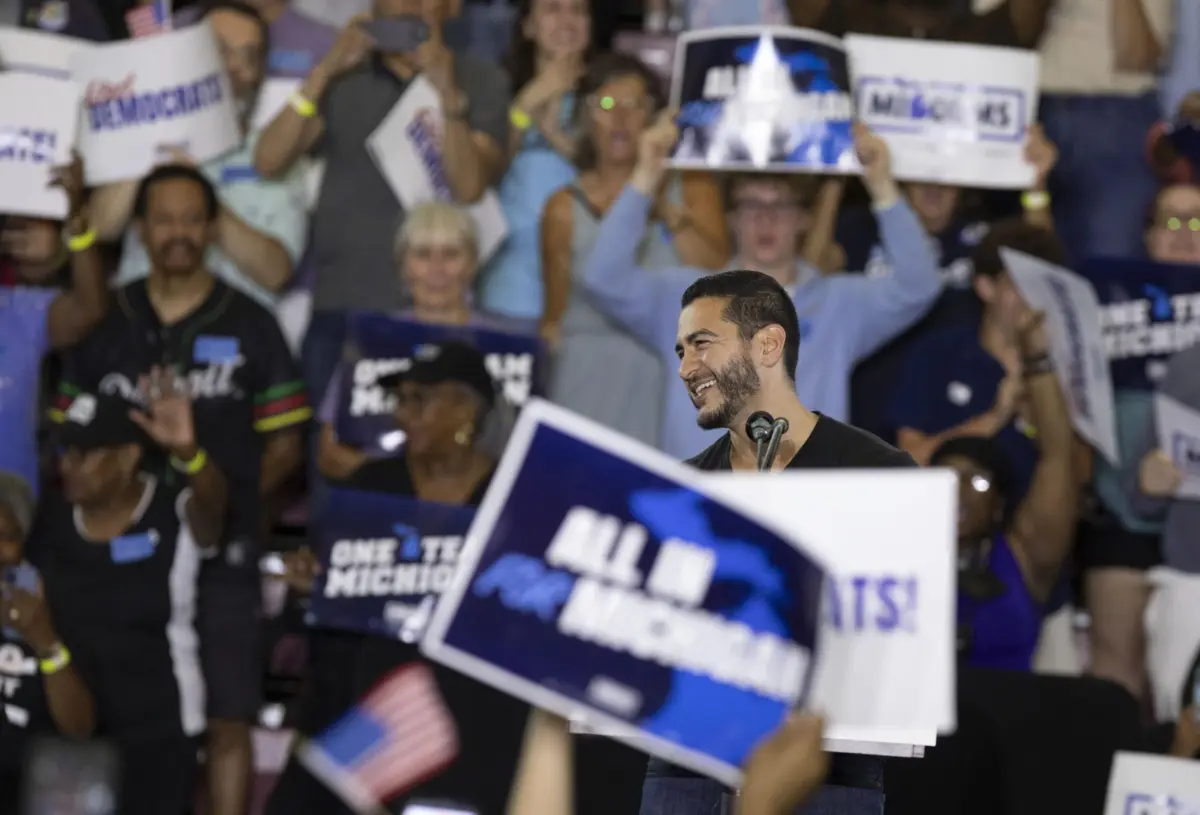
For years, the conventional wisdom of American politics was simple: whoever spends the most money wins. But recent electoral shocks have complicated that narrative. In Michigan’s high-stakes Democratic Senate primary, progressive candidate Abdul El-Sayed defied a massive financial disadvantage—surviving an onslaught of heavy outside spending—to secure the nomination. Meanwhile, in California, billionaire businessman Tom Steyer pumped more than $200 million of his own personal fortune into a gubernatorial bid, only to watch his campaign sputter and fail.
Compounding this volatile dynamic is a shifting legal landscape. Following a pivotal Supreme Court ruling that struck down long-standing limits on how much political parties can spend in coordination with their own candidates, the regulatory boundaries governing campaign cash have grown increasingly porous. To untangle these complex realities, this report examines the empirical relationship between fundraising and electoral success, drawing on pioneering political science research to analyze the true signal value of money in American elections.
Read Also
Detailed Chronology: The Evolution of Modern Campaign Finance
To understand how the 2026 midterms arrived at this unprecedented financial apex, one must trace the legal and cultural shifts that have transformed American campaigns over the past several decades.
- The Post-Citizens United Era (2010s): Following the Supreme Court’s landmark Citizens United v. FEC ruling, independent expenditure-only committees—commonly known as Super PACs—proliferated. This era gave rise to the belief that small-dollar, grassroots fundraising would serve as a democratizing counterweight to corporate cash, allowing everyday citizens to pool resources and rival the influence of wealthy elites.
- The Rise of High-Profile Upsets (2014–2018): High-profile electoral upsets challenged prevailing financial assumptions. In 2014, House Majority Leader Eric Cantor suffered a stunning primary defeat despite outspending his primary challenger, David Brat, by a staggering margin. Four years later, Alexandria Ocasio-Cortez shocked the political establishment by defeating long-term incumbent Joe Crowley with a fraction of her opponent’s war chest, cementing the mystique of the grassroots insurgent.
- The Polarization of Small Donors: Throughout the late 2010s and early 2020s, political science literature increasingly demonstrated that small-dollar donors were not neutral actors; rather, they tended to concentrate heavily on the ideological edges of both major parties, actively fueling partisan polarization.
- The Self-Funding Boom (2020–2024): A growing cohort of affluent candidates attempted to bypass traditional donor networks entirely, self-funding their primary and general election bids. Data from this period revealed that while candidates frequently used personal wealth to supplement their campaigns, fully self-funded candidates without outside backing overwhelmingly lost.
- The 2026 Midterm Flashpoints: Entering the 2026 cycle, campaign finance has evolved into a hyper-specialized battleground. Issue-specific interest groups tied to emerging technologies (AI, crypto) and entrenched foreign policy debates (Israel) have become primary-race flashpoints. Compounding this, a June 2026 Supreme Court decision dismantling coordinated expenditure limits between political parties and candidates has further blurred the lines of political financing, setting the stage for the most expensive midterms on record.
Supporting Context & Metrics: What the Data Actually Shows
To separate political myth from empirical reality, academic research offers vital clues into how money operates beneath the surface of congressional and Senate races. Dr. Danielle M. Thomsen, a political science professor at the University of California, Irvine, and author of The Money Signal: How Fundraising Matters in American Politics, has spent years analyzing these exact dynamics.
The "Low-Information" Nature of Primaries
A common misconception is that voters closely track every policy position of primary candidates. In reality, congressional primaries are traditionally "low-information" contests. Many voters enter the voting booth with little to no prior knowledge of the contenders.
In this environment, early fundraising serves as a critical proxy for viability. When a candidate raises substantial capital in their opening quarters, it signals to the public, local party leaders, and the media that the campaign is serious. However, when voters do possess alternative sources of information—such as in high-profile Senate races where media saturation is absolute—the insulating effect of money diminishes, opening the door for under-resourced candidates like Abdul El-Sayed to break through.
Financial Thresholds for Viability
Is there an objective minimum financial threshold required for a congressional candidate to be considered viable? According to empirical data compiled by political scientists, the benchmarks are remarkably consistent:
- Open-Seat Primaries: Successful non-incumbent candidates running in open seats typically raise between $300,000 and $400,000 in their first fundraising quarter.
- Challenger Viability: Incumbents who struggle or ultimately lose general or primary races are rarely beaten by broke opponents. Successful challengers routinely match open-seat baselines, hauling $200,000 to $300,000 in their initial quarters.
- Early Money as a Prerequisite: While raising money does not guarantee victory, failing to raise early money almost universally guarantees irrelevance. Virtually all successful contenders demonstrate early financial momentum.
The Myth and Reality of Self-Funding
The role of personal wealth in politics is frequently misunderstood. Collaborative research conducted by Dr. Thomsen and graduate researcher Ryan Mundy demonstrates that rich candidates are not only more likely to run for office, but they are also significantly more likely to win among those who enter the race.
- The Advantage of Early Large-Dollar Donors: Wealthy candidates possess immediate access to networks capable of providing large-dollar donations. These early infusions yield a higher return on investment in subsequent fundraising quarters.
- The Failure of Pure Self-Funding: Candidates who fully self-fund—relying exclusively on their own bank accounts without supplementing through external donations—almost always lose. Out of 407 non-incumbent general election winners analyzed between 2014 and 2024, only 17 bankrolled at least 90% of their first-quarter funds and went on to win.
- Self-Funding as a Supplement: Conversely, partial self-funding is remarkably common. Roughly 40% of non-incumbent general election winners self-fund at least $10,000 to jumpstart their campaigns, highlighting a persistent structural advantage for candidates wealthy enough to bridge early cash-flow gaps.
The "Friends and Family" Quarter
Where does early campaign money actually originate? Data indicates that the overwhelming majority of early campaign cash comes from individual, itemized contributors giving amounts exceeding $200.
Up to 50% of early funds for successful non-incumbents come from "max-out" donors—individuals contributing the maximum allowable limit (currently $6,600). These contributors are rarely average, working-class Americans; they are politically engaged, upper-middle-class professionals connected to the candidate’s personal and professional network. Consequently, political consultants routinely refer to the first quarter of fundraising as the "friends and family quarter," relying on candidates to exhaust personal Rolodexes built over a lifetime.
Official Perspectives & Expert Analysis
The friction between structural campaign finance theory and real-world electoral outcomes has generated vigorous debate among political scientists and practitioners alike.
-
On the Signaling Function of Money:
"Fundraising works largely as a signal of viability and strength—to the public, party leaders, media, everyone… Money matters not just for material goods like buying advertisements, office infrastructure, hiring staff, and consultants, but as a primary indicator of whether a candidate is seriously in the mix." — Dr. Danielle M. Thomsen, UC Irvine.
-
On Voter Apathy and Campaign Backlash:
When asked whether heavy outside spending or self-funding triggers a toxic voter backlash, empirical evidence suggests the public is often largely unaware of these financial details."Most people don’t know where money comes from. So the backlash is minimal… I’ve asked candidates who raised a lot of money from self-funding, ‘Did your self-funding ever come up?’ And they’d say, ‘No, it never came up. I thought it would either help me, to show that I wasn’t beholden to special interests, or hurt me… but it didn’t come up.’" — Dr. Danielle M. Thomsen.
-
On the Illusion of the Exception:
While media outlets frequently fixate on extraordinary outliers—such as low-budget insurgent victories or astronomical spending failures by billionaires—political scientists emphasize that these anomalies do not invalidate macro-level trends."There’s a tendency to look at the cases that don’t conform to the rule rather than the rule… In political science, though, we like to look at the rule." — Dr. Danielle M. Thomsen.
Future Outlook: Navigating the 2026 Midterms and Beyond
As the 2026 midterm elections unfold against a backdrop of record-breaking expenditures, legal deregulation, and shifting donor ecosystems, the trajectory of American campaign finance points toward several defining realities:
- Blurring Lines of Party Coordination: With the Supreme Court dismantling coordinated spending caps, political parties will assume an even more direct, muscular role in managing candidate treasuries. This development threatens to further centralize party control while rendering traditional distinctions between candidate-raised funds and outside party expenditures increasingly obsolete.
- The Persistent Upper-Class Bias: Despite populist rhetoric and the proliferation of digital platforms designed to encourage small-dollar participation, major legislative and congressional campaigns remain heavily anchored by upper-middle-class max-out donors and wealthy elites. The structural reliance on early, large-dollar contributions ensures that socioeconomic privilege will remain a quiet, decisive gatekeeper in candidate recruitment.
- Voter Skepticism and Democratic Reform: As total cycle costs skyrocket into historic territory, public anxiety regarding political corruption and the perceived commodification of elections will likely intensify. While grassroots insurgencies will continue to score headline-grabbing upsets by bypassing traditional money machines, these victories will remain the exception rather than the rule.
Ultimately, money will not dictate the outcome of every race, but it will continue to establish the boundaries of who gets to play. For voters attempting to navigate the 2026 midterms, understanding the subtle signaling power of campaign finance—beyond the superficial noise of multi-million-dollar ad buys—remains essential to decoding the true mechanics of American democracy.




Comments
Facebook App ID not configured. Please add it in the Customizer.