

Executive Overview
In the landscape of contemporary American poetry, few pieces capture the agonizing intersection of familial obligation, neurological decay, and raw emotional friction quite as vividly as Christine Marshall’s poem, “Ataxia.” Selected as a finalist for the prestigious 2026 Perkoff Prize and featured as the Poem of the Week for September 14, 2026, by The Missouri Review, the work serves as a masterclass in modern elegiac verse.
Marshall, an acclaimed North Carolina-based educator and writer whose work has frequently graced publications such as Best American Poetry, Agni, The Missouri Review, Poetry Daily, and The Sun, turns her profound lyric intelligence toward a deeply personal and universal subject: watching a beloved parent degenerate under the weight of a rare, little-understood neurological disorder.
Through striking imagery—ranging from a burdened mule carrying a basket of water to the crushing, literal weight of storm clouds and the unforgiving architectures of classical myth—Marshall deconstructs the sanitized tropes often associated with caregiving. Instead of painting a portrait of passive martyrdom, “Ataxia” investigates the unvarnished resentment, exhaustion, and fury that accompany long-term care. This article provides an in-depth literary analysis of the poem, explores the biographical and medical contexts surrounding its creation, and contextualizes its place within Marshall’s broader poetic trajectory, including her newly released 2026 collection, Night Halves.
Read Also
Detailed Chronology and Literary Context
The Evolution of Christine Marshall’s Poetic Voice
To fully understand the resonance of “Ataxia,” one must examine the developmental arc of Christine Marshall’s career. Over the past decade, Marshall has established herself as a vital voice in contemporary lyric poetry, marked by her keen psychological acuity and restrained emotional precision.
Her debut collection, Match (Unicorn Press, 2018), established her reputation for exploring domestic intimacy, human fragility, and the subtle fractures that define everyday relationships. Over the ensuing years, her essays and poems found homes in some of the most rigorous literary outlets in the country. However, her creative output underwent a profound shift following the onset of her father’s degenerative neurological condition—a grueling, six-year crucible of progressive loss that ultimately culminated in the composition of Night Halves (Gunpowder Press, 2026).
“Ataxia” stands as a thematic cornerstone of this second collection. The poem charts a psychological and temporal chronology of caregiving. It moves away from the initial shock of diagnosis toward the grinding, monotonous reality of chronic exhaustion—what Marshall captures so sharply as the accumulation of nights without sleep, where time loses its linear progression and collapses into a continuous loop of physical and emotional strain.
Anatomy of the Poem: Text and Subtext
In “Ataxia,” Marshall immediately confronts the linguistic isolation of the disease itself:
Ataxia is a disease nobody knows, so I compare
your illness to ALS or Parkinson’s, more familiar.
By introducing the poem through the necessity of translation—translating an obscure medical diagnosis into terms the public can readily conceptualize—Marshall highlights the loneliness of the caregiver. The general public’s ignorance of ataxia forces the speaker into a perpetual state of advocacy and explanation.
The poem then pivots on a breathtaking etymological and metaphorical leap:

Familiar, rooted in “family.” Family,
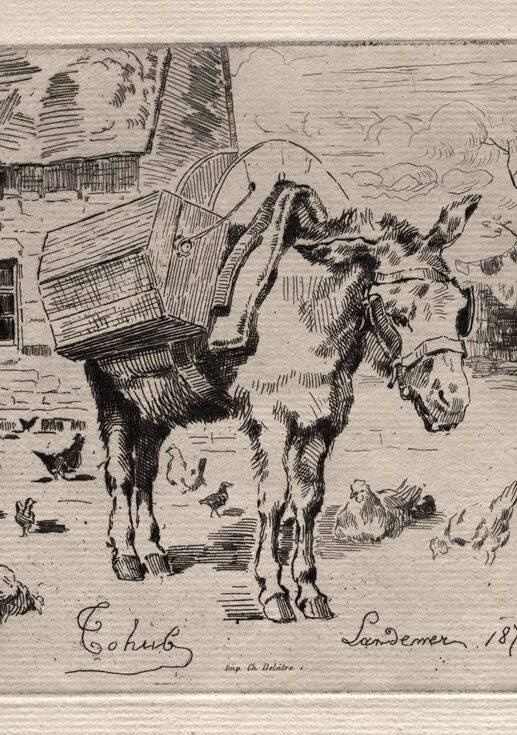
basket of water hanging from a mule’s neck.
Here, the poem achieves its most potent artistic synthesis. The linguistic root shared by "familiar" and "family" is suddenly tethered to the image of a beast of burden. The basket of water—sloshing, unstable, prone to spilling, yet essential for survival—encapsulates the precarious equilibrium of familial caregiving.
As the poem progresses, Marshall directly challenges the romanticized cultural myths surrounding family duty. In classical mythology, structural tragedies (such as those chronicled by Edith Hamilton) involve grand passions, rapes, murders, and overt outrages, but they rarely capture the slow, unheroic erosion of chronic illness:
There are no martyrs in Edith Hamilton.
There’s murder, incest, rape—outrage
moves rather than seething, bitter stew.
The dialogue injected into the poem’s latter half—fragments of conversation where the father questions his own worth (“What’s happening in there, Dad? Are you angry?” / “I’m sorry I’m such a dud,” you repeat)—exposes the heartbreaking psychological toll of the disease. Ataxia strips away motor control, balance, and speech, leaving the patient to grapple with feelings of inadequacy, while the caregiver navigates a turbulent sea of compassion and deep-seated, suppressed rage.

Supporting Context & Metrics
Understanding Ataxia: The Medical Reality
To appreciate the emotional weight of Marshall’s work, one must understand the pathology that inspired it. Ataxia is not a single disease, but a group of neurological disorders that affect coordination, balance, and speech. Damage to the cerebellum—the part of the brain that controls muscle coordination—results in a loss of control over body movements, making simple tasks like walking, eating, and speaking exceedingly difficult.
- Prevalence and Recognition: Unlike Parkinson’s disease or Amyotrophic Lateral Sclerosis (ALS), which have high public visibility and dedicated national awareness campaigns, various forms of inherited and sporadic ataxias remain largely obscure to the general populace.
- The Caregiver Burden: Medical studies consistently show that caregivers of individuals with progressive neurodegenerative diseases experience exceptionally high rates of chronic sleep deprivation, clinical depression, and physical ailments. Marshall’s observation that "It’s been six years since I’ve had a good night’s sleep" reflects a well-documented clinical reality of long-term informal caregiving.
- Metaphorical Weight: Marshall’s poetic assertion that "clouds can weigh one million pounds" is scientifically accurate regarding cumulonimbus storm clouds, serving as an ingenious metaphor for the invisible, atmospheric pressure of chronic stress that hovers perpetually over the caregiver.
Publication and Critical Reception Metrics
- Perkoff Prize Recognition: The Perkoff Prize, administered through The Missouri Review, honors poetry and fiction that explores health, illness, and the medical experience. Being named a finalist in 2026 places Marshall alongside a distinguished group of writers addressing the human body in extremis.
- Literary Footprint: Marshall’s work continues to be taught in creative writing programs across the United States, celebrated for its refusal to settle into easy sentimentality. Her poems bridge the gap between clinical observation and lyrical grace.
Official Statements and Author’s Insights
In her official author’s note accompanying the publication of “Ataxia,” Christine Marshall provided vital context regarding the impulses behind the poem:
"Ataxia is a little-known neurological disorder that impairs coordination, balance, and speech. This poem explores the fury and heartbreak of watching my beloved father struggle with the disease, and the complex reality of family dynamics."
The tension between profound love and visceral anger is the axis upon which the entire poem rotates. Marshall does not attempt to sanitize the caregiver experience. When she writes, "Fucking hell. I’m so angry / I could spit lightning, weep clouds," she strips away the saintly veneer often imposed upon daughters who care for aging, infirm parents.
In interviews and readings discussing her 2026 collection Night Halves, Marshall has emphasized the necessity of artistic honesty when addressing terminal or degenerative conditions. Poetry, in her view, should not offer easy consolations or tidy resolutions when faced with the dismantling of a human mind and body. Instead, it must bear witness to the complexity of human suffering, capturing the moments where faith fractures, patience dissolves, and love expresses itself not through gentle resignation, but through the sheer, stubborn refusal to look away.

Future Outlook
As Night Halves gains traction in the literary world following its 2026 release by Gunpowder Press, Christine Marshall’s footprint in American letters continues to expand. Her unflinching examination of neurodegeneration through "Ataxia" signals a vital shift in how contemporary literature engages with the realities of aging, disability, and caregiving.
Looking forward, works like “Ataxia” are expected to find a permanent home in anthologies dedicated to medical humanities, narrative medicine, and contemporary lyric poetry. By giving voice to a condition that defies easy categorization, Marshall has not only honored her father’s struggle but has also forged a linguistic map for others navigating the lonely, mountainous terrain of familial care.
For readers, scholars, and healthcare professionals alike, Marshall’s poetry stands as an essential testament: a reminder that art can hold the weight of a million-pound cloud, transforming private grief into a shared, enduring monument of human endurance.





Comments
Facebook App ID not configured. Please add it in the Customizer.