

Executive Overview
The micro-form-factor E Ink market is undergoing a seismic shift. While established brands like Xteink and Onyx Boox—with devices such as the Picco—have historically dominated conversations surrounding ultra-portable electronic paper, the competitive landscape has officially expanded. Announced in September 2026 alongside the flagship Honor Magic 9 series, the Honor Life S3 represents a radical departure from traditional standalone e-readers. Weighing a mere 61 grams and featuring a compact 3.68-inch display, this device is engineered not to replace your smartphone, but to integrate directly with it.
By utilizing a built-in magnetic attachment system, the Honor Life S3 snaps onto the rear glass panel of a compatible handset, effectively transforming a standard smartphone into a dual-screen hybrid with an eye-friendly, paper-like secondary display. At an aggressive price point of $60, Honor is making a calculated play to capture the attention of commuters, minimalists, and digital readers who suffer from eye strain induced by high-frequency OLED and LCD panels.
However, hardware innovation rarely comes without operational trade-offs. While the Life S3 offers exceptional portability and an impressive 30-hour continuous reading battery life, its reliance on a proprietary operating system introduces significant software friction. Lacking native Google Play Services or support for mainstream applications such as Amazon Kindle, users are restricted to manual file sideloading through the Honor Smart Space ecosystem.
Read Also
This investigative report explores the technical architecture, market implications, software limitations, and future outlook of Honor’s audacious entry into the micro-e-reader space.
Detailed Chronology: From Concept to the September 2026 Launch
The journey toward the Honor Life S3 is rooted in a broader industry-wide search for solutions to modern screen fatigue. Over the past five years, smartphone usage metrics have continued to climb, with the average consumer spending upwards of four to six hours daily staring at backlit displays. While manufacturers have iteratively improved refresh rates, peak brightness, and blue-light filtration, the underlying physics of OLED and LCD screens remain fundamentally taxing on human ocular tissue during extended text consumption.
The Rise of Micro-E-Readers (2024–2026)
Before Honor turned its engineering focus toward magnetic dual-screen accessories, the ultra-compact e-reader category was largely the domain of niche manufacturers and crowdfunding campaigns. Devices featuring screens under four inches began to surface as consumers sought true pocketability. Traditional e-readers like the Amazon Kindle Paperwhite or Kobo Clara range, while lightweight, still require a dedicated pocket or bag.
Recognizing an opening in the market, companies like Xteink and Onyx Boox began developing ultra-small e-paper devices. Yet, these products were generally positioned as standalone gadgets—meaning users had to carry an extra device alongside their primary smartphone, leading to pocket clutter and synchronization headaches.
The Honor Magic 9 Ecosystem Integration
In September 2026, during its high-profile global product showcase, Honor shifted the narrative. Rather than introducing just another standalone device, the company unveiled the Honor Life S3 as an organic extension of the Honor Magic 9 smartphone ecosystem.
The development timeline of the S3 prioritized three core pillars:
- Physical Integration: Engineers were tasked with designing a chassis thin enough to sit almost flush against the back of a phone case without creating an awkward bulge in the user’s pocket.
- Magnetic Snapping Mechanics: Utilizing high-grade rare-earth magnets, the design team engineered a one-click mounting mechanism capable of withstanding the rigors of daily insertion and removal from pockets and bags.
- Power Optimization: Because the device communicates with the host phone and operates independently for long stretches, firmware engineers had to optimize the power draw to achieve a targeted 30-hour continuous reading benchmark.
The result of this multi-year hardware sprint was officially revealed in late September 2026, immediately drawing praise for its innovative physical design while simultaneously sparking debates over its walled-garden software architecture.
Supporting Context & Technical Metrics
To fully understand the engineering achievement and limitations of the Honor Life S3, one must examine its hardware specifications, thermal profile, and user-experience metrics under real-world conditions.
Comprehensive Specification Breakdown
| Feature / Metric | Honor Life S3 Specification | Industry Context / Comparison |
|---|---|---|
| Form Factor | Ultra-compact, pocket-sized companion | Smaller than standard 6-inch e-readers |
| Display Size | 3.68 inches | Comparable to early-generation smartphone screens |
| Weight | 61 grams | Lighter than most wireless earbuds charging cases |
| Display Resolution | 239 PPI (Pixels Per Inch) | Delivers crisp text rendering for small-font reading |
| Attachment Method | Built-in magnetic structure (one-click snap) | Flush-fit design for seamless pocketability |
| Battery Life | Up to 30 hours of continuous reading | Exceptional endurance due to E Ink’s zero-power static state |
| Interface Design | Full-screen, single-point touch (Zero physical buttons) | Minimalist aesthetic; reliant on tap gestures |
| Operating System | Proprietary Honor OS variant | Lacks native Android / Google Play support |
| File Transfer | Manual syncing via Honor Smart Space app | Excludes direct cloud downloads from third-party stores |
| Launch Price | Approximately $60 USD | Highly aggressive pricing strategy |
The Ergonomics of Magnetic Dual-Screening
The most striking element of the Life S3 is its weight distribution. At just 61 grams, adding the reader to the back of a modern flagship smartphone (such as the Honor Magic 9) increases the overall device weight marginally—equivalent to wearing a lightweight protective case.
Furthermore, the absence of physical buttons forces a behavioral shift in how users interact with electronic paper. Traditional e-readers rely heavily on side-mounted page-turn buttons or touch-zone swiping. The Life S3 adopts a minimalist, single-point touch interface. Turning a page requires a simple tap anywhere on the screen panel, a design choice intended to prevent accidental inputs while the phone is stowed away or held in one hand.

Battery Longevity and E Ink Physics
E Ink technology inherently consumes power only when the image on the screen changes (electrophoretic display properties). Consequently, static text requires zero electrical current. Honor’s implementation capitalizes on this physics principle, yielding an astounding 30 hours of continuous reading battery life. For the average commuter or traveler, this translates to weeks of casual reading between charges, mitigating battery anxiety.
Software Limitations and the Walled-Garden Dilemma
Despite the enthusiastic reception of its physical design, the Honor Life S3 has faced intense scrutiny from tech journalists and power users alike regarding its software ecosystem.
The Absence of Open-Platform Ecosystems
Unlike modern Android-based e-readers from competitors like Onyx Boox, Meebook, or Bigme—which allow users to install virtually any application from the Google Play Store—the Honor Life S3 runs a heavily restricted, proprietary operating system.
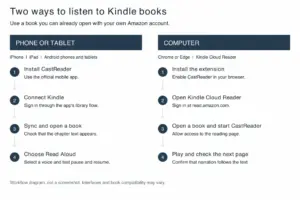
- No Native Kindle App: Users cannot log directly into their Amazon Kindle, Kobo, or Google Play Books accounts to stream or download their existing digital libraries.
- No Direct Wi-Fi Cloud Syncing: The device lacks an open browser or direct cloud-fetching capabilities for third-party platforms.
- The Sideloading Bottleneck: To read personal documents, EPUBs, or PDFs on the Life S3, users must manually transfer files from their smartphone to the e-reader via the Honor Smart Space companion app.
Analyzing Honor’s Strategic Intent
Industry analysts suggest that this walled-garden approach is a deliberate trade-off. By stripping away a full Android operating system, background task managers, and power-hungry processors, Honor was able to keep the manufacturing cost down to an astonishing $60 while maximizing battery efficiency and minimizing thermal output.
However, this friction creates a distinct divide in the target audience. For casual readers who primarily store local EPUB libraries and enjoy bite-sized reading sessions during morning commutes, the manual file-transfer process is a minor inconvenience. For heavy ecosystem users embedded deeply in Amazon’s or Google’s digital reading infrastructure, the lack of native app support represents a significant barrier to entry.
Official Statements and Industry Reception
The announcement of the Honor Life S3 sent ripples through the mobile technology and e-reading communities. Executives and product strategists have weighed in on what this device signals for the future of multi-screen hardware design.
During the September 2026 keynote, Honor’s head of product design emphasized the company’s focus on human-centric innovation:
"We live in an era where consumers are constantly tethered to high-intensity displays. Our objective with the Life S3 was not to build another standalone tablet that you have to remember to pack, charge, and manage. By anchoring the E Ink experience directly to the device you already hold in your hand all day—your smartphone—we are bridging the gap between digital connectivity and visual wellness."
Initial reviews from independent tech publications have echoed this sentiment, praising the engineering prowess required to manufacture a 61-gram magnetic accessory with such high display clarity (239 PPI). Reviewers have particularly highlighted the convenience of flipping the phone over to read an article or book chapter without inviting the cognitive distractions—such as push notifications, social media pings, and flashing ads—that plague primary smartphone screens.
At the same time, consumer advocacy groups and tech critics have voiced legitimate concerns over software longevity. The reliance on Honor’s proprietary Smart Space app raises questions about long-term software support, firmware updates, and cross-brand compatibility. Currently, the magnetic mounting system and synchronization software are optimized primarily for the Honor ecosystem, leaving users of competing smartphone brands (such as Apple, Samsung, or Google) unable to fully utilize the product’s feature set.
Future Outlook: Where Does the Micro-E-Reader Go From Here?
The launch of the Honor Life S3 marks a watershed moment for micro-form-factor electronic paper. It challenges the assumption that e-readers must be standalone tablets and demonstrates that consumers are hungry for modular, multi-device ecosystems.
Potential Market Trajectories
- Ecosystem Expansion: If the Life S3 proves to be a commercial success in global markets, pressure will mount on Honor to develop universal software adapters or iOS/Android companion apps that allow cross-brand compatibility. Opening the ecosystem to third-party apps via a lightweight, optimized launcher could dramatically broaden its market appeal.
- Competitive Counter-Moves: Major smartphone manufacturers—including Huawei, Xiaomi, and potentially even Apple or Samsung—will be watching Honor’s sales figures closely. Should consumer demand for rear-mounted E Ink displays surge, we may see a wave of proprietary companion screens built directly into flagship accessory lineups.
- Technological Refinement: Future iterations of micro-companions like the Life S3 will likely experiment with color E Ink technology (such as ACeP or Gallery panels), higher refresh rates for smoother scrolling, and wireless charging pass-through capabilities to ensure the phone battery is not compromised while powering the magnetic attachment.
Conclusion
The Honor Life S3 is not a silver bullet for digital distraction, nor is it a complete replacement for a dedicated 10-inch e-reading tablet. What it is, however, is a brilliant exercise in micro-engineering and ergonomic design. By repackaging electronic paper into a 61-gram, magnetically attached companion priced at an accessible $60, Honor has successfully redefined how we think about secondary displays.
As the boundaries between smartphones and auxiliary hardware continue to blur, devices like the Life S3 point toward a future where our digital tools adapt to our biological needs—offering connectivity when we need it, and the quiet, calming respite of paper when we want it.


Comments
Facebook App ID not configured. Please add it in the Customizer.