
Executive Overview
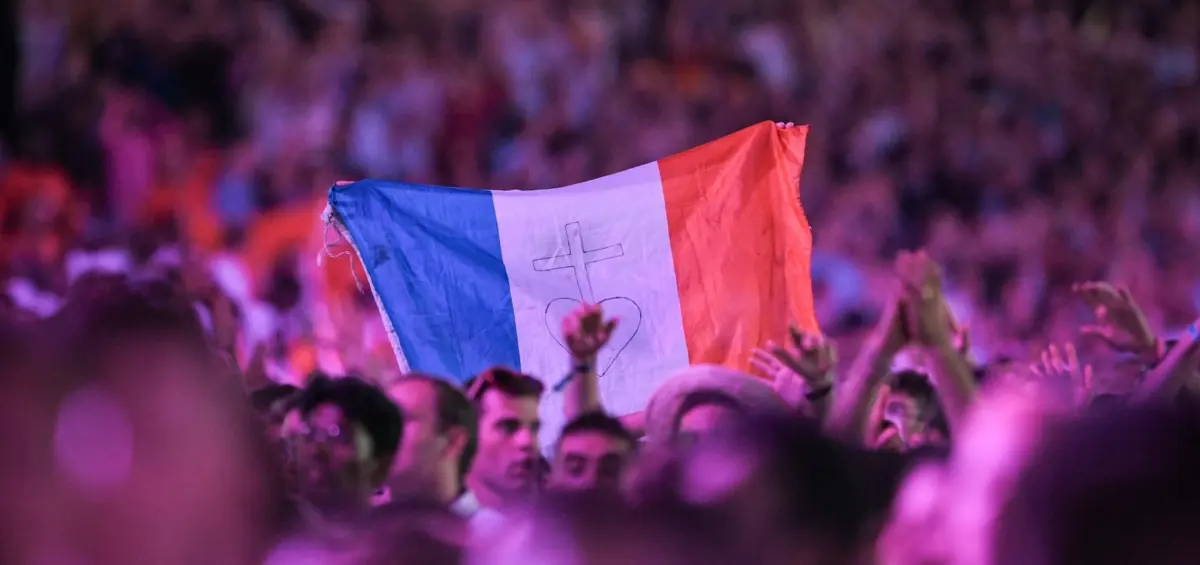
On Friday, September 25, the Stade de France—the country’s largest soccer stadium, with a seating capacity of approximately 80,000—was packed to its rafters not with sports fans, but with a vibrant, surging sea of young Catholics. The occasion was a monumental youth vigil, a central fixture of a wider papal visit that drew an estimated 800,000 people to a historic outdoor Mass in Paris the following day.
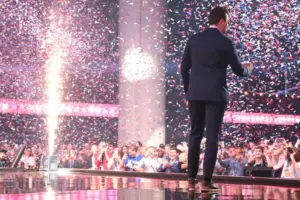
As Pope Leo entered the arena, greeted by the thunderous strains of Charles-Marie Widor’s Toccata from Symphony for Organ No. 5—meticulously arranged for orchestra and overlaid with the triumphant “Tu es Petrus, Alleluia” sung by a choir of 2,500 voices—the atmosphere was charged with a profound sense of historical continuity and spiritual renewal. Following formal addresses, a reverent commemoration of the countless saints of France, and an elaborate litany processing historic relics into the stadium, the evening culminated in a breathtaking fireworks display.
For a nation long grappling with an internal culture war over its own history, the gathering offered a striking and welcome counter-narrative. Rather than indulging in the self-critical pessimism bent on deconstructing national identity—a mood that many critics felt dominated the widely criticized opening ceremony of the 2024 Paris Olympics—this evening celebrated France through the lives of its exemplary Christians. By weaving together sacred music, theatrical pageantry, and a living heritage of faith, the event provided a powerful platform for a new generation to re-engage with their spiritual and national roots.
Read Also
Detailed Chronology: An Evening of Sacred Pageantry
The centerpiece of the youth vigil was an ambitious, deeply immersive theatrical parade that traced the sweeping narrative of French history through what organizers termed the “Army of Saints.” This was no dry historical procession; it was a living, breathing theatrical canvas that mapped out the formation of French culture from antiquity to the modern era.
From Antiquity to the Modern Era
The narrative began with Lazarus and Mary Magdalene. According to enduring French tradition, the pair sailed to the country’s southern coast following the crucifixion, living out their remaining days as bishop and anchoress, thereby embedding Christian presence into the soil of Gaul from its earliest days. The procession wound its way dynamically through the packed stadium crowd, pulling the audience into a chronological journey that highlighted the major figures of French Catholic—and by extension, French national—history.
The historical sweep concluded with the most recently beatified Frenchman, Gabriel-Maria Nicolas, bridging ancient origins with modern sanctity. The auditory landscape of the evening mirrored this historical depth. Early Christian martyrs were hailed with the “Christus vincit, Christus regnat, Christus imperat,” a resonant chant of probable Frankish origin that historically inverted Roman imperial acclamations to declare a higher, spiritual sovereignty.
As the procession advanced through the centuries, the mellifluous, hauntingly beautiful twentieth-century melodies of Maurice Duruflé introduced a pantheon of religious reformers and educators:
- Francis de Sales
- Vincent de Paul
- Louise de Marillac
- John Eudes
- Jean-Baptiste de La Salle
- Louis de Montfort
The seamless integration of these figures served as a reminder that the formative influence of France on Western Christian liturgy, belief, and practice—and vice versa—is historically profound and difficult to overstate.
The Climax of the Vigil
As the night progressed, the Stade de France transformed into a space of collective memory. The litany of relics processed across the turf brought a tangible, physical connection to the saints who shaped the nation’s moral architecture. When the final addresses concluded, the arena erupted into a brilliant fireworks display that illuminated the Paris night sky, signaling not an ending, but a resurgence of confidence among young believers. The enthusiastic cheer that greeted the theatrical appearance of a young Louis IX—king, Crusader, and saint—underscored an appetite among the youth for earnest, unironic engagement with their heritage.
Supporting Context & Metrics: Cultural Shifts and Religious Realities
To fully understand the resonance of the September 25 youth vigil, one must view it against the backdrop of recent cultural flashpoints and shifting demographic trends within French Catholicism.
The Shadow of the 2024 Olympics
The success of the papal visit—bolstered by the massive turnout for the Saturday Mass in Paris—has been widely hailed by commentators as a sign of profound promise for a beleaguered institution. This optimism stands in stark relief against the cultural memory of the 2024 Paris Olympics opening ceremony, an event that remains sharply etched in the minds of traditionalists and cultural critics for reasons diametrically opposed to the Stade de France vigil.
The Olympic opening ceremony attempted to tell the story of France through abstract nouns like liberté, égalité, and fraternité, alongside more esoteric concepts like synchronicité and obscurité. However, the show drew its harshest and most sustained criticism for a tableau vivant that parodied Leonardo da Vinci’s The Last Supper, featuring an ensemble of actors of diverse shapes, genders, and presentations.
Furthermore, the ceremony openly celebrated the more gruesome and violent elements of the French Revolution. Dozens of portrayals of Marie-Antoinette, complete with severed heads held in their hands, belted out a heavy-metal number from the windows of the Conciergerie—the historic Paris prison from which the real queen was taken to the guillotine. This morbid, self-flagellating display epitomized a critical, deconstructive attitude toward national history that has long dominated intellectual and cultural circles in France, often sacrificing taste, reverence, and historical compassion for provocative shock value.
Complex Realities: Assessing the "Baptism Boom"
While the enthusiasm at the Stade de France was undeniable, observers note that it would be trite to simply conclude that "the French kids are alright" without examining the complex statistical reality on the ground.
- Adolescent Baptisms: Recent data indicates a notable and encouraging rise in baptisms among adolescents and adults across France, pointing to a genuine movement of adult conversion and rediscovery of the faith among the younger demographic.
- Infant Baptisms: Conversely, traditional metrics present a more sobering picture; infant baptism numbers continue their long-term decline.
- Weekly Mass Attendance: According to comprehensive sociological studies on religious practices in France (such as data from the Observatoire du Catholicisme), weekly Mass attendance remains stubbornly low, hovering around a paltry 5 percent of the national population.
Yet, optimism within faith communities is remarkably resilient. For at least one electrifying night at the Stade de France, the Catholic Church in France managed to bypass the prevailing cultural pessimism, offering its young people an alternative, deeply rooted tale of France’s past and presenting a bold, confident vision for its future.
Official Statements and Institutional Reactions
The tension between secular institutional self-expression and religious offense has historically sparked intense diplomatic and cultural friction. Following the 2024 Olympic opening ceremony, the Holy See felt compelled to issue a formal response addressing the controversies on the global stage.
The Vatican’s Response to the Olympic Ceremony
In an official statement released in the wake of the Olympic games, the Vatican did not mince words regarding the artistic choices made by the ceremony’s directors:
"The Holy See was saddened by certain scenes during the opening ceremony of the Paris Olympic Games . . . at a prestigious event where the whole world comes together to share common values, there should be no allusions ridiculing the religious convictions of many people."
While the Holy See’s complaint was entirely valid regarding the mockery of sacred imagery, many cultural analysts argued that the official Vatican statement missed a deeper, more structural point. The most galling aspect of the Last Supper parody was not merely its superficial mockery of modern religious sensitivities, but its pointed, systemic dismissal of the foundational institution that shaped Gaul and its people centuries before a unified Francia—let alone a modern French nation-state—was even imaginable.
Reclaiming Historical Legitimacy
As the "Army of Saints" vividly demonstrated at the youth vigil, French national history can be articulated far more compellingly, cohesively, and proudly through the moral architecture, charity, and cultural contributions of its great Christians than through the blood-soaked spectacles of revolutionary terror. The stark contrast between the earnest, historical pageantry of the 2026 youth vigil and the cynical, deconstructive irony of the 2024 Olympic opening ceremony highlights a shifting cultural pendulum. What was once heralded as cutting-edge avant-garde expression now risks aging into a cringe-inducing relic of an unserious culture, while traditional, faith-based narratives find a newly receptive audience among the young.
Future Outlook: A Resurgent Church at a Crossroads
As the echoes of Widor’s Toccata fade from the Stade de France and the crowds return to their everyday lives across the hyper-secularized landscape of modern Europe, the long-term impact of the September 25 vigil remains a subject of intense speculation.
Can a single night of transcendent art, historical pageantry, and papal solidarity reverse decades of secularization? Statistically, the structural challenges facing French Catholicism—marked by an aging clergy, low weekly Mass attendance, and deep-seated societal secularism—are formidable. The modest 5 percent regular attendance rate is a stark reminder that the institutional Church operates in a profoundly post-Christian environment.
However, historical movements rarely begin with institutional metrics; they begin with cultural imaginaries. By re-coupling national identity with the heroic, saintly narratives of France’s past, the Church has successfully provided a new generation with an intellectual and spiritual alternative to national self-loathing. The rising tide of adolescent baptisms, coupled with the visible, unashamed enthusiasm of 80,000 young people filling the Stade de France, suggests that a resilient counter-culture is quietly taking root.
Whether this momentum can translate into sustained, systemic revitalization remains to be seen. What is certain, however, is that the youth of France have proven willing to look past the cynical deconstructions of contemporary culture and embrace a heritage that links their future directly to their deepest historical roots.




Comments
Facebook App ID not configured. Please add it in the Customizer.