
Executive Overview
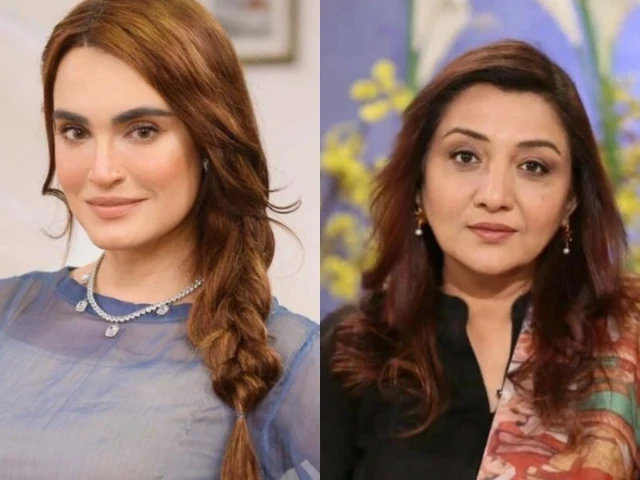
In an era defined by hyper-digital connectivity and polarized public discourse, the Pakistani entertainment industry has increasingly emerged as a crucible for vital social conversations. Recently, prominent actors Nadia Hussain and Nadia Afgan utilized their digital platforms to launch a scathing critique against systemic victim-blaming and the pervasive double standards that govern societal responses to sexual violence, gender-based misconduct, and public accountability.
Their impassioned interventions—soon amplified by fellow industry heavyweights Ayesha Omar and Anoushey Ashraf—shed light on an uncomfortable societal reality: women are routinely subjected to intense moral scrutiny, immediate character assassination, and disproportionate judgment, while men accused of severe misconduct enjoy an absurdly high threshold of skepticism, institutional protection, and benefit of the doubt.
This unfolding discourse transcends mere celebrity commentary; it serves as a macro-level mirror reflecting deep-seated patriarchal structures embedded within South Asian legal, social, and cultural frameworks. By dissecting the asymmetrical burdens of proof, the societal inclination to shield perpetrators, and the relentless policing of women’s autonomy, these high-profile voices have reignited a critical dialogue regarding justice, ethics, and the urgent need for structural reform.
Read Also
This report provides an in-depth exploration of the statements made by Hussain, Afgan, Omar, and Ashraf, contextualizing their cultural weight within broader socio-legal frameworks of gender inequality, victimhood, and societal accountability in Pakistan and beyond.
Detailed Chronology of Events
The recent wave of advocacy and digital activism among Pakistan’s female media figures did not occur in a vacuum; it represents a cumulative build-up of frustration against institutionalized misogyny and public harassment.
Phase 1: Anoushey Ashraf and the Policing of Female Autonomy
The conversation gained early momentum last month when prominent television host and model Anoushey Ashraf took to Instagram to share a candid, emotionally resonant photo dump detailing the exhausting societal audits faced by modern Muslim women. Opening her post with the direct address, "Hello, fellow Muslim liberal girl. Can we talk about some of the things that exhaust me?" Ashraf articulated a profound sense of alienation stemming from ideological cross-fires.
She detailed how she was frequently subjected to simultaneous interrogation from conservative factions demanding absolute adherence to orthodox traditions and secular or non-Muslim circles questioning her religious identity. From micro-criticisms regarding her dietary habits and the keeping of pets to aggressive scrutiny of her personal wardrobe and religious practices, Ashraf highlighted the impossible tightrope walk modern women must navigate. Her core thesis—"Too Muslim for some. Not Muslim enough for others"—laid the groundwork for subsequent discussions on how society continuously monitors, judges, and attempts to regulate female existence.
Phase 2: Ayesha Omar Redefines Feminism
Earlier in the week, actor and cultural commentator Ayesha Omar stepped forward to dismantle persistent misconceptions surrounding feminism. Utilizing a multi-part Instagram series, Omar confronted the weaponization of the term "feminism" within patriarchal circles, where it is frequently mischaracterized as a movement rooted in misandry or the hatred of men.
To counter this narrative, Omar shared a widely resonant quote attributed to Nadia Carly:
"Feminism doesn’t hate men. It hates abusers, sexists, misogynists, rapists, pedophiles, and deadbeats. And good men aren’t bothered by that because they hate them too."
Complementing this philosophical stance, Omar transitioned to sharing harrowing case studies of gender-based violence and femicide spanning Pakistan, India, and the United States. By drawing direct lines between institutional apathy and global patterns of violence against women, Omar challenged her audience to look past defensive male fragility and confront the systemic realities of gender-based crime.
Phase 3: Nadia Hussain and Nadia Afgan Strike at the Core of Legal and Social Hypocrisy
The discourse reached a definitive inflection point when Nadia Hussain and Nadia Afgan published separate, highly targeted critiques addressing the gross disparities in how society handles female versus male misconduct.
Nadia Hussain’s intervention focused explicitly on structural complicity and institutionalized double standards. Enumerating historical and contemporary injustices, Hussain published a starkly worded indictment of societal hypocrisy:
"We live in a world where sex workers are judged but not their clients, single mothers are judged but not absent fathers, rape victims are judged but not the rapists, and the ones who speak out are judged instead of the ones covering it up."
Simultaneously, Nadia Afgan targeted the deeply skewed standards of credibility applied to victims of sexual assault versus the men accused of perpetrating it. In a razor-sharp critique of evidentiary bias, Afgan noted:
"Men will believe a woman is a hoe with zero evidence, but need a documentary, 12 witnesses, DNA, CCTV, and God’s signature to believe a man is a rapist."
Together, these sequential interventions formed a cohesive, multi-pronged cultural critique that dismantled the illusion of equity within contemporary public and private spaces.
Supporting Context & Cultural Metrics
To fully understand the gravity of these statements, one must examine the socio-cultural landscape of Pakistan, where gender-based violence, systemic victim-blaming, and the policing of women remain pervasive issues.
The Evidentiary Chasm in Gender-Based Violence Cases
Afgan’s critique regarding the impossible burden of proof placed on female victims touches upon a universally acknowledged failing within criminal justice systems, particularly in South Asia. Sociological research consistently demonstrates that female survivors of sexual assault and harassment face an uphill battle when seeking justice or social validation.
- The Burden of Immaculate Victimhood: Unlike male defendants, whose character is routinely insulated by legal presumptions of innocence and societal empathy, female victims are subjected to invasive inquiries regarding their clothing, past relationships, mobility, and behavioral history.
- Institutional Attrition: Police departments, medical examiners, and judicial bodies frequently lack gender-sensitive training, resulting in hostile environments that discourage reporting. According to data compiled by various human rights organizations in Pakistan, conviction rates in sexual assault cases remain abysmally low, largely driven by systemic compromises, delayed forensic processing, and profound social stigma.
The Weaponization of Social Media and Digital Misogyny
The intervention of high-profile actors also highlights the hostile digital ecosystem female public figures navigate in Pakistan. When women with vast platforms speak truth to power or challenge patriarchal norms, they are routinely subjected to coordinated digital harassment campaigns, character assassination, and online trolling designed to silence dissent.
Despite these intimidation tactics, the willingness of figures like Hussain, Afgan, Omar, and Ashraf to leverage their capital for social advocacy signifies a vital shift. It demonstrates that the entertainment industry is no longer content with operating as an insulated, apolitical bubble; rather, it is actively participating in the democratization of progressive discourse.
Official Statements & Public Discourse
The cascading series of statements by Hussain, Afgan, Omar, and Ashraf generated widespread national debate across digital platforms, traditional media outlets, and academic circles.
- Nadia Hussain’s Focus on Accountability: Hussain’s emphasis on systemic complicity underscored the reality that patriarchal violence is enabled by enablers who shield wrongdoers. By highlighting the societal leniency granted to clients of sex workers, absent fathers, and rapists, Hussain drew a direct line between everyday sexism and catastrophic gender-based crimes.
- Nadia Afgan’s Satirical Deconstruction: Afgan’s biting commentary exposed the absolute absurdity of evidentiary standards used to invalidate female trauma. Her metaphorical framing—demanding "God’s signature" to validate a male perpetrator while blindly accepting misogynistic tropes against women—resonated with thousands of digital users who echoed similar frustrations with institutional inertia.
- Ayesha Omar’s Definitional Clarity: Omar’s framing of feminism successfully reframed the movement not as an assault on manhood, but as a universal moral imperative against abuse. By stating that "good men aren’t bothered" by the eradication of predators, Omar effectively stripped defensive patriarchs of their moral high ground.
- Anoushey Ashraf’s Intersection of Faith and Identity: Ashraf’s testimony provided a necessary intersectional layer to the conversation. By illustrating how religious and cultural expectations are weaponized to police women’s choices, she expanded the feminist discourse to include the exhausting nuances of faith-based moral policing.
Future Outlook & Path Forward
The collective outcry from Pakistan’s leading entertainment figures signals a turning point in how cultural power can be harnessed for social justice. However, translating digital solidarity into tangible institutional reform remains the ultimate challenge.
1. Reforming Legal and Investigative Frameworks
For the systemic inequities highlighted by Afgan and Hussain to be dismantled, comprehensive legal reforms must be enacted. This includes:
- Mandatory gender-sensitivity training for law enforcement agencies, judiciary members, and medical professionals handling sexual assault cases.
- The streamlining of forensic evidence collection to prevent evidentiary loss while protecting victims from secondary trauma during legal proceedings.
- Strict legal penalties for character assassination and victim-blaming within public and digital spheres.
2. Shifting Cultural Paradigms Through Media Representation
The entertainment industry itself bears a profound responsibility in shaping societal attitudes. Portrayals of women in television dramas and films must move away from archaic tropes of passive endurance, toxic romanticization of abuse, and moral policing. By centering narratives that champion accountability, female autonomy, and emotional intelligence, media creators can actively dismantle the patriarchal scripts reinforced over generations.
3. Sustaining Cross-Sectoral Solidarity
The concerted efforts of Hussain, Afgan, Omar, and Ashraf prove that collective visibility offers a shield against institutional silencing. Moving forward, sustained cross-sectoral collaboration between civil rights activists, legal experts, media personalities, and grassroots organizations will be essential to ensure that these digital conversations materialize into lasting, structural protections for women across all strata of society.
Ultimately, the courage demonstrated by these artists serves as an enduring reminder that true societal progress requires an uncompromising willingness to interrogate uncomfortable truths, dismantle deeply ingrained double standards, and demand absolute accountability—no matter how powerful the perpetrator, or how deeply entrenched the systemic bias.

Comments
Facebook App ID not configured. Please add it in the Customizer.