
Executive Overview
The children’s publishing landscape continues to broaden its horizons, increasingly introducing young readers to historical figures whose contributions have been unjustly marginalized in standard educational curricula. Among the most anticipated additions to this canon is Postcards from Malcolm X: How Yuri Kochiyama Became a Civil Rights Activist, authored by Mia Wenjen and illustrated by Keith Henry Brown. Scheduled for publication on October 13, 2026, by Red Comet Press, this 42-page picture-book biography targets readers aged 8 to 12. Priced at $19.99 for the hardcover edition, the book explores the remarkable life of Japanese American activist Yuri Kochiyama (1921–2014), tracing her evolution from a sheltered, patriotic American youth into a towering figure of 20th-century social justice movements.
However, the book has already sparked robust literary and critical discussion following its pre-publication reviews. While critics universally praise Keith Henry Brown’s vibrant, energetic artwork—which employs watercolor, ink, and charcoal to capture the kinetic pulse of mid-century urban life—scholarly and critical conversations have interrogated Wenjen’s structural choice to center Kochiyama’s decades-spanning life narrative heavily around her relationship with Malcolm X.

This comprehensive review-driven feature analyzes the biographical framework of Postcards from Malcolm X, investigates the historical context of Yuri Kochiyama’s life and her fateful connection to Malcolm X, examines the artistic contributions of Keith Henry Brown, and contextualizes the book within the broader contemporary ecosystem of children’s literature dedicated to youth activism.
Read Also
Detailed Chronology: From All-American Youth to Global Activist
To fully understand the narrative weight of Mia Wenjen’s picture book, one must trace the extraordinary trajectory of Yuri Kochiyama’s life—a timeline that mirrors the turbulent intersections of race, war, and civil rights in modern American history.

Early Life and World War II Internment
Born Mary Yuriko Nakahara in 1921 in San Pedro, California, Kochiyama grew up in a relatively insulated environment. As noted in critical assessments of her early life, prior to the December 7, 1941, attack on Pearl Harbor by Imperial Japan, "racism had never been a part of [Kochiyama’s] all-American life." Growing up in a predominantly white community, she enjoyed the typical milestones of mid-century American youth.
That sense of security was shattered forever by the geopolitical shockwaves of World War II. Following the signing of Executive Order 9066 by President Franklin D. Roosevelt, the United States government forcibly removed and incarcerated over 120,000 individuals of Japanese descent—the majority of whom were American citizens—into desolate inland concentration camps.

For the Nakahara family, the fallout was catastrophic. Federal authorities arrested Yuri’s father, a prosperous businessman, on suspicion of espionage without evidence. Exhausted, broken by the interrogation process, and suffering from neglect while detained, he tragically passed away at the age of 56, just hours after returning home following his release. Shortly thereafter, Yuri, her mother, and her siblings were uprooted and imprisoned behind barbed wire at the Jerome War Relocation Center in Arkansas. This state-sponsored trauma served as the crucible for Kochiyama’s political awakening, shifting her worldview from passive patriotism to a critical awareness of systemic racial oppression in America.
Post-War Life and the Harlem Move
Following the conclusion of World War II, Yuri married Bill Kochiyama, a Nisei veteran who had fought with the legendary, highly decorated 442nd Regimental Combat Team of the U.S. Army. Seeking a fresh start, the couple eventually relocated to New York City in 1960, ultimately settling in Harlem.

Moving to Harlem placed the Kochiyama family directly at the epicenter of the burgeoning Black Freedom Movement. In this vibrant, politically charged environment, Yuri “noticed injustice all around her.” The Kochiyama home transformed into an open, welcoming community hub that embraced everyone “from neighbors to notables.” It was within this intellectual and social incubator that Kochiyama engaged deeply with the pressing liberation struggles of the era, aligning her solidarity not just with Japanese American redress, but with Black nationalists, Puerto Rican independence fighters, anti-war activists, and political prisoners across the globe.
The Fateful Alliance with Malcolm X
The defining pivot of Kochiyama’s mid-life activism occurred in the early 1960s when she met Malcolm X. Admiring his uncompromising rhetoric and his uncompromising critique of white supremacy, Kochiyama immediately sought him out, famously challenging some of his initial positions and thereby earning his intellectual respect.

This encounter initiated a profound friendship and mentorship, largely conducted through conversation and correspondence—the thematic anchor of Wenjen’s book. Their bond was tragically cut short on February 21, 1965, at the Audubon Ballroom in Washington Heights, New York. As Malcolm X was shot 21 times during a speaking engagement, Yuri Kochiyama rushed to the stage. In an iconic, heartbreaking image etched into American history, Malcolm X died with his head cradled in Yuri Kochiyama’s lap.
A Half-Century of Sustained Activism
Inspired by her friend and mentor, Kochiyama’s tireless activism continued for nearly five decades following his assassination. Her subsequent achievements span multiple historic campaigns:

- The Black Panther Party and the Young Lords: She maintained deep, operational alliances with radical organizations fighting for community control, health equity, and self-determination.
- Japanese American Redress and Reparations: Kochiyama was instrumental in the decades-long movement that culminated in the Civil Liberties Act of 1988, wherein the U.S. government formally apologized and offered reparations to surviving internees.
- Political Prisoners and International Solidarity: She campaigned tirelessly for the release of political prisoners like Mumia Abu-Jamal and supported Puerto Rican nationalists such as Lolita Lebrón.
- Human Rights Advocacy: Well into her nineties, Kochiyama remained a visible, revered elder stateswoman of intersectional radical activism until her passing in 2014 at the age of 93.
Supporting Context & Metrics: Publishing Data and Critical Reception
Postcards from Malcolm X: How Yuri Kochiyama Became a Civil Rights Activist enters the literary marketplace backed by clear publishing specifications and rigorous pre-publication evaluation.
Publication Specifications
- Author: Mia Wenjen
- Illustrator: Keith Henry Brown
- Publisher: Red Comet Press
- Publication Date: October 13, 2026
- Online Publication Date (Review): July 20, 2026
- Print Review Date: August 15, 2026
- Page Count: 42 pages
- Target Audience: Children’s literature, recommended for ages 8 to 12
- Hardcover Price: $19.99
- ISBN-13 (Hardcover): 9781636550893
Critical Discourse: The Scope and Narrative Focus
While trade reviews praise the book for introducing a vital, under-represented historical figure to middle-grade readers, critical analysis has homed in on structural storytelling choices. Reviewers have noted that framing the vast majority of Kochiyama’s extensive biography primarily through her relationship with Malcolm X creates a distinct narrative imbalance.

By dedicating a substantial portion of the picture-book biography to a relationship that spanned roughly 16 months—albeit an intensely pivotal one—the narrative inadvertently risks compressing a nonagenarian’s lifetime of monumental, multi-decade achievements into a brief window. Critics argue that while the Malcolm X connection provides an emotional and dramatic focal point, it slightly overshadows Kochiyama’s independent leadership in the Asian American movement, her work with Puerto Rican activists, and her 50-year legacy of grassroots organizing that extended long after Malcolm X’s death.
Conversely, the visual artistry executed by Keith Henry Brown receives universal acclaim. Utilizing a mixed-media palette of watercolor, ink, and charcoal, Brown constructs immersive, dynamic spreads. Reviewers have highlighted his exceptional ability to depict human figures caught in mid-motion, with particular praise directed toward a memorable Harlem street scene featuring young children imbued with distinct personality and attitude.
Furthermore, the book is bolstered by robust supplementary educational apparatuses, including a detailed historical timeline, brief biographical profiles of key historical figures, and an instructional glossary designed to aid young readers navigating complex historical nomenclature.
Official Statements and Promotional Overview
In tandem with its rollout by Red Comet Press, Postcards from Malcolm X has been accompanied by robust promotional initiatives, including an official book trailer (released across digital platforms in mid-2026) and integration into author Mia Wenjen’s broader portfolio of socially conscious children’s literature.
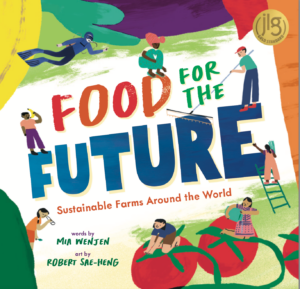
Wenjen, a prominent voice in multicultural children’s literature and the creator behind the widely read Pragmatic Mom platform, has consistently focused her creative output on illuminating hidden histories, diverse role models, and intersectional narratives. Postcards from Malcolm X joins a robust ecosystem of her recent titles—including Barbed Wire Between Us (illustrated by Violeta Encarnación), Fortune Cookies for Everyone! (Smithsonian), The Traveling Taco, and We Sing from the Heart: How the Slants® Took Their Fight for Free Speech to the Supreme Court.
In promotional materials and educator guides provided by the publisher and author, the overarching mission of Postcards from Malcolm X is framed as an empowering call to action. The book aims to demystify the origins of radical empathy, demonstrating to young readers that systemic injustice can ignite a lifelong commitment to collective liberation. The inclusion of free, downloadable teacher guides and multimedia resources underscores Red Comet Press’s commitment to positioning the title as a foundational text for elementary and middle school classrooms seeking to expand their social studies and civil rights curricula.
Future Outlook: Impact on Children’s Literature and Social Studies Curricula
As Postcards from Malcolm X: How Yuri Kochiyama Became a Civil Rights Activist hits shelves in October 2026, its long-term impact on the children’s publishing industry and educational spaces will likely be multifaceted.
Bridging Intersectional Histories in Elementary Education
For decades, mainstream children’s literature tended to compartmentalize civil rights history strictly along Black-and-white binaries, frequently obscuring the deep, coalitional solidarity that existed between communities of color. Books like Wenjen’s work help rectify this historical omission by demonstrating how Asian American activists actively participated in, shaped, and were transformed by the broader struggles for racial and economic justice in 20th-century America. By introducing children aged 8 to 12 to Yuri Kochiyama, the book provides a crucial bridge for discussions regarding cross-racial alliances, international human rights, and intersectional coalition-building.

Pedagogical Utility and Classroom Integration
Despite minor structural critiques regarding the narrative’s heavy reliance on the Malcolm X framing, the book’s pedagogical value remains exceptionally high. Educators are expected to leverage Brown’s striking watercolor and charcoal artwork, alongside the book’s built-in timeline, glossary, and biographical notes, to foster critical thinking among young students. Teachers can use the text not only to teach the history of the Civil Rights Movement and Japanese American internment, but also to prompt discussions on how historical actors maintain resilience across decades of political struggle.
The Evolution of the Biographical Picture Book
Postcards from Malcolm X exemplifies a broader, welcome trend in contemporary children’s publishing: the willingness to tackle complex, morally weight-bearing, and politically radical historical figures for younger audiences. Rather than sanitizing history into palatable, passive morality tales, contemporary picture-book biographies increasingly present children with figures who challenged state power, engaged in contentious political debates, and dedicated their entire existence to the pursuit of equity.
As educators, librarians, and parents navigate an increasingly polarized educational landscape, titles that champion courageous cross-cultural solidarity—while sparking healthy critical debates about how we tell those stories—will remain vital catalysts for the next generation of changemakers.

Comments
Facebook App ID not configured. Please add it in the Customizer.