
Executive Overview
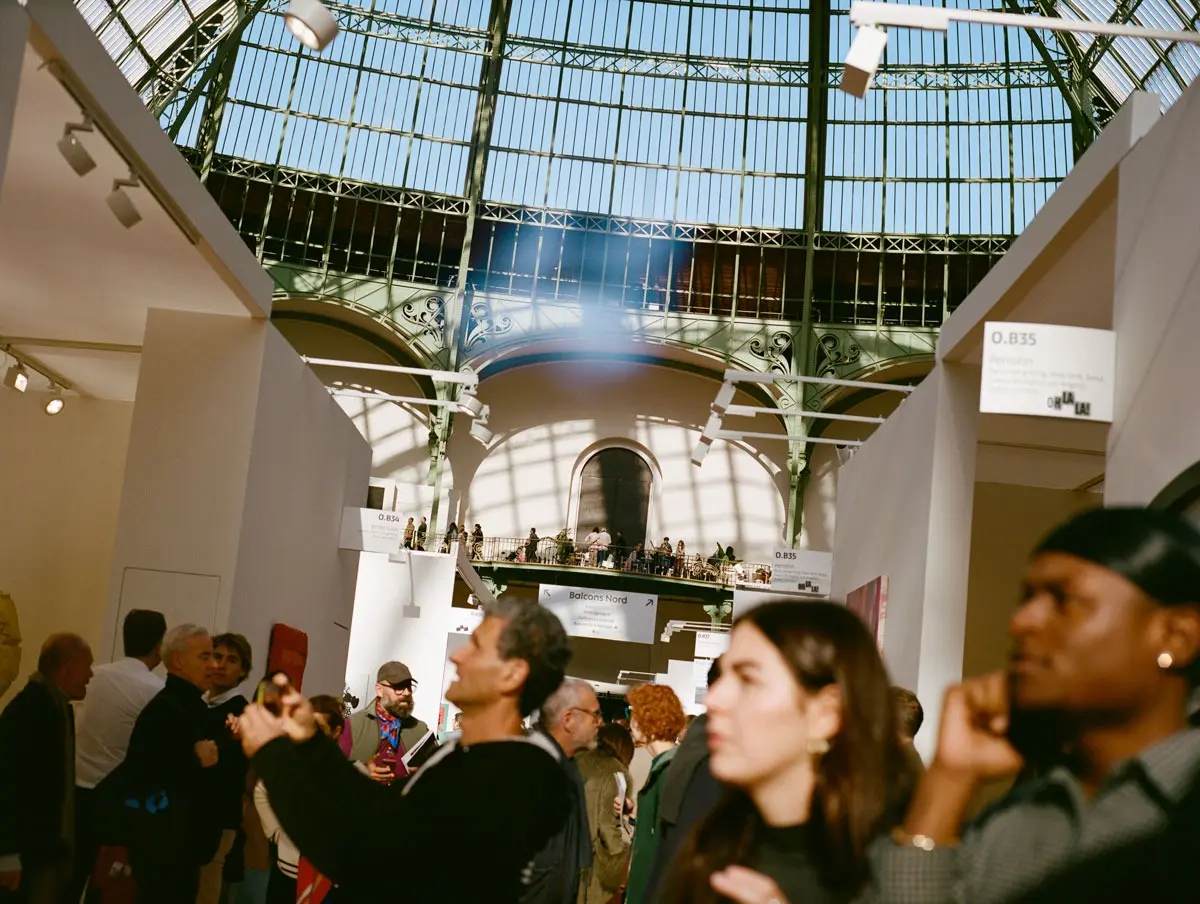
As autumn settles across Europe, the international art world prepares for its most anticipated—and intensely scrutinized—fortnight of the calendar year. The continent is bracing for a high-stakes double round of world-class art fairs: Frieze London, running from October 14 to 18, followed immediately by Art Basel Paris, taking place from October 21 to 25.
For the global elite of dealers, collectors, advisors, and curators, this back-to-back scheduling is more than a logistical marathon; it is a live stress test for the contemporary art market. Against a backdrop of economic hesitation, geopolitical uncertainty, and shifting tax landscapes, the twin capitals of London and Paris are locked in a sophisticated dance of rivalry and complementarity.
While London faces headwinds from post-Brexit customs red tape and steep value-added tax (VAT) regimes, it continues to boast unmatched infrastructural scale, a deep pool of working artists, and a historic legacy of institutional grit. Simultaneously, Paris is experiencing a triumphant renaissance, supercharged by the unstoppable momentum of Art Basel’s French edition, blockbuster museum exhibitions, and surging auction house totals.
Read Also
Rather than choosing a single victor, major international galleries are increasingly treating the two cities as a unified, biphased ecosystem. By splitting their strategies—showcasing fresh, contemporary studio discoveries in the British capital while deploying museum-grade historical masterpieces in the City of Light—dealers are attempting to master the art of equilibrium in an unpredictable market.
Detailed Chronology: The Evolution of the Trans-Channel Dynamic
To understand the current positioning of London and Paris, one must look back over the tectonic shifts of the past three to five years.

The Post-Pandemic Correction (2022–2023)
Three years ago, veteran dealer Thaddaeus Ropac began questioning the fundamental health of the London art market. Mixed auction results through 2022 and 2023 signaled what he and other market observers identified as a prolonged stagnant period. At the same time, Art Basel launched its inaugural Parisian edition inside the newly renovated Grand Palais, instantly capturing the imagination of the international collecting class.
"London lost part of the market because Paris became very attractive," Ropac remarked in an interview with ARTnews.
The momentum seemed palpable. Paris leveraged its unrivaled network of world-class museums—mounting blockbuster exhibitions that drew American and international collectors en masse—to position itself as the undisputed epicenter of European cultural tourism.
The London Resilience (2024–Present)
Despite predictions of London’s steady decline, the city has refused to yield its ground. Demonstrating long-term confidence in the British market, Ropac’s gallery recently renewed its London lease for another decade. Global powerhouse Hauser & Wirth, which has maintained a physical presence in the city since 2003, is currently constructing a massive, 15,000-square-foot gallery space on Mayfair’s prestigious South Audley Street.
Zoe Sperling, a partner at Hauser & Wirth London, emphasized that the city’s cultural pull remains exceptionally strong. "Our artists want to be in London," she noted. "We represent 15 artists and estates in the UK, the majority of whom call London home, but so many of our international artists want to exhibit here too."

Furthermore, industry veterans argue that London’s appeal lies in its gritty, organic identity as a city for working artists—a mantle it has effectively inherited from Berlin, which many dealers feel has lost a degree of its creative vitality.
Supporting Context & Metrics: Scale, Economics, and the Cost of Doing Business
The debate between London and Paris ultimately boils down to hard economics, logistical realities, and raw metrics.
Scale and Infrastructure
London continues to command a distinct advantage in terms of sheer market scale:
- Gallery Density: London maintains a higher total concentration of permanent commercial galleries than Paris.
- Exhibitor Footprint: Frieze London and Frieze Masters routinely bring a larger footprint to Regent’s Park. Last year’s edition united over 280 galleries, compared to Art Basel Paris’s 203 exhibitors.
- Auction House Dominance: Historically, London’s seasonal evening sales outpace Paris. During the autumn 2025 Frieze week, Christie’s London 20th- and 21st-century evening sales totaled a formidable $142.9 million, easily dwarfing the $107.4 million achieved across all four Christie’s sales held during Art Basel Paris.
However, Paris is closing the gap at an astonishing velocity. Last year, Christie’s Paris sales jumped 16 percent year-over-year, while Sotheby’s marquee Modern and Surrealist sales surged past €89.7 million—a staggering 50 percent increase over the previous year. This included a landmark €27 million sale of Amedeo Modigliani’s Elvire en buste, setting an all-time record for Sotheby’s in the French capital.
Pricing Power at Fairs
When it comes to top-tier transactions, Art Basel Paris has increasingly become the venue of choice for eight-figure masterpieces. At last year’s editions, the highest prices realized in Paris far exceeded those reported at Frieze. Hauser & Wirth secured a $23 million sale for a Gerhard Richter, Pace shifted a Modigliani for just under $10 million, and David Zwirner parted with a Ruth Asawa for $7.5 million. By contrast, Frieze’s largest reported sales hovered safely in the low seven figures.

The Burden of Taxation and Red Tape
For international dealers, navigating the UK market involves formidable financial friction. Ryan Stern, a director at British nomadic gallery Sixty Six, points to taxation as one of the most prohibitive hurdles in London. The final invoice for any artwork remaining in the UK incurs a mandatory 20 percent VAT.
"Sometimes that amount is enough to be an entire work in itself," Stern explains. "That can deter someone from going through with it, and that’s a shame for younger collectors."
Compounding this is the ongoing fallout from Brexit. Arianne Piper, a London-based art advisor, notes that the loss of temporary import fee exemptions and the bureaucratic nightmare of customs red tape have fundamentally altered Frieze London’s DNA. Once a high-volume transactional hub, it has been forced to pivot toward a more curated, talent-focused platform, with major international galleries splitting their best inventory between the two European capitals.
Booth Economics
The cost of participating in these elite fairs has skyrocketed. Over the past decade, Zurich-based gallerist Eva Presenhuber estimates that total fair expenditures have risen by roughly 50 percent.
- Frieze London Stand Fees: Space at Regent’s Park is billed aggressively by the square meter, scaling upward based on booth size. Small stands (30–50 sq meters) cost around £597 per square meter, while XXL configurations (110–130 sq meters) climb to £671 per square meter. Without lighting, furniture, or freight, a small gallery faces a baseline space fee of £17,910 ($23,657), while an XXL stand can reach an eye-watering £87,230 ($115,219).
- Art Basel Paris Stand Fees: Ground-floor booths range from €880 to €1,098.50 per square meter, with upper-level spaces priced between €724.50 and €849 per square meter. To ease the burden, Art Basel Paris offers tiered incentives: a 25 percent discount for first-time exhibitors in the main sector, 15 percent off for sophomore outings, and heavily subsidized rates for smaller sectors like Emergence and Premise.
Despite these escalating costs—with Presenhuber estimating that her gallery will drop between $250,000 and $350,000 all-in for Art Basel Paris, requiring at least $1 million in sales just to break even—dealers agree that fairs remain an irreplaceable engine for client acquisition.

Official Statements & Dealer Strategies: The "Extended Fair" Concept
To navigate this high-cost environment, galleries are adopting highly coordinated, multi-city strategies. Rather than viewing London and Paris as mutually exclusive battlegrounds, sophisticated dealers view them as chapters of the same story.
Kenta Murakami, a partner at New York’s Ortuzar gallery, describes the two events as a single, extended fair split across two distinct cultural contexts:
"We think of the two fairs as one extended fair, split between two different cities in two different contexts. They allow us to show the breadth of our program. In a way, you can start a conversation in London that you might close in Paris. From a sales numbers perspective, we look at both fairs holistically."
Ortuzar’s strategy exemplifies this duality. At Frieze Masters, the gallery is presenting museum-caliber historical works from the 1940s to the 1990s—including pieces by Josef Albers, Robert Ryman, and Yoko Ono’s iconic Cleaning Piece—with price tags ranging from $50,000 to over $10 million. Meanwhile, in Paris, the gallery pairs primary-market living artists like Takako Yamaguchi and Claudette Johnson with historical 1970s works by Yoko Ono and André Cadere.
Similarly, Thaddaeus Ropac utilizes Frieze London as a laboratory for fresh contemporary talent, bringing works by Denzil Forrester, Jordan Casteel, and Antony Gormley. In Paris, by contrast, Ropac leans into art-historical heavyweight status, showcasing museum-grade pieces by Marcel Duchamp, Lucio Fontana, and Andy Warhol.

Future Outlook: Identity, Innovation, and Market Resilience
As the art world converges on London and Paris this October, the long-term trajectory of both markets is coming into sharper focus.
While some market makers, such as advisor Meredith Darrow, argue that "Paris has stolen the thunder of really every art fair, including Basel, Switzerland," others see a distinct silver lining for the British capital. Bernard LaGrange of Gagosian Art Advisory suggests that London’s lower average price points relative to Paris may grant Frieze a unique opportunity to shed its past corporate staleness and rediscover its original identity.
"Hopefully, that allows Frieze to go back to being a place where you can discover what’s new and what’s exciting," LaGrange notes.
Conversely, Paris is rapidly establishing itself as a bold incubator for experimental presentations. First-time exhibitor Mariposa from New York is bringing a large-scale installation by Drake Carr priced between $10,000 and $15,000 to Art Basel Paris. As cofounder Alec Smyth explains, the gallery views the exorbitant cost of the fair not as an immediate sales trap, but as a vital marketing expenditure designed to capture international eyeballs.
Ultimately, the enduring success of both London and Paris proves that physical gatherings remain the beating heart of the global art market. Despite global anxieties, economic fatigue, and client hesitation in the face of over-inflated prices for young artists, the appetite for discovery persists. Whether navigating the regulatory complexities of Regent’s Park or basking in the grandeur of the Grand Palais, dealers and collectors alike are proving that the European art market is not dying—it is simply evolving.




Comments
Facebook App ID not configured. Please add it in the Customizer.