
Executive Overview
With less than four weeks before millions of Americans head to the polls to decide control of Congress and a critical slate of state and local offices, the political landscape is experiencing a profound and unexpected realignment. High-stakes midterm elections are unfolding against a backdrop of deep economic anxiety, presidential overreach, and a cost-of-living crisis exacerbated by an unpopular war. Yet, tucked beneath the usual debates over inflation, reproductive rights, and border security is a booming, bipartisan flashpoint that analysts say has fundamentally "upended politics as we know it": the rapid, aggressive expansion of artificial intelligence and the sprawling industrial data centers powering it.
Once viewed as the innocuous realm of corporate IT departments, the physical infrastructure of the digital age has transformed into a toxic political liability. Across the United States—from the battleground state of Wisconsin to the suburbs of Ohio and Texas—voters and politicians alike are grappling with the insatiable energy, water, and land demands of server farms.
This hostility transcends traditional partisan boundaries. Candidates from both sides of the aisle are weaponizing the issue, launching attack ads featuring monikers like "Data Center Dave" to paint their opponents as tools of Big Tech. Elected officials who once welcomed these multi-billion-dollar investments are now racing to distance themselves, calling for moratoria, tax subsidy repeals, and strict regulations to protect household utility bills.
Read Also
However, a critical paradox defines this political moment: while grassroots animus toward data centers and AI is at an all-time high, polling indicates that only a tiny fraction of the electorate lists the issue as their primary motivation at the ballot box. This extensive report examines the anatomy of the data center backlash, tracing its evolution from localized noise complaints into a nationwide proxy war over the future of artificial intelligence, economic inequality, and corporate influence in American democracy.
Detailed Chronology: From the IT Closet to the Campaign Trail
To understand how server farms became the defining political bogeyman of the current cycle, it is necessary to trace the rapid escalation of public sentiment over the past several years.
Phase 1: The Invisible Expansion (Pre-2024)
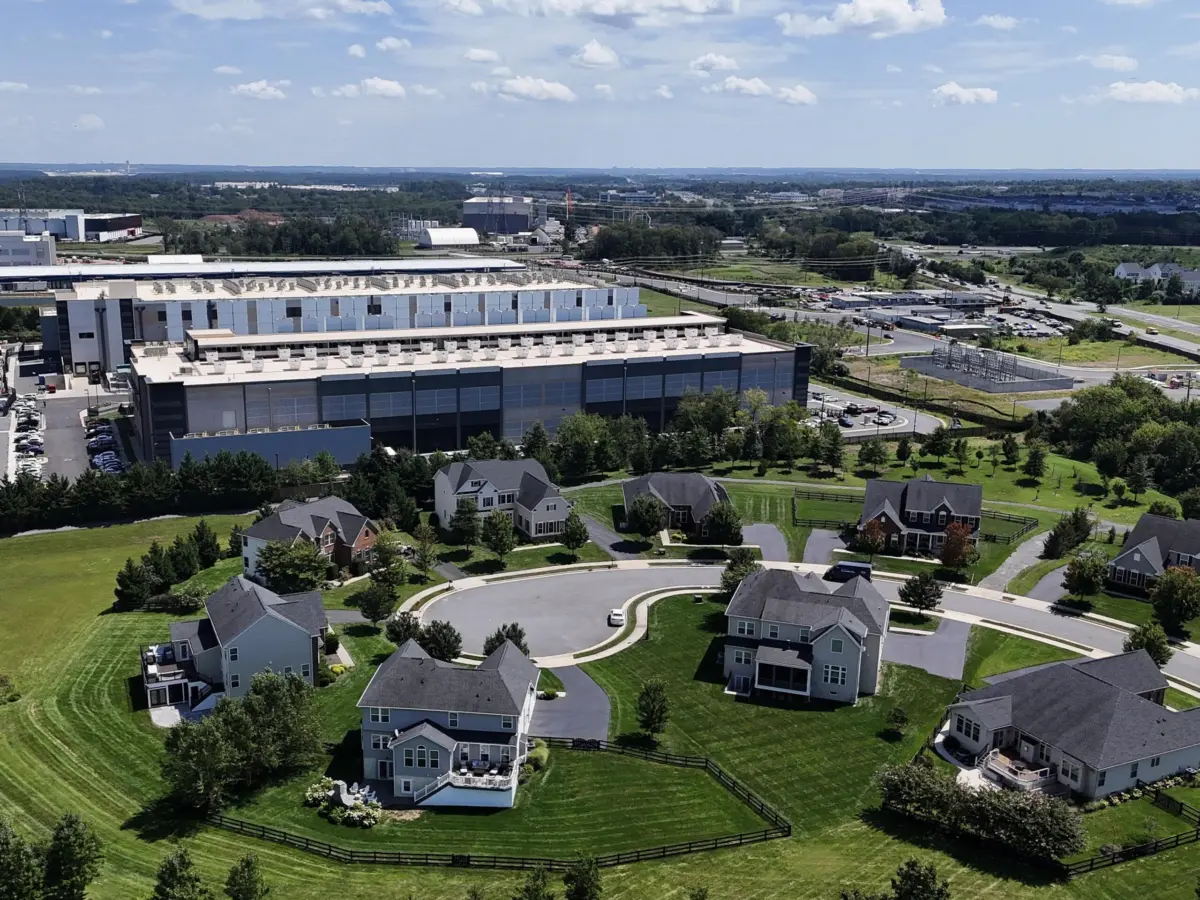
For decades, data centers were quietly integrated into rural and suburban landscapes. Often resembling unassuming, windowless industrial warehouses, these facilities hummed along quietly near major fiber-optic trunks and cheap power sources. To the average citizen, a "data center guy" or an IT specialist was simply a workplace fixture. Local governments welcomed them as sources of construction jobs and commercial property tax revenue, largely unaware of the monumental changes on the horizon.
Phase 2: The Generative AI Gold Rush (2024–2025)
The public launch and subsequent ubiquity of generative artificial intelligence changed everything. To train and run complex large language models, tech giants like OpenAI, Microsoft, Google, and Amazon embarked on an unprecedented construction spree. Suddenly, communities across America were targeted for massive complexes demanding gargantuan amounts of electricity—often equivalent to the power draw of entire small cities—and millions of gallons of water daily for cooling systems.
Phase 3: The Quality-of-Life Backlash (Late 2025–Early 2026)
Initial resistance to the data center boom was fiercely localized. Residents living adjacent to proposed sites began organizing against continuous industrial noise, plummeting property values, and the looming threat of skyrocketing residential electricity bills as utility companies rushed to upgrade the grid to feed the AI beast. Local zoning boards were inundated with angry town-hall meetings, and grassroots organizations formed coalitions to demand transparency and accountability.
Phase 4: The Political Weaponization (Mid-2026–Present)
By the summer and fall of 2026, local grievances metastasized into a potent national political issue. Recognizing the depth of the public’s unease, political campaigns seized on the sentiment. In high-profile gubernatorial and congressional contests, candidates began framing their opponents as dangerously cozy with technology conglomerates. The Wisconsin gubernatorial race between Republican Tom Tiffany and Democrat Crowley epitomized this shift, highlighted by campaign spots branding the Democratic candidate as "Data Center Dave."
Simultaneously, a data analysis of thousands of political newsletters and social media posts conducted by Washington Post data reporter Jeremy Merrill revealed a striking trend: positive mentions of data centers among major-party politicians had plummeted, with candidates falling over themselves to prove who could be tougher on Big Tech infrastructure.
Supporting Context & Metrics: The Anatomy of a Bipartisan Backlash
The hostility toward data centers cannot be neatly categorized along traditional ideological lines. While environmental degradation and corporate subsidies might traditionally rally Democrats, and concerns over grid reliability and property rights might mobilize Republicans, the data center backlash has successfully united both extremes of the electorate.
The Broader Fears Stoking the Fire
As Vox reporters and researchers have noted, the physical footprint of a data center has gradually become a proxy symbol for deeper, existential anxieties surrounding artificial intelligence. Voters are increasingly asking hard questions without receiving reassuring answers:
- Economic Displacement: Will the rapid deployment of AI lead to mass unemployment, hollowing out white-collar and creative industries?
- Resource Strain: Why should ordinary citizens subsidize the energy needs of trillion-dollar corporations while facing their own cost-of-living squeezes?
- Democratic Deficit: Why are local zoning decisions and multi-billion-dollar tax breaks negotiated behind closed doors with little to no public input?
What the Data Shows
To gauge the scope of this political phenomenon, researchers have analyzed public statements, social media engagement, and voter polling across key states:
- Unanimous Negativity: An analysis of political rhetoric by the Washington Post demonstrated that an overwhelming majority of GOP politicians—historically champions of corporate development and deregulation—now speak negatively about data centers. Democrats have mirrored this tone, framing the issue as a fight for economic justice and environmental protection.
- The Ohio Paradox: Ohio has emerged as both a primary hub for planned OpenAI data center development and a hotbed for grassroots opposition. Yet, a comprehensive Times/Siena poll revealed that only 3 percent of Ohio voters cited data centers as the most important issue driving their vote. While modest, that figure was the highest recorded in the entire nation; in most other states, the issue barely registered as a primary voting catalyst.
- Primary Outcomes vs. General Election Rhetoric: The disconnect between vocal opposition and ballot-box prioritization was starkly illustrated in Wisconsin’s Democratic gubernatorial primary. There, "Data Center Dave" Crowley triumphed over Francesca Hong, a prominent and vocal critic of data center expansion. Political analysts point to this race as evidence that while anti-data center rhetoric is ubiquitous, it does not necessarily crowd out traditional voter concerns like healthcare, abortion access, and overall economic performance.
Official Statements and Campaign Strategies
As the November midterms approach, candidates are walking a fine political tightrope: leveraging anti-tech populism to energize voters without alienating the broader business community or appearing entirely anti-innovation.
In Ohio, every major candidate for governor—spanning both parties—has publicly called for strict legislative restrictions on the data center boom. Proposals range from mandatory public notification periods before a shovel hits the dirt to complete moratoria on new tax breaks and subsidies. Furthermore, candidates are championing utility regulations designed to ensure that the massive cost of grid expansions falls squarely on the tech companies rather than residential ratepayers.
In Florida, candidates have likewise sought to tar their opponents with the "Data Center Dave" brush, signaling that the localized phenomenon has successfully crossed state lines into the Sun Belt.
Political strategist Andrew Prokop, speaking on the impact of these dynamics in key races, noted:
"Data centers have been a major theme in several races, particularly governor’s races where one of the candidates has taken past pro-data center positions… That just goes to show that data centers don’t necessarily crowd out everything else, but they have fundamentally shifted how candidates talk about economic development and technology."
Similarly, Jeremy Merrill emphasized the speed at not only which politicians adapted their language, but how thoroughly the pro-development consensus collapsed:
"Most politicians now realize that being seen as an ally to the data center industry is a liability. They are falling over themselves to sound tough, regardless of what party they belong to."
Future Outlook: What the Midterms Mean for AI and Infrastructure
As voters prepare to cast their ballots, the long-term implications of the 2026 midterm data center backlash extend far beyond next year’s legislative sessions. Several key trends are likely to shape the post-election landscape:
- Regulatory Gridlock at the State Level: Regardless of which party wins control of key governorships and state legislatures, the wave of proposed restrictions, moratoriums, and subsidy rollbacks is expected to accelerate. Tech companies will likely face a fragmented patchwork of state-level regulations that could significantly slow down the deployment of physical AI infrastructure.
- Federal Intervention and Grid Planning: The intersection of massive power demands and local pushback will inevitably force federal regulators—such as the Federal Energy Regulatory Commission (FERC)—to take a more active role in managing energy markets, transmission lines, and data center interconnection requests.
- The Evolution of Tech Lobbying: Big Tech will be forced to overhaul its community engagement and public relations strategies. Moving forward, companies cannot rely on quiet municipal approvals; they will need to demonstrate tangible community benefits—such as localized green energy investments, direct utility subsidies for residents, and transparent environmental impact reports—to secure political licenses to build.
Ultimately, whether "Data Center Dave" becomes a permanent fixture of American political folklore or merely a transient buzzword of the 2026 midterms, the phenomenon has permanently altered the relationship between technological progress and the communities forced to host its physical footprint. Voters have signaled that the digital future cannot be built at the expense of their immediate quality of life, forcing politicians to listen—even if the ballot box ultimately prioritizes bread-and-butter economic survival above all else.





Comments
Facebook App ID not configured. Please add it in the Customizer.