
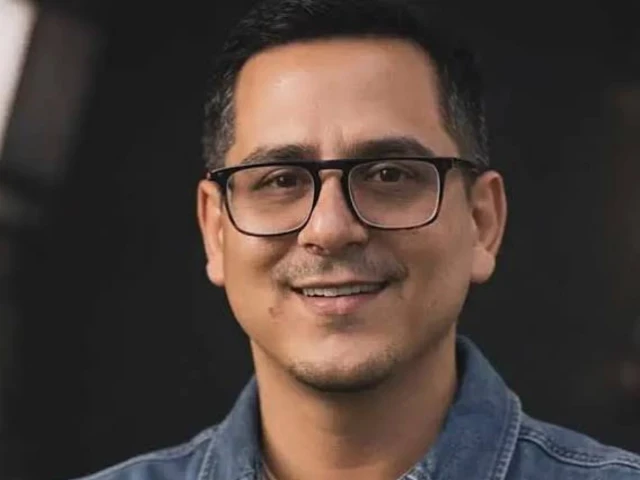
By Global Bureau Investigative Desk
Published: October 09, 2026
Executive Overview
Award-winning Kashmiri filmmaker Arfat Sheikh was released from the custody of the United States Immigration and Customs Enforcement (ICE) on bond on Thursday, bringing a temporary halt to a harrowing ordeal that began with his sudden arrest on September 24, 2026. Sheikh, whose cinematic work frequently examines the harrowing sociopolitical realities and human rights crises of conflict zones—most notably his native region of India-administered Kashmir—was detained by federal authorities immediately after stepping off a domestic flight from California at Washington Dulles International Airport.
According to an advocacy campaign organized by his close friends, relatives, and professional colleagues, Sheikh was granted a bond on Tuesday following intensive legal intervention before securing his physical release late Thursday. However, legal representatives and supporters emphasize that while this chapter has concluded with his return home to Alexandria, Virginia, the broader administrative deportation proceedings against him remain active. The case has rapidly evolved into a major flashpoint, drawing intense scrutiny from civil liberties organizations, free-speech advocates, and immigrant rights defenders who view the incident as part of a widening federal crackdown on asylum seekers, students, and foreign artists residing within the United States.
Read Also
Sheikh’s detention and subsequent conditional release underscore the escalating vulnerabilities faced by foreign nationals navigating the labyrinthine American immigration system—particularly those hailing from volatile geopolitical conflict zones. The incident also highlights the growing friction between artistic expression, political asylum claims, and the aggressive immigration policies championed by the administration of President Donald Trump. As the legal battle persists, the case of Arfat Sheikh serves as a critical barometer for the state of due process, artistic freedom, and immigrant protections in the contemporary United States.
Detailed Chronology of Events
The sequence of events leading to Arfat Sheikh’s detention, incarceration, and subsequent bond release spans several years of administrative compliance, interrupted by a swift and unexpected enforcement action by federal immigration authorities.
1. Arrival and Legal Entry (2019–2020)
Arfat Sheikh originally entered the United States in 2019 on a legally obtained non-immigrant student visa. His primary objective was to pursue advanced graduate studies in film production and cinematic arts at Georgia State University, a program that allowed him to further hone a distinct storytelling lens shaped by his upbringing in Srinagar. Recognizing the escalating political instability, human rights abuses, and systemic crackdowns in India-administered Kashmir—themes that would eventually form the backbone of his award-winning artistic portfolio—Sheikh formally filed an application for political asylum in 2020.
Under established U.S. immigration protocols, the filing of a timely asylum application confers specific administrative protections. Throughout the protracted processing period, which routinely spans years due to massive backlogs within the U.S. Citizenship and Immigration Services (USCIS) and immigration courts, Sheikh maintained lawful authorization to both live and work inside the country. He established a residence in Alexandria, Virginia, fully integrated himself into the local creative community, and continued developing independent film projects that bridged the cultural and political divide between South Asia and the West.
2. The Arrest at Washington Dulles (September 24, 2026)
The situation dramatically shifted on September 24, 2026. After traveling to California for professional engagements related to his cinematic distribution, Sheikh boarded a return flight destined for the Washington, D.C. metropolitan area. Upon disembarking at Washington Dulles International Airport—a major international and domestic transit hub—he was intercepted by personnel from Immigration and Customs Enforcement (ICE), an operational arm of the Department of Homeland Security (DHS).
According to statements released by his support campaign, the arrest was executed without prior warning. Sheikh was immediately taken into federal custody, effectively cutting him off from his legal representation, artistic collaborators, and personal support network. He was subsequently transferred to an ICE detention facility, where he remained incarcerated for nearly two weeks while his legal team scrambled to mount an emergency defense strategy.
3. Legal Mobilization and Bond Hearing (October 6–8, 2026)
In the wake of the sudden arrest, an advocacy coalition composed of Sheikh’s friends, family members, and civil rights advocates mobilized rapidly. Operating under the banner of a "Free Arfat Sheikh" campaign, they raised public awareness, coordinated with legal aid organizations, and engaged media outlets to shed light on what they characterized as an arbitrary and unjust detention.
Sheikh’s defense attorneys filed urgent motions before an immigration judge, arguing that his continued detention was unwarranted given his clean record, active employment authorization, deep community ties, and the pending status of his asylum application. On Tuesday, October 6, 2026, an immigration judge officially granted Sheikh a bond. Following administrative processing and the posting of the required financial security, Sheikh was released from ICE custody on Thursday, October 8, 2026. Despite this temporary victory, his legal team cautions that the underlying deportation case remains open, setting the stage for high-stakes administrative hearings in the months ahead.
Artistic Profile and Creative Contributions
To fully understand the resonance of Arfat Sheikh’s detention, one must examine his artistic trajectory and the thematic weight of his cinematic output. Sheikh’s work is deeply rooted in the lived experiences of marginalized populations, utilizing the medium of film as an instrument of social documentation, empathy, and political resistance.
"Saffron Kingdom" and Critical Acclaim
Sheikh’s creative zenith arrived with his 2024 debut feature film, Saffron Kingdom. The cinematic masterwork explores the multi-generational trauma, geopolitical conflict, and psychological dislocation experienced by the people of Kashmir through the intimate lens of a single family’s journey. The narrative tracks the family’s forced displacement from their ancestral home in Srinagar, India-administered Kashmir, in the turbulent 1990s, eventually following their winding path toward eventual resettlement in Atlanta, Georgia, by 2019.
The film received widespread critical acclaim on the international independent festival circuit, cementing Sheikh’s reputation as a visionary auteur capable of translating geopolitical violence into deeply human, emotionally resonant storytelling. Among its many accolades, Saffron Kingdom secured the prestigious Best Feature Film awards at:
- The Chicago Filmmakers Awards
- The LA Film and Documentary Awards
- The Melbourne Independent Film Festival
- The Wake Forest Film Festival
Furthermore, Sheikh’s personal commitment to advocacy through art was formally recognized at the Teaneck International Film Festival, where he was honored with the Emerging Filmmaker Activist Award. By giving voice to a population whose narratives are frequently suppressed, censored, or heavily politicized on the global stage, Sheikh’s work transcended traditional entertainment, serving as a vital cultural archive of modern displacement.
Official Statements and Institutional Positions
The case has triggered a war of words between federal immigration enforcement agencies, who point to technical violations of immigration status, and civil rights advocates, who accuse the government of weaponizing bureaucratic loopholes to target political dissidents and asylum seekers.
The Department of Homeland Security (DHS) Perspective
In an official statement issued on Wednesday, October 7, 2026, the Department of Homeland Security defended the legality of the enforcement action. DHS officials confirmed that Arfat Sheikh was arrested on September 24 pursuant to administrative enforcement priorities.
According to the agency:
"Sheikh legally entered the United States on a temporary basis and illegally overstayed his lawful admittance."
DHS explicitly addressed Sheikh’s pending legal petitions, asserting that the mere filing of an asylum application or other immigration adjustments does not confer lawful permanent immigration status or immunity from removal proceedings under federal statute. The agency maintained that Sheikh would be afforded standard due process rights within the immigration court system, where an immigration judge will ultimately determine the validity of his claims for relief from deportation.
The Defense and Advocacy Campaign Perspective
Conversely, the campaign organized to free Sheikh firmly rejects the narrative presented by DHS. Advocates argue that targeting an individual with a pending, legally filed asylum application—who has lived peaceably in the country for seven years, maintained lawful work authorization, and contributed positively to American culture and academia—represents a profound miscarriage of justice.
Legal representatives emphasize that Sheikh followed every procedural requirement mandated by the U.S. government upon his arrival in 2019. They contend that treating individuals with pending immigration applications as prime targets for aggressive enforcement undermines the integrity of the U.S. asylum system, which was specifically designed under domestic and international law to protect individuals fleeing political persecution, violence, and state-sponsored oppression in their home countries.
Supporting Context: The Broader Political and Legal Landscape
Arfat Sheikh’s case cannot be viewed in a vacuum; it is unfolding against the backdrop of a radically transformed American immigration policy under the administration of President Donald Trump.
The Trump Administration’s Immigration Crackdown
Since returning to office, President Trump has pursued an aggressive, uncompromising immigration enforcement strategy aimed at dramatically curtailing both legal and undocumented immigration, increasing domestic deportations, and tightening national security protocols. The administration has repeatedly argued that sweeping enforcement actions are necessary to restore the rule of law and safeguard domestic communities.
As part of this broader push, the administration announced a sweeping policy initiative in August 2026 specifically targeting foreign nationals who utilize temporary non-immigrant visas—such as tourist, business, or student visas—as a pathway to enter the United States before subsequently filing for asylum to secure permanent residency. Senior administration officials stated that federal agencies were actively working to identify, review, and revoke the non-immigrant visas of individuals who fall into this category, signaling a concerted effort to close perceived loopholes in the asylum adjudication pipeline.
Civil Liberties and Human Rights Concerns
This aggressive enforcement posture has drawn sharp condemnation from a broad coalition of civil rights organizations, legal scholars, and human rights watchdogs. Critics argue that the administration’s policies have systematically degraded constitutional due process protections, eroded freedom of speech, and fostered an atmosphere of fear and insecurity across the United States.
Particular concern has been raised regarding the disproportionate impact of these policies on ethnic minorities, foreign students, journalists, and artists from conflict-affected regions. Human rights advocates note that individuals who utilize creative media or journalism to critique oppressive foreign governments often face severe retaliation if forced to return to their countries of origin. By subjecting such individuals to sudden detention and rapid deportation proceedings, critics argue that U.S. policy risks sending vulnerable artists back into situations of active persecution, thereby violating core tenets of international humanitarian law and the 1951 Refugee Convention.
Future Outlook: What Lies Ahead for Arfat Sheikh
While Arfat Sheikh’s release from ICE detention on bond allows him to reunite with his community and resume his creative work in the immediate term, his legal battle is far from over.
Legal Proceedings and Immigration Court
The primary legal battleground will now shift back to the immigration court system, where Sheikh’s defense team will continue to press his underlying application for political asylum. The central legal question before the immigration judge will revolve around whether Sheikh’s well-documented history of engaging with sensitive political themes in Kashmir—coupled with the prevailing security conditions in India-administered Kashmir—constitutes a credible and well-founded fear of persecution should he be compelled to return.
Immigration attorneys note that bond hearings and deportation defenses for asylum seekers with pending status often involve protracted litigation, requiring extensive expert testimony, country-condition reports, and personal declarations. The outcome of these proceedings will set a critical precedent not only for Sheikh’s personal future in the United States but also for numerous other foreign students and artists whose legal statuses exist in similar administrative limbos.
Implications for the Artistic Community
Beyond the courtroom, Sheikh’s case has served as a rallying cry for the global and domestic film community. Filmmakers, producers, and artistic associations have expressed solidarity with Sheikh, viewing his detention as a direct assault on the fundamental principles of artistic freedom and expression. As Sheikh prepares for his upcoming legal defenses, supporters vow to maintain pressure on federal authorities, ensuring that his voice—and the vital stories he brings to the screen—are neither silenced nor marginalized by bureaucratic overreach.
Statistical and chronological data compiled from Reuters, Department of Homeland Security briefings, and records provided by the "Free Arfat Sheikh" advocacy campaign.


Comments
Facebook App ID not configured. Please add it in the Customizer.