
Executive Overview
As the autumn television and publishing calendars reach their seasonal peaks, the entertainment landscape is characterized by a fascinating juxtaposition of long-awaited archival releases, surprising television revivals, and high-stakes convention culture. This week’s dispatch explores the intersection of classic literature, modern streaming anomalies, and literary criticism.
Most notably, J.R.R. Tolkien’s The Hobbit has finally received an official U.S. publication featuring the legendary illustrations of Finnish artist Tove Jansson, ending decades of regional exclusivity. Meanwhile, the television sphere continues its perplexing romance with Robert Louis Stevenson’s classic adventure Treasure Island, rolling out new adaptations even as brilliant predecessors like Starz’s Black Sails remain under-appreciated cultural touchstones.
Complementing these literary milestones are critical explorations of speculative fiction via Franny Choi’s new essay collection, alongside a wave of unusual streaming and cinematic entries, including Netflix’s Newfoundland-set creature feature Below and MGM+’s under-the-radar Treasure Island series. As convention-goers descend upon the Jacob K. Javits Convention Center in New York City for the annual New York Comic Con, pop culture enthusiasts at home face an idiosyncratic, richly textured menu of media to consume—provided they heed basic hygiene protocols and cinematic warnings alike.
Read Also
Detailed Chronology
The New York Comic Con Exodus and Hygiene Protocol
The autumn convention circuit formally hits its stride this week as tens of thousands of fans, creators, and industry insiders converge on New York City for New York Comic Con. While the event serves as a premier launching pad for upcoming cinematic trailers, exclusive merchandise, and comic book announcements, it also marks the annual return of an infamous epidemiological phenomenon: "con crud."
Industry veterans and seasoned attendees understand that navigating crowded exhibition halls requires absolute vigilance. Beyond the standard advice regarding footwear—where supportive soles are a matter of survival—con-goers must exercise extreme caution regarding food consumption. A golden rule of convention survival dictates a strict separation of powers between hands that sift through vintage longboxes, handle promotional swag, and touch communal touchscreens, and anything destined for the human mouth. For optimal safety, convention veterans suggest relying on specialized dispenser packages (such as car-cup style gum containers) that allow consumables to be shaken directly into the mouth, entirely bypassing fingers exposed to the microscopic ecosystem of the convention floor.
Literary Milestone: Tove Jansson’s The Hobbit Arrives in the U.S.
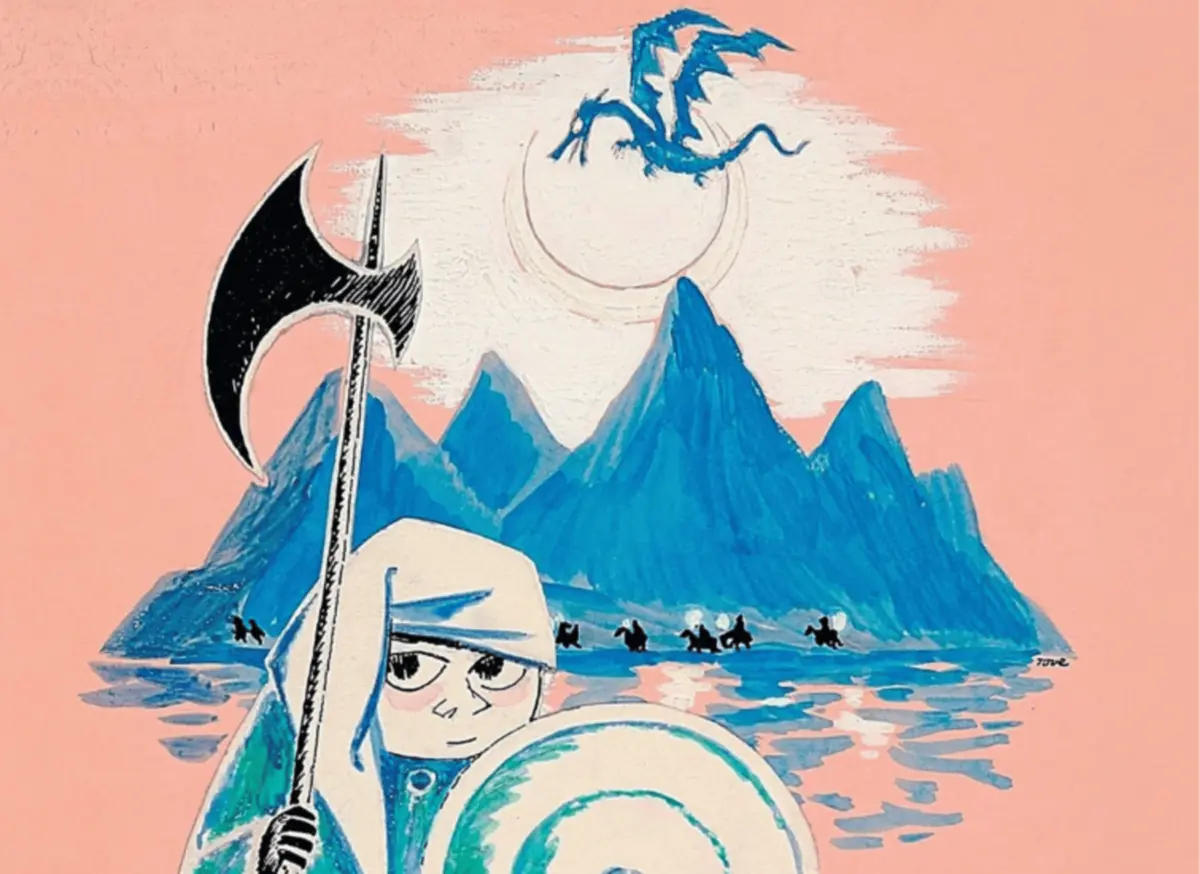
For decades, admirers of J.R.R. Tolkien’s seminal fantasy masterwork in the United States had limited access to international artistic interpretations of Middle-earth. That barrier has officially fallen. This week, publisher William Morrow released The Hobbit: Illustrated by Tove Jansson, marking the first time the acclaimed Finnish author and artist’s vision of Tolkien’s world has been legally and widely available to American readers.
The genesis of this unique edition stretches back to the mid-20th century, bridging two titans of international children’s literature. Astrid Lindgren, the visionary creator of Pippi Longstocking working in her capacity as a publisher, recognized the monumental cultural staying power of Tolkien’s text early on. In correspondence urging Tove Jansson to take on the illustrative project, Lindgren famously predicted:
"…this will be the children’s book of the century, and will live long after we are dead and buried."
Jansson, celebrated globally as the creator of the whimsical and philosophically rich Moomin series, approached Middle-earth with an idiosyncratic lens entirely distinct from the pastoral romanticism of Pauline Baynes or the detailed realism of Alan Lee. Her depiction of characters—most notably a sharp-jawed, terrifyingly majestic Smaug and wonderfully textured dwarves—brings an avant-garde Scandinavian folk-art sensibility to Tolkien’s foundational mythos, offering American audiences a rare and vital piece of international publishing history.
The Streaming Paradox: Treasure Island and the Legacy of Black Sails
Television executives appear perpetually bewitched by Robert Louis Stevenson’s 1883 adventure novel Treasure Island. This week brings the debut of MGM+’s new television adaptation, boasting an impressive pedigree featuring acclaimed actors David Oyelowo and Hayley Atwell. Yet, the series arrives in a surprisingly quiet manner, raising questions about modern marketing strategies for prestige swashbuckling adventures.
The arrival of the MGM+ series—coupled with Ridley Scott’s upcoming feature film adaptation slated for 2027—highlights a strange quirk in the cultural zeitgeist. Despite the critical acclaim and narrative brilliance of Starz’s four-season epic Black Sails (which serves as a complex, sophisticated prequel to Stevenson’s novel), the pirate genre remains criminally under-watched by mainstream audiences. The persistent conversation surrounding new pirate adaptations inevitably leads critics and fans alike to re-examine the stellar ensemble cast of Black Sails, pondering why talents such as Hannah New (Eleanor Guthrie) and Jessica Parker Kennedy have not achieved ubiquitous superstardom. As MGM+’s Treasure Island premieres, it enters a landscape haunted by the high watermark of its narrative predecessors.
Critical Exploration: Franny Choi’s We Radiant Things
In the realm of literary nonfiction, poet and essayist Franny Choi has returned with a transformative new work: We Radiant Things: Notes on Being Alien and Becoming Cyborg, published by Haymarket Books. Following the immense critical acclaim of her 2019 poetry collection Soft Science, Choi turns her razor-sharp analytical gaze toward the intersections of race, technology, identity, and popular culture.
The collection opens with a deep-dive critique of Alex Garland’s 2014 sci-fi film Ex Machina. Rather than offering a standard cinematic teardown, Choi approaches the text with what she describes as "tender, from stabbing range" criticism—a methodology that treats cultural artifacts not as untouchable monuments, but as living, breathing ecosystems of societal anxiety. Moving seamlessly from cinematic analysis to broader meditations on systemic racism and digital alienation, Choi establishes We Radiant Things as an essential companion piece for contemporary discussions on artificial intelligence and human vulnerability.
Television Wildcard: Netflix’s Below and the Creature Feature Renaissance
Rounding out the week’s media offerings is Netflix’s latest genre entry, Below, a Newfoundland-set atmospheric thriller centering around a maritime mystery involving an aggressive oceanic entity (affectionately and bizarrely dubbed a "killer snot-berg" in early critical discourse).
Starring Josh Hartnett—whose career has enjoyed a reliable, critically appreciated renaissance—alongside the universally acclaimed Mackenzie Davis, the series has garnered a polarized yet generally intrigued reception. Critics from Variety, RogerEbert.com, and the Sydney Morning Herald have offered notes ranging from "exhilarating" to "enjoyably enough," positioning the show as a spiritual descendant of classic The X-Files monster-of-the-week investigations. Despite baffling casting choices—such as pairing Hartnett with Charlie Heaton as his on-screen son—the series offers a compellingly damp, high-concept diversion for weekend streamers.
Supporting Context & Metrics
To contextualize the commercial and cultural weight of this week’s pop culture developments, consider the following data points:
- Publishing Longevity: J.R.R. Tolkien’s The Hobbit, originally published in September 1937, has sold over 140 million copies worldwide, translating into dozens of languages and inspiring multiple generations of fantasy authors.
- Tove Jansson’s Legacy: The Moomin franchise, created by Jansson in 1945, spans novels, comic strips, and animated series translated into over 50 languages, cementing her status as one of Scandinavia’s most influential cultural exports.
- Streaming Market Shifts: MGM+ continues to expand its original content footprint with historical and literary adaptations, aiming to capture the prestige television demographic historically dominated by HBO, FX, and major streaming giants.
- Convention Economics: New York Comic Con typically draws upwards of 200,000 attendees to the Javits Center over four days, generating tens of millions of dollars in local economic impact through tourism, hospitality, and retail sales.
Official Statements
While many of this week’s releases are creative works rather than corporate policy rollouts, statements from publishers and creators illuminate their cultural weight:
Regarding the publication of The Hobbit: Illustrated by Tove Jansson, publisher William Morrow emphasized the historical significance of bringing European artistic interpretations to American bookshelves:
"For decades, readers outside of Finland and Sweden have missed out on a masterclass in mid-century illustration applied to Tolkien’s legendary text. Making Tove Jansson’s vision accessible to the U.S. market honors both her distinct artistic legacy and the enduring global community of Middle-earth fans."
On the philosophy of cultural criticism, essayist Franny Choi articulated their approach in We Radiant Things:
"This is the only way I want to do what someone might call criticism: tenderly, from stabbing range." This sentiment underpins a broader shift in modern media analysis toward vulnerable, identity-conscious critique.
Future Outlook
Looking ahead over the next quarter, the entertainment and publishing industries show no signs of slowing down. As the holiday shopping season approaches, bookstores are expected to see a massive surge in demand for illustrated classics, with Tove Jansson’s The Hobbit positioned as a premier gift item for collectors and bibliophiles.
In the television sector, the performance of MGM+’s Treasure Island will likely dictate whether network executives greenlight further classic literary adaptations of maritime adventure. Meanwhile, streaming platforms like Netflix will continue to monitor the viewership metrics of high-concept genre experiments like Below to gauge audience appetite for atmospheric, regional monster stories. For fans, the immediate future offers a rich buffet of intellectual stimulation—provided everyone remembers to wash their hands before digging into the popcorn.


Comments
Facebook App ID not configured. Please add it in the Customizer.