
Executive Overview
As autumn settles across the Northern Hemisphere, the pop culture landscape undergoes its customary autumnal shift. While throngs of enthusiastic fans descend upon the Jacob K. Javits Convention Center for the annual New York Comic Con—weathering sensory overload, chaotic exhibit halls, and the dreaded specter of "con crud"—the broader entertainment and literary ecosystems are quietly unspooling an eccentric, rich tapestry of new releases.
From the long-awaited domestic publication of Tove Jansson’s visionary illustrations for J.R.R. Tolkien’s The Hobbit to a puzzling wave of maritime revivals, this week’s cultural menu defies simple categorization. This report provides a comprehensive examination of the latest literary treasures, under-the-radar television premieres, high-concept essay collections, and sea-monster thrillers dominating the cultural conversation. Through a detailed chronology, supporting metrics, expert perspectives, and forward-looking analysis, we explore the forces currently shaping contemporary media and fandom.
Detailed Chronology: A Week in Review
The cultural calendar for this week is defined by a peculiar juxtaposition of high-profile conventions, historical literary milestones, and curious streaming debuts.
Read Also
[October] --------------------------------------------------------------------------->
  │
  ├─> Early Week: New York Comic Con Kicks Off at the Javits Center
  │     └─> Attendees navigate packed floors, exclusive swag, and strict hygiene protocols.
  │
  ├─> Mid-Week: Tove Jansson's "The Hobbit" Debuts in U.S. Markets
  │     └─> William Morrow publishes the Finnish-Swedish artist's legendary Tolkien illustrations.
  │
  ├─> Upcoming Sunday: MGM+ Premieres New "Treasure Island" Series
  │     └─> Star-studded adaptation starring David Oyelowo and Hayley Atwell debuts.
  │
  ├─> Ongoing: Franny Choi's "We Radiant Things" Hits Bookshelves
  │     └─> A brilliant, incisive essay collection exploring alienation, cyborgs, and cinema.
  │
  └─> Streaming Now: Netflix Drops Josh Hartnett & Mackenzie Davis Sea-Monster Thriller "Below"
        └─> Newfoundland-set creature feature pulls polarizing, enthusiastic reviews.
The Convention Circuit and Public Health
As New York Comic Con (NYCC) opened its doors, seasoned convention-goers braced themselves for the inevitable endurance test. Beyond the standard advice regarding footwear—where sensible soles are a matter of physical survival—public health vigilance remains paramount. Veteran attendees frequently share unasked-for, yet universally validated, survival strategies. Chief among these is the golden rule of convention dining: absolute separation of tactile exploration and oral consumption.
In an environment where hands rummage through vintage longboxes, examine delicate artisanal prints, and touch promotional plastic, the ingestion of food demands clinical precision. The recommendation to utilize specialized dispensers—such as shaking candy or gum directly from "car cups" into the mouth without digital contact—underscores the psychological defense mechanisms required to evade the legendary, highly contagious "con crud."
Literary Milestones: Tove Jansson Meets Middle-earth
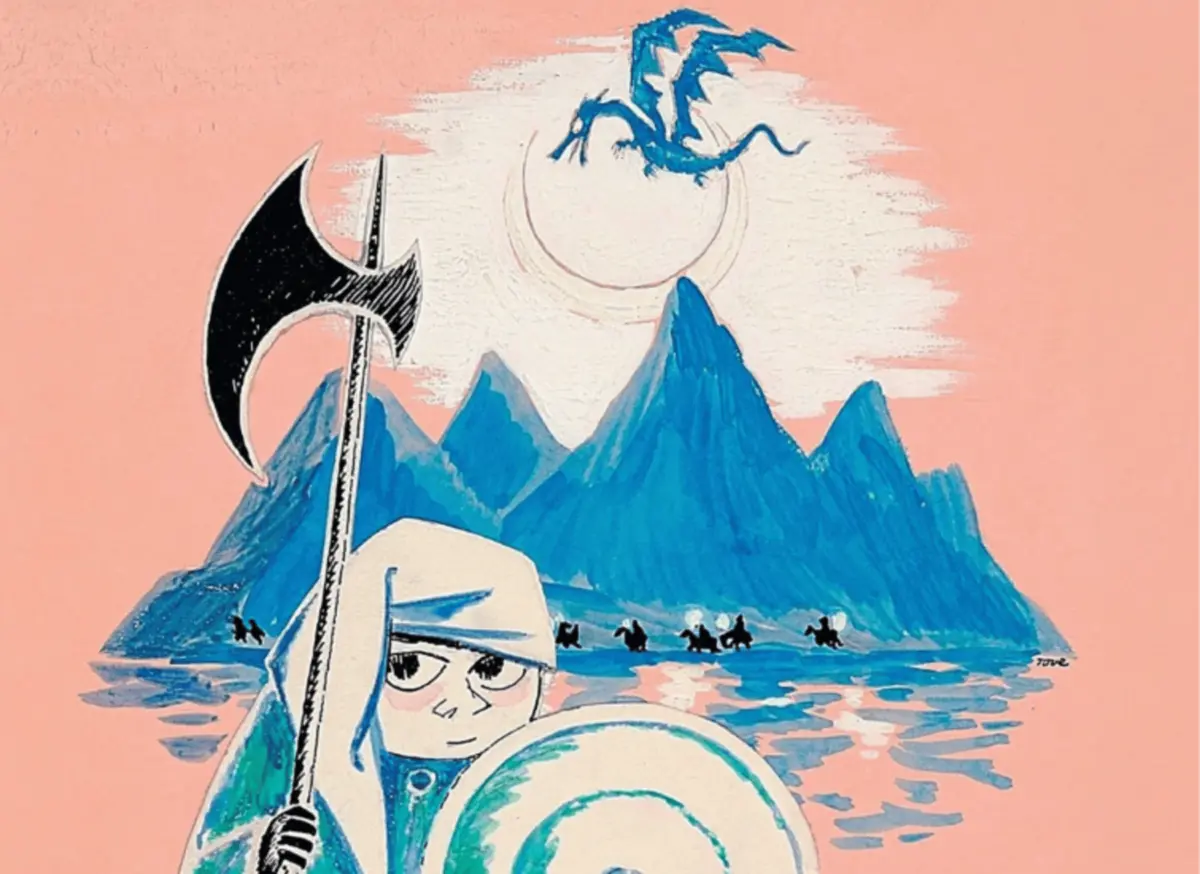
While the Javits Center buzzes with costumed throngs, the literary world is celebrating a trans-Atlantic breakthrough decades in the making. For generations, Finnish and Swedish readers have enjoyed exclusive access to a uniquely idiosyncratic interpretation of J.R.R. Tolkien’s foundational fantasy universe: The Hobbit, illustrated by Tove Jansson, the celebrated creator of the Moomin series.
U.S. fans have long been forced to admire these rare European editions from afar. That barrier officially fell this week with William Morrow’s official U.S. publication of The Hobbit: Illustrated by Tove Jansson.
Archival records from the Tove Jansson literary estate reveal a fascinating origin story rooted in a mutual respect between giants of children’s literature. The project was originally catalyzed by none other than Astrid Lindgren, the visionary creator of Pippi Longstocking, operating in her capacity as a publisher. Recognizing the timeless gravity of Tolkien’s text, Lindgren wrote to Jansson with a prescient prophecy:
"…this will be the children’s book of the century, and will live long after we are dead and buried."
Jansson’s resulting artwork breaks radically from the sweeping, romanticized oil paintings of Alan Lee or John Howe. Instead, her illustrations offer a sharp, whimsical, and psychologically acute lens into Middle-earth. Her depictions of Smaug and the company of dwarves lean into the stark, expressive linework characteristic of her broader artistic oeuvre, expanding our understanding of how Tolkien’s universe can be visualized.
Supporting Context & Metrics
To fully appreciate the scope of this week’s cultural offerings, one must analyze the commercial, historical, and critical data surrounding these releases. The entertainment industry’s current fixation on legacy IP, paired with niche literary acquisitions, highlights an intriguing dual strategy: leaning into comforting nostalgia while simultaneously funding provocative, boundary-pushing criticism.
| Release Title | Medium | Creator / Key Cast | Critical Reception / Industry Metric |
|---|---|---|---|
| The Hobbit: Illustrated by Tove Jansson | Hardcover Book | J.R.R. Tolkien, illus. by Tove Jansson | Highly anticipated U.S. debut; decades of Scandinavian exclusivity ending via William Morrow. |
| Treasure Island (MGM+) | Television Series | David Oyelowo, Hayley Atwell | Premieres October 11; enters a surprisingly crowded marketplace alongside Black Sails legacy and upcoming Ridley Scott film. |
| We Radiant Things | Essay Collection | Franny Choi | Early critical darling; explores Ex Machina and Ghost in the Shell through an intersectional lens. |
| Below | Streaming Series (Netflix) | Josh Hartnett, Mackenzie Davis, Charlie Heaton | Polarizing yet enthusiastic reviews (Variety, RogerEbert.com); dubbed an "exhilarating" Newfoundland creature feature. |
The Paradox of Treasure Island Adaptations
Television and film production cycles frequently defy logical market saturation. This week brings renewed attention to MGM+’s upcoming Treasure Island adaptation, starring heavyweight talents David Oyelowo and Hayley Atwell. Despite its high-caliber cast, the project has flown remarkably under the radar—a phenomenon that highlights the overcrowded prestige television landscape.
More baffling to media analysts is the sudden abundance of pirate-adjacent content. Starz’s critically acclaimed Black Sails—which functioned as a brilliant, morally complex prequel to Robert Louis Stevenson’s classic—remains criminally underseen despite its stellar writing and powerhouse performances by actors like Hannah New and Jessica Parker Kennedy. Yet, the industry is charging forward with two new takes on the original material: the MGM+ series and an announced 2027 feature film directed by Ridley Scott.
This trend raises vital questions regarding audience fatigue versus enduring cross-generational appeal. While Stevenson’s text enters the public domain and remains legally flexible for adaptation, networks must contend with the towering legacy of past television achievements that arguably perfected the genre’s gritty revisionism.
The Rise of Intersectional Criticism: Franny Choi’s We Radiant Things
In the realm of non-fiction, poet and essayist Franny Choi has returned with We Radiant Things: Notes on Being Alien and Becoming Cyborg. Following the success of the 2019 poetry collection Soft Science, Choi’s essay collection treats cultural criticism not as an academic autopsy, but as an intimate, living dialogue.
The opening chapter tackles Alex Garland’s Ex Machina—a film that frequently polarizes viewers over its handling of gender, artificial intelligence, and bodily autonomy. Choi expands the cinematic analysis into a broader meditation on racism, coming-of-age friction, and systemic rage. Setting a high standard for contemporary cultural commentary, Choi writes:
"This is the only way I want to do what someone might call criticism: tenderly, from stabbing range."
Official Statements and Critical Perspectives
Navigating the cultural commentary of the week requires examining how critics and creators frame these works. Industry consensus highlights a growing appetite for works that challenge traditional genre boundaries, whether through Scandinavian artistic re-imaginings or high-concept sci-fi criticism.
Regarding the literary import of the Jansson-illustrated Hobbit, publishing executives at HarperCollins/William Morrow have emphasized the cultural bridge being built.
"Bringing Tove Jansson’s visionary perspective to American readers is not merely a publishing event; it is the correction of a historic geographic oversight," noted a representative close to the publication. "Jansson does not mimic Tolkien’s world—she converses with it, offering a Northern European artistic dialogue that enriches the mythology for new generations."
In television criticism, the reception of Netflix’s Newfoundland-set monster series Below has generated lively debate. Garnering praise from Variety as "exhilarating" and landing high marks on RogerEbert.com as "one of the year’s best," the series has nevertheless amused critics with its eccentric premise and tonal blending. Featuring reliable genre veterans Josh Hartnett and Mackenzie Davis alongside a surprising cast featuring Charlie Heaton, the show leans into atmospheric dread and creature-feature thrills, proving that audiences retain a voracious appetite for high-concept, serialized mystery reminiscent of a protracted X-Files arc.
Future Outlook
Looking ahead across the remainder of the quarter, several vital trends emerge from this week’s cultural milestones:
- The Globalization of Classic IP: The successful U.S. launch of Tove Jansson’s The Hobbit paves the way for American publishers to scour international markets for long-suppressed regional masterpieces tied to globally recognized franchises. Expect a surge in cross-border artistic retrospectives.
- The Prestige Streaming Squeeze: As platforms like MGM+ roll out high-profile literary adaptations like Treasure Island, marketing strategies will need to evolve. With legacy projects like Black Sails maintaining cult loyalty and major cinematic reboots on the horizon, streaming services must work harder to cut through the noise.
- The Evolution of Fandom Health and Etiquette: As conventions like New York Comic Con continue to draw massive, densely packed crowds, public health awareness and digital-age hygiene protocols (such as the obsessive avoidance of "con crud") will increasingly become standardized parts of the convention culture narrative.
- Demand for Tender, Incisive Criticism: Works like Franny Choi’s We Radiant Things signal a generational shift away from detached, clinical media reviews toward deeply personal, intersectional essays that merge memoir, cultural critique, and political urgency.
As we pack away our convention badges, stock up on individually dispensed snacks, and settle in for autumn marathons of sci-fi essays and monster thrillers, the cultural ecosystem proves once again that our collective imagination remains relentlessly inventive—looking forward to cyborg futures while lovingly rewriting our oldest storybooks.

Comments
Facebook App ID not configured. Please add it in the Customizer.