
Executive Overview
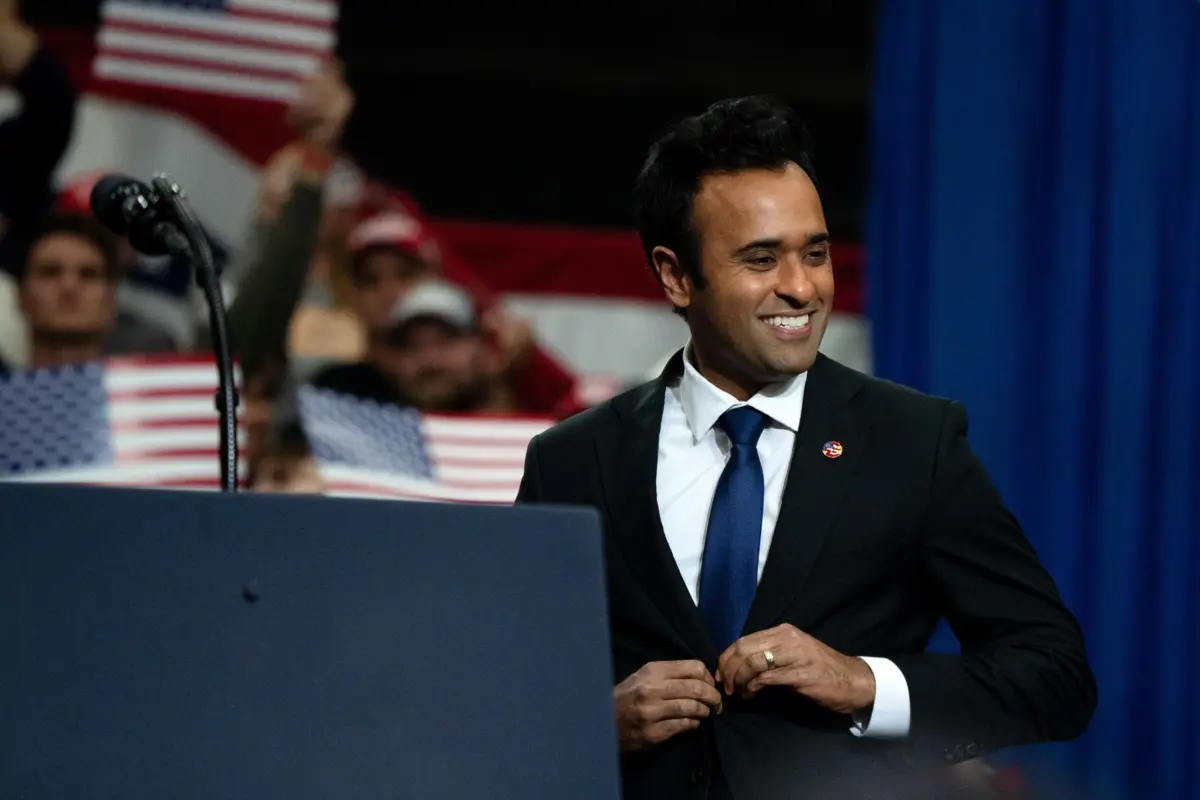
In the hyper-polarized landscape of modern American politics, cultural touchstones can shift overnight from mundane campaign missteps to flashpoints for deep-seated demographic anxieties. This phenomenon was on stark display when Republican Ohio gubernatorial candidate Vivek Ramaswamy attempted a classic political ritual: lifting a young child at a public event. The resulting clumsy interaction quickly went viral, generating the usual wave of internet mockery.
However, the online vitriol directed at Ramaswamy rapidly devolved beyond standard political satire into overt, targeted racism rooted in distinct anti-Indian tropes. When Ramaswamy responded the following day with a lighthearted image of himself holding his own son, the replies were flooded with vitriolic attacks. This episode was not an isolated incident of cyberbullying; rather, it served as a high-profile symptom of a broader, systemic ideological shift on the American right. Increasingly, Indian Americans and Indian immigrants are becoming the explicit targets of online conservative hostility.
To unpack this shifting cultural dynamic, Today, Explained co-host Noel King sat down with freelance journalist Zaid Jilani, who recently reported on the surging wave of anti-Indian bigotry for Vox. Their conversation explores a paradox of contemporary American politics: why a demographic known for high educational attainment, strong family values, and professional success—traits traditionally championed by conservative orthodoxy—has become a prime target for right-wing ire.
Read Also
According to Jilani, the animus is not driven by the conventional xenophobic tropes of criminality or economic dependency often hurled at other immigrant communities. Instead, it is fueled by status anxiety, economic competition, and a broader anti-globalization backlash.
Detailed Chronology: From Campaign Stumble to Ideological Flashpoint
The trajectory from a clumsy campaign moment to a national discussion on racial anxiety highlights how quickly digital culture can weaponize demographic resentments.
Early October: The Ramaswamy Campaign Incident
During a campaign stop in early October, Vivek Ramaswamy sought to project the quintessential image of an approachable American politician by picking up a young child. The execution was awkward, resulting in a fumbled interaction that was captured on video and rapidly distributed across social media platforms like X (formerly Twitter) and TikTok.
While political bloopers are a staple of modern campaigning, the commentary surrounding Ramaswamy’s video quickly took a darker turn. Users began framing the gaffe not merely as a clumsy moment, but as evidence of cultural alienation. As Zaid Jilani observed during his interview, detractors utilized the clip to lean into pre-existing prejudices: "The people who had negative stereotypes about Indians in their mind said, ‘Hey, look, the guy can’t even pick up a kid… he can’t even act like a normal American family man.’"
The Retort and the Racist Backlash
The day following the viral incident, Ramaswamy attempted to neutralize the criticism by posting a photograph of himself holding his own son. While intended as a benign, humanizing retort, the post exposed the candidate—and by extension, the broader South Asian community—to an aggressive wave of racist backlash. Commentators and anonymous accounts resurrected toxic tropes, questioning the assimilation, loyalty, and cultural compatibility of Indian Americans within the American social fabric.
This online phenomenon mirrors a string of similar public incidents involving prominent South Asian figures and conservative commentators. It highlights a growing friction point where the hyper-visible success of a minority group intersects with the economic insecurities of a shifting domestic working and middle class.
Supporting Context & Metrics: The Mechanics of Status Anxiety
To understand why a community defined by high-achieving metrics has drawn the ire of right-wing commentators, it is necessary to examine how demographic shifts are perceived within the current socio-economic climate.
Shifting Stereotypes: From Destitute to Formidable
Historically, American xenophobia has relied on the caricature of the impoverished, uneducated immigrant who drains public resources and strains social services. However, the stereotype of Indian immigrants and Indian Americans stands in sharp contrast to this narrative. Statistically, this demographic is characterized by:
- Higher Education: A disproportionate percentage hold advanced degrees, including master’s degrees, Ph.D.s, and professional medical or legal certifications.
- Economic Mobility: Median household incomes for Indian Americans consistently rank among the highest of any ethnic group in the United States.
- Professional Integration: South Asians occupy significant leadership roles across critical sectors of the American economy, including technology, medicine, engineering, and academia.
When examining these metrics, one might expect political conservatives to celebrate a community that embodies self-reliance, academic rigor, and nuclear family stability. Instead, these very attributes have become triggers for a distinct brand of resentment.
The Dynamics of Visible Success and the "Micro Minority"
Jilani points out a critical distinction between Indian Americans and other historically successful minority groups, such as Jewish Americans. While Jewish Americans achieved prominent economic and social integration by the late 20th century, they remained a largely less visible minority in terms of distinct physical markers.
In contrast, South Asians represent a highly visible "micro minority," comprising roughly 1 to 2 percent of the total U.S. population. Despite their small numbers, their rapid ascent into elite institutional spaces has made them exceptionally prominent.
"You have a group of people who I think are in many ways a very micro minority… visibly rising into so many positions that I think a lot of people have typically associated with white folks," Jilani explained. “White people generally run the Fortune 500, white folks run the universities, white folks are the most successful doctors and engineers. And that was true for the 20th century.”
The Parallel to Antisemitism
Jilani argues that the current wave of anti-Indian sentiment bears a closer conceptual resemblance to historical antisemitism than to the anti-Black or anti-Latino racism historically prevalent in America.
Rather than being stereotyped as criminals or economic burdens, Indian Americans are increasingly framed as a status threat. Middle-class Americans navigating an increasingly competitive and unstable economic landscape look at their children’s prospects for college admissions, corporate corner offices, and high-status careers through a lens of scarcity. In the minds of anxious critics, the competition is no longer localized; globalization and high-achieving immigrant populations have expanded the playing field to a global scale. This dynamic fuels a broader anti-globalization backlash on the right that encompasses not only immigration policies, but also international trade, tariffs, and cross-border labor.
Official Statements and Cultural Discourse: "The Indian Question"
The mainstreaming of these anxieties within right-wing intellectual circles became impossible to ignore following discussions held by prominent conservative influencers. Figures such as Christopher Rufo and Jonathan Keeperman explicitly addressed what they termed "The Indian Question" on their platforms, giving voice to anxieties that were previously relegated to the dark corners of internet message boards.
Redefining Americanism Through Cultural Coping Mechanisms
In their commentary, these right-wing activists attempted to frame the academic success of South Asian children—such as dominating national spelling bees—as somehow "un-American." Conversely, they romanticized traditional markers of American youth culture, such as participating in high school football, attending parties, and balancing social lives with high academic performance, as the true benchmarks of native cultural authenticity.
Jilani analyzes this rhetoric as a psychological coping mechanism:
"There’s a certain level of coping mechanism being deployed there in the sense that they are trying to explain the success of Indian Americans as a deficiency: ‘Maybe they’re getting to the top schools, but that’s because they’re shut in all day studying.’"
However, Jilani notes that this caricature fails to capture the reality of modern Indian American communities. Drawing on his years of experience as a tutor, he observes that second- and third-generation Indian American youth are becoming increasingly well-rounded, engaging in high-level athletics, extracurricular activities, and the arts—a trajectory entirely consistent with the historical assimilation patterns of prior immigrant waves.
The Historical Parallel: The Italian American Experience
To contextualize this cultural evolution, Jilani draws a direct parallel to the integration of Italian Americans in the 20th century.
When the first waves of Italian immigrants arrived in the United States, they often clustered within specific geographic enclaves and occupational sectors where they could secure a foothold. They faced intense cultural skepticism, marginalization, and the burden of stereotypes. Over generations, as these families built economic security and gained breathing room, their descendants integrated seamlessly into the broader fabric of American life. Today, Italian Americans are thoroughly woven into the cultural mainstream, their heritage celebrated without the immediate cultural anxieties that once accompanied their arrival.
The current concentration of South Asian Americans in STEM fields, medicine, and corporate leadership represents a familiar, predictable stage of immigrant integration. As generations mature and build generational wealth, their cultural footprint inevitably expands into Hollywood, the arts, and broader public life.
Future Outlook: Immigrant Pragmatism and Resilience
Perhaps the most striking insight from Jilani’s reporting is the reaction of the Indian American community itself to the rising tide of online hostility.
Pragmatism Over Outrage
While historical precedent suggests that targets of targeted racism respond with immediate, fiery outrage, the reaction among many Indian Americans interviewed for Vox’s reporting was characterized by a surprising degree of pragmatism.
Many recognized the historic opportunity that America has afforded them and their families—what Jilani describes as the "golden ticket" to study, work, and achieve prosperity. Rather than adopting an antagonistic stance, some community members expressed a nuanced understanding of broader economic frustrations:
- Economic Empathy: Many respondents acknowledged that average Americans are struggling in a volatile economy, making the hyper-visible success of rising minorities an easy target for misplaced resentment.
- Strategic Low Profile: A recurring sentiment among those interviewed was the belief that excessive flag-waving or flaunting success can inadvertently exacerbate tensions. This reflects a classic first- and second-generation immigrant mindset: keeping one’s head down, working hard, and navigating cultural friction with quiet resilience.
Critique of Self-Seriousness
Some Indian Americans interviewed also pointed a critical finger inward, specifically referencing Vivek Ramaswamy’s political messaging. They noted that Ramaswamy’s frequent public critiques of American cultural deficiencies—contrasting native work ethics with the drive of immigrant communities—were ultimately unhelpful. Denigrating broader American culture while elevating immigrant performance inevitably alienates the very public whose trust a political candidate must earn.
Conclusion: A Resilient Path Forward
The convergence of viral campaign gaffes, internet trolling, and right-wing ideological soul-searching highlights a transitional moment in American multiculturalism. As the demographic makeup of the nation continues to evolve, the friction between established populations and rising immigrant success stories will likely persist.
Yet, history suggests that these tensions are part of a larger, grinding process of assimilation and adaptation. Just as previous immigrant groups weathered the storms of status anxiety and xenophobia to become foundational pillars of American society, the Indian American community continues to demonstrate the resilience, pragmatism, and cultural integration necessary to navigate and ultimately transcend the headwinds of modern political backlash.




Comments
Facebook App ID not configured. Please add it in the Customizer.