
Executive Overview
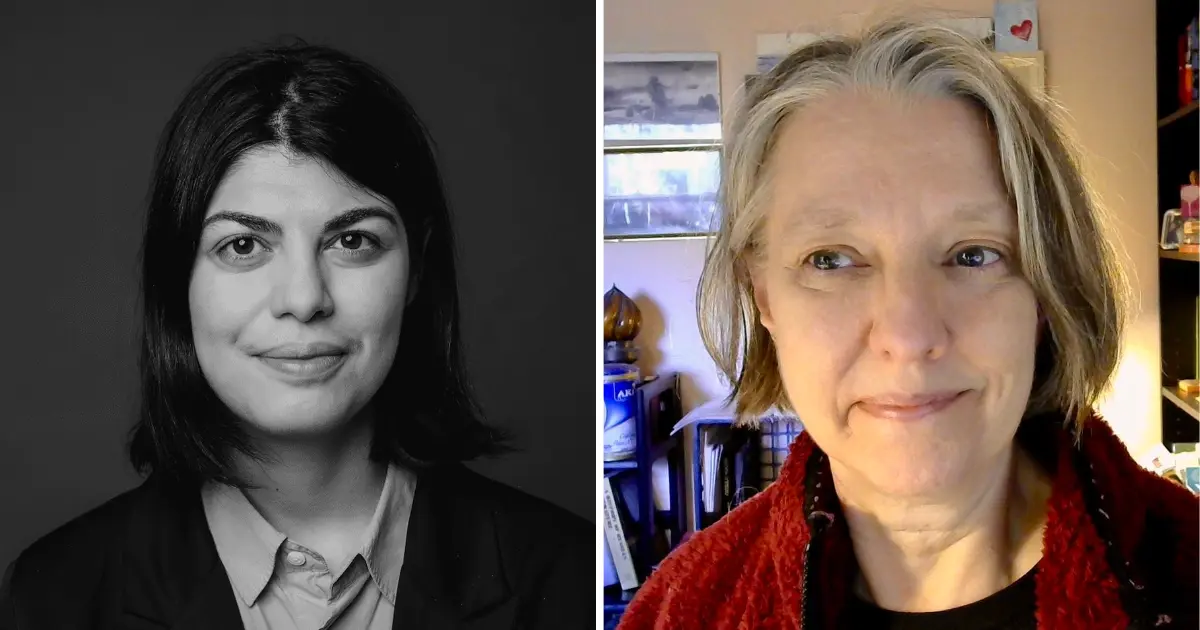
In the contemporary landscape of global literature, few works bridge the fraught geography of the post-Soviet space and Western literary sensibilities with as much poetic urgency as My Dreadful Body. Written by Azerbaijani-Russian poet, essayist, and scholar Egana Djabbarova and rendered into English by veteran literary translator Lisa Hayden, the book stands as a towering testament to the ways bodily autonomy, displacement, and systemic marginalization intersect. Published by New Vessel Press, the novel is not merely a work of fiction; it is a physical and psychological mapping of survival, forged under the duress of geopolitical upheaval, state-sponsored homophobia, and systemic xenophobia.
This in-depth literary investigation examines the genesis of Djabbarova’s masterwork—composed across temporal and geographical dislocations between Taipei, Taiwan, and Hamburg, Germany—and explores the intricate, high-stakes collaborative translation process she undertook alongside Hayden. Moving beyond standard literary interviews, this report dissects the heavy sociopolitical burdens of translating post-Soviet xenophobic slurs for Western audiences, the aesthetic choices required to preserve a profoundly poetic register, and the ways in which translation serves as an act of cross-cultural solidarity and political resistance.
Detailed Chronology: From Personal Crisis to Transnational Publication
The trajectory of My Dreadful Body from an internal ideological and physical crisis to an internationally accessible English-language publication spans continents, political shifts, and profound personal transformations.
Read Also
The Genesis: Early Identity Crises and the "Coloniality of Being"
The conceptual foundation of the book far predates its writing phase. For Djabbarova—born into an Azerbaijani family in Yekaterinburg, Russia—the struggle against a fractured sense of belonging began in her youth. Confronted early in life by systemic racism and xenophobia, and later by debilitating illness and patriarchal societal expectations, Djabbarova found herself searching for an organic anchor in worlds that repeatedly rejected her.
The true catalyst for the novel, however, was a medical diagnosis. This diagnosis triggered an acute sense of embodiment—a stark realization that human subjecthood and the physical body are inextricably linked. Drawing from decolonial theorist Nelson Maldonado-Torres and his framework of the “coloniality of being,” Djabbarova recognized a parallel between the systemic denial of humanity experienced by colonized populations and the precarious existence of ethnic minorities, diaspora communities, and marginalized "tricksters" within Russia. To combat this erasure, she made a deliberate aesthetic and political choice: she constructed her narrative entirely through the lens of the body, making marginalization visible, inescapable, and an undeniable testament to personal agency.
The Writing Process in Exile (2022–2023)
Between 2022 and 2023, while living and teaching Russian as a foreign language in Taipei, Taiwan, Djabbarova committed her life narrative to paper. This dual distance—both temporal and geographical—provided the vital emotional and intellectual detachment needed to shape a deeply traumatic life into a cohesive narrative work of fiction.
By 2024, the political climate in Russia made her continued residence untenable. Forced to flee her homeland due to her fierce opposition to the war in Ukraine and her tireless LGBTQ+ activism, Djabbarova relocated to Hamburg, Germany. The geopolitical backdrop of flight, exile, and state persecution fundamentally imbued the text with an undeniable urgency.
Acquisition and the Collaborative Translation Journey
The manuscript caught the eye of Michael Wise, publisher and editor at New Vessel Press. Recognizing its profound literary and cultural merit, Wise brought the project to Lisa Hayden, an esteemed translator with an MA in Russian Literature from the University of Pennsylvania and years of immersive experience living in Moscow.
Hayden accepted the commission, drawn to the exceptional quality of the writing and the opportunity to collaborate with New Vessel Press. What began as a professional assignment quickly transformed into a landmark project in Hayden’s career. Operating in constant dialogue with Djabbarova across international time zones, Hayden approached the text with deep sensitivity and precision, establishing a symbiotic translator-author relationship that shaped every layer of the English manuscript.
Supporting Context & Metrics: The Mechanics of Post-Soviet Translation
Translating My Dreadful Body was not merely an exercise in lexical substitution; it required navigating complex geopolitical semantics, cultural specificities, and deeply ingrained linguistic asymmetries between Russian and English.
The Politics of Insult: Navigating Xenophobia vs. Anti-Blackness
One of the most formidable hurdles in the translation process manifested in Chapter VII, titled “TONGUE.” In this section, the protagonist enumerates the hostile slurs hurled at her: “I’m black, blackie, black-ass, alien, monster, foreigner, foreign-born . . .”
In the Russian linguistic landscape, terms such as “chernaya” or “chernozhopaya” function as virulent xenophobic slurs designed to degrade, dehumanize, and marginalize individuals hailing from the Caucasus and Muslim-majority countries of the former Soviet Union, as well as anyone with darker skin tones. However, translating these terms directly into American English presents a severe semantic trap: in the United States, such literal renderings are historically and primarily intertwined with anti-Black racism and chattel slavery legacies.
To resolve this, Hayden and Djabbarova engaged in meticulous negotiations to convey the precise weight of post-Soviet ethnic discrimination and regional colorism without conflating it with Western racial paradigms. This careful calibration ensured that the specific nature of the protagonist’s marginalization—rooted in Soviet and post-Soviet imperial hierarchies—remained transparent and accurate for Western readers.
Managing Multilingualism and Formal Constraints
Beyond ideological slurs, the novel incorporates elements of Azerbaijani and Turkish alongside Russian, reflecting Djabbarova’s complex heritage. Furthermore, formal Russian linguistic patterns—such as a sustained string of pejorative descriptors beginning with the letter “ch”—defied literal replication in English.
To prevent the text from becoming bogged down by excessive in-line explanations, Hayden and Djabbarova strategically deployed footnotes. While Hayden typically resists excessive glossing, terms requiring cultural or botanical context (such as Peganum harmala, locally known as uzerlik) and specific regional foods necessitated a fine balance to preserve the novel’s fast-paced, lyrical momentum without sacrificing informational clarity.
Poetic Compression
A foundational pillar of Djabbarova’s prose style is its deeply poetic register. Eschewing traditional narrative flatness, the author deliberately approached prose through the methodology of poetry, packing every sentence with metaphoric weight, emotional intensity, and linguistic density. Hayden’s task was to "hear" this subterranean musicality, ensuring that the tight poetic compression of the Russian original did not dissipate in the transition to English.
Official Statements & Insights
Egana Djabbarova on Exile, the Body, and Collaboration
Reflecting on the psychological genesis of the book and its collaborative translation, Djabbarova emphasizes the protective value of distance and the necessity of bodily visibility:
"This book was written under very unusual circumstances. During the writing process, from 2022 to 2023, I was living in Taipei, Taiwan… It is very likely that this dual distance—both temporal and geographical—helped me look at my own life as a cohesive narrative and reshape it into a work of fiction."
Detailing the mechanics of translating the novel’s poetic density with Lisa Hayden, Djabbarova notes:
"A central challenge of this process was the fact that the novel is written in a deeply poetic register. It was a conscious aesthetic choice on my part to approach prose through the lens of poetry, utilizing its inherent metaphoric weight, emotional intensity, and linguistic density. Translating a text where every sentence is tightly wound and packed with imagery required a constant dialogue to ensure that this poetic compression wasn’t lost in translation."
Speaking on the interpersonal trust required for such a delicate text, Djabbarova adds:
"The process of translating the novel together with Lisa Hayden was an incredible journey. We stayed in constant contact throughout, and Lisa’s approach to the work absolutely amazed me with its profound responsibility, sensitivity, and tenderness. I trusted her one hundred percent, and I still do!"
Lisa Hayden on the Transformative Power of Translation
Lisa Hayden highlights the profound personal resonance My Dreadful Body ultimately held for her career and worldview:
"I didn’t realize at the time that My Dreadful Body would become such an important book for me. I love first readings, but it’s subsequent readings (and drafts of translations, if I’m translating) that open up a book’s depths and dimensions, turning them into permanent parts of my life. My Dreadful Body is an extraordinarily wise book, a book that taught me a lot about all the topics Egana lists above—I love the fresh angles and perspectives she brings to the reader."
On the intuitive nature of capturing an author’s voice across languages, Hayden observes:
"Since the translator’s job involves both reading and somehow hearing the voice(s) in a text, I’ve always felt that the author is involved in my entire translation process. Even if I’ve never met them, they’ve always been with me as I’ve typed, looked up words, and, yes, stared out the window. I’ve always worked very intuitively… I sense what I read and hear, and if something somehow feels poetic, I attempt to translate it that way."
Metaphors of the Text
When asked to characterize My Dreadful Body through metaphor, both creators offered vivid, organic imagery:
- Egana Djabbarova: "I would suggest the metaphor of a woven carpet or the tangled roots in a garden. In a way, a traditional carpet is a garden in its own right…"
- Lisa Hayden: Expanding upon Djabbarova’s botanical and textile imagery, Hayden adds the metaphor of a coiled spring: "Like a spring, Egana’s text is very compact, but it stores lots of power, tremendous energy… Like Egana’s text, that spring is fluid, sparkly, and tremendously fresh, rising out of a deep source."
Future Outlook
The publication of My Dreadful Body by New Vessel Press marks a crucial milestone not only for contemporary Russian-language literature in translation, but also for the global visibility of marginalized voices originating from the post-Soviet periphery. As the war in Ukraine continues to reshape political boundaries and accelerate the diaspora of dissident intellectuals, artists, and LGBTQ+ activists from Russia, works of literature forged in exile are acquiring unprecedented historical and cultural weight.
For Egana Djabbarova, currently based in Hamburg, Germany, the book represents a foundational stepping stone in a literary career defined by resilience against authoritarian erasure. Her refusal to separate political dissidence from bodily reality establishes a powerful precedent for contemporary feminist and decolonial writing.
For the field of literary translation, the partnership between Djabbarova and Lisa Hayden offers a masterclass in ethical, empathetic collaboration. By resisting the flattening tendencies of globalization and instead fiercely protecting cultural, political, and poetic specificities—from post-Soviet xenophobic slurs to Azerbaijani botanical references—the translation team has established a new benchmark for cross-cultural communication.
As My Dreadful Body reaches English-speaking readers worldwide, its reverberations will undoubtedly extend far beyond the literary market. It stands as an enduring monument to the resilience of the human body, an unyielding indictment of imperial oppression, and a brilliant celebration of the art of translation as an act of profound, borderless solidarity.





Comments
Facebook App ID not configured. Please add it in the Customizer.