
Executive Overview
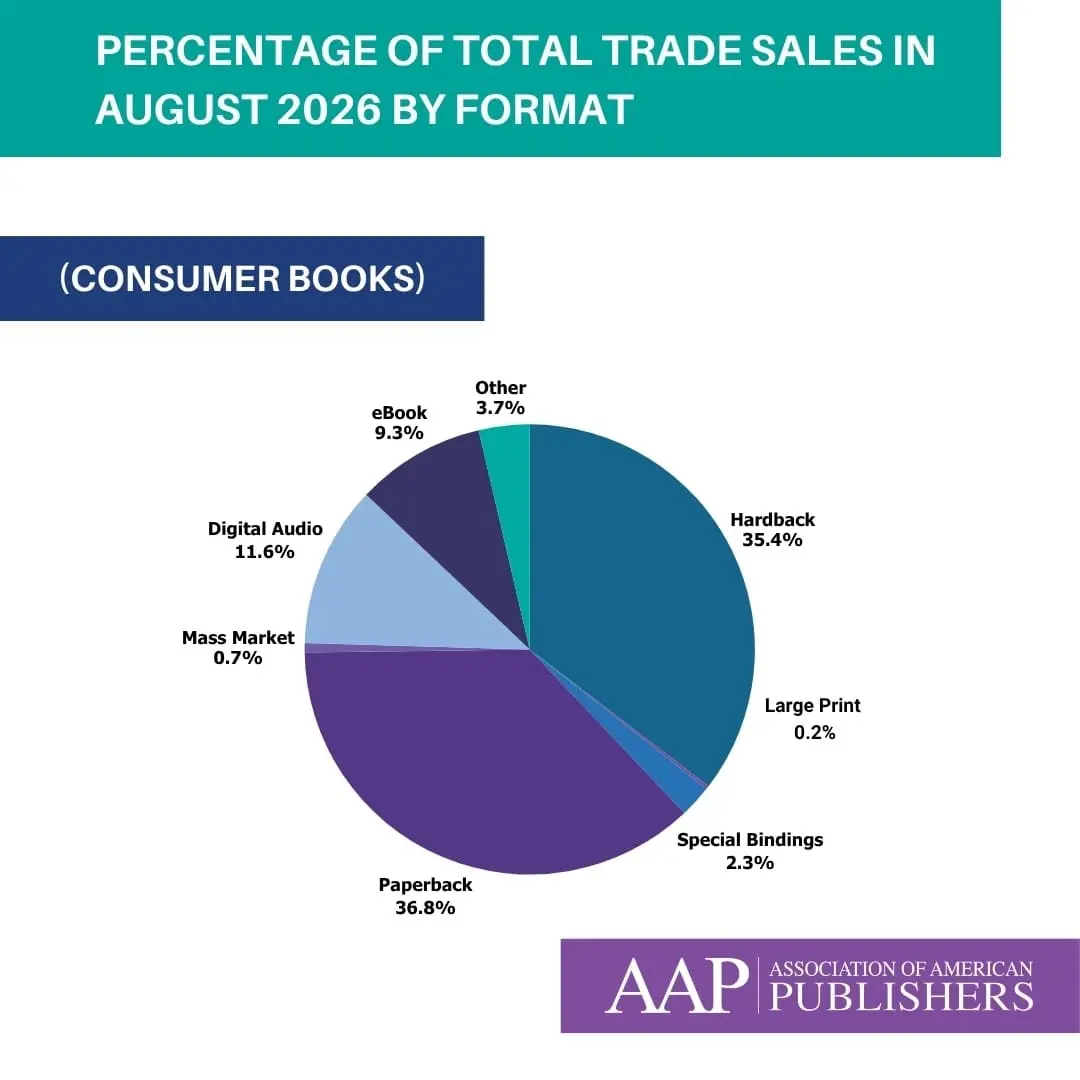
The publishing industry is undergoing a profound structural rebalancing, characterized by a distinct revival of traditional print formats alongside a shifting digital audio and e-book paradigm. Newly released performance data for August 2026—complemented by robust year-to-date (YTD) metrics—paints a fascinating picture of consumer behavior, economic adaptation, and format preference. While print books, particularly paperbacks and hardbacks, continue to command the lion’s share of reader loyalty and marketplace revenue, the digital sector tells a split story: e-books are experiencing a mild cooling-off period, whereas digital audiobooks continue an aggressive, seemingly unstoppable upward trajectory.
For industry observers, authors, and publishing houses alike, these metrics are more than mere bookkeeping. They serve as a vital barometer for how literature is consumed in an era defined by media multitasking, subscription models, and shifting economic pressures. This report provides an exhaustive, granular breakdown of the August 2026 trade sales data, exploring the underlying market drivers, the persistent decline of legacy formats like mass market paperbacks, and what these trends signal for the future of the global book trade.
Detailed Chronology and Performance Breakdown: The August 2026 Snapshot
To understand the broader trajectory of the publishing sector, one must examine the specific month-over-month shifts captured in the August 2026 reporting cycle. August traditionally marks a critical juncture for publishers—sitting squarely at the transition between heavy summer reading campaigns and the impending, lucrative Q4 holiday publishing blitz.
Read Also
The Print Sector: Hardbacks and Paperbacks Lead the Charge
Far from facing an imminent digital takeover, physical books demonstrated exceptional resilience and growth in August 2026.
- Paperbacks: Leading the charge in sheer revenue generation for the month, paperback sales surged by an impressive 17.6%, pulling in $333.3 million. This reflects robust consumer demand for accessible, portable reading formats during the late-summer travel and leisure peak.
- Hardbacks: Close behind, hardback revenues climbed 13.8% to reach $320.2 million. The strength in hardbacks points to the continued drawing power of major fiction blockbusters, highly anticipated celebrity memoirs, and prestige nonfiction titles that readers prefer to own in premium hardcover editions.
- Special Bindings: Niche and collector-focused formats also saw positive momentum, with special bindings ticking up 3.7% to generate $20.4 million for the month.
The Digital Divide: Audio Climbs While E-Books Slip
The digital landscape presented a contrasting dynamic between text-based digital reading and spoken-word audio content.
- Digital Audiobooks: Continuing their multi-year dominance as the industry’s premier growth engine, digital audio revenues jumped 12.6% in August, hitting a formidable $105.4 million. The convenience of smartphone integration, the proliferation of subscription-based listening platforms, and a booming market for fantasy and romance audio adaptations continue to fuel this sector.
- E-Books: Conversely, e-book revenues experienced a slight contraction, dropping 5.7% to $83.9 million for the month. While e-books remain a foundational pillar of modern publishing, the August dip suggests a normalization period following years of pandemic-era highs, or perhaps a seasonal consumer pivot toward outdoor physical reading during the late summer months.
- Physical Audio & Mass Market Decay: On the declining end of the spectrum, physical audio revenues suffered a steep 35.2% drop down to just $400,000—underscoring the near-complete obsolescence of CDs and cassettes in the consumer mainstream. Meanwhile, mass market paperbacks dropped 14.6% to $6.2 million, continuing a long-term structural decline as retailers increasingly allocate shelf space to trade paperbacks and specialized editions.
Supporting Context and Metrics: Year-to-Date (YTD) Analysis
Zooming out from the single-month data of August to analyze the comprehensive year-to-date performance provides a clearer macroeconomic view of the publishing industry through the first eight months of 2026.

Comprehensive YTD Financial Performance Table
| Format | August 2026 Revenue | August YoY Change | YTD 2026 Revenue | YTD YoY Change |
|---|---|---|---|---|
| Paperback | $333.3 Million | +17.6% | $2.3 Billion | +11.8% |
| Hardback | $320.2 Million | +13.8% | $2.1 Billion | +3.1% |
| Digital Audio | $105.4 Million | +12.6% | $806.3 Million | +12.6% |
| E-Book | $83.9 Million | -5.7% | $685.1 Million | -3.4% |
| Special Bindings | $20.4 Million | +3.7% | $152.6 Million | +14.5% |
| Mass Market | $6.2 Million | -14.6% | $26.9 Million | -57.2% |
| Physical Audio | $0.4 Million | -35.2% | $3.5 Million | -11.9% |
Interpreting the YTD Trajectories
The year-to-date figures reinforce several crucial industry narratives:
- The Print Renaissance is Real: Both paperbacks ($2.3 billion, up 11.8%) and hardbacks ($2.1 billion, up 3.1%) show that tactile reading experiences retain immense cultural and economic value. The strong double-digit growth in paperbacks highlights consumer sensitivity to price-to-value ratios in an inflationary economic climate, making paperbacks the preferred choice for value-conscious book buyers.
- The Audiobook Juggernaut: Generating over $806 million through the first eight months of the year—and maintaining a steady 12.6% growth rate—digital audiobooks are firmly established as a co-primary format alongside traditional print. Publishers are responding by increasing production budgets, investing in full-cast audio adaptations, and securing high-profile celebrity narration talent.
- The E-Book Correction: With YTD e-book revenues sliding 3.4% to $685.1 million, digital reading is undergoing a period of recalibration. While dedicated e-reader hardware and mobile reading apps retain massive active user bases, the explosive growth seen during the early 2020s has stabilized.
- The Demise of Mass Market: Perhaps the most dramatic statistic in the YTD report is the staggering 57.2% collapse of mass market paperbacks, shrinking down to just $26.9 million. Once the ubiquitous staple of grocery store checkouts and airport kiosks, this format has been almost entirely cannibalized by trade paperbacks and digital alternatives.
Official Industry Perspectives and Expert Analysis
Industry analysts and publishing executives point to several structural shifts to explain the 2026 data. Speaking on condition of anonymity regarding mid-quarter financial returns, senior executives at major trade publishing houses emphasize that consumer habits have permanently fragmented.
"We are no longer looking at a zero-sum game where digital formats inevitably swallow print," notes one trade distribution strategist. "Instead, readers are operating in an omni-channel ecosystem. The same consumer who listens to thirty hours of audiobooks a month during their commute will willingly pre-order a collector’s edition hardcover for their home library and buy a paperback for vacation. Formats are serving complementary, rather than competing, psychological needs."
Furthermore, the explosive growth in special bindings (up 14.5% YTD to $152.6 million) highlights the success of the "special edition" book boom. Fueled heavily by BookTok communities on platforms like TikTok and Instagram, publishers have capitalized on reader demand for sprayed edges, foil-stamped covers, and author-signed inserts. This collector-driven market has injected fresh capital into physical retail spaces, helping independent bookstores and major chains alike offset declines in generic mass market inventory.
Future Outlook: What the 2026 Data Means for the Road Ahead
As the publishing industry sets its sights on the remainder of 2026 and heads into 2027, several strategic imperatives emerge from the data:
- Diversification of Audio Production: Given that digital audio is the only major digital format showing sustained, robust double-digit growth, publishers must continue to innovate in audio. This includes exploring AI-assisted narration for backlist titles where human narration is cost-prohibitive, while pouring premium resources into frontlist blockbusters.
- Capitalizing on Print Collectibility: The success of hardbacks and special bindings proves that physical books are increasingly treated as aesthetic objects and luxury goods. Publishers will likely expand partnerships with indie book box subscriptions and specialty retailers to maximize margins on physical inventory.
- Re-evaluating E-Book Monetization: With e-books seeing minor contractions both monthly and year-to-date, digital publishing arms may need to rethink pricing strategies, subscription bundling, and promotional models to reignite consumer engagement on screens.
Ultimately, the August 2026 sales figures demonstrate an industry that is maturing, adapting, and finding unexpected pockets of growth. Far from facing obsolescence in a digital age, the written and spoken word continues to find innovative ways to capture the public imagination.




Comments
Facebook App ID not configured. Please add it in the Customizer.