
Executive Overview
In the landscape of narrative fiction, the most profound emotional and thematic resonances rarely originate from explicit declarations. Instead, they thrive within the realm of story subtext—the implied meaning operating invisibly beneath what characters articulate, enact, or consciously understand. While often perceived by aspiring writers as an elusive, almost magical element of craft, subtext is, in reality, a disciplined execution of the unexplained. It functions as the foundational architecture that allows readers to infer character motives, thematic depth, and intricate backstories without encountering heavy-handed exposition.
Far from being a mere stylistic flourish, subtext is a participatory medium. It invites the audience into the narrative space to fill in critical blanks utilizing their own imagination, intuition, and lived experience. However, successfully wielding this literary tool requires a delicate balance. Writers must provide sufficient contextual "bread crumbs" so that subtlety does not devolve into frustrating obscurity.

Analyzing narrative frameworks across literature and cinema reveals that mastering subtext is not a matter of pure intuition, but rather the application of five core principles: grounding subtext between fixed points, ensuring its substantive existence beneath the surface, maintaining strict authorial restraint, utilizing internal-external dichotomies, and leveraging the power of silence. By moving past on-the-nose dialogue and heavy-handed explanations, authors can cultivate stories of lasting maturity, psychological complexity, and profound resonance.
Read Also
Detailed Chronology: The Evolution of Subtext in Narrative Craft
The historical evolution of subtext within storytelling shifted dramatically with the advent of modern literary minimalism and cinematic grammar. Tracing this trajectory illuminates how the technique matured from classical exposition-heavy prose into the subtle, iceberg-style artistry valued by contemporary writers.

- The Classical Paradigm (Pre-20th Century): Early theatrical and literary traditions heavily relied on explicit dialogue. Characters frequently articulated their internal motivations, moral dilemmas, and emotional states directly to the audience through soliloquies and direct exposition, leaving little room for unstated inference.
- The Hemingway Revolution (Early 20th Century): Ernest Hemingway revolutionized prose by introducing the "Iceberg Theory" (or theory of omission). He posited that if a writer knows enough about a subject, they can omit things that are true, and the reader—if the writing is strong enough—will feel a-strong sense of the whole, even though only one-tenth of it floats above the water. This marked the formal codification of subtext as an explicit, highly structured literary strategy.
- The Cinematic Shift (Mid-20th Century to Present): With the rise of visual media, filmmakers like Alfred Hitchcock and screenwriters of the noir and psychological thriller eras recognized that the camera could capture physical nuance, hesitation, and environmental context far more effectively than text. This fostered a new era where dialogue actively contradicted or concealed interior reality.
- The Contemporary Masterclass (2000s–Present): Modern narrative craft across both page and screen has increasingly embraced complex character psychological profiling, amnesiac or unreliable protagonists (e.g., The Bourne Identity), and high-concept genre world-building (e.g., Pacific Rim or Supernatural). In these works, subtext serves as the primary engine driving audience engagement, transforming passive consumers into active co-creators of the narrative experience.
Supporting Context & Metrics: Why Subtext Demands Audience Participation
Understanding the psychological mechanics of subtext requires examining how readers and viewers process narrative information. Unlike explicit exposition, which places the audience in a passive, receptive posture, subtext activates active cognitive processing.
The Cognitive Load of Inference
When an author deploys subtext effectively, the brain’s pattern-recognition systems engage. According to narrative psychology frameworks, audiences derive greater psychological and emotional reward from discovering a truth than from being handed one.

- Retention Rates: Studies in literary cognition indicate that information inferred by a reader through contextual clues and subtextual cues is retained at significantly higher rates than explicitly stated facts.
- Emotional Resonance: The emotional weight of a scene increases exponentially when dialogue and action run counter to internal emotional states. The gap between what is said and what is felt creates psychological tension that resolves only through active reader synthesis.
Genre Conventions and Subtextual Literacy
Subtext operates differently depending on the reader’s familiarity with genre conventions.
- The Learning Curve: In unfamiliar genres—such as navigating warp-drive mechanics in hard science fiction, esoteric magic systems in fantasy, or clue-gathering tropes in detective fiction—audiences initially require explicit foundational context.
- The Compounding Effect: As readers grow accustomed to the world-building rules and stylistic tropes, their ability to process advanced subtext increases. Consequently, re-readability factors skyrocket, as secondary and tertiary viewings or readings reveal layers of subtext that were invisible during the initial pass.
Official Principles: The 5 Pillars of Writing Deeper Subtext
To demystify the creation of subtext in fiction, writers must adhere to five foundational, repeatable principles that transform raw concepts into rich narrative depths.

1. Subtext Arises From the Space Between Two Known, Fixed Points
Subtext cannot exist in a vacuum of total mystery. If a story is entirely ambiguous, it ceases to have subtext and simply becomes an absence of information.
- The Mechanism: An author must establish explicit, shown elements—such as a character’s clear backstory or a visible contextual milestone. By defining the starting point and the ending point, the writer outlines a shape.
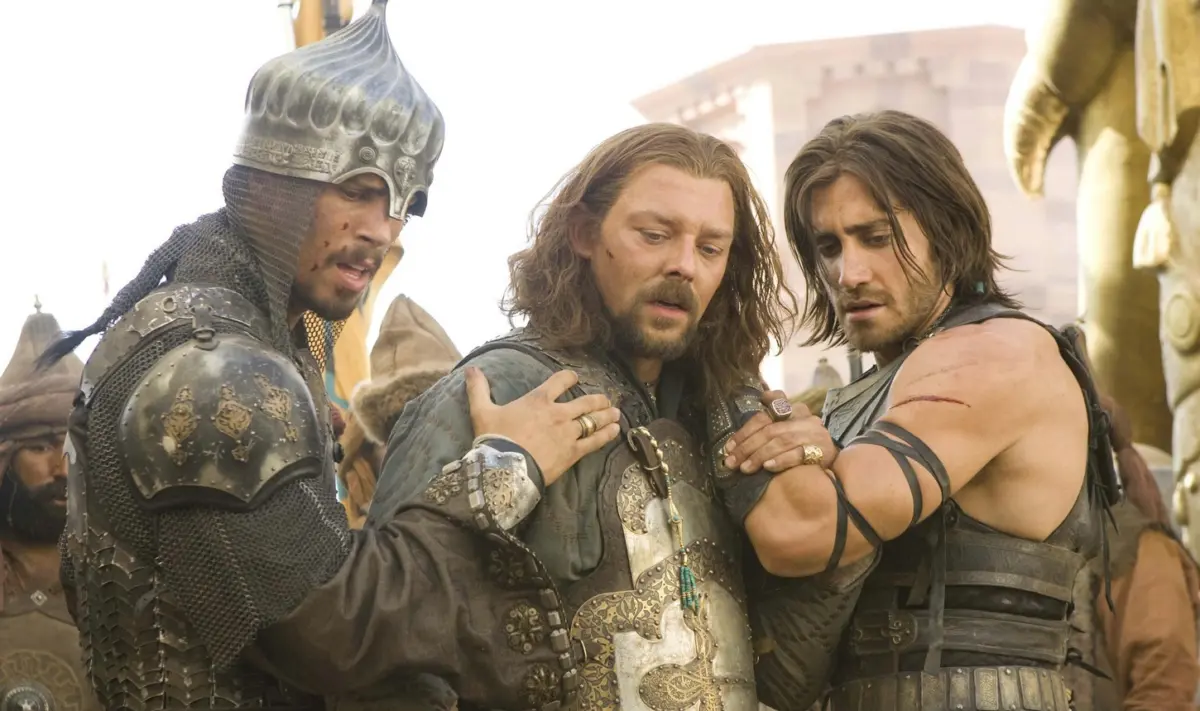
- Application: When the space between those two points is left unexplained, readers naturally extrapolate the implicit connections. For instance, in Prince of Persia: The Sands of Time, fixed point #1 establishes protagonist Dastan as a street orphan rescued by the king, while fixed point #2 presents his adult, fiercely loyal yet strained dynamic with his royal adoptive brothers. The unspoken dynamics of their childhood rivalry and brotherhood thrive entirely in the unmapped space between these two anchors.
2. Subtext Must Explicitly Exist Beneath the Surface
A common pitfall is equating subtext with "nothingness" or an accidental blank space. In truth, subtext must be exceptionally concrete within the author’s mind.

- The Iceberg Metaphor: Just as nine-tenths of an iceberg rests beneath the water line to keep the visible peak afloat, the author must possess a comprehensive understanding of character backstories, world-building lore, and psychological motivations.
- Application: In Guillermo del Toro’s Pacific Rim, the post-apocalyptic world is sketched through rigorous fixed points—black-market trade networks, specialized military tech, and desperate societal defense initiatives like the Wall of Life. Even though the plot does not explain every historical detail, the undeniable weight of a thoroughly realized, subterranean world imbues the narrative with palpable authenticity.
3. Subtext Must Remain Under the Surface
The temptation for any creator who has invested time in crafting rich backstory or complex lore is to expose it prematurely. Writers often craft a brilliantly subtextual scene, only to ruin it with an on-the-nose explanatory conclusion out of fear that the audience "won’t get it."
- The Rule of Restraint: Authors must resist the urge to explain. Trust the audience to parse the implications.
- Application: The Jason Bourne film series exemplifies this discipline. Bourne remains an enigmatic, deeply compelling figure precisely because he operates almost entirely within his own amnesiac subtext. Had he spent his time explaining his psychological trauma to a therapist on-screen, the intellectual and emotional mystique would have evaporated.
4. Subtext Is Created by Dichotomy
The most potent subtext is forged in the fires of contradiction—specifically, the dichotomy between interior and exterior behavior, or between surface appearance and underlying reality.

- The Paradox: When the fixed points of a character’s context do not neatly align, it instantly triggers audience curiosity.
- Application: In the television series Supernatural, Dean Winchester presents a deliberately crafted facade: he is reckless, cocky, and outwardly unbothered by existential threats. Yet, his actions consistently reveal profound empathy, trauma, and an unwavering capacity for brutal self-sacrifice. This stark dichotomy between persona and reality invites the audience to continually question the psychological motors driving his internal conflicts.
5. Subtext Exists in the Silent Spaces
While prose fiction inherently requires more explicit narration than visual media like film, authors can easily replicate cinematic depth by deliberately cultivating silence between characters.
- Dialogue Maneuvers: Characters should be forced to talk around subjects, utilizing metaphor, sidelong glances, or strategic conversational avoidance rather than stating their precise emotional states.
- Application: In Markus Zusak’s novel The Book Thief, the protagonist Liesel stands near the edge of Dachau with her doomed best friend Rudy. She formulates a profound internal monologue expressing deep gratitude for his friendship ("Thank you, Rudy… She said none of it."). By withholding the spoken words, the author charges the literal silence between them with unbearable emotional resonance.
Future Outlook: The Evolution of Storytelling and the Expanding Role of Subtext
As digital platforms, interactive media, and evolving literary markets continue to accelerate, the demand for sophisticated narrative subtext is projected to grow. Modern audiences—bombarded with rapid-fire data streams and hyper-explicit digital content—increasingly turn to fiction for cognitive engagement and emotional depth.

Writers who master the discipline of the unspoken will find themselves uniquely equipped to satisfy this demand. By treating subtext not as an accidental byproduct of drafting, but as a meticulously engineered architectural framework, authors can elevate standard plots into enduring works of art. Moving forward, the most successful storytellers will continue to honor the intelligence of their readers, understanding that what is left unsaid is often infinitely more powerful than the words printed on the page.




Comments
Facebook App ID not configured. Please add it in the Customizer.