
Executive Overview
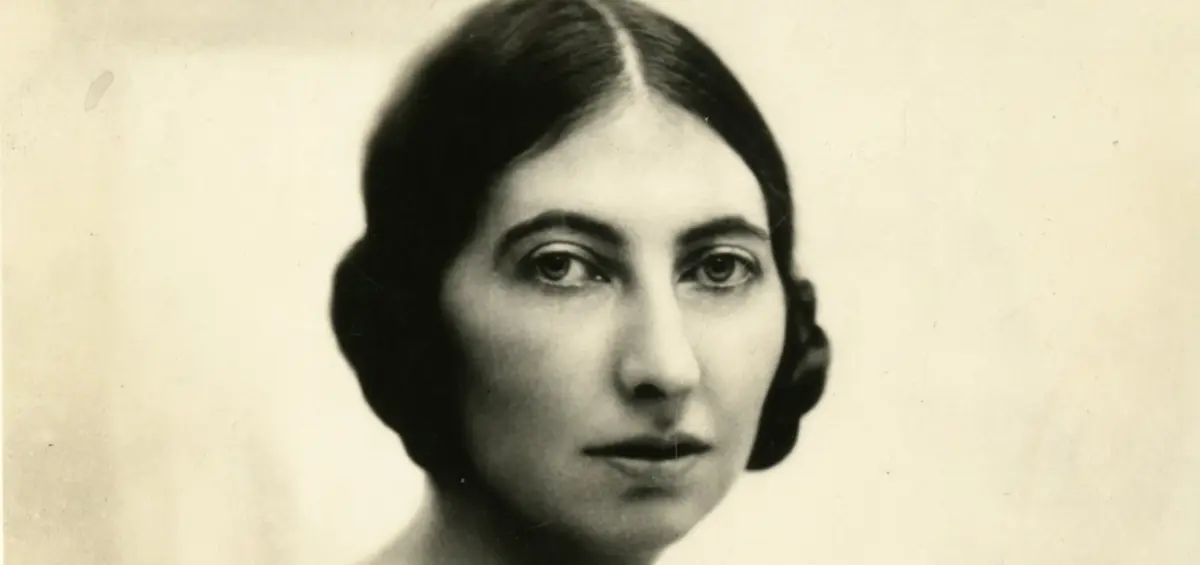
For decades, the name Margaret Kennedy occupied an awkward, liminal space in the annals of English letters—recalled, if at all, as the author of the sensational 1924 bestseller The Constant Nymph, yet largely dismissed as a capable middlebrow practitioner whose career faded into quiet obscurity before her death in 1967. A novelist, playwright, historian, and critic of formidable output, Kennedy’s literary stature is now undergoing a long-overdue reassessment.
This resurgence has been catalyzed by publisher McNally’s recent republication of two of her compelling late-period novels: The Feast (1950) and Troy Chimneys (1953). The re-release prompted a sweeping, appreciative review in the New York Review of Books by Edward Mendelson, the Lionel Trilling Professor in the Humanities at Columbia University. Mendelson’s advocacy has sparked fresh critical interest, drawing modern readers back into Kennedy’s uniquely moral, psychologically acute universe.
At the center of this revival is The Feast, a structurally audacious and morally complex novel that subverts traditional domestic drama with the force of an apocalyptic parable. Beginning with an unmistakable act of structural foreboding—the catastrophic collapse of a Cornish coastal hotel—the narrative works backward, challenging readers to reckon with the frailties, vices, and hidden graces of characters marching inexorably toward their doom. Blending the crisp, satirical bemusement of Jane Austen with the allegorical weight of John Bunyan, The Feast stands as a masterclass in mid-century British fiction, demanding that both contemporary critics and modern audiences revise their definitions of literary permanence versus popular appeal.
Read Also
Detailed Chronology: The Rise, Fall, and Return of Margaret Kennedy
1. The Early Triumph and Mid-Century Eclipse
Margaret Kennedy’s literary trajectory was initially characterized by meteoric success. Following the publication of her second novel, The Constant Nymph, in 1924, she achieved international renown, cultural cachet, and critical validation. The novel captured the interwar zeitgeist, spawning theatrical adaptations and cementing her place in the upper echelon of contemporary English writers.
However, the devastation of World War II marked a distinct fracture in her career. Like many of her generation, Kennedy paused her novelistic output during the conflict. When she reemerged in the postwar years, the literary landscape had shifted toward starker modernist experimentations and gritty social realism. Although she continued to write prolifically—publishing works that bridged the gap between literary fiction and popular storytelling—the critical establishment increasingly marginalized her output. She was codified, somewhat unfairly, as a "middlebrow" writer, a designation that relegated her substantial late-period achievements to the dusty margins of literary history.
2. The 2024–2025 Critical Renaissance
The turning point in modern critical perception arrived with McNally’s strategic republication of The Feast (1950) and Troy Chimneys (1953). These editions cut through decades of critical inertia, making accessible once more works that had long languished out of print.
The revival gained institutional momentum when Edward Mendelson published his extensive appraisal in the New York Review of Books. Mendelson argued forcefully for a reevaluation of Kennedy’s stature, positioning her not as a relic of popular middlebrow fiction, but as a sophisticated moralist and structural innovator whose late works rival those of her more celebrated contemporaries. Word-of-mouth enthusiasm, amplified by impassioned readers and literary critics alike, has since propelled The Feast back into contemporary discourse, proving that great storytelling possesses a resilient, timeless gravity.
Supporting Context & Metrics: Anatomy of an Apocalyptic Pastoral
Narrative Architecture and Subversion of Form
To understand the brilliance of The Feast, one must first examine its unconventional structure. While readers are accustomed to narratives that build suspense toward a climactic catastrophe, Kennedy upends this convention in the novel’s very first chapter.
Set at the cliffside Pendizack Manor Hotel on the rugged Cornish coast, the book opens with a terrifying certainty: the hotel is doomed. During the winter months, a stray naval mine washes up and explodes in a subterranean sea cave without causing immediate, visible damage. Over the following spring and summer, ominous cracks begin to fissure the surrounding cliff face. A structural expert issues a dire warning, recommending the immediate evacuation and abandonment of the property if the fissures widen.
The proprietors, the Siddal family, display a fatalistic indifference. Then, one fateful evening, the entire cliff face shears away, plunging the hotel and its occupants into the rocky surf below, burying their bodies beneath tons of rubble.
Having revealed the apocalypse on page one, Kennedy reverses time, carrying the reader back a few weeks. As the narrative ticks forward day by day toward its predetermined terminus, the suspense shifts entirely. The question is no longer if disaster will strike, but who will be taken, who will be left, and who possesses the moral fortitude to survive an apocalypse of their own making.
The Human Tapestry: A Cast of Characters
Kennedy populates the doomed Pendizack Manor Hotel with a rich, Dickensian array of personalities, each freighted with psychological depth and symbolic weight:
- The Siddal Family: Hotel owners and managers whose passivity mirrors a broader societal drift toward disaster. Among them is Gerry Siddal, a practicing doctor who falls for Evangeline (Angie) Wraxton.
- The Wraxtons: Led by the contentious Canon Wraxton, a man who has devoted his clerical life to systematically expunging Anglo-Catholicism from the Church of England. Angie, his sheepish daughter, struggles under his dogmatic shadow.
- Anna Lechene and Bruce: Anna is an author laboring over historical fiction concerning the Brontë sisters, accompanied by her strikingly handsome chauffeur, Bruce. Bruce harbors literary ambitions of his own, drafting a manuscript titled Hangman’s Boy. His initially combative dynamic with Nancibel, the hotel’s upright maid, gradually matures into genuine affection.
- Miss Ellis: A domestic worker who neglects her professional duties of cleaning and bed-making, redirecting her boundless venom into the curation and dissemination of vicious gossip.
- The Giffords: Sir Henry and the bedridden Lady Eirene Gifford, estranged from one another for a decade, who bring their mostly adopted children on holiday. The Gifford children operate a strict, militaristic "Spartan Club" led by Hebe, a young girl whose self-loathing is masked by a streak of refined cruelty.
- The Cove Family: Poor, grasping, and pathetically petty, Mrs. Cove arrives at the hotel alongside her three kind-hearted daughters, desperate to ingratiate themselves with the Giffords and gain admission to the Spartan Club.
Official Statements and Critical Perspectives
The Moralist’s Design: The Seven Deadly Sins
At its core, The Feast functions as a sophisticated moral allegory. As Edward Mendelson notes, the dust jacket of the original 1950 edition traced the book’s genesis to a collaborative exercise proposed by Kennedy and several friends: to produce a short story collection centered explicitly upon the Seven Deadly Sins.
This thematic framework permeates the novel. The characterizations align so neatly with traditional vices that astute readers have noted their almost Bunyanesque allegorical resonance. With only minor mental adjustments, the hotel population transforms into a living parable:
- Canon Wrath
- Anna Lechery
- Mrs. Covetousness
- Guests of the Sloth family, tended to by Miss Envy
The hotel becomes, in effect, a modern-day Hotel Sodom sliding inexorably down a crumbling cliff.
Yet, Kennedy avoids the trap of heavy-handed moralizing. Her characters are neither entirely good nor irredeemably wicked; they possess shifting allegiances and hidden vulnerabilities. Hebe, for example, undergoes a moment of profound transformation, abandoning her cruelty through an act of abject penance.
Theological Framing and the Philosophy of Suffering
The philosophical backbone of the novel is articulated through Mr. Siddal, who, despite his outwardly passive demeanor, serves as the novel’s resident theologian. In a striking conversation with Lady Gifford, Siddal reflects upon the biblical narrative of Lot in Sodom, positing a chilling metaphysical theory:
"Mankind is protected and sustained by undeserved suffering; by all those millions of helpless people who pay for the evil we do and who shield us simply by being there, as Lot was in the doomed city. . . . The oppressed preserve the oppressors. If the innocent did not suffer we should all go pop."
Conversely, Siddal muses that if a society were to become purely evil, entirely devoid of a single innocent soul, "the earth would probably open and swallow them up" and "split the moral atom." It is a masterclass in literary foreshadowing, linking human moral decay directly to physical catastrophe.
Future Outlook: Reassessing Mid-Century Literature
The literary rehabilitation of Margaret Kennedy offers a vital lesson for contemporary publishing and academic criticism: the historical dismissal of "middlebrow" fiction often obscures profound artistic achievement, structural daring, and moral complexity.
With McNally’s republication of The Feast and Troy Chimneys establishing a commercial and critical foothold, scholars are calling for a broader, more inclusive canon that reevaluates mid-century women writers who bridged the gap between popular accessibility and high-literary artistry. As modern readers rediscover the bracing wit, theological depth, and structural audacity of The Feast, Kennedy’s permanent place in the English literary firmament is finally being secured.
The novel’s climactic centerpiece—the humble lobster feast organized by the impoverished Cove children, inspired by the Eucharist and echoing the redemptive grace of Babette’s Feast—serves as an enduring metaphor for Kennedy’s own literary legacy. Like the feast at the edge of world’s end, her work challenges contemporary pretenses, offering a banquet of wit, judgment, and grace to any reader willing to accept the invitation before the cliff finally gives way.





Comments
Facebook App ID not configured. Please add it in the Customizer.