
Executive Overview
In an era characterized by hyper-accelerated digital cycles, shifting geopolitical fault lines, and the pervasive anxiety of technological disruption, public discourse often struggles to look beyond the immediate horizon. The modern attention economy, driven by algorithmic engagement and transient outrage, actively discourages historical memory and sustained reflection. Against this volatile backdrop, intellectual journals and editorial roundtables serve as crucial cultural barometers, attempting to synthesize how contemporary policy, legal controversies, and philosophical legacies intersect.
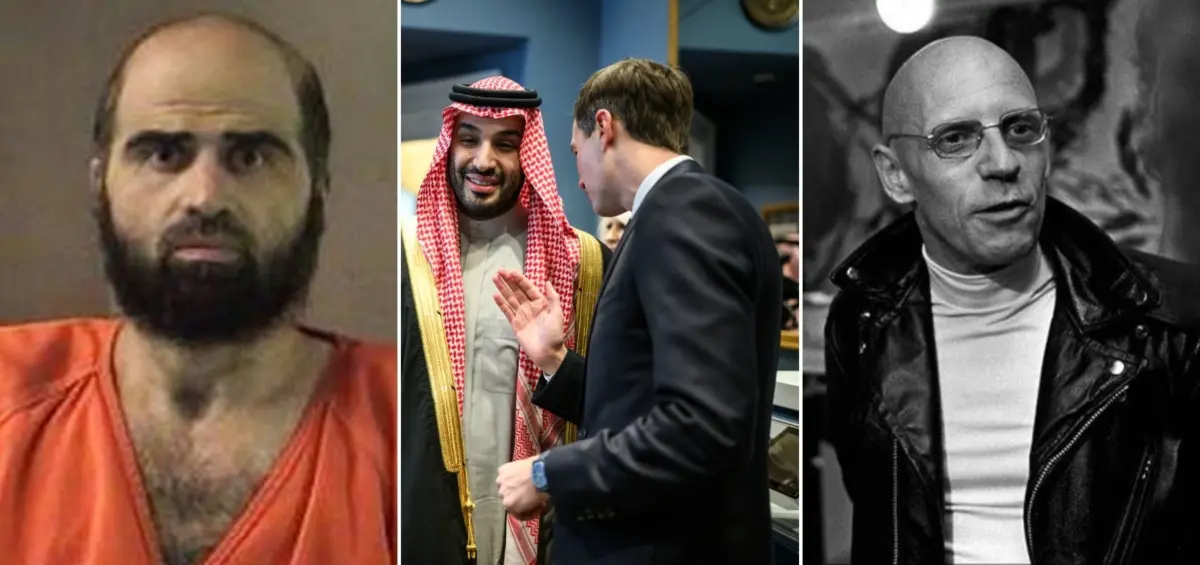
A recent editorial discussion hosted by First Things encapsulates this clash between the ephemeral noise of the digital age and enduring principles of governance, justice, and intellectual history. The editors focused their analysis on three seemingly disparate yet profoundly interconnected cultural flashpoints: the abrupt cancellation of the livestreamed execution of convicted Fort Hood shooter Nidal Hasan; mounting allegations of institutional and political corruption within the executive branch under the Trump administration; and the centennial observation of the birth of French postmodern philosopher Michel Foucault.
Far from being isolated topics, these subjects collectively probe the boundaries of state authority, public spectacle, and the erosion of institutional trust. The suppression of a high-profile execution speaks volumes about the state’s management of capital punishment as both a deterrent and a modern media event. Simultaneously, renewed debates over executive integrity highlight the fragile nature of democratic norms in a polarized climate. Finally, revisiting the intellectual framework of Michel Foucault—a thinker who famously interrogated how power, knowledge, and institutions shape human subjectivity—provides a provocative lens through which to view contemporary bureaucratic and political machinery. This report examines these themes in depth, tracing their implications across legal, political, and philosophical dimensions.
Read Also
Detailed Chronology & Thematic Breakdown
1. The Silencing of the Screen: The Canceled Livestream of Nidal Hasan
The decision to call off the planned livestreaming of the execution of Nidal Hasan—the U.S. Army major convicted of the 2009 mass shooting at Fort Hood, Texas, which left 13 people dead and more than 30 injured—marks a pivotal moment in the intersection of modern penology and digital media.
- The Precedent of Visibility: For decades, capital punishment in the Unitedest States has retreated behind the closed doors of maximum-security correctional facilities, witnessed only by a select group of official witnesses, journalists, and victims’ families. The initial proposition to stream Hasan’s execution promised an unprecedented collision between the state’s ultimate sanction and the hyper-transparent digital public square.
- The Ethical and Logistical Pivot: Advocates for transparency argued that public execution via broadcast would strip the state-sanctioned death penalty of its sanitized abstractions, forcing citizens to confront the raw reality of lethal injection. Conversely, critics and correctional officials raised severe legal, security, and ethical objections. Chief among these were concerns regarding the commodification of violence, the potential radicalization of sympathetic extremists turning Hasan into a digital martyr, and the profound psychological impact on the victims’ families who might be subjected to a sensationalized media circus.
- The Editorial Assessment: During the First Things discussion, the editors scrutinized the implications of this reversal. The cancellation highlights a profound societal ambivalence: while modern culture demands total visibility and continuous content, the state ultimately recoiled from subjecting its most severe exercise of sovereign power to the unfiltered, gamified mechanics of internet streaming. The decision underscores an underlying tension in contemporary governance—the desire for accountability balanced against the fear of turning sovereign justice into digital entertainment.
2. The Specter of Corruption: Navigating Executive Ethics
Moving from the theater of criminal justice to the corridors of political power, the editorial board turned its attention to persistent allegations of corruption surrounding the Trump administration.
- The Erosion of Norms: Throughout successive political cycles, questions regarding executive overreach, conflicts of interest, and the transactional nature of governance have dominated the American political lexicon. The discussion emphasized that the "stench of corruption" is rarely confined to isolated legal violations; rather, it permeates the broader institutional ecosystem, degrading public trust in the rule of law.
- Institutional Decay: Modern political corruption often operates within the letter of the law while violating its spirit, utilizing patronage, political appointments, and regulatory capture to consolidate power. The editors noted that as institutions become increasingly politicized, the mechanisms designed to check executive power—ranging from congressional oversight to independent judicial review—face unprecedented strain.
- The Philosophical Crisis: Beyond the immediate partisan battles, this recurring climate of ethical scandal points to a deeper moral exhaustion within Western democracies. When the citizenry comes to view all political actors as fundamentally self-serving, civic engagement curdles into cynicism, paving the way for further institutional decay.
3. A Century of Surveillance and Power: The Michel Foucault Centennial
Marking the 100th anniversary of the birth of Michel Foucault (1926–1984), the discussion pivoted from immediate political crises to the realm of high theory, examining the enduring relevance of one of the 20th century’s most influential and controversial intellectuals.
- Deconstructing Power and Knowledge: Foucault’s corpus—spanning foundational texts such as Discipline and Punish, The History of Sexuality, and Madness and Civilization—radically transformed how scholars understand power. Rejecting the notion that power is merely held by a sovereign or a government, Foucault argued that power is diffuse, decentralized, and embedded in everyday institutional practices, expert discourses, and social norms.
- Relevance in the Digital Panopticon: One hundred years after his birth, Foucault’s concept of the "panopticon"—a disciplinary architecture where individuals internalize surveillance because they never know when they are being watched—has found chilling validation in the modern digital age. Algorithmic tracking, state intelligence gathering, and social media self-policing represent a realization of disciplinary power far exceeding anything Foucault observed in 18th-century European institutions.
- The Conservative Critique: From the perspective of traditionalist and religious journals like First Things, Foucault occupies a paradoxical space. While his diagnostic tools offer brilliant insights into how modern bureaucracies and technological systems control the human subject, his philosophical framework is often viewed as complicit in the dissolution of objective truth, traditional morality, and metaphysical foundations. Nevertheless, engaging with Foucault remains essential for understanding the psychological and structural conditioning of contemporary citizens.
Supporting Context & Metrics
To fully grasp the weight of these discussions, one must evaluate the structural realities framing contemporary American life. The convergence of digital media, institutional distrust, and philosophical disorientation does not occur in a vacuum; it is measurable across several societal metrics:
| Metric / Domain | Current Landscape / Trend | Societal Impact |
|---|---|---|
| Media Consumption | Over 70% of U.S. adults receive news regularly from digital devices and social media platforms. | Accelerates the attention economy, favoring emotional polarization over nuanced deliberation. |
| Institutional Trust | Trust in the federal government remains near historic lows, with fewer than 30% expressing trust. | Fosters pervasive cynicism, eroding voluntary compliance with civic norms and laws. |
| Capital Punishment | Gradual nationwide decline in executions, with a shift toward secrecy regarding drug protocols. | Increases legal battles over transparency, Eighth Amendment protections, and public accountability. |
| Digital Surveillance | Exponential growth in data-broker industries and state-level electronic monitoring. | Realizes Foucauldian predictions of decentralized surveillance and self-censorship. |
These metrics illustrate a society caught between the demands for total digital exposure and a profound institutional retreat from transparency. Whether examining the secretive halting of an execution broadcast, the opaque nature of modern political corruption, or the invisible architectures of algorithmic control, the underlying thread is the contested nature of truth and visibility in public life.
Official Statements & Intellectual Perspectives
The discourse surrounding these events reveals deep ideological fault lines among legal scholars, political commentators, and cultural critics.
- On State Execution and Public Spectacle:
Legal scholars remain divided on whether televising executions would serve as a vital check on state power or a descent into barbaric voyeurism. Civil liberties advocates historically argued for maximum transparency to ensure accountability within the penal system. However, correctional administrators and victims’ advocates emphasize the dignity of the deceased and the danger of converting solemn judicial acts into viral digital content. The cancellation of Nidal Hasan’s broadcast reflects an institutional instinct to preserve the solemnity—or perhaps the insulation—of state violence from the vulgarities of the internet age. - On Executive Integrity:
Political scientists note that public tolerance for executive malfeasance has shifted drastically over the past decade. Where ethical breaches once routinely triggered swift bipartisan condemnation, hyper-polarization has transformed corruption into a contested narrative weapon. Critics argue that normalizing transactional governance hollows out the republic from within, while defenders frequently characterize administrative investigations as partisan "lawfare." - On Foucault’s Legacy at 100:
Philosophical commentators marking the Foucault centennial emphasize his dual legacy. Left-leaning academics continue to utilize his frameworks to critique systemic marginalization, biopolitics, and identity structures. Conversely, traditionalist critics warn that Foucault’s radical skepticism leaves no room for transcendent truth, reducing all human interaction to power struggles. Yet, across the ideological spectrum, there is consensus that Foucault’s diagnostic brilliance remains indispensable for navigating the technological cages of the 21st century.
Future Outlook
As contemporary culture hurtles through an unyielding news cycle, the fundamental questions raised by these intersecting events will only intensify. The collision between state power and digital media is far from resolved. As artificial intelligence, advanced surveillance, and decentralized communication platforms continue to reshape human life, the need for enduring intellectual anchors becomes increasingly acute.
Institutions dedicated to literary excellence, philosophical depth, and historical memory—such as First Things—operate as vital counterweights to the tyranny of the present. By refusing to let public discourse be dictated solely by algorithmic outrage, such platforms provide the critical distance necessary to evaluate the moral health of a civilization.
Looking ahead, society must confront difficult reckonings:
- The Limits of Transparency: Policymakers and jurists will need to establish coherent frameworks for how public justice is communicated in an era where digital platforms prioritize engagement over ethics.
- The Restoration of Trust: Rebuilding confidence in executive and legislative institutions will require more than mere rhetorical reform; it demands a return to substantive accountability and ethical integrity.
- The Reclamation of Meaning: As thinkers grapple with the intellectual inheritance of figures like Foucault, the cultural challenge remains to forge a vision of human freedom that resists both bureaucratic technocracy and nihilistic despair.
Ultimately, navigating the modern labyrinth requires looking backward to timeless truths just as much as it demands looking forward with clear-eyed realism. Only by anchoring public debate in permanent principles can a society hope to weather the storms of technological disruption and political decay.





Comments
Facebook App ID not configured. Please add it in the Customizer.