

Executive Overview
In what is rapidly becoming the most closely watched state-level political battle in the United States, Texas is experiencing a seismic shift in its political terrain. After more than thirty years of unyielding Republican dominance—stretching back to the departure of Democratic Governor Ann Richards in 1995—a convergence of economic frustration, infrastructure strains, and public education crises has created an unprecedented opening for the Democratic Party.
At the center of this battle is State Representative Gina Hinojosa, a five-term legislator, former Austin school board president, and lawyer who is mounting a competitive gubernatorial challenge against three-term Republican incumbent Greg Abbott. Running alongside State Representative James Talarico—a former seminarian who is currently leading controversial Attorney General Ken Paxton in polling for the U.S. Senate—Hinojosa is spearheading a statewide Democratic ticket that aims to convert long-simmering demographical and economic shifts into concrete electoral victories.
Hinojosa’s campaign strategy represents a calculated departure from previous high-profile Democratic bids. Rather than centering her message on national partisan lightning rods or lingering on former President Donald Trump, Hinojosa has framed her candidacy around economic populism, state government integrity, and public infrastructure protection. She has targeted Abbott’s aggressive push for taxpayer-funded private school vouchers, the rapid, unregulated expansion of energy- and water-guzzling artificial intelligence data centers in rural Texas, and alleged high-level corporate cronyism involving tech billionaires like Elon Musk.
Read Also
With early voting underway and polling showing a neck-and-neck contest within the margin of error, the outcome of the Texas gubernatorial race carries profound implications. Beyond deciding the leadership of the second-largest state in the nation, the contest holds existential stakes for national electoral politics: the winner will hold crucial veto power over the upcoming 2027 redistricting cycle, which could shift up to ten U.S. House seats and permanently alter the balance of power in Washington.
Detailed Chronology: The Eclipse and Resurgence of Texas Democrats
Historical Context: From LBJ and Ann Richards to the Red Citadel
To understand the significance of the 2026 Texas gubernatorial contest, one must look at the long arc of the state’s political history. For much of the twentieth century, Texas was a Democratic stronghold, producing figures like President Lyndon Baines Johnson, House Speaker Sam Rayburn, Congresswoman Barbara Jordan, and Governor Ann Richards. However, the realignment of conservative Southern voters toward the Republican Party in the late 1980s and 1990s—culminating in George W. Bush’s gubernatorial victory in 1994—transformed Texas into the bedrock of national GOP power.
For three decades, Texas Democrats suffered a series of devastating electoral droughts. Subsequent efforts to flip the state—most notably Beto O’Rourke’s close 2018 Senate campaign against Ted Cruz and his 2022 gubernatorial run—built substantial national fundraising apparatuses but ultimately fell short at the ballot box. Critics within the state argued that past top-of-the-ticket campaigns operated in isolation without building down-ballot infrastructure, or overemphasized national social issues that alienated moderate and rural voters.
The Evolution of Gina Hinojosa’s Campaign
Gina Hinojosa’s path to the gubernatorial nomination reflects an organic, grassroots progression within Texas state politics. The daughter of Gilberto Hinojosa, a prominent Texas attorney and former chairman of the Texas Democratic Party, Hinojosa initially resisted a career in electoral politics, seeking to protect her family from public scrutiny.
Her entry into public life was catalyzed by a local crisis: an effort by the Austin Independent School District to consolidate and shut down her son’s elementary school. Driven to protect community public education, she ran for and won a seat on the Austin Independent School District Board of Trustees, serving as board president before being elected to the Texas House of Representatives in 2016.
Over five terms in the minority party at the State Capitol, Hinojosa developed a reputation as an authority on public education funding and state oversight. Her decision to launch a statewide gubernatorial campaign in late 2025 was initially viewed by national analysts as a long-shot endeavor. When she launched her campaign, her statewide name recognition hovered below 20%. However, through aggressive statewide campaigning across Texas’s 254 counties, that figure has risen to approximately 80%, while six independent polls over a five-week period showed her tied with or narrowly leading Governor Abbott within the margin of error.
Supporting Context & Key Metrics
The narrowing poll numbers reflect systemic voter dissatisfaction across several key policy sectors, which Hinojosa’s campaign has leveraged to forge a cross-partisan coalition.
1. The Crisis in Public Education
Public education has emerged as the central policy battlefield of the gubernatorial race. Under Governor Abbott’s tenure, Texas public schools have faced mounting financial pressures, exacerbated by state funding formulas that have failed to keep pace with inflation.
TEXAS PUBLIC EDUCATION METRICS (2025–2026)
┌──────────────────────────────────────────────┬────────────────────────┐
│ Metric / Issue                               │ Current Status         │
├──────────────────────────────────────────────┼────────────────────────┤
│ Districts Operating on 4-Day School Weeks     │ 150+                   │
│ Campus Closures / Consolidations Nationwide  │ 200+                   │
│ Enacted School Voucher Allocation             │ $1.0 Billion           │
│ Total K-12 Student Enrollment in Public      │ 5.4 Million            │
│ Schools                                      │                        │
└──────────────────────────────────────────────┴────────────────────────┘
The crisis has been heightened by Abbott’s passage of a $1 billion private school voucher program. To secure passage of the voucher legislation, Abbott took the unprecedented step of intervening directly in Republican legislative primaries, spending millions to unseat rural conservative Republicans who had joined Democrats in voting against vouchers to protect their local school districts.
Simultaneously, state-supported pilot programs—such as an initiative in Houston converting 100 public schools into screen-based, AI-driven learning centers co-founded by tech donor MacKenzie Price—have drawn sharp backlash from parents and educators concerned about teacher displacement and declining instructional quality.
2. The Unregulated Expansion of AI Data Centers
Texas has become the primary destination for industrial-scale artificial intelligence data centers, housing more processing facilities than any other state in the nation. While promoted by state leadership as economic development, these facilities consume extraordinary amounts of electricity and local water supplies, frequently straining rural municipal infrastructure.
A prominent flashpoint in Hinojosa’s campaign is Project Matador in Amarillo, located in the Texas Panhandle. Situated on state-owned land with backing from major investors—including former Governor Rick Perry and his family—the facility negotiated access to the city’s municipal water supply despite the region’s recurring, severe drought conditions.
DATA CENTER IMPACT ON RURAL INFRASTRUCTURE
• Energy Grid Strain: Data center facilities draw multi-gigawatt continuous loads, compounding summer grid stability risks.
• Water Depletion: Large evaporative cooling towers consume millions of gallons daily from local aquifers.
• Tax Subsidies vs. Public Value: Tax abatement packages frequently reduce local tax bases while offering minimal permanent local employment.
3. Corporate Transparency and Executive Oversight
Hinojosa has made state-level public integrity a key theme, targeting Governor Abbott’s financial and regulatory ties to corporate figures. A centerpiece of her legal strategy is an active lawsuit filed against Governor Abbott seeking the public release of state email communications between the Governor’s office and tech billionaire Elon Musk.
- Campaign Contributions: Musk and affiliated entities have provided over $500,000 in direct contributions to Abbott’s campaign apparatus.
- Tax Incentives: Facilities associated with Musk’s enterprises have received an estimated $1.7 billion in local property tax abatements alongside multi-million-dollar direct cash grants.
- Contract Interventions: Over the summer of 2025, public records revealed that the Governor’s office intervened in state procurement processes to redirect a $100 million state broadband infrastructure contract toward Musk-owned enterprises.
- State Defense: Abbott’s legal defense team has resisted the public release of the communications, arguing in court filings that portions of the material contain "private, intimate, and embarrassing" content. Abbott has publicly characterized the lawsuit as "performative politics."
4. Border Policy and "Operation Lone Star"
State border enforcement has undergone intense scrutiny. Under Abbott’s signature initiative, Operation Lone Star, Texas has deployed billions of state tax dollars to erect physical barriers, deploy National Guard troops, and arrest migrants on state trespassing charges.
OPERATION LONE STAR FINANCIAL OVERVIEW
┌──────────────────────────────────────────┬────────────────────────────┐
│ Expenditure Category                     │ Estimated Value            │
├──────────────────────────────────────────┼────────────────────────────┤
│ Total State Monies Committed             │ $11.0+ Billion             │
│ Federal Reimbursement Requested          │ $11.0 Billion              │
│ Federal Reimbursement Received           │ $7.0 Billion               │
│ Legal Defense & Local Processing Costs   │ Hundreds of Millions       │
└──────────────────────────────────────────┴────────────────────────────┘
Hinojosa has criticized Operation Lone Star as a fiscal "boondoggle," arguing that billions in non-bid contracts were distributed to political donors with minimal systemic impact on immigration enforcement. Furthermore, controversial enforcement actions by federal and state agencies—including the fatal shooting of American citizen Ruben Ray Martinez in South Texas and instances of aggressive profiling of Latino residents—have alienated key demographic groups in border regions.
Official Statements & Candidate Interview Highlights
In a comprehensive interview with The New Yorker Radio Hour, Representative Gina Hinojosa outlined her political philosophy, policy framework, and tactical campaign strategy for defeating Governor Greg Abbott.
On Public Education and School Choice
Addressing Governor Abbott’s assertion that opponents misunderstanding or distort the concept of school choice, Hinojosa clarified her stance:
"I wouldn’t call it school choice. It’s the school’s choice… The school gets to decide who it accepts; it’s not the family who gets to decide which school they can go to. Vouchers—where they have happened across this country—have been shown to cause learning loss on par with pandemic learning loss. It’s that significant."
"The vast, vast majority of the 5.4 million schoolkids in Texas really only have one choice, and it is their neighborhood public school. And so that should be the best choice. Our schools are lagging considerably—and they’re worse off than they were twelve years ago, before Greg Abbott became governor."
On Economic Populism, AI, and Moratoriums on Data Centers
Hinojosa drew a firm line between sustainable economic development and corporate favoritism, endorsing a temporary freeze on high-impact technology projects until state protections are established:
"My position is there should be a moratorium [on AI data centers] until we can pass laws to protect Texans. What AI is not for is to replace human beings. It is not to replace teachers. It is not to replace nurses… It should not be blocking opportunities for jobs."
"The way I describe my politics is populism—economic populism—and that is the same message that motivates urban voters versus rural voters… Nobody in 2026 in Texas has the luxury of fighting culture wars. We’ve been doing that for ten years, and we’re all worse off. The only winners of the culture wars are fifteen billionaire tech dudes."
HINOJOSA'S ECONOMIC POPULISM PLATFORM
• AI & Data Guardrails: Pause data center expansion pending local environmental impact reviews.
• Public Education Integrity: Repeal voucher programs and redirect state surpluses to teacher pay and operational funding.
• Ending Crony Capitalism: Ban no-bid state contracts to campaign donors and audit tax-incentive packages.
• Protection of Local Resources: Grant rural municipalities authority over groundwater allocation against corporate developers.
On Campaign Strategy, Debates, and Donald Trump
When pressed on why her campaign rarely centers its rhetoric on former President Donald Trump—who won Texas in previous presidential cycles—Hinojosa detailed her post-partisan electoral outreach:
"When I started this campaign, I made sure my whole staff understood we have one enemy: it is Greg Abbott… I have to win Trump voters to win this race. Latinos went for Trump in Texas last year."
"People are angry at Donald Trump, and maybe regret their support of him. I don’t think it is helpful to rub their noses in his failures. And I think at a time when most Texans… are recognizing that it’s really, really bad, we need to bring those people along and say there’s a better way forward."
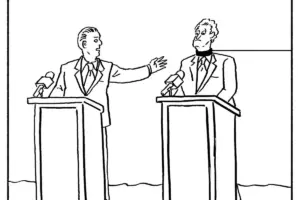
Regarding Abbott’s refusal to participate in formal campaign debates—which led Hinojosa to host a publicized debate against an empty podium—she added:
"Listen, this man won’t debate me. He’s fearful of something. He’s running from his record; he’s running from voters. If he were actually telling the truth in the millions of dollars of negative ads against me, he would have the courage to debate me, but he knows his ads are lies, and that’s why he’s refusing to debate."
Future Outlook & Strategic Implications
As early voting continues, national political strategists are closely watching Texas to evaluate whether Hinojosa’s strategy of economic populism and down-ballot coordination can break the GOP’s long-standing hold on the state.
THE 2026–2027 REDISTRICTING STAKES
┌──────────────────────────────────────────────┬────────────────────────┐
│ Scenario                                     │ Strategic Outcome      │
├──────────────────────────────────────────────┼────────────────────────┤
│ GOP Retains Texas Governorship               │ Redraws maps after     │
│                                              │ 2026 Census; up to +10 │
│                                              │ GOP U.S. House seats   │
├──────────────────────────────────────────────┼────────────────────────┤
│ Democratic Victory (Hinojosa Wins)           │ Vetoes gerrymandered   │
│                                              │ maps; forces balanced  │
│                                              │ mid-decade mapping     │
└──────────────────────────────────────────────┴────────────────────────┘
The Existential Map Battle of 2027
Beyond state governance, the Texas gubernatorial race carries structural consequences for federal power. Following decisions by the U.S. Supreme Court that diluted key enforcement provisions of the Voting Rights Act of 1965, the Texas Legislature plans to initiate a mid-decade congressional redistricting process in 2027.
Demographic realignments captured in upcoming census updates indicate that Texas will likely gain four to five additional seats in the U.S. House of Representatives due to population growth. Under single-party Republican control, mapmakers could redraw congressional boundaries to eliminate up to five existing Democratic districts while gerrymandering newly created seats for the GOP.
Such a shift—representing a potential net swing of up to ten seats in the U.S. House of Representatives—could effectively secure a durable Republican majority in Congress for the next decade, irrespective of national voter trends.
Conclusion
A gubernatorial victory for Gina Hinojosa would provide Democrats with crucial veto power over state legislative maps, ensuring a more balanced redistricting process. Conversely, an Abbott reelection would consolidate Republican control over the state’s economic and political direction for years to come.
With poll margins hovering near parity, the race will ultimately depend on voter turnout across Texas’s major urban centers—Houston, Dallas, San Antonio, and Austin—and whether Hinojosa’s economic platform can mobilize working-class and rural voters dissatisfied with the status quo. What is certain is that the outcome in Texas will reverberate far beyond state borders, reshaping the landscape of American politics for the decade ahead.




Comments
Facebook App ID not configured. Please add it in the Customizer.