

Executive Overview
To the uninitiated, the traditional publishing industry appears to be a meritocracy—a well-oiled literary ecosystem where brilliant manuscripts rise naturally to the top, find dedicated champions, and achieve the commercial and critical success they inherently deserve. However, for authors, editors, and industry insiders who have peered behind the curtain, this romanticized view is recognized as a comforting myth.
The reality of modern publishing is a chaotic, high-stakes theater of chance, corporate restructuring, marketing missteps, and administrative oversight. As satirical novelist Donald Westlake observed in his 1984 comedy A Likely Story, the publishing machine is practically horror-adjacent for anyone foolish enough to dream of creative validation. If an author or editor reads Westlake’s account of editorial musical chairs and unending literary inundations—such as Isaac Asimov relentlessly submitting unprompted essays—they are likely to experience a familiar, cold sweat of post-traumatic stress.
While Westlake framed the publishing industry’s absurdities through a comedic lens, the underlying truth is deeply sobering. Brilliant works of fiction are regularly derailed, commercialized into failure, or driven out of print entirely by forces completely disconnected from the quality of the prose.
Read Also
This investigative report examines the fragile nature of literary success by analyzing four distinct publishing casualties spanning four decades: Charles R. Saunders’s Imaro (1981), Dorothy J. Heydt’s The Interior Life (1990), C.J. Cherryh’s Faery in Shadow (1993), and Becky Allen’s Bound by Blood and Sand (2016). Through an exploration of these cases, we uncover how editorial turnover, catastrophic marketing gaffes, legal overreaches, and the cold mathematics of modern book distribution conspire to crush promising works.

Detailed Chronology
The lifecycle of a book is fraught with critical milestones, any one of which can become a point of catastrophic failure. To understand how promising literary works are systematically derailed, we must trace the historical chronology of avoidable publishing disasters across four decades.
1981: The Pulped Epic (Imaro by Charles R. Saunders)
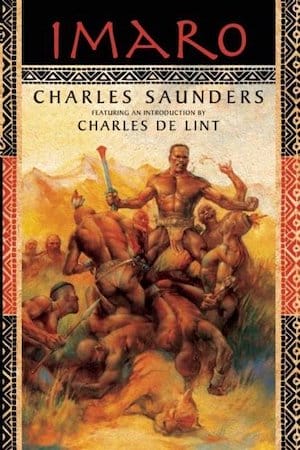
In the early 1980s, speculative fiction was desperately in need of fresh mythologies. Charles R. Saunders answered the call with Imaro, a groundbreaking heroic fantasy set on the vast, richly imagined African-inspired continent of Nyumbani. The protagonist, Imaro, was an exile molded by the Illyassai people—granted the skills to survive a harsh world, yet constantly reminded of his outsider status.
- The Setup: The manuscript possessed immense potential to rewrite the conventions of sword-and-sorcery fiction, offering a nuanced alternative to Eurocentric tropes.
- The Catastrophe: Rather than marketing Saunders’s work on its own revolutionary merits, DAW Books’ marketing apparatus made a fatal miscalculation. They chose to brand the novel with the cover tagline: "The Epic Novel of a Black Tarzan."
- The Fallout: The comparison was not only critically inaccurate—Imaro shared virtually no characteristics with Edgar Rice Burroughs’ iconic vine-swinger aside from physical prowess—it was legally radioactive. The Burroughs estate immediately issued a lawsuit. To satisfy legal pressures, the entire first printing of Imaro was unceremoniously pulped, effectively severing the book’s commercial momentum at its absolute inception.
1990: The Formatting and Marketing Maelstrom (The Interior Life by Dorothy J. Heydt)
Operating under the pseudonym Katherine Blake, Dorothy J. Heydt crafted a deeply ambitious dual-narrative novel. The Interior Life juxtaposed the mundane, high-stress domestic struggles of a modern housewife named Sue against the sweeping, existential dread faced by Lady Amalia as a creeping Darkness consumed her world. The central mystery interrogated whether Lady Amalia’s universe was a coping mechanism of Sue’s imagination or a genuinely connected alternate reality.
- The Setup: Championed by veteran writers and editorially acquired through Baen Books via the advocacy of Karen Anderson, the novel had high-level literary backing.
- The Catastrophe: Baen Books’ traditional strengths lay in hard science fiction and military space opera; they lacked the specialized infrastructure to effectively position, market, and sell a nuanced, character-driven domestic fantasy. Compounding these structural hurdles, Heydt utilized variable fonts throughout the manuscript to visually distinguish the shifting narrative planes—a typographical design choice that became an expensive and complex nightmare for printers.
- The Fallout: Furthermore, the cover art missed the mark, failing to capture the terrifying, Nazgûl-esque atmosphere Heydt intended. Despite receiving glowing praise from early readers who managed to find copies, the book went out of print so rapidly that industry veterans quipped it might as well have been printed on sheets of hypothetical thiotimoline.
1993: The Cursed Odyssey (Faery in Shadow by C.J. Cherryh)
Master world-builder C.J. Cherryh is no stranger to the grueling realities of the publishing world, but the trajectory of Faery in Shadow remains a masterclass in cumulative corporate misfortune. The novel follows Caith, a man driven by irrational, obsessive vengeance into the terrifying, untamed realms of faerie law, where he is forced to navigate perilous alliances with untrustworthy pookas and hostile faery lords.
- The Setup: Penned by a multi-Hugo Award-winning author, the novel should have enjoyed a frictionless release cycle backed by robust promotional support.
- The Catastrophe: Instead, Faery in Shadow became a textbook example of a project besieged by a compounding cascade of editorial indifference, distribution bottlenecks, and contractual miscommunications.
- The Fallout: The initial release limped through the marketplace, failing to capture the audience it deserved. Cherryh’s frustrations culminated years later when she successfully reclaimed the rights, heavily rewriting and expanding the text for her 2009 self-published omnibus, Faery Moon. In the prefatory materials of the reissue, Cherryh documented an exhaustive ledger of the systemic administrative failures that had crippled the original edition.
2016: The Modern Algorithmic Void (Bound by Blood and Sand by Becky Allen)
Moving into the contemporary era of digital publishing and algorithmic curation, Becky Allen’s 2016 debut novel, Bound by Blood and Sand, encountered a modern nightmare: utter invisibility in a saturated marketplace.
- The Setup: Allen entered the traditional publishing arena with high hopes, delivering an inventive fantasy that passed through professional acquisitions, edits, and standard publisher printing schedules.
- The Catastrophe: The book simply failed to capture mainstream attention upon release, sliding quietly into the vast sea of contemporary mid-list titles. In the hyper-connected, metric-driven modern publishing environment, a weak debut creates a compounding downward spiral.
- The Fallout: As Allen candidly detailed in a retrospective blog post tracking her decade-long hiatus from publishing, the financial and commercial failure of the first book practically guaranteed the doom of its sequel, Freed by Flame and Storm. With total sales figures hovering shy of 1,500 copies for the debut and dipping below 500 for the follow-up, the series missed publisher benchmarks entirely, effectively freezing Allen out of traditional publishing contracts for the ensuing decade.
Supporting Context & Metrics
The disheartening fates of Imaro, The Interior Life, Faery in Shadow, and Bound by Blood and Sand are not anomalies; they reflect structural vulnerabilities inherent in the commercial book market. To quantify the scale of this vulnerability, consider the following structural metrics and industry dynamics:
- The Mid-List Desertion: Historically, traditional publishers maintained a diversified portfolio, using blockbuster bestsellers to subsidize mid-list authors whose books sold steadily over years. In the modern corporate publishing landscape, compressed profit margins mean that books failing to hit aggressive sales targets within their first 30 to 90 days are quickly declared commercial failures, stripped of marketing budgets, and allowed to go out of print.
- The Sequel Death Spiral: As Becky Allen noted regarding her duology, the economics of series fiction are unforgiving. If a debut novel fails to secure a foundational readership, the sequel is mathematically doomed before it hits shelves. Industry data indicates that second-book sales in a failing series routinely drop by 60% to 80% compared to the first installment, as bookstores and online retailers slash ordering quantities.
- The Legal and Logistical Toll: As demonstrated by the pulping of Saunders’s initial print run of Imaro, a single ill-advised cover blurb or marketing descriptor can completely erase years of creative labor. The physical cost of pulping tens of thousands of mass-market paperbacks represents an absolute financial loss that many publishing houses refuse to absorb twice, permanently halting an author’s career momentum.
Official Statements & Industry Perspectives
The fragility of the publishing ecosystem has long been a subject of dark humor and candid reflection among veterans of the craft.
Reflecting on the psychological toll of administrative chaos, Donald Westlake’s satirical observations in A Likely Story capture the bewildered terror of authors caught in the gears of corporate restructuring:

"What could go wrong? After convincing an assortment of authors to contribute… the answer turns out to be ‘everything can go wrong.’ The book is orphaned when Diskant’s editor leaves for a better job. The book is orphaned again when Diskant’s next editor—with whom he is having an affair—takes maternity leave. The next editor sticks around, but unfortunately that editor is a well-meaning idiot."
For real-world authors who have watched their creative visions wither under the weight of market indifference, the reflection is far less comedic and much more existential. Becky Allen’s candid assessment of her commercial trajectory provides an unvarnished look at the reality of modern literary failure:
"Because oh boy, did the book flop. And fun fact, if the first book in a series flops, then the second book flops even harder because no one picks up the sequel to a book they haven’t read. Over the last ten years, Bound by Blood and Sand has sold somewhere shy of 1500 copies… So, to put it mildly, they did not meet publisher expectations. And I haven’t sold anything since. So sit back and grimace with me as I walk through how it feels to fail at your dream, the aftermath, and what comes next."
Yet, amidst the wreckage of pulped print runs, typography disasters, and unrecovered marketing investments, industry veterans emphasize a vital counter-narrative. Writing and successfully publishing a book—whatever its commercial fate—remains an extraordinary feat. As C.J. Cherryh’s tenacity and Charles Saunders’s enduring legacy (further explored in Jon Tattrie’s 2026 biography To Leave a Warrior Behind: The Life and Stories of Charles R. Saunders, the Man Who Rewrote Fantasy) demonstrate, the true value of a work often outlasts the capricious winds of marketplace fortune.

Future Outlook
As the publishing industry navigates the mid-2020s, the landscape is undergoing rapid transformation. The rise of independent digital publishing, print-on-demand technology, and direct-to-consumer author platforms has altered how books find their audiences, offering new lifelines to works that might otherwise have been crushed by traditional gatekeeping.
However, the core systemic risks identified in the histories of Saunders, Heydt, Cherryh, and Allen remain largely unchanged. Algorithms have largely replaced the well-meaning, overwhelmed human editors of Westlake’s satire, yet the capacity for a brilliant book to be derailed by poor positioning, corporate restructuring, or simple bad luck persists.
Ultimately, the cautionary tales of these four unjustly doomed works serve as both a sobering warning and a badge of honor. While commercial success remains subject to the fickle whims of Fortuna, the act of bringing a fully realized imaginative world into existence is an achievement that no corporate miscalculation or marketing flop can ever truly erase.





Comments
Facebook App ID not configured. Please add it in the Customizer.