
Executive Overview
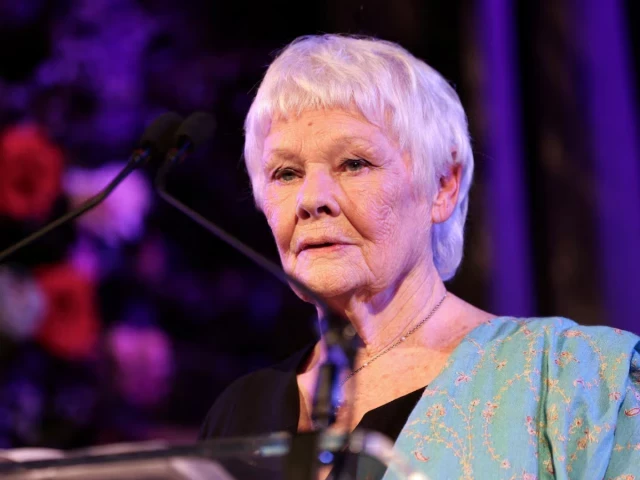
In the grand tapestry of British theatrical and cinematic history, few names resonate with the profound authority, emotional range, and regal grace of Dame Judi Dench. For over seventy years, she has commanded the world’s most prestigious stages and silver screens, breathing immortal life into Shakespearean heroines, fierce historical monarchs, and the steely yet deeply empathetic intelligence of MI6’s chief, "M," across the James Bond franchise.
However, time and biology have introduced an unscripted, immutable reality to her storied life. In a candid and deeply moving interview with BBC Radio, the 91-year-old Oscar-winning icon confirmed a bittersweet truth that many in the entertainment industry and global audience had long feared: advanced macular degeneration has eroded her vision to the point where she can no longer read scripts, memorize stage blocking, or perform in films and theatrical productions.
This announcement marks the definitive closing chapter of one of the most remarkable acting careers in modern history. Rather than retreating into bitterness, Dame Judi faces this profound transition with the characteristic pragmatism, humor, and resilient philosophy that has defined both her life and art. While the physical toll of her condition—including being unable to recognize faces and occasionally nearly embracing strangers—presents daily trials, her fierce intellect and profound love for the written word remain completely undimmed.
Read Also
This comprehensive report examines the announcement, the clinical realities of the condition that forced her retirement, a retrospective of her monumental career, the industry-wide legacy she leaves behind, and her enduring reflections on the art of performance.
+-----------------------------------------------------------------------------------+
|                            DAME JUDI DENCH: AT A GLANCE                           |
+---------------------------+-------------------------------------------------------+
| Age                       | 91                                                    |
+---------------------------+-------------------------------------------------------+
| Primary Medical Condition | Advanced Age-Related Macular Degeneration (AMD)       |
+---------------------------+-------------------------------------------------------+
| Duration of Condition     | Over a decade                                         |
+---------------------------+-------------------------------------------------------+
| Career Span               | 7+ decades (Stage, Film, Television)                  |
+---------------------------+-------------------------------------------------------+
| Major Accolades           | 1 Academy Award (Oscar), 1 Tony Award, 7 Olivier Awards |
+---------------------------+-------------------------------------------------------+
| Iconic Roles              | 'M' in 8 James Bond films, Shakespearean leads        |
+---------------------------+-------------------------------------------------------+
Detailed Chronology: The Progressive Descent of Vision Loss
To understand the magnitude of Dame Judi’s recent announcement, it is necessary to trace the timeline of her battle against ocular deterioration. For more than ten years, the British public and the theatrical community have watched a slow, agonizing evolution in how the actress interfaces with her craft.
The Early Diagnosis and Early Adjustments
Dame Judi first went public with her diagnosis of age-related macular degeneration (AMD) in 2012. At the time, she revealed that she was suffering from the "dry" form of the condition, which gradually destroys the macula—the part of the retina responsible for sharp, central vision needed for reading, driving, and recognizing faces.
Even in the early stages of the diagnosis, Dench exhibited fierce independence. Recognizing that her peripheral vision remained intact, she refused to let the condition immediately curtail her professional ambitions. Instead, she began implementing clever workarounds. Because she could no longer read scripts or scripts’ fine print, she relied heavily on trusted colleagues, family members, and friends to read lines aloud to her, allowing her to commit vast monologues to memory entirely by ear.
The Tipping Point: Transition to the Inevitable
As the years progressed, however, the degenerative nature of AMD continued its relentless march. By the arrival of her nineties, the accommodations that had once kept her at the pinnacle of stage and screen were no longer sufficient. The central blind spots expanded, rendering the intricate mechanics of professional acting—where catching a director’s subtle cue, reading split-second teleprompters, or navigating a darkened stage without spatial orientation is paramount—an insurmountable hazard.
During her landmark interview with BBC Radio, Dame Judi spoke with stark, unvarnished honesty about crossing that threshold. "I can’t be on stage, I can’t do a play anymore, I can’t do a film anymore, I can’t read anymore," she told listeners.
Far from seeking pity, she immediately pivoted to the philosophy required to survive such a monumental loss of autonomy: "So you’ve got to adjust to all that, and make allowances for it and just get on and don’t think about it too much."
Navigating the Mundane: The Humor in Daily Struggles
The impact of macular degeneration extends far beyond the professional sphere, altering the very fabric of daily existence. Dame Judi shared lighthearted yet revealing anecdotes about the social hurdles created by her facial recognition deficits. Because she can no longer clearly discern facial features from a standard conversational distance, she frequently mistakes passing strangers for long-standing acquaintances, leading to awkward moments where she nearly embraces unknown individuals on the street.
Rather than isolating herself, she navigates these mix-ups with self-deprecating wit, embodying the same resilience that made her characters so fiercely compelling.
Supporting Context & Metrics: The Clinical Reality of Macular Degeneration
To fully appreciate the adversity Dame Judi Dench has managed for over a decade, it is vital to examine the medical landscape of Age-Related Macular Degeneration (AMD), a condition affecting millions of older adults globally.
Understanding Age-Related Macular Degeneration (AMD)
AMD is a progressive eye disease that causes damage to the macula, leading to a gradual loss of central vision. It is broadly categorized into two types:
- Dry AMD: The more common form, characterized by the thinning of the macula over time and the accumulation of yellowish protein deposits called drusen. Progression is typically slow, but it offers no cure once central vision cells are lost.
- Wet AMD: A more aggressive form where abnormal blood vessels grow under the retina and leak fluid or blood, causing rapid and severe central vision loss.
+-----------------------------------------------------------------------------------+
|                           THE CLINICAL IMPACT OF AMD                              |
+---------------------------+-------------------------------------------------------+
| Affected Area             | The Macula (Center of the Retina)                     |
+---------------------------+-------------------------------------------------------+
| Primary Symptoms          | Blurred central vision, blind spots, trouble reading  |
+---------------------------+-------------------------------------------------------+
| Global Prevalence         | Leading cause of vision loss in people aged 50+       |
+---------------------------+-------------------------------------------------------+
| Professional Impact       | Loss of spatial coordination, inability to read print |
+---------------------------+-------------------------------------------------------+
The Psychological and Cognitive Toll
For an artist whose entire livelihood depends on reading text, studying facial expressions, and responding to visual cues in real-time, an AMD diagnosis is uniquely devastating. Clinical studies consistently show that severe vision loss in older adults correlates with elevated risks of social isolation, depression, and cognitive decline.
Dame Judi’s ability to maintain her career for more than a decade after her diagnosis is a testament to extraordinary cognitive fortitude. By transitioning from visual memorization to auditory retention, she exercised neuroplasticity at an elite level, proving that an active, engaged mind can defy physical limitations for years before a full retreat becomes necessary.
A Monumental Seven-Decade Legacy
The cessation of Dame Judi Dench’s active performance career prompts a retrospective look at a body of work that helped define modern British culture. Her journey through the arts is nothing short of legendary.
The Stage: Shakespearean Royalty
Dench’s professional career commenced in 1957 when she joined the Old Vic Company, playing Ophelia in Hamlet at the Royal Court Theatre in Liverpool. From that moment forward, she established herself as one of the premier classical actresses of the 20th and 21st centuries.
She conquered virtually every major Shakespearean heroine with a unique blend of intellectual rigor and visceral passion. Her performances as Juliet in Romeo and Juliet, Lady Macbeth in Macbeth, and Cleopatra in Antony and Cleopatra set gold standards for theatrical interpretation.
Even in her later years, her love for the Bard remained foundational. During her recent reflections, she expressed a particular, enduring devotion to his poetic works:
"I am besotted by the sonnets, I just love them. The way he summed up so simply the way that any of us feel about, well, anything."
The Silver Screen and Global Stardom
While her theatrical roots ran deep, Dench achieved unprecedented global crossover fame later in life. To millions of filmgoers worldwide, she is instantly recognizable as "M," the flinty, uncompromising head of MI6 whom she portrayed across eight James Bond films, starting with GoldenEye (1995) alongside Pierce Brosnan and carrying through the Daniel Craig era up to Skyfall (2012) and a cameo in Spectre (2015). Her version of M redefined the character, transforming a previously secondary administrative figure into a moral and operational powerhouse.
Her cinematic versatility earned her critical acclaim across genres, accumulating a staggering array of accolades:
- Academy Award (Oscar): Won for her breathtaking portrayal of Queen Elizabeth I in Shakespeare in Love (1998) despite appearing on screen for a mere eight minutes.
- Tony Award: Recognized for her stellar work on Broadway.
- Seven Laurence Olivier Awards: The highest recognition in British theatre, cementing her unmatched dominance on the West End stage.
Official Statements and Deep Reflections on Acting
In her conversation with BBC Radio, Dame Judi offered a masterclass in how to process aging, professional obsolescence, and artistic identity. Rather than lamenting what was lost, she focused on the philosophical mechanics of what made her art so powerful in the first place.
The Value of Fear and Creative Energy
Reflecting on the psychological weight of stepping onto a stage or in front of a film camera for seven decades, Dench revealed that performance was never a comfortable endeavor. It was, by her own account, a perpetual trial of nerves.
"For me, always frightening, but that’s part of it," she stated. "It’s part of what that fear generates—an energy that you can use up, use the energy."
This perspective illuminates the raw, electric authenticity that marked her performances. She did not seek to eliminate performance anxiety; rather, she harnessed it as fuel, converting adrenaline into artistic truth.
The Unfinished Canvas
Summarizing her lifelong artistic philosophy, Dench offered a final, poetic thought that serves as a fitting epitaph for her working life:
"It’s always ‘work in progress’, always."
Even at 91, having achieved every conceivable honor the entertainment world can bestow, Dench viewed herself not as a finished monument, but as an ongoing student of human emotion.
Future Outlook: Life Beyond the Limelight
As Dame Judi Dench steps away from the stage and screen, the theatrical community and global audiences are left to process the end of an era. While she can no longer command the spotlight through direct performance, her legacy is permanently etched into the cultural DNA of global entertainment.
The Preservation of a Masterclass
The future of her influence will undoubtedly live on through the generations of actors, directors, and artists she inspired. Film schools, drama academies, and cultural institutions will continue to analyze her interpretations of Shakespeare, her commanding presence in political dramas, and her sharp-witted authority as M.
Furthermore, her public transparency regarding age-related macular degeneration provides a vital cultural touchstone for aging populations. By speaking openly about her visual impairments, the loss of her driving privileges, and the everyday adjustments required to live with dignity, she normalizes the conversation around physical decline, stripping away the stigma often associated with late-life disability.
A Lasting Cultural Debt
Dame Judi Dench’s retirement is undeniably a loss for the arts, but it is also a celebration of an incomparable career. She navigated the transition from youth to old age in the unrelenting glare of public scrutiny with unmatched grace, elegance, and fierce determination.
As she retreats to the quietude of private life, away from the blinding lights of the cameras and the breathless whispers of packed auditoriums, she leaves behind a standard of excellence that will challenge and inspire artists for generations to come. Her journey is, and always will be, a masterclass in living—a brilliant, unyielding work in progress.





Comments
Facebook App ID not configured. Please add it in the Customizer.