
Executive Overview
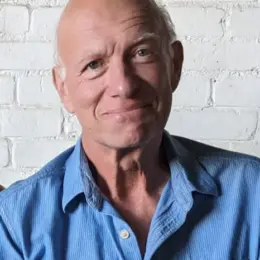
On the brisk morning of October 1, 2026—coinciding with the nationwide cultural milestone of National Poetry Day—The Poetry Society officially announced the results of its prestigious annual Stanza Poetry Competition. Culminating months of anticipation within the literary community, the spotlight fell upon Lindsay Fursland, representative of the Cambridge Stanza, who claimed the top honor for his evocative poem, “Morning in February at the Recreation Ground.”
Selected by acclaimed poet and judge Maya C. Popa from a remarkably competitive pool of submissions, this year’s entries were united under the resonant thematic banner of “Wonder.” Fursland’s winning piece led a triumphant cohort of recognized voices, which included three joint runners-up: Nicky Kippax of the York Stanza (“Instructions for a Wonderful World”), Jane Simmons of the Sherwood Forest Stanza (“Prayer”), and Gordon Taylor representing the Global Online Stanza (“Dear Afternoon”).
The Stanza Poetry Competition holds a unique position within the United Kingdom’s literary ecosystem. Open exclusively to members of The Poetry Society who actively participate in local or digital Stanzas—regional poetry-sharing networks—the competition serves as a vital grassroots engine for poetic excellence. By tying its annual brief directly to the core theme of National Poetry Day, the contest captures the zeitgeist of the contemporary poetry scene, translating collective national reflection into deeply personal lyric art.
Read Also
This year’s competition not only highlighted the technical mastery of established and emerging writers alike but also underscored how poetry continues to grapple with the grandest existential questions of our time, from the tender observations of new life to the urgent anxieties of the climate crisis.

Detailed Chronology and Announcement
The path to the 2026 awards concluded with the formal publication of the results on October 1, 2026, but the competition’s narrative has been unfolding across the literary calendar for months. Stanzas across the UK and beyond—self-organized communities of poets meeting regularly to workshop poems, share ideas, and build local artistic infrastructure—spent the early part of the year engaging with the conceptual framework of “Wonder.”
When submissions closed, the task of adjudication fell to Maya C. Popa, whose discerning eye sifted through poems written by members of diverse geographic and digital backgrounds. Popa’s selection process focused heavily on the distinction between writing about wonder and actively enacting it.
The announcement day itself was marked by widespread celebration across digital platforms, local Stanza meetups, and literary journals. The Poetry Society used its official channels to publish the winning and runner-up poems, making works like Fursland’s “Morning in February at the Recreation Ground” and Taylor’s “Dear Afternoon” immediately accessible to a global audience of poetry enthusiasts.
For the winners, the announcement marks a significant career milestone. Lindsay Fursland, stepping into the national spotlight after years of dedicated local service to the Cambridge Stanza, adds this victory to a growing list of accolades, closely following his impressive second-place finish in the 2025 Bridport Prize Poetry Competition. Meanwhile, joint runner-up Nicky Kippax celebrated the news from York while concurrently editing her eagerly anticipated debut poetry collection, building upon a banner year that has seen her named a Word Up North New Northern Poet for 2026.

Supporting Context & Metrics: The Anatomy of "Wonder"
To fully appreciate the 2026 Stanza Poetry Competition, one must examine the thematic constraints and the rich tapestry of responses submitted by the entrants. The theme of “Wonder” offered a dual-purposed lens through which poets could view the world. As Maya C. Popa observed in her judge’s report, wonder manifested throughout the submissions in two distinct grammatical and philosophical modes: as a noun—representing that which inspires deep admiration, astonishment, and awe—and as a verb, signifying the act of questioning, searching, and maintaining an open, inquisitive posture toward reality.
Thematic Trends in the 2026 Submissions
An analysis of the shortlisted and winning poems reveals several dominant thematic currents:
- Intergenerational Discovery: A significant number of entries explored the miraculous dawn of new life. Poets turned their gaze toward the birth of children and grandchildren, capturing the profound, humbling experience of watching the next generation encounter the world’s basic phenomena for the very first time.
- Ecological Consciousness and the Climate Crisis: In an era defined by rapid environmental shifts, many writers utilized the theme of wonder to reckon with the state of the earth. These poems balanced a celebration of the natural world’s fragile beauty with an urgent, questioning anxiety regarding its future.
- The Ordinary Made Extraordinary: Winning pieces like Fursland’s “Morning in February at the Recreation Ground” demonstrated how profound emotional and philosophical revelations can be mined from mundane, everyday settings—local parks, quiet afternoons, and domestic spaces.
Profile of the Award-Wining Poets
The 2026 podium reflects a vibrant cross-section of contemporary British and international poetry, uniting seasoned local organizers with boundary-pushing contemporary voices:
- Lindsay Fursland (Winner – Cambridge Stanza): Writing poetry since his teens, Fursland is a pillar of the East Anglian literary community, having served as the Cambridge Stanza Representative for approximately fifteen years. His deep immersion in peer-led workshopping clearly bore fruit in his competition entry, building upon his runner-up success in the prestigious Bridport Prize just a year prior.
- Nicky Kippax (Joint Runner-Up – York Stanza): Based in York, Kippax is a powerhouse in the Northern poetry scene. Named a Word Up North New Northern Poet in 2026 and a Northern Writers’ Award winner in 2022, her publication credits read like a roster of elite literary journals, including The London Magazine, PN Review, The Rialto, Poetry Oxford, and Poetry News. Furthermore, she has been highly commended in The Forward Book of Poetry 2027, shortlisted for the Brotherton, Bridport, and Gingko Prizes, and co-hosts the vibrant York poetry evening series Rise Up!.
- Jane Simmons (Joint Runner-Up – Sherwood Forest Stanza): A scholar and lyricist who recently completed her PhD in Creative Writing, Simmons brings a rigorous academic background to her evocative verse. A multi-time winner of the University of Leicester’s GS Fraser Poetry Prize (2019–2021) and a consistent presence in magazines such as Mslexia, Ink Sweat and Tears, and The Blue Nib, Simmons is currently preparing her debut pamphlet for publication with New Walk Editions in 2027.
- Gordon Taylor (Joint Runner-Up – Global Online Stanza): Representing the borderless capabilities of the digital age, Taylor is a queer, emerging poet whose work navigates the intersection of technology and lyrical tradition. A 2022 Pushcart Prize nominee and winner of the 2026 Ellis Prize in Poetry from the New Ohio Review, Taylor’s contributions to publications like Narrative, Cincinnati Review, and Poet Lore are driven by a desire to invite readers into unchartered perceptual worlds.
Official Statements and Critical Insight
The cultural weight of the competition was underscored by the official commentary provided by judge Maya C. Popa. Her evaluation cuts to the heart of what makes poetry enduringly vital in the twenty-first century:

"The poems that most captivated me enacted wonder rather than merely describing it," Popa noted in her official adjudication statement. "They carried a sense of having encountered something unlikely and of being surpassed by the experience. Of course, they also displayed excellent craft."
Popa went on to elaborate on the emotional and intellectual breadth of the entries:
"Many of the poems concerned children—the birth of children and grandchildren, and the experience of watching them discover the world. Others addressed the climate crisis and the state of the earth. Across the submissions, wonder appeared both as a noun (something that inspires admiration) and as a verb (the act of questioning, searching)."
The Poetry Society echoed these sentiments in its National Poetry Day release, emphasizing the vital role that local Stanzas play in nurturing talent. By providing a structured, supportive framework where writers can test their boundaries away from the solitary desk, Stanzas function as crucibles for national-caliber work. The success of representatives from Cambridge, York, Sherwood Forest, and the Global Online Stanza demonstrates that poetic excellence thrives equally in historic university towns, regional creative hubs, and borderless digital spaces.

Future Outlook: The Horizon of Stanza Poetry
As the celebrations of National Poetry Day 2026 draw to a close, the ripple effects of the Stanza Poetry Competition will undoubtedly shape the literary landscape for months to come. For the winners and runners-up, the recognition serves as a powerful catalyst. With Nicky Kippax preparing her debut collection, Jane Simmons gearing up for her 2027 pamphlet release with New Walk Editions, and writers like Lindsay Fursland and Gordon Taylor continuing to push their aesthetic boundaries, the future of the Stanza network looks exceptionally bright.
Looking forward, The Poetry Society’s Stanza network continues to expand, offering an indispensable lifeline for poets seeking community, rigorous critique, and professional milestones. The success of the 2026 competition proves that when poets are given a shared thematic anchor—such as "Wonder"—and a supportive institutional home, the resulting art transcends mere technical exercise. It opens windows into the human condition, reminding readers of all backgrounds why poetry remains one of our most enduring tools for navigating an uncertain, awe-inspiring world.


Comments
Facebook App ID not configured. Please add it in the Customizer.