
Executive Overview
As millions of holiday travelers navigate overcrowded terminals, tight connecting flights, and unpredictable winter weather, a distinct brand of fatalistic humor has taken root across the American cultural landscape. What was once considered an exceptional operational crisis—the mass cancellation of commercial flights during peak travel windows—has gradually metastasized into an anticipated norm.
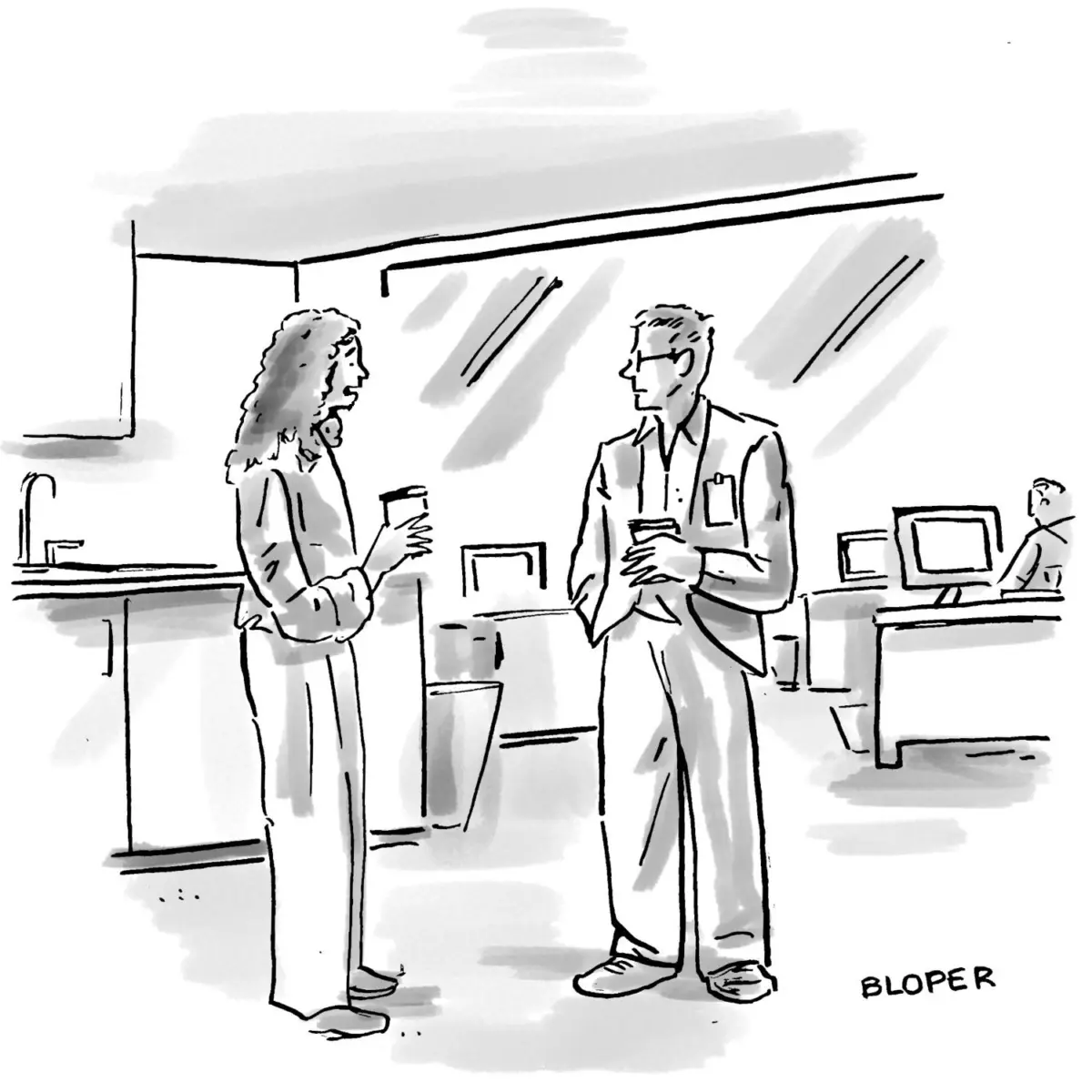
This shift in consumer psychology is captured in a single-panel cartoon by acclaimed artist Brendan Loper, published by The New Yorker. The illustration depicts two office workers engaging in casual water-cooler conversation. The punchline delivers a sharp critique of modern transit reliability:
"I don’t plan on going anywhere for the holidays, but I guess there is a chance my flight takes off."
+--------------------------------------------------------------------------------+
|                           THE CYCLE OF TRAVEL FATALISM                         |
+--------------------------------------------------------------------------------+
|  [ Legacy Infrastructure & Crew Scheduling Bottlenecks ]                      |
|                                  │                                             |
|                                  ▼                                             |
|  [ Systemic Delays & Mass Cancellations during Peak Windows ]                  |
|                                  │                                             |
|                                  ▼                                             |
|  [ Consumer Resignation: Travel Disruption Expected as Default ]              |
|                                  │                                             |
|                                  ▼                                             |
|  [ Cultural Normalization & Satire (e.g., Loper's New Yorker Editorial) ]      |
+--------------------------------------------------------------------------------+
Loper’s cartoon, while delivered with the dry, economical wit characteristic of The New Yorker, articulates a deeper structural reality. Commercial aviation in the United States faces unprecedented friction caused by aging air traffic control infrastructure, severe staffing shortages, legacy software vulnerabilities, and volatile winter weather patterns.
By framing a non-existent trip as vulnerable to operational error, Loper captures the absurd extent to which air travel failure has been normalized.
This report provides an in-depth analysis of the structural factors behind holiday travel disruptions, tracing how operational vulnerabilities evolved into systemic failures, examining key performance metrics, and assessing the future of commercial flight reliability and editorial satire.
Detailed Chronology
The evolution of holiday travel disruption from a rare inconvenience into a cultural baseline has unfolded over several distinct phases over the past decade.
CHRONOLOGY OF AVIATION DISRUPTIONS & CULTURAL SHIFTS

2018–2019 ─── Lean Operating Models & High Load Factors
              Airlines run at maximum capacity; minimal operational buffer.

2020–2021 ─── Pandemic Shock & Workforce Contraction
              Early retirements create acute shortages of pilots and controllers.

Dec 2022  ─── The Systemic Watershed (Southwest Meltdown)
              16,700+ flights canceled; legacy crew-scheduling software crashes.

2023–2024 ─── FAA Controller Shortages & Federal Interventions
              DOT imposes stricter refund mandates; passenger fatalism peaks.

Present   ─── Cultural Normalization
              Editorial satire reflects widespread cynicism toward travel reliability.
1. The Pre-Pandemic Vulnerability Phase (2018–2019)
Prior to the global pandemic, major U.S. carriers operated on extremely lean margins with near-capacity load factors during holiday periods.
- Airlines optimized fleet utilization to record levels, leaving minimal aircraft buffers in reserve.
- Air traffic management systems operated near peak capacity during peak travel windows, making minor weather delays compound across regional corridors.
2. Pandemic Contraction and Workforce Disruptions (2020–2021)
The sudden collapse of travel demand in 2020 led airlines to streamline operations through accelerated early retirements, buyouts, and deferred maintenance schedules.
- Thousands of senior pilots, technicians, and ground crew left the sector.
- When travel demand rebounded sharply in late 2021, carriers faced severe labor deficits, leaving flight networks highly sensitive to minor disruptions.
3. The Great Holiday Meltdown (December 2022)
The systemic fragility of the commercial aviation framework reached a watershed moment during the 2022 holiday season.
- A severe winter storm swept across North America, causing widespread delays across major carriers.
- Southwest Airlines suffered a complete operational collapse, canceling over 16,700 flights over ten days.
- The failure was driven by an outdated internal crew-scheduling engine (SkySolver), which was unable to reassign stranded flight crews to available aircraft.
- This event permanently reshaped public perception, shifting consumer expectation from minor delays to catastrophic network collapses.
4. Regulatory Scrutiny and Infrastructure Bottlenecks (2023–2024)
Throughout 2023 and into 2024, the Federal Aviation Administration (FAA) faced severe staffing shortages in key Air Traffic Control (ATC) facilities, particularly in the Northeast corridor and Florida airspace.
- Airlines voluntarily trimmed schedules at major hubs like New York (JFK, LGA, EWR) and Washington (DCA) to avoid widespread delays.
- Despite these schedule adjustments, peak holiday travel windows remained prone to cascading cancellations.
- This ongoing instability solidified a culture of travel anxiety, setting the stage for editorial satirists like Brendan Loper to document the public’s growing resignation.
Supporting Context & Metrics
The Mechanics of Systemic Failure
To understand why flight reliability has become a frequent subject of satire, one must examine the underlying structural metrics that govern modern aviation logistics.
       OPERATIONAL BOTTLENECKS IN COMMERCIAL AVIATION

  +-------------------------+     +-------------------------+
  |  FAA ATC Staffing Deficit|     | Outdated Crew Software  |
  |  (~3,000 Controllers)   |     |  (Legacy IT Systems)    |
  +------------+------------+     +------------+------------+
               |                               |
               +---------------+---------------+
                               |
                               ▼
  +---------------------------------------------------------+
  |               Cascading Network Delays                  |
  | (Turnaround Misses, Crew Out-of-Position, Hub Blockades) |
  +----------------------------+----------------------------+
                               |
                               ▼
  +---------------------------------------------------------+
  |                  Consumer Impact                        |
  |  (Loss of Trust, Resignation, Satirical Normalization)  |
  +---------------------------------------------------------+
1. Air Traffic Controller Shortages
The FAA currently operates with a deficit of approximately 3,000 certified air traffic controllers relative to target staffing targets. In critical facilities, such as the New York Terminal Radar Approach Control (TRACON), staffing levels dropped below 60% of recommended targets during peak periods in recent years, forcing air traffic flow management programs (Ground Delay Programs and Ground Stops) even during mild weather conditions.
2. Fleet Utilization and Turnaround Times
Major U.S. network carriers maintain high aircraft utilization rates, with aircraft flying up to 11 to 13 hours per day. While economically efficient, this leaves little operational buffer:
- A 45-minute departure delay on a morning flight from Boston (BOS) can cascade into a 3-hour delay by the time the aircraft reaches its fourth leg in Dallas/Fort Worth (DFW).
- Federal Duty Time Restrictions (FAR Part 117) automatically ground flight crews if delays push them past their maximum allowable duty hours, stranding aircraft even when equipment is fully functional.
3. Legacy IT Infrastructure
While customer-facing booking apps have modernized, core operational backend systems—such as crew tracking and maintenance routing—often rely on decades-old architecture. When weather events disrupt flight paths, these legacy platforms struggle to realign stranded crews and aircraft, escalating minor disruptions into systemic shutdowns.

The Role of Editorial Satire: Brendan Loper’s Critique
The power of Brendan Loper’s cartoon in The New Yorker relies on its precise commentary on corporate and consumer culture. Loper, a frequent contributor to The New Yorker whose visual art has been exhibited in premier venues such as the David Zwirner gallery, specializes in minimalist line work paired with sharp cultural critique.
| Element | Structural Reality | Satirical Representation in Loper’s Work |
|---|---|---|
| Travel Expectations | Delays and cancellations are built into modern travel planning. | The character assumes a non-existent flight will somehow be canceled. |
| Corporate Workplace | Office workers navigate burnout, limited PTO, and unreliable holiday logistics. | Set in a bland, corporate office environment, highlighting ambient workplace weariness. |
| Infrastructure Risk | Passengers feel helpless against complex, opaque airline logistics systems. | Dark humor serves as a coping mechanism for widespread institutional failure. |
By situating the dialogue within an ordinary office environment, Loper captures how systemic logistical failures have entered everyday workplace conversation. The joke works precisely because the premise—that an unbooked flight might still manage to derail one’s plans—feels only slightly exaggerated to a weary traveling public.
Official Statements
Regulatory Bodies and Government Officials
The U.S. Department of Transportation (DOT) has taken a firmer regulatory stance in response to recurring holiday travel disruptions.
"Passengers deserve to be treated fairly, and airlines must be held accountable when their systems fail. We have established clear mandates requiring automatic cash refunds for canceled or significantly delayed flights, and we continue to push carriers to modernize their internal operational software to prevent cascading network failures during peak travel seasons."
— Representative Official, U.S. Department of Transportation
Airline Industry Representatives
Trade groups representing major U.S. carriers attribute operational challenges primarily to external constraints, such as air traffic control staffing deficits and severe weather patterns.
"Our member airlines invest billions of dollars annually in operational technology, workforce recruitment, and fleet modernization. While weather events and severe air traffic control staffing bottlenecks in key corridors create unavoidable challenges, carriers remain deeply committed to safely and efficiently transporting millions of passengers to their destinations during the holiday season."
— Spokesperson, Airlines for America (A4A)
Consumer Protection Advocates
Consumer advocacy groups argue that structural issues run deeper than weather and staffing shortages, pointing to aggressive scheduling practices.
"For years, major airlines have scheduled flights up to the absolute limit of their capacity without maintaining adequate operational buffers for equipment failure or routine weather. The result is a consumer landscape where travelers have lost fundamental confidence in carrier schedules, turning travel anxiety into a fixture of American life."
— Executive Director, Aviation Consumer Protection Coalition
Future Outlook
The landscape of holiday commercial travel stands at a critical juncture. Addressing these systemic vulnerabilities requires long-term infrastructure investment, regulatory enforcement, and technological modernization.
+--------------------------------------------------------------------------------+
|                        FUTURE OUTLOOK: ROADMAP TO STABILITY                    |
+--------------------------------------------------------------------------------+
|                                                                                |
|  REGULATORY MANDATES      ▶  Automatic Refunds & Stricter Service Guarantees   |
|                                                                                |
|  INFRASTRUCTURE           ▶  FAA NextGen Deployment & ATC Workforce Expansion  |
|                                                                                |
|  ENTERPRISE IT            ▶  Cloud-Native Crew Optimization Platforms           |
|                                                                                |
|  CULTURAL REALITY         ▶  Continued Reliance on Satire Until Systems Repair  |
|                                                                                |
+--------------------------------------------------------------------------------+
1. FAA Modernization and ATC Workforce Expansion
The reauthorization of the FAA provides long-term funding to recruit and train thousands of air traffic controllers over the coming decade. Additionally, the continued rollout of the Next Generation Air Transportation System (NextGen)—moving from ground-based radar to satellite-based GPS tracking—is expected to optimize flight corridors, reduce separation requirements, and improve terminal airspace efficiency during bad weather.
2. Next-Generation Crew Optimization Systems
Carriers are phasing out legacy software in favor of cloud-native, real-time optimization platforms powered by predictive analytics. These platforms allow flight operations centers to:
- Re-route stranded crews dynamically before duty-time limits are exceeded.
- Simulate recovery scenarios during severe weather storms.
- Minimize cascading cancellations across hub-and-spoke networks.
3. Regulatory Enforcement and Financial Accountability
With new DOT rules requiring automatic refunds for delayed flights and mandatory compensation for controllable disruptions, the financial cost of operational failure has risen significantly. This regulatory pressure forces airlines to prioritize schedule reliability over aggressive capacity expansion.
4. The Enduring Role of Cultural Satire
Until these structural investments yield consistent, measurable improvements at the gate, the public’s fatalistic relationship with commercial flight will persist.
Artists like Brendan Loper play an important role in documenting this shift. Through platforms like The New Yorker and contemporary gallery spaces like David Zwirner, editorial cartooning serves as a barometer of institutional health. As long as the gap between technological capabilities and consumer expectations remains wide, the absurdities of modern transit will continue to fuel poignant, essential commentary.



Comments
Facebook App ID not configured. Please add it in the Customizer.