
Executive Overview
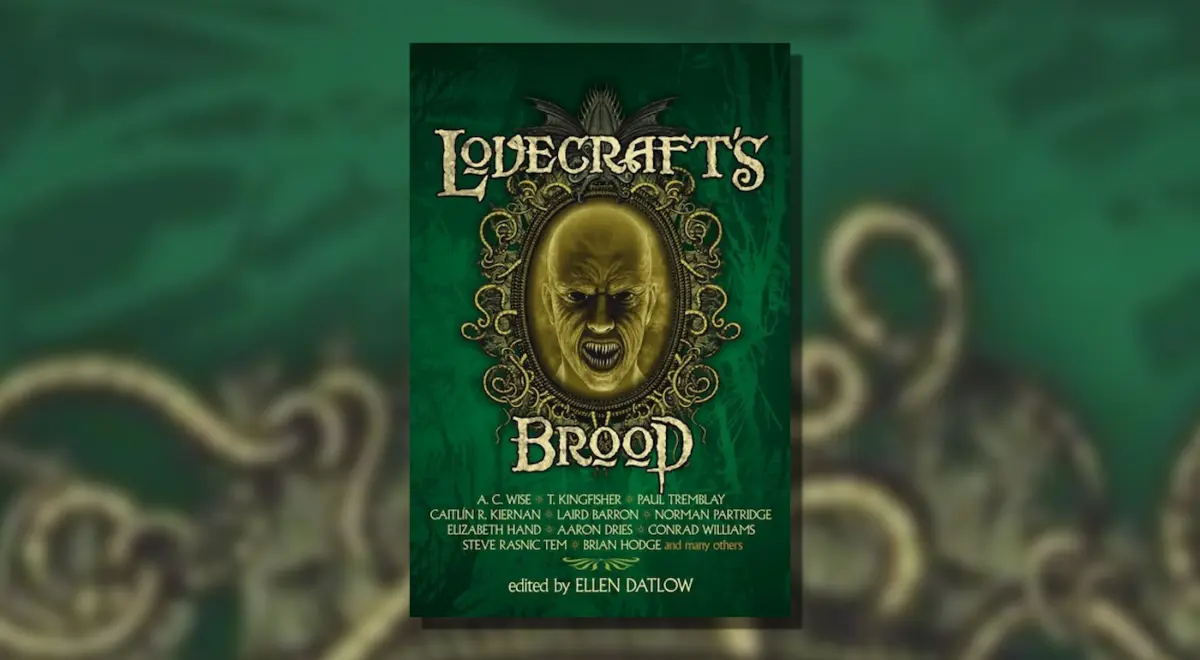
In the realm of contemporary weird fiction and cosmic horror, few texts achieve the chilling, visceral resonance of Brian Hodge’s short story "One Possible Shape of Things to Come." Initially published in the 2015 anthology Eulogies III (edited by Tony Tremblay, Naci Kalanta, and Christopher Jones) and subsequently elevated to canonical status via its 2026 inclusion in Ellen Datlow’s prestigious retrospective Lovecraft’s Brood, Hodge’s narrative reimagines the architectural dread first conceptualized by Frank Belknap Long in his 1929 classic "The Hounds of Tindalos."
The narrative operates on a premise that is both deceptively simple and existentially devastating: that the sharp, converging angles of human architecture are not merely structural necessities, but interdimensional thresholds. Through these geometric choke points, a hostile, higher-dimensional intelligence systematically culls the human race by targeting its most vulnerable demographic—children.
This review-analysis explores the socio-architectural horror, psychological devastation, and scientific desperation depicted in Hodge’s work. By examining the domestic tragedy of the protagonist, Brook, alongside broader societal collapses, this report contextualizes "One Possible Shape of Things to Come" as a masterclass in modern cosmic horror, highlighting how the erosion of structural safety dismantles the foundational promises of modern civilization.
Read Also
Detailed Chronology: The Unfolding of the Architectural Apocalypse
Phase I: The Infiltration and the First Casualties
The narrative centers on Brook, a man who travels to California to visit his sister Meredith, his brother-in-law Ethan, and his five-year-old nephew, Micah. Brook views himself as the archetypal "cool uncle"—a sanctuary of unsavory adult conversations and unconditional indulgence for a child navigating the rigid structures of early childhood.
However, this domestic bliss is abruptly shattered on the second night of Brook’s visit. Awakened by Meredith, the adults discover Micah out of bed, standing rigidly and facing blindly into a bedroom corner. Awakened from his trance, the boy speaks in slow, hesitant tones, confessing that he "has been bad" and that "They" told him to wait in the corner to be punished.
While the family dismisses the event as a bizarre, isolated anomaly, the reality is far more pervasive. Unknown to them, this exact psychological and physical compulsion is manifesting simultaneously in children across the globe.
Phase II: The Escalation and the Birth of STODS
On subsequent nights, Micah’s compulsion deepens despite the adults’ best efforts to intervene. Brook, standing vigil in the suspected corner after moving the boy downstairs, experiences a terrifying perceptual shift:
The ceiling corner starts to emit light, as if each of its three axes keep going on the other side of the wall and beyond the ceiling, continuing into another dimension.
The corner bubbles outward, revealing a hexagon-faceted eye that evaluates Brook before vanishing. Despite moving Micah to his parents’ room on the third night, a tragic keening wakes the household. Micah has slipped away once more to a corner, where Meredith cradles his lifeless body.
In the wake of the funeral, the global scale of the phenomenon becomes undeniable. The contagion of unexplained fatalities tied to angular spaces—dubbed Sudden Toddler Death Syndrome (STODS)—wipes out infants and grade-schoolers alike. Skeptics who blame viruses or domestic abuse watch helplessly as their own children succumb.
Phase III: The Truth of "Black Lightning" and Global Adaptation
The mystery is definitively solved when a nanny-cam records the death of a young girl named Heather Myers. Slow-motion replay captures a pulse of unilluminated energy—dubbed "black lightning"—emanating from a ceiling corner and striking the top of her skull.
Theoretical physicists scramble to explain the phenomenon to a panicked populace: collisions in the "foam" of space-time have brought radically different laws of matter and energy into convergence. The higher-dimensional intruders realize that to eradicate humanity without engaging in a direct war with adults, they need only methodically slaughter the young.
As society reorganizes around this existential threat, humanity splits into desperate survival strategies. People abandon traditional architecture for amoeboid, curve-based dome tents, while homeowners painstakingly plaster over interior corners. During this holocaust, Brook finds a second chance at domestic love with Elsa and her seven-year-old daughter, Jodi. Yet, the daily existence of this reconstituted family is consumed by a relentless, paranoid battle against missed angles and structural breaches.
Phase IV: The Fermilab Intervention and the Final Convergence
A fragile glimmer of hope emerges when scientists devise a counter-offensive utilizing the Fermilab Main Injector particle accelerator—a facility deliberately chosen for its circular, non-angular design. Brook, Elsa, and Jodi watch the live-feed attempt, which ends in catastrophic silence. Subsequent footage reveals the complete collapse of the accelerator ring into an abyss—a door slammed so hard against an invader that it permanently widens the frame.
The end arrives swiftly at dawn. Jodi summons her parents to witness a sky tinged in deep lavender—the true chromatic signature of the black lightning. The force sweeps across the globe, simultaneously terminating all biological life and geometrically restructuring inanimate matter. The story closes on Brook pulling his family close, contemplating a reality where God is no longer a metaphor, but a polygon remaking the world entirely in His own image.
Supporting Context & Metrics: The Inversion of Child Mortality
To fully appreciate the psychological horror of Hodge’s narrative, one must examine the real-world statistical backdrop of child mortality, as highlighted in academic commentary surrounding the text.
| Historical Era / Milestone | Child Mortality Rate (Under Age 15) | Primary Contributing Factors to Decline |
|—————————-|——————————–5|—————————————–|
| Pre-Industrial Era | ~50% of all children | Infectious disease, malnutrition, lack of sanitation. |
| 20th Century Revolution | Sharp exponential decrease | Introduction of vaccines, antibiotics, and surgical advances. |
| Modern Era (Pre-Apocalypse)| Historic lows | "Back to Sleep" campaigns, improved vector control, nutritional security. |
| The Hodge Scenario (STODS) | Rapid reversal to 100% | Higher-dimensional geometric predation targeting vulnerable age groups. |
The terror of STODS lies in its complete subversion of the modern safety contract. For generations, advanced societies have operated on the premise that childhood is a protected sanctuary safeguarded by medical science, sanitation, and law. Hodge’s entities weaponize parental protection mechanisms, rendering vaccines, childproofing, and home security utterly obsolete. By exploiting the inherent architectural reality of human civilization—which is fundamentally built on right angles—the invaders turn our very homes into abattoirs.
Official Statements & Expert Analysis
Literary critics and commentators within the speculative fiction community have widely praised "One Possible Shape of Things to Come" for its modernization of classic cosmic horror tropes.
- On the Nature of the Antagonists: Unlike traditional cosmic threats driven by ancient malice or sheer indifference, Hodge’s entities exhibit a calculated, targeted cruelty. Commentators note that the implementation of preliminary psychological torture—forcing children to face corners and await arbitrary "punishment"—inflicts a distinct moral injury upon the victims and their families.
- Architectural Vulnerability: Reviewers draw direct parallels between Hodge’s work and Frank Belknap Long’s Hounds of Tindalos, noting that while Long warned readers about the dangers of angles, Hodge successfully operationalizes this fear within a modern domestic framework. The transition from traditional square housing to amoeboid, curve-based living reflects humanity’s desperate, futile attempt to unlearn millennia of civilizational development.
- The Thematic Weight of Hope and Futility: The inclusion of the Fermilab sequence serves as a crucial narrative pivot. Representing the pinnacle of human scientific inquiry and circular engineering, the particle accelerator’s catastrophic failure underscores the absolute powerlessness of humanity against higher-dimensional physics.
Future Outlook: Living in the Shadow of the Polygon
Brian Hodge’s "One Possible Shape of Things to Come" leaves readers with an enduring, deeply unsettling question: What happens when the universe itself turns out to be structurally incompatible with human life?
As speculative fiction continues to explore the intersection of domestic vulnerability and cosmic scale, stories like Hodge’s serve as a stark reminder of the fragility of human existence. The transition from a world governed by biological vulnerabilities to one dictated by higher-dimensional geometry marks a definitive shift in contemporary horror.
In a reality where every corner hides an inescapable threshold, the human impulse to build, structure, and domesticate our environment becomes our greatest liability. As the lavender lightning sweeps across the landscape, humanity is forced to confront the ultimate, horrifying realization: our architecture was never a shelter; it was an invitation.




Comments
Facebook App ID not configured. Please add it in the Customizer.