
Value: Why Philosophers Must Learn to Diagnose Their Arguments
Executive Overview
In the disciplined landscape of academic philosophy, taking ideas at face value is traditionally held as a sacred duty. While a declaration that "life has no ultimate meaning" might trigger an immediate wellness check or a call to human resources in a corporate office, it is met in a philosophy seminar with rigorous inquiry: What do you mean by ultimate? Prove it.
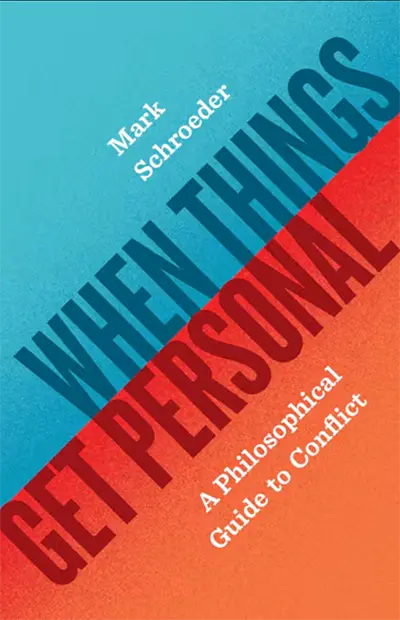
However, a provocative new thesis from University of Southern California philosophy professor Mark Schroeder suggests that this uncompromising commitment to literalism has run its course. Drawing from his latest book, When Things Get Personal: a Philosophical Guide to Conflict, Schroeder argues that philosophers are profoundly resistant to "diagnosis"—the practice of identifying the underlying psychological, environmental, or accidental origins of an argument rather than debating its explicit logic.
Read Also
While philosophy has historically functioned as a safe harbor where ideas can be scrutinized in a vacuum—insulated from the personal biases, professional backgrounds, and psychological quirks of their creators—Schroeder contends that this hyper-literal approach frequently leads to a worse understanding of what is actually happening in a debate. By exploring the delicate balance between signal and noise, Schroeder challenges the discipline to adopt a more nuanced approach to interpersonal and intellectual conflict, mirroring the messy realities of ordinary human relationships.
Detailed Chronology: The Evolution of Philosophical Diagnosis
To understand Schroeder’s thesis, one must first trace how philosophy has traditionally guarded its borders against external critique. The aversion to psychological or sociological diagnosis is deeply embedded in the historical canon of the discipline.
The Classical Precedent
In Book 1 of Plato’s Republic, the sophist Thrasymachus launches a blistering, cynical attack on justice, arguing that it is merely the interest of the stronger. Rather than dismissing Thrasymachus as a belligerent outsider whose views are the byproduct of a disagreeable personality or a flawed character—what Schroeder defines as an external diagnosis—Socrates’ interlocutors, Glaucon and Adeimantus, insist on taking the challenge head-on. They separate the argument from the arguer, establishing a precedent that has defined philosophical inquiry for millennia: ideas must be judged purely on their internal merits.
The Modern Academic Silo
Over the centuries, this tradition crystallized into the modern academic norm. Scholars select philosophy precisely because it offers an oasis from the reductive identity-based dismissals common in other humanities fields. In literary theory or sociology, an argument might be swiftly categorized as a manifestation of class privilege, patriarchal ideology, or cultural hegemony. In contrast, philosophy prides itself on a culture where a colleague can present a radical thesis on skepticism, and responses will target premises rather than mental health or personal background.
The Case of Sam: When Diagnosis Succeeds
To illustrate the transformative power of diagnosis when it functions correctly, Schroeder shares the real-world (though pseudonymously protected) story of a former student named Sam.

During his first semester away at college, Sam became cripplingly obsessed with the epistemological problem of skepticism. While many students grapple with Descartes’ evil demon intellectually, Sam was genuinely tormented by whether his surrounding environment—brick buildings, skateboards, and palm trees—was an elaborate illusion. Standard philosophical pushback from faculty failed to ease his existential terror.
It was only when Sam returned home for the holidays and confessed his torment to his mother that a breakthrough occurred. Her response was swift and unphilosophical: "Sam, you’re letting your OCD get control of you again!"
Armed with this external diagnosis, Sam saw his freshman-year anxieties in a completely new light. Recognizing his obsessive-compulsive disorder as the true source of his existential dread allowed him to screen off the nagging voice demanding proof against radical deception. The diagnosis acted as a filter, separating the psychological noise from legitimate intellectual curiosity. Sam ultimately returned to his studies with renewed focus—and, ironically, went on to major in philosophy.
Supporting Context & Metrics: Signal, Noise, and "Discord"
Schroeder’s exploration moves beyond individual anecdotes to examine the broader mechanics of human communication. We are all, as he describes, "imperfectly embodied beings." Our thoughts and arguments are inevitably influenced by an array of non-rational factors: fatigue, hunger, hormones, professional training, attachment styles, and past ideological commitments.
[Human Expression] ---> [Imperfect Embodiment: Nerves, Training, Bias, OCD] ---> [Signal vs. Noise Filtering] ---> [Philosophical Interpretation]The Signal-to-Noise Ratio
In everyday life, we instinctively use diagnosis to preserve relationships. When a partner snaps rudely after a long day, we do not automatically initiate a fundamental inquiry into the health of the relationship; we attribute the outburst to exhaustion or stress. We distinguish between the signal (genuine relational information) and the noise (transient physiological states).
Philosophical texts and arguments are subject to these exact same distortions. A philosopher who earned a PhD at Harvard in the 1960s carries different theoretical baggage than one who graduated from USC in the 2010s. One may reflexively frame all ethical dilemmas in terms of "reasons," while another instinctively defaults to the language of "value."
The Problem of Discord
However, implementing diagnosis is fraught with hazard. Knowing when an argument is shaped by incidental factors rather than core logical intent requires fine-tuned judgment. When two scholars disagree on whether a specific text should be interpreted through its literal claims or its underlying psychological and institutional drivers, a communicative mismatch occurs. Schroeder terms this state discord.
Unlike private disagreements, philosophical debates take place in the public square of academic journals and monographs. When a researcher publicly diagnoses a peer’s argument—suggesting, for instance, that a rival’s complex metaphysical framework is merely an artifact of their graduate school indoctrination—it can easily be perceived as condescending, dismissive, or intellectually dishonest.

Official Statements and Core Insights
Schroeder’s arguments challenge contemporary epistemological assumptions by drawing heavily on foundational philosophy of mind and action, notably building upon P.F. Strawson’s classic lecture, Freedom and Resentment.
“Over and over again I see philosophers go so far to take everything at face value that it leads them to a worse understanding of what is actually going on in an argument.”
— Mark Schroeder, Professor of Philosophy, University of Southern California
According to Schroeder, Strawson demonstrated that external diagnoses—such as recognizing that someone is acting under the influence of mental illness, extreme youth, or coercion—do not merely dissolve our inclination to feel resentment; they fundamentally alter how we relate to them, softening our demands for respect, admiration, and love.
Schroeder expands this insight to intellectual engagement:
- The Danger of Literalism: By refusing to look behind the curtain of an argument, philosophers frequently waste countless hours debating formulations that are merely symptomatic of professional habits, stylistic quirks, or localized academic conditioning.
- The Necessity of Balance: Just as failing to listen due to premature diagnosis is intellectually catastrophic, taking every flawed, reactive, or idiosyncratic argument at face value ensures a superficial understanding of human thought.
Future Outlook: A New Paradigm for Philosophical Conflict
As academic philosophy grapples with increasing specialization, polarization, and interdisciplinary cross-pollination, Schroeder’s work signals a necessary pivot in methodological self-awareness.
Moving forward, the discipline faces a critical challenge: how to integrate diagnostic tools into scholarly critique without devolving into ad hominem reductionism. To achieve this, the philosophical community must cultivate what Schroeder calls intellectual grace.
- Adopting Contextual Awareness: Scholars must become more willing to acknowledge that the best interpretation of a text or argument may occasionally require looking past its literal phrasing to diagnose its true operational mechanics.
- Accepting Fallibility: Because diagnosis is an art rather than an exact science, philosophers must apply these tools with humility, recognizing that their hypotheses about an opponent’s underlying motivations or theoretical baggage may be mistaken.
- Bridging the Gap: By accepting that philosophers are people too—flawed, embodied, and shaped by forces far beyond pure abstract reasoning—the field can move past a sterile literalism and foster a deeper, more psychologically honest engagement with the complexities of human thought.
Ultimately, When Things Get Personal suggests that the health of philosophy depends not on pretending its practitioners are disembodied intellects operating in a vacuum, but on developing the nuanced judgment required to navigate the messy, intertwined realities of human conflict and intellectual life.




Comments
Facebook App ID not configured. Please add it in the Customizer.