
Executive Overview
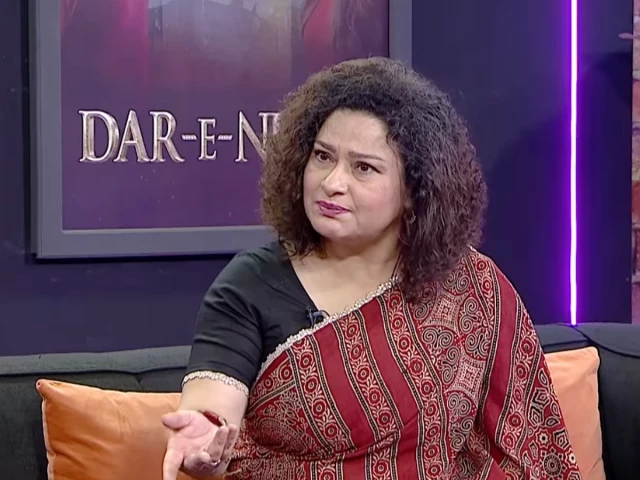
In contemporary television, few performers command the narrative and emotional gravity of veteran actor Sania Saeed. Renowned for her nuanced portrayals across theatre, television, and film, Saeed has long championed stories that interrogate the intricate architecture of human relationships, systemic societal pressures, and the unyielding weight of generational trauma. In a recent, wide-ranging interview, the acclaimed star dissected her role as Khushbakht in the hit drama series Dar-e-Nijaat, using the platform to unpack the profound intersections of parenting, moral formation, gender double standards, and the evolution of storytelling in South Asian media.
At the core of Saeed’s critique is a fundamental truth often overlooked in mainstream media: values are rarely absorbed through didactic instruction; rather, they are forged in the crucible of everyday behavior and lived example. By examining the trajectories of characters like Khushbakht, Abubakr, Zaryab, and Zamil, Saeed offered a masterclass in how television can either perpetuate toxic societal loops or serve as a mirror for radical empathy and reform. Furthermore, her reflections touched upon the insidious nature of female impostor syndrome, the normalization of basic human decency in men versus the taken-for-granted sacrifices of women, and the urgent necessity for modern scripts to stop punishing female ambition and autonomy.
This report provides an in-depth exploration of Saeed’s insights, weaving together her character analyses, her socio-cultural commentaries on gender perceptions, and her broader vision for the future of progressive narrative arts in Pakistan.
Read Also
Detailed Chronology: Unpacking Dar-e-Nijaat and Character Dynamics
Saeed’s reflections were anchored primarily in her immersive experience bringing the character of Khushbakht to life in Dar-e-Nijaat. As a narrative vehicle, Khushbakht represents a masterclass in resilience—a woman who weathered profound personal hardships, battled illness, navigated prolonged isolation, and successfully raised her son as a single mother. Yet, what makes Khushbakht stand out in the landscape of contemporary television is not merely her endurance, but her conscious, revolutionary choice to halt the transmission of her suffering.
The Anatomy of Resilience: Breaking Intergenerational Chains
According to Saeed, Khushbakht’s defining attribute is her refusal to let her historical pain dictate the emotional reality of the next generation. In many traditional narratives, characters who suffer abuse, neglect, or hardship are written as bitter vessels, passing down the very trauma they endured to their children and daughters-in-law. Khushbakht subverts this cliché entirely.
"Khushbakht’s most important thought is that she breaks the cycle of the trauma being passed on across generations," Saeed noted during the interview. "She was like, ‘I went through it but my daughter-in-law will not.’ She chooses not to spill the pain over to the next generation."
This deliberate choice requires immense psychological fortitude. Khushbakht acknowledges that the hardships she experienced should not become the involuntary inheritance of those who follow her. By shielding her daughter-in-law from the systemic cruelty she once faced, Khushbakht models a form of emotional intelligence that remains rare both on-screen and in real-world family dynamics.
Deconstructing Abubakr: Normalizing Decency vs. Creating "Angels"
Moving beyond Khushbakht, the conversation shifted to the character of Abubakr, whose altruism and moral compass have garnered widespread acclaim from viewers. However, Saeed offered a tempered, highly analytical view of this praise, cautioning against the pedestalizing of male decency.
While acknowledging that Abubakr’s characterization carried a degree of dramatization, Saeed firmly rejected the label of him being an "angel."
"Abubakr is not an angel, though. We have dramatised it a bit. I feel that he is a decent human being just how men should be. If you call him an angel, you take away from that normalisation," she asserted.
Saeed highlighted a striking systemic double standard in how society—and by extension, media—consumes morality based on gender. She pointed out that countless women exhibit the very same selflessness, empathy, and care embodied by Abubakr every single day, yet their actions are routinely dismissed as mundane or expected.
"This is becoming more popular just because he is a man," Saeed observed. "I know a lot of women just like him. They have basically written the story of a girl and given it to a guy… You have taken for granted good women and that does not strike you as much as a man doing such good does."
The Nuance of Zaryab: Rejecting Binary Morality
Television dramas frequently rely on lazy binaries: characters are either paragons of virtue or unmitigated villains. Saeed challenged this reductive framing when discussing the character of Zaryab, who displays classist tendencies and materialistic values inherited from her family.
Despite these behavioral flaws, Saeed refused to categorize Zaryab as an inherently "bad person." Instead, she contextualized Zaryab’s actions through the lens of parental modeling and psychological conditioning.
"Zaryab saw her parents be materialistic. However, she is not a bad person," Saeed explained. "Maybe in behaviour she was classist but she was never a bad woman. She was committed to one man since her childhood and she tried to maintain it and that is why she crossed the line. She was not all over the place."
This reading underscores Saeed’s demand for multidimensional female characters—women whose flaws do not strip them of their core humanity, and whose romantic or personal obsessions stem from psychological conditioning rather than inherent malice.
Supporting Context & Metrics: The Mechanics of Parental Influence
Beyond specific plot points, the heart of Saeed’s commentary centered on a universal sociological reality: the profound, often invisible influence of parents on the psychological and moral architecture of children.
Actions Speak Louder Than Precepts
Saeed argued passionately that values are never successfully transmitted merely through verbal instruction or moral lecturing. Children do not become kind, empathetic, or ethical because they are told to; they absorb these traits by observing how adults navigate the complexities of daily existence.
"Parents’ set of values is what they practice, how present they are," Saeed emphasized.
To illustrate this, she contrasted the upbringing of various characters within the narrative ecosystem:
- Zaryab: Exhibited materialism and classism because those were the behavioral templates set by her chronically absent or misaligned parents.
- Zamil: Suffered in silence because his parents were entirely disconnected from his emotional reality, remaining unaware of his internal struggles.
- Abubakr: Developed a natural inclination toward charity, social work, and spiritual mindfulness simply by watching his mother embody those principles in her daily routine. "It became a part of his daily life to be kind and give or share with people," Saeed noted.
This comparative analysis serves as a powerful reminder to audiences and creators alike: the domestic environment functions as an ecosystem of observation. Children internalize the unsaid subtext of parental behavior far more deeply than any articulated rulebook.
The Weight of Internalized Societal Rejection
Saeed also shed light on the psychological phenomenon of impostor syndrome as experienced by women. She articulated how societal conditioning forces women to perpetually question their worth, achievements, and moral standing.
This self-doubt is not confined to professional or financial spheres; it permeates every facet of a woman’s identity. Women frequently grapple with whether they are adequately fulfilling the roles of wives, mothers, friends, and siblings, driven by an external gaze that is rarely satisfied.
Saeed tied this directly back to Khushbakht, who, even after fighting courageously for her personal autonomy and choices, expressed an underlying anxiety that her son might end up with a woman just like herself. For Saeed, this psychological residue highlights the agonizing difficulty of shedding historical trauma.
"It is very hard to let go of your past," she reflected, noting that the persistent whisper—“your society is not accepting you”—remains lodged in the psyche long after physical liberation has been achieved.
Official Statements & Industry Perspectives
Saeed’s career spans decades of transformative work across television, theatre, and film, positioning her as an authoritative voice on the cultural impact of media. Known for her fearless commitment to layered characters and socially resonant storytelling—with standout performances in acclaimed projects such as Aap Ki Izzat, Dil Manay Na, and Sang-e-Mah—her perspective on the direction of Pakistan’s entertainment industry carries significant weight.
In her concluding remarks, Saeed issued a direct challenge to writers, directors, and producers regarding how female agency and narrative consequences are structured. She critiqued the persistent trope that demands absolute female subjugation as a prerequisite for narrative redemption or emotional fulfillment.
"There are small things such as the fact that many women should be shown that if they make decisions for themselves, they could be wrong. Until they do not fully submit, it is shown that they won’t get love," she observed critically.
She advocated for a maturation in how ambitious, intelligent women are written on screen:
- The Right to Err: Intelligent and ambitious women must be allowed to make mistakes without those mistakes invalidating their entire moral character or autonomy.
- Guidance Over Submission: Rather than being forced into complete submission to earn affection, flawed female characters should have access to mentorship, mutual growth, and supportive networks that help guide their evolution.
- Decoupling Conformity from Happiness: A woman’s ultimate narrative reward should not be tied to her willingness to conform to patriarchal expectations, but rather to her internal growth and self-actualization.
Future Outlook: The Evolution of Storytelling in South Asian Media
As the entertainment landscape continues to expand across digital and traditional platforms, the imperative for progressive, psychologically grounded storytelling has never been more urgent. Sania Saeed’s analysis of Dar-e-Nijaat serves as both a critique of current media shortcomings and a blueprint for future creative endeavors.
The trajectory moving forward demands that writers move past simplistic hero-villain binaries and confront the messy, beautiful complexities of human behavior. By acknowledging that trauma can be actively broken rather than passively inherited, television can play an active, therapeutic role in shifting cultural paradigms. Furthermore, by dismantling gender double standards—such as celebrating male decency while ignoring the foundational sacrifices of women—producers can foster a more equitable and authentic reflection of society.
Ultimately, Saeed’s insights remind us that art holds up a mirror to humanity not to showcase perfection, but to illuminate the arduous, courageous journey toward self-awareness, empathy, and emotional liberation. As long as artists of her caliber continue to interrogate the narratives we consume, Pakistani television retains the vital potential to not only entertain, but to heal.




Comments
Facebook App ID not configured. Please add it in the Customizer.