
Executive Overview
In the high-stakes, fast-paced world of contemporary Bollywood, the physical and mental toll of filmmaking has once again taken center stage. However, for beloved Indian cinema icon Preity Zinta, stepping back onto the soundstages of Mumbai was less about conforming to industry norms and more about executing a meticulously timed logistical operation. During the star-studded trailer launch of her upcoming spy-comedy film Vibe in Mumbai on Wednesday, Zinta offered a candid, behind-the-scenes look at the extreme demands of her latest project.
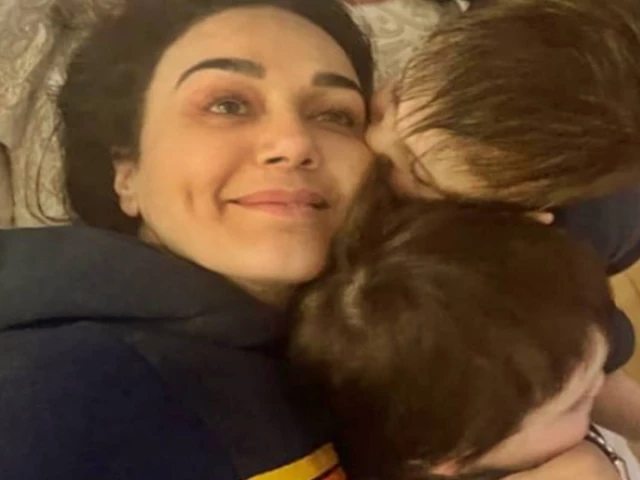
The actress revealed that she voluntarily subjected herself to grueling, relentless 18-hour working shifts during production. Far from being forced into a punishing schedule by demanding producers, Zinta’s motivations were deeply personal. As a mother of young twins based in the United States, her primary objective was to compress a sprawling production workload into the tightest window possible, allowing her to swiftly return home to her family in America.
Zinta’s revelations arrive at a particularly sensitive moment for the Hindi film industry. Her comments intersect directly with a broader, increasingly volatile national conversation regarding actor well-being, demanding production schedules, and the elusive pursuit of work-life balance—a discourse recently galvanized by fellow superstar Deepika Padukone. Yet, for Zinta, this intense chapter of her career represents a calculated compromise: a triumphant return to the art form that defined her youth, strictly subordinated to her ultimate life milestone—motherhood.
Read Also
Marking her second cinematic venture following a self-imposed, eight-year hiatus from the industry—which she initially broke with Batwara 1947—Vibe represents a major professional milestone. Directed and produced by Kunal Kemmu, and featuring a dynamic ensemble cast including Sparsh Shrivastava and Vanshika Dhir, the spy-comedy is slated for a theatrical release on September 18. As Zinta continues to navigate her dual life as a bi-continental mother and an elite cinematic leading lady, her recent statements illuminate the quiet sacrifices, profound personal adjustments, and fierce maternal instincts powering the modern Bollywood comeback.
Detailed Chronology: The Making of Vibe and the Race Against the Clock
The Logistics of a Compressed Schedule
When Preity Zinta signed on to star in Vibe, she understood that returning to active production after nearly a decade away would require immense physical stamina. However, the exact parameters of the shoot demanded an unprecedented level of endurance. Speaking candidly to the press during the film’s promotional rollout in Mumbai, Zinta detailed the sheer density of her daily routine on set.
"Every day we had very long shoots," Zinta explained to Indian media outlets on Wednesday. "So, each to his own, and of course, the reason I was working 18 hours is that I wanted to finish my work as soon as I could and go back to America to be with my kids."
For a production of this scale—encompassing high-octane action sequences, intricate comedic timing, and complex narrative choreography—an 18-hour workday is an extreme anomaly, even by the demanding standards of commercial cinema. Zinta noted that her windows on the subcontinent were deliberately finite. Operating on a strict itinerary, she restricted her time in India to a concentrated 30-to-40-day block. To achieve in a single month what typically requires three to four months of principal photography, the actress chose to fast-track her scenes, eliminating any downtime between setups.
Sacrificing Social Ties for Family Priorities
The intensity of Zinta’s daily schedule left virtually no room for personal leisure or industry networking. In an industry where socializing, promotional dinners, and networking are traditionally viewed as essential components of an actor’s professional footprint, Zinta adopted a monk-like level of discipline.
"I made no social plans during the filming process," Zinta noted. "It’s not always that everyone is laughing on set. You want to get the job done. There was a lot of action. There were many other variables. Sometimes it was raining. Sometimes you were sick. So, keeping all that in mind, my whole thing was, ‘I don’t mind doing this,’ because I’m coming to India and I’m here for 30–40 days."
This laser-focused approach allowed the production team to maximize natural lighting, weather windows, and studio bookings without experiencing delays tied to their leading lady’s availability. While the physical toll of night shoots, stunt rehearsals, and volatile weather conditions—ranging from unexpected downpours to sweltering Mumbai humidity—weighed heavily on the cast and crew, Zinta’s psychological anchor remained firmly fixed across the Atlantic Ocean. By converting her professional obligations into a high-intensity sprint, she successfully mitigated the emotional strain of long-distance motherhood, ensuring that her absence from her children was measured in weeks rather than seasons.
Supporting Context & Metrics: The Evolving Bollywood Work-Life Paradigm
The National Discourse on Working Hours
Zinta’s voluntary endurance of 18-hour shifts has unexpectedly poured fuel on a raging fire within the contemporary Indian film fraternity. Over the past several months, the Indian entertainment press and digital forums have been dominated by intense debates regarding the physical and psychological toll placed upon actors and crew members by grueling production schedules.
This industry-wide introspection was catalyzed in large part by reports surrounding Bollywood powerhouse Deepika Padukone, who reportedly advocated for standardized working hours, strict shift caps, and a healthier corporate-style approach to film production. For decades, the Hindi film industry—colloquially known as Bollywood—has operated on informal, deeply entrenched traditions of open-ended shooting schedules, frequently pushing cast and crew members past the 14-hour mark without adequate rest periods.
Contrast in Perspectives: Personal Choice vs. Systemic Demand
The juxtaposition between Padukone’s systemic critique and Zinta’s personal narrative highlights a nuanced schism within the industry regarding how work-life balance should be pursued. While Padukone’s stance addresses structural reform—demanding that production houses respect baseline human limits and prevent actor burnout industry-wide—Zinta’s approach highlights individual agency.
For Zinta, the punishing 18-hour shift was not a symptom of an exploitative studio system, but rather an empowering tool of self-determination. By willingly trading sleep, social interaction, and leisure for accelerated production metrics, Zinta leveraged her star power to dictate the terms of her engagement. She chose to burn the candle at both ends not because a producer demanded it, but because she refused to let her professional commitments compromise her presence as a mother.
This dynamic opens up critical questions regarding gender, agency, and career longevity in modern cinema. As more female stars return to the industry post-motherhood—navigating international flights, family relocations, and complex childcare arrangements—the demand for flexible, efficient, and modern production pipelines has never been more urgent. Zinta’s experience serves as both a testament to individual grit and an implicit critique of traditional scheduling inefficiencies that plague conventional filmmaking models.
Official Statements & Industry Reactions
Preity Zinta on Motherhood and Career Realignment
The philosophy guiding Zinta’s return to the cinematic landscape has been consistent, articulate, and deeply reflective. When she initially broke her eight-year cinematic silence to star in Batwara 1947, she spoke at length about how the birth of her twins fundamentally rewired her value system.
"However big my career milestones might be, my greatest milestone was to have children and a family," Zinta remarked during the promotional campaign for Batwara 1947.
This sentiment sets the proper context for her approach to Vibe. Where a younger Zinta—famed for her effervescent, high-energy performances in turn-of-the-millennium classics like Kal Ho Naa Ho, Dil Chahta Hai, and Veer-Zaara—might have immersed herself entirely in the social and promotional fabric of Bollywood, the mature Zinta operates with ruthless logistical clarity. Her commitment to her craft remains absolute, but it is strictly bounded by her maternal commitments to her husband, American financial analyst Gene Goodenough, and their twins, Jai and Gia, whom the couple welcomed via surrogacy in 2016.
The Creative Team Behind Vibe
The collaborative dynamic on the set of Vibe appears to have accommodated Zinta’s high-velocity workflow. Directed and produced by actor-turned-filmmaker Kunal Kemmu, the spy-comedy genre requires a delicate balance of high-stakes physical action and sharp, rapid-fire comedic timing. Kemmu, known for his versatile performances, has cultivated a collaborative on-set atmosphere that allowed his lead actress to execute her intense schedule effectively.
Co-starring alongside emerging talents Sparsh Shrivastava and Vanshika Dhir, Zinta’s presence provides both a nostalgic anchor and a modern comedic spark. Industry insiders have praised the production’s ability to maintain high morale despite the condensed shooting timeline, attributing much of the project’s disciplined execution to Zinta’s uncompromising professionalism and clear communication of her scheduling boundaries.
Future Outlook: The Road to September 18 and Beyond
Anticipation for Vibe
As the release date for Vibe approaches on September 18, public and critical anticipation is reaching a fever pitch. The film represents a fascinating cross-section of cinematic generations: combining the enduring star power and commercial goodwill of 2000s icon Preity Zinta with the fresh comedic sensibilities of director Kunal Kemmu and a vibrant young supporting cast.
Spy-comedies have historically enjoyed a warm reception at the Indian box office, provided they successfully marry intricate action set-pieces with sharp verbal wit. Early trailers for Vibe suggest a self-aware, fast-paced narrative that plays directly to Zinta’s strengths as a charismatic, high-energy performer capable of anchoring complex comedic set-pieces.
The Evolution of the Bi-Continental Star
Looking beyond the theatrical run of Vibe, Preity Zinta’s career trajectory offers a compelling blueprint for modern cinematic longevity. By refusing to choose exclusively between a thriving international family life in the United States and her enduring cultural legacy in Indian cinema, she has carved out a unique bi-continental existence.
Her willingness to embrace intense, short-burst production cycles demonstrates that veteran actors can successfully dictate their own terms of re-entry into the entertainment sphere. As streaming platforms, global distribution networks, and evolving studio models continue to shrink geographical distances, Zinta’s hybrid lifestyle may well become the archetype for future generations of global artists attempting to balance the relentless demands of international stardom with the irreplaceable warmth of domestic life.
For now, all eyes are locked on September 18. Whether Vibe achieves the box office glory anticipated by its producers remains to be seen, but for Preity Zinta, the true victory has already been secured: a job thoroughly done, an artistic passion successfully honored, and a rapid ticket booked back home to the arms of her children.


Comments
Facebook App ID not configured. Please add it in the Customizer.