
Executive Overview
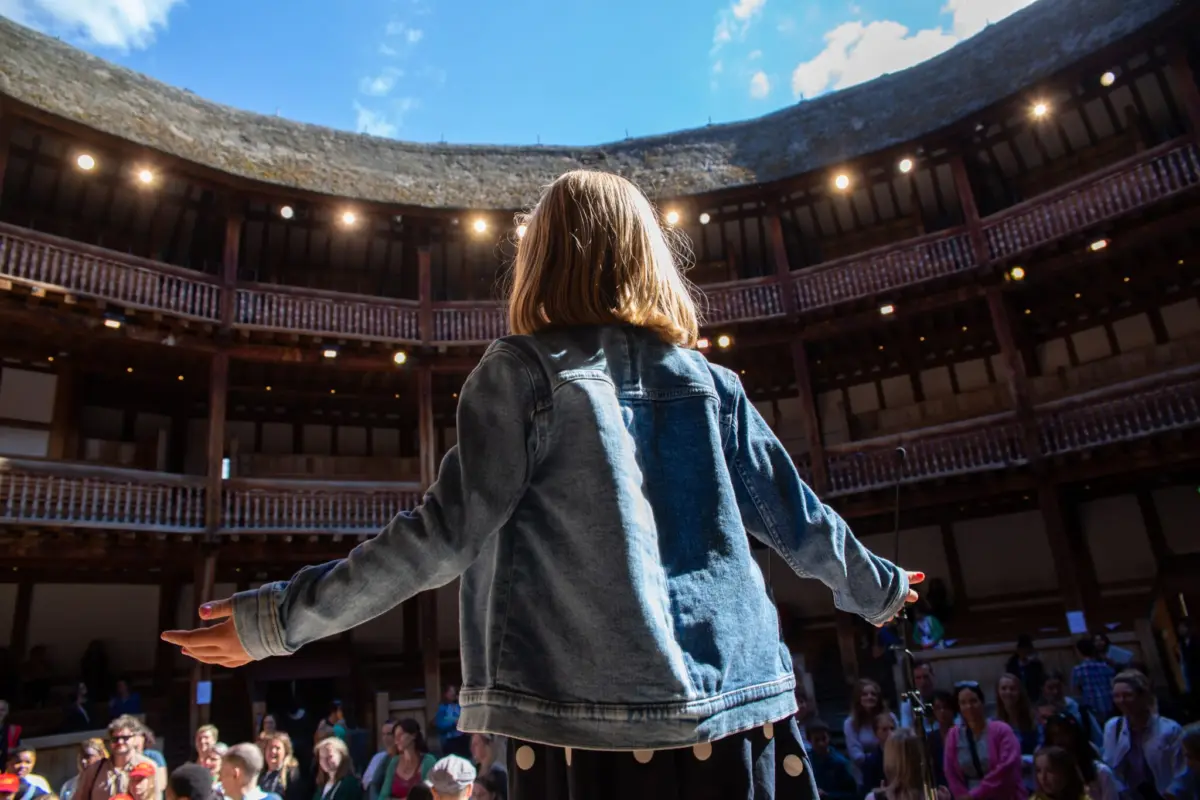
In a celebration of the spoken word that bridged international borders, contemporary issues, and centuries of literary tradition, the 2026 Poetry By Heart national poetry speaking competition reached its triumphant climax. Held on Monday, July 6, the annual Grand Finale transformed Shakespeare’s Globe in London into a vibrant nexus of youthful eloquence, theatrical spectacle, and communal joy. Over an 800-strong audience of family members, educators, peers, and luminaries of the contemporary poetry scene gathered beneath the open skies of the iconic Elizabethan playhouse to witness the culmination of a nationwide—and increasingly global—literary journey.
The statistics underlying this year’s competition speak volumes about its enduring cultural footprint and educational resonance. A staggering 146,677 pupils engaged with Poetry By Heart across the academic year, participating in classroom workshops, school-wide recitations, and rigorous regional heats. The finalists who ultimately walked the boards at the Globe represented the absolute pinnacle of this vast ocean of participants, offering interpretations of verse that were by turns harrowing, hilarious, tender, and profound.
This year’s iteration was notable not only for the caliber of the performances but also for its breadth. The event featured dedicated categories for classic poetry recitation, a vibrant "Freestyle" section celebrating diverse and inclusive performance styles, and an international track that drew competitors from Thailand and Romania. Furthermore, the day underscored the profound resilience of educational communities, handing out special institutional awards to a hospital school, a collective of Ministry of Defence schools overseas, and a primary school transforming student self-esteem through verse. Complete with guest appearances by celebrated poets, a display of authentic Elizabethan swordfighting, and fierce competition across all age groups, the 2026 Grand Finale proved that poetry remains a living, breathing art form uniquely capable of moving the human heart.
Read Also
Detailed Chronology
The journey to the Shakespeare’s Globe stage is one of incremental mastery, beginning months prior in classrooms across the United Kingdom and beyond. By the time the dust had settled on the regional qualifiers, the finalists converged on London for a day that would be etched into their memories forever.
The events of Monday, July 6, unfolded in a whirlwind of theatrical energy. The morning commenced with final technical preparations and nervous anticipation backstage at Shakespeare’s Globe—a venue that lent a tangible historical weight to the proceedings. The afternoon performance block opened to a packed auditorium of 800 spectators, creating an atmosphere that was at once intensely supportive and electrically charged.
Rather than a sterile academic exercise, the program was curated to showcase the dynamic possibilities of verse speaking. Special guest poets—including contemporary masters Alice Oswald, Kate Wakeling, and Matt Goodfellow—took to the stage to share their own work, reminding the young competitors of the living lineage of poetry to which they were contributing. In a thrilling nod to the Globe’s theatrical heritage, the afternoon also featured a live exhibition of Elizabethan swordfighting, blending the physical dynamism of Renaissance drama with the linguistic precision of the spoken word.
The heart of the afternoon, however, belonged to the competitors. The Classic Competition saw finalists deliver meticulously memorized masterworks. Oliver from South London set a high bar with a deliciously theatrical rendition of Roald Dahl’s dark comedic romp, Little Red Riding Hood and the Wolf. He was followed by Albie from Dorset, whose delivery of T.S. Eliot’s The Journey of the Magi captured the existential weight and desolate beauty of the modern classic. In the older brackets, Adam from Worcestershire delivered a chilling, visceral reading of Simon Armitage’s Remains, a poem detailing the haunting psychological fallout of conflict, while Daniella from County Durham offered a sensory, evocative performance of D.H. Lawrence’s Peach.
The competition also celebrated the educators who champion these young voices. Pip from Nottinghamshire claimed the All School Staff championship with a resonant, deeply felt reading of Marianne Moore’s Poetry.
As the afternoon transitioned into evening, the Freestyle category showcased the innovative boundaries of the spoken word. Blending rhythm, movement, and bold vocal inflection, performers like Zidaan from Birmingham—who delivered a crowd-pleasing rendition of the traditional nonsense verse There Was An Old Lady Who Swallowed A Fly—and Kairo from Kent, who offered a searing alternative take on Armitage’s Remains, captivated the audience. The day concluded with the announcement of the winners by an illustrious panel of judges, leaving the Globe ringing with applause and poetic echoes.
Supporting Context & Metrics
To fully appreciate the triumph of the 2026 Grand Finale, one must examine the robust architecture and sociological impact of the Poetry By Heart initiative. Founded in 2013 by Andrew Motion and Julie Blake, the competition was designed to encourage children and young people to explore the vast heritage of English poetry by learning poems by heart and performing them aloud. Over the past decade, it has evolved into a cornerstone of British arts education.
The metric of 146,677 participating pupils is not merely a quantitative milestone; it represents an extraordinary logistical feat involving thousands of teachers, school coordinators, and regional arts organizations. In an educational landscape frequently dominated by standardized testing and STEM-focused curricula, Poetry By Heart provides a vital sanctuary for emotional literacy, public speaking, and cultural engagement.
Crucially, the 2026 competition highlighted the adaptability of the program in the face of structural adversity. Three institutions received special commendations for bending the competition framework to serve exceptional student populations:
- Kingfisher Academy, operating within Sheffield Children’s Hospital in South Yorkshire, demonstrated how poetry can offer intellectual stimulation, emotional release, and a sense of normalcy to children undergoing long-term medical treatment.
- A collaborative network of five Ministry of Defence (MoD) schools based in Cyprus proved that distance from the British mainland is no barrier to cultural engagement, using the competition to foster a tight-knit community among service children navigating transient lifestyles.
- St Nicholas Priory CofE Primary School in Norfolk was lauded for its transformative pedagogical approach, utilizing the memorization and performance of verse to fundamentally alter disadvantaged children’s perceptions of their own intellectual and creative capabilities.
Furthermore, the international dimension of the 2026 event underscored the global reach of English-language poetry. The Poetry By Heart International track introduced a cross-cultural dialogue that enriched the entire program. Rowan, based in Thailand, captured the international Classic Competition crown with a sharp, witty delivery of Sophie Hannah’s Postcard from a Travel Snob. Meanwhile, Romanian students Sorana-Maria and David stunned the judges and audience alike with an inventive, collaborative interpretation of Emily Dickinson’s I’m Nobody! Who are you?, securing the international Freestyle prize. Maria, also from Romania, completed the international sweep for her region by winning the All School Staff category with Alberto Rios’s poignant When Giving is all we Have.
Official Statements & Judicial Perspectives
Judging a competition of this magnitude is a formidable undertaking, requiring an intimate understanding of poetic meter, emotional authenticity, and stagecraft. The 2026 judging panel comprised some of the most respected figures in contemporary British poetry and literature: Liz Berry, Jean Sprackland, Patience Agbabi, Valerie Bloom, and Glyn Maxwell.
While individual deliberations remained confidential, the collective ethos of the judging panel has long championed the idea that poetry recitation is not about elocutionary perfection or stiff theatrical imitation, but rather about an authentic encounter between the speaker, the text, and the listener.
Reflecting on the performances, the judges noted a distinct shift toward vulnerability and emotional depth among this year’s cohort. The selection of works such as Simon Armitage’s Remains by multiple finalists—including both Adam in the domestic classic bracket and Kairo in the Freestyle category—demonstrated that young people are actively engaging with complex, mature themes through poetry. Rather than shying away from difficult subject matter, the participants used the structured discipline of memorization to process and communicate profound human truths.
Similarly, the introduction of the first-ever people’s vote award in the Freestyle category marked a deliberate democratization of the evaluation process. By allowing the 800-strong audience to cast their votes for performers like Zidaan and Kairo, the competition reinforced the idea that poetry ultimately belongs to the community—to those who listen, feel, and respond in real-time.
Future Outlook
As the applause faded at Shakespeare’s Globe and the participants returned to their respective schools—whether in South London, Dorset, Cyprus, or Thailand—the conversation immediately turned toward the horizon. Poetry By Heart has established itself not as a fleeting annual event, but as a sustainable, growing cultural institution that continuously reinvents itself to meet the needs of new generations.
The success of the 2026 international track and the specialized hospital and MoD school adaptations points toward an increasingly inclusive future. Organizers have signaled their intent to expand outreach initiatives, ensuring that geographical isolation, socioeconomic barriers, or health challenges never preclude a young person from experiencing the transformative power of verse.
Plans for the 2027 competition cycle are already underway. Educational institutions, independent competitors, and international schools are encouraged to begin reviewing the extensive Poetry By Heart anthologies, which span centuries of verse from Chaucer to contemporary spoken word. As schools prepare to integrate next year’s resources into their English and drama curricula, the legacy of the 2026 finalists will serve as both an inspiration and a challenge: to speak with courage, to listen with empathy, and to keep the heartbeat of poetry alive for generations to come.
For further information on how schools, teachers, and independent learners can register for the upcoming competition cycle, stakeholders are invited to visit the official Poetry By Heart portal.

Comments
Facebook App ID not configured. Please add it in the Customizer.