
Executive Overview
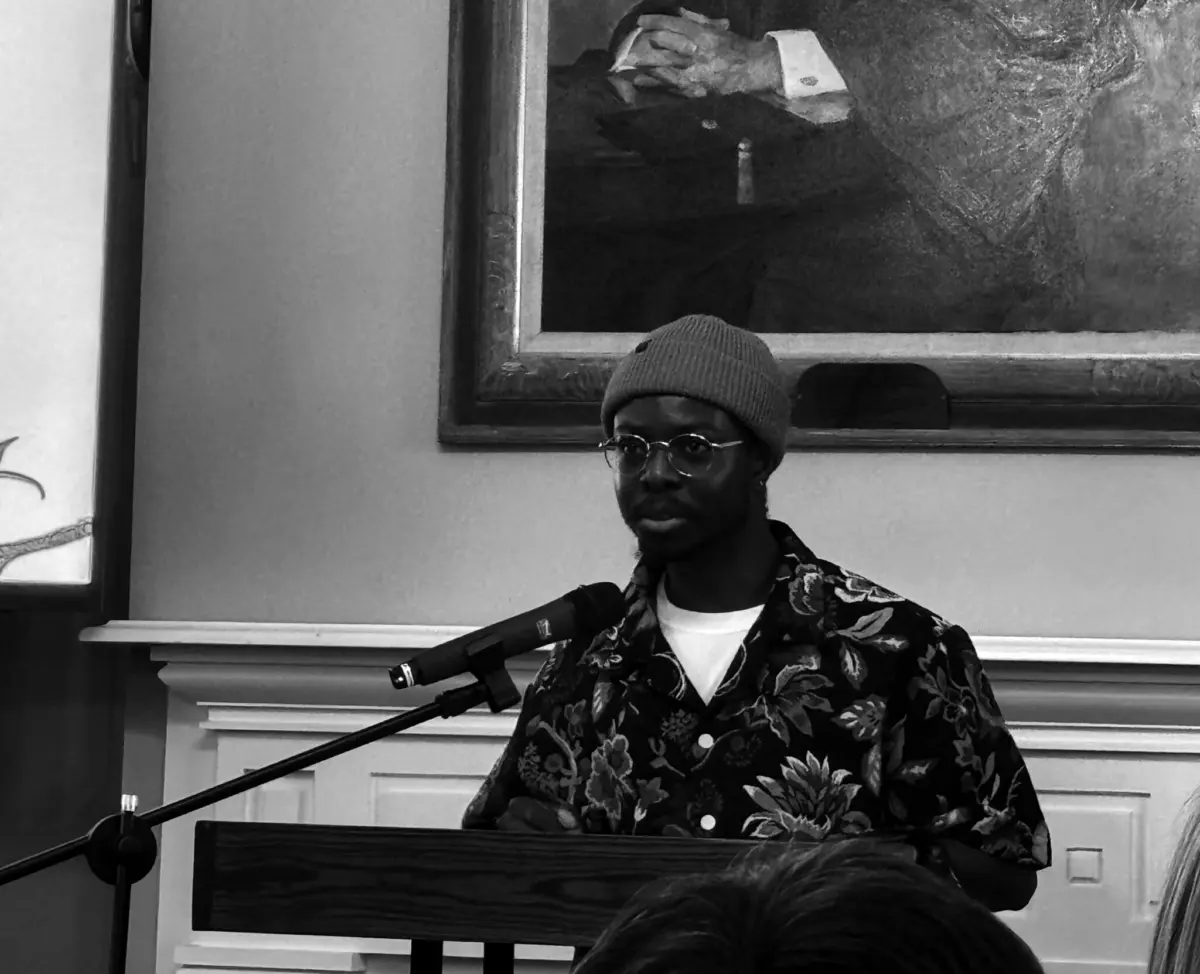
In the contemporary literary landscape, few accolades carry the specific prestige, historical weight, and career-launching potential for emerging poets quite like the Geoffrey Dearmer Prize. Administered annually by The Poetry Society—one of the world’s most dynamic literary organizations—the prize serves as a vital national and international barometer for the most compelling new voices writing in English today. In this year’s highly anticipated adjudication, the literary world turns its attention to O-Jeremiah Agbaakin, whose mesmerizing, structurally inventive poem “Embouchure” has officially been crowned the winner of the 25/26 prize cycle.
Selected by acclaimed poet and judge Joey Connolly, Agbaakin’s winning piece originally graced the pages of the Spring 2026 issue of The Poetry Review (Vol. 116, No. 1). The Geoffrey Dearmer Prize occupies a unique niche within the poetry ecosystem: it is exclusively dedicated to honoring the finest poem published within the pages of The Poetry Review during the preceding year by a writer who has yet to publish a full-length poetry collection. By shining a spotlight on uncollected talent, the award has historically served as a critical stepping stone, identifying generational talents well before they become household names in the literary community.
Agbaakin’s victory with “Embouchure” is not merely a personal triumph for the rising writer; it is a testament to the power of linguistic precision, emotional resonance, and musicality in modern verse. The poem explores complex intersections of sound, breath, memory, and physical performance, drawing on the specialized terminology of wind instrumentation to articulate deeper human truths. As poetry enthusiasts, scholars, and critics digest the announcement—unveiled in the vibrant summer pages of The Poetry Review—this comprehensive report examines the anatomy of Agbaakin’s victory, the rigorous judging process overseen by Joey Connolly, the historical significance of the Geoffrey Dearmer Prize, and what this milestone means for the future trajectory of Agbaakin’s burgeoning literary career.
Read Also
Detailed Chronology: From Page to Podium
The journey of any major literary prize is a meticulously orchestrated timeline that spans months of editorial selection, independent judging, and strategic public unveiling. To fully appreciate O-Jeremiah Agbaakin’s triumph, it is essential to trace the chronological path that led to his crowning achievement.
Phase One: Publication in The Poetry Review
The prerequisite for contention in the Geoffrey Dearmer Prize is rigorous in its own right: a poet must first break through the fiercely competitive editorial gates of The Poetry Review, widely regarded as one of the premier poetry journals in the English-speaking world. Edited with a discerning eye for craft, innovation, and intellectual rigor, the journal receives thousands of submissions from across the globe for every quarterly issue.
When Agbaakin’s poem “Embouchure” was accepted for publication, it marked an initial validation of his distinct poetic voice. Released to subscribers and bookstores in the Spring 2026 (Vol. 116, No. 1) issue, the poem immediately caught the attention of readers and critics alike. Its title, referencing the physical adjustments a brass or woodwind player makes with their lips, facial muscles, and teeth to produce sound, served as a brilliant metaphor for the careful shaping of language. The poem’s appearance in the Spring issue set the stage for its subsequent entry into the prize pool.
Phase Two: The 25/26 Adjudication Process
Following the publication cycle encompassing the four quarterly issues of The Poetry Review, the accumulated eligible poems—all authored by writers awaiting their debut full-length collections—were handed over to the designated judge for the 25/26 cycle, acclaimed poet Joey Connolly.
Connolly undertook the formidable task of reading through a diverse, high-caliber pool of uncollected work. The judging process for the Dearmer Prize requires an eye not just for momentary brilliance, but for sustained control, technical mastery, and thematic depth. While many poems offered striking imagery, Connolly found himself continually drawn back to the sonic architecture and emotional gravity of Agbaakin’s “Embouchure.” The judge’s final decision crystallized the consensus that Agbaakin’s poem represented the absolute pinnacle of uncollected poetry published in the magazine during that period.
Phase Three: The Summer Announcement and Public Reveal
The official announcement of the winner was timed to coincide with the release of the Summer 2026 issue of The Poetry Review. This traditional unveiling allows the poetry community to celebrate the winner during the heart of the literary calendar. Alongside the formal announcement, The Poetry Society published the winning poem prominently on its official web platforms, ensuring global accessibility.
To deepen the public’s engagement with the victory, journalist and interviewer Henry St Leger sat down with Agbaakin for an exclusive Q&A session. Published alongside the prize announcement on The Poetry Society’s channels, the interview granted readers a rare, behind-the-scenes look into Agbaakin’s creative process, the genesis of “Embouchure,” and his reflections on winning one of the most respected accolades in contemporary verse.
Supporting Context & Metrics: The Weight of the Geoffrey Dearmer Prize
To understand the magnitude of O-Jeremiah Agbaakin’s win, one must contextualize the history, mission, and legacy of the Geoffrey Dearmer Prize within the broader ecosystem of British and international letters.
The Legacy of Geoffrey Dearmer
Established in memory of Geoffrey Dearmer (1893–1996), a remarkable poet, World War I veteran, and long-serving literary figure who championed the work of younger writers throughout his long life, the prize carries a proud heritage. Dearmer was famously associated with The Poetry Society for decades, serving as an enthusiastic advocate for emerging talent and ensuring that fresh, unconventional voices found a welcoming platform.
Upon his passing, the prize was established to honor his lifelong dedication to discovering and nurturing new poets. Over the decades, the award has tracked the evolution of contemporary poetry, serving as an early indicator of literary greatness. Winning the Dearmer Prize places Agbaakin in an elite lineage of writers who used the accolade as a springboard for major publication deals, fellowships, and international acclaim.
The Criteria: Championing the Uncollected Voice
What makes the Geoffrey Dearmer Prize uniquely demanding—and uniquely rewarding—is its strict eligibility rule: contestants must not yet have published a full-length poetry collection.

In an industry where debut collections are the gold standard for establishing a literary career, uncollected poets often struggle to gain widespread visibility outside of magazine publication. By focusing exclusively on this demographic, the prize acts as an institutional filter, identifying poets who are operating at a professional, masterclass level of craft before they have even assembled their first book.
Furthermore, because the pool is restricted to poems published specifically within The Poetry Review, the competition represents a filtering of the best of the best. To win, a poet must first impress the magazine’s editors against international competition, and then stand out to the guest judge against the finest work published across an entire year of the journal’s run.
Official Statements & Insights: Inside the Mind of the Winner
The dialogue surrounding this year’s prize has highlighted both the brilliance of the winning text and the humility and artistic dedication of its creator. Through the collaborative efforts of The Poetry Society and interviewer Henry St Leger, readers have been granted deep insights into how “Embouchure” came to life.
Joey Connolly’s Editorial Vision
While the specific judging notes provided by Joey Connolly emphasized the taut control and sensory richness of Agbaakin’s work, the broader philosophy of the Dearmer Prize adjudication centers on recognizing a poet who possesses a distinct, unmistakable register. Connolly’s selection of “Embouchure” underscores a growing appetite in contemporary poetry for work that bridges the gap between physical sensation and intellectual inquiry. The poem does not merely describe an act; it performs it through syntax, breath, and rhythm.
In Conversation: O-Jeremiah Agbaakin Speaks with Henry St Leger
In his interview with Henry St Leger for The Poetry Society, O-Jeremiah Agbaakin opened up about the emotional and technical realities of writing “Embouchure.”
When discussing the central metaphor of the embouchure—the precise physical shaping of the mouth required to play a brass or woodwind instrument—Agbaakin reflected on how the concept mirrors the poetic act itself. Just as a musician must constantly calibrate their breath, tension, and release to produce a clean, resonant note, the poet must manipulate language, silence, and line breaks to strike the precise emotional and intellectual pitch.
"Writing ‘Embouchure’ was an exercise in listening—not just to external sounds, but to the internal pressures of memory, language, and physical form," Agbaakin noted during his discussion with St Leger. "The poem asks how we prepare ourselves to speak, to make music, or to endure. To have it recognized by Joey Connolly and published in The Poetry Review was already an honor; winning the Geoffrey Dearmer Prize is an incredible encouragement to keep pushing the boundaries of what my work can achieve."
Agbaakin also touched upon the significance of being an uncollected poet navigating the contemporary literary landscape. He emphasized that the validation provided by established institutions like The Poetry Society offers crucial sustenance during the often solitary years of drafting, revising, and compiling a manuscript for a debut book.
Future Outlook: The Next Chapter for O-Jeremiah Agbaakin
Every major literary award serves a dual purpose: it honors past achievement while casting a beacon toward the future. For O-Jeremiah Agbaakin, winning the 25/26 Geoffrey Dearmer Prize marks a definitive turning point in his literary journey.
Anticipation for the Debut Collection
With his profile significantly elevated by this major win, all eyes within the poetry community are now turned toward Agbaakin’s next logical milestone: the completion and publication of his debut full-length poetry collection.
In the wake of a Dearmer Prize victory, publishers, agents, and editors actively monitor the winner’s output. The award functions as an industry-wide seal of approval, signaling that Agbaakin is not merely a promising writer of isolated lyric moments, but a disciplined artist capable of sustaining high-level poetic execution across a larger, unified manuscript. Readers who were captivated by the intricate architecture of “Embouchure” can now anticipate a debut volume that explores similar themes of sound, embodiment, displacement, and grace with expanded scope and ambition.
The Enduring Vitality of The Poetry Review and The Poetry Society
Agbaakin’s victory also highlights the ongoing cultural relevance of institutions like The Poetry Society. In an era dominated by digital noise and rapid, ephemeral content, the deliberate, slow-cooked art of print literary journals remains an irreplaceable crucible for literary excellence. By continuing to support initiatives like the Geoffrey Dearmer Prize, The Poetry Society ensures that the future of English-language poetry remains secure, vibrant, and fiercely independent.
As O-Jeremiah Agbaakin steps forward to claim his place among the most exciting new voices of his generation, “Embouchure” stands as a masterclass in modern verse—a brilliant, resonant note struck with absolute precision, echoing far beyond the pages of The Poetry Review and into the permanent annals of contemporary literature.




Comments
Facebook App ID not configured. Please add it in the Customizer.