
Executive Overview
In a watershed moment for contemporary Indian cinema, actor Kartik Aaryan has been awarded the prestigious National Film Award for Best Actor in a Leading Role, recognizing his career-defining performance in Kabir Khan’s biographical sports drama Chandu Champion. The accolade, which marks Aaryan’s first National Film Award, serves as both a personal validation for an actor who began his journey far from the traditional epicenters of Bollywood power and a profound tribute to India’s Paralympic community.
Reflecting an arduous transition from a self-described "mumma’s boy" growing up in the tier-two city of Gwalior to commanding the upper echelons of the Indian film industry, Aaryan’s victory is emblematic of perseverance against structural odds. The journey to this milestone required not only a radical physical metamorphosis but also an emotional excavation to portray Murlikant Petkar, India’s first Paralympic gold medalist in freestyle swimming.
This comprehensive report details the anatomy of Aaryan’s historic win, tracing the biographical intersections between the actor and his subject, evaluating the institutional weight of the National Film Awards, and contextualizing the cultural impact of Chandu Champion within the broader tapestry of modern Indian cinema. Through an exhaustive look at production metrics, directorial visions, and personal reflections, this article examines how a star renowned for mainstream romantic comedies transitioned into a vehicle for national athletic history.
Read Also
Detailed Chronology: From Gwalior Aspirations to National Recognition
The Roots of Ambition
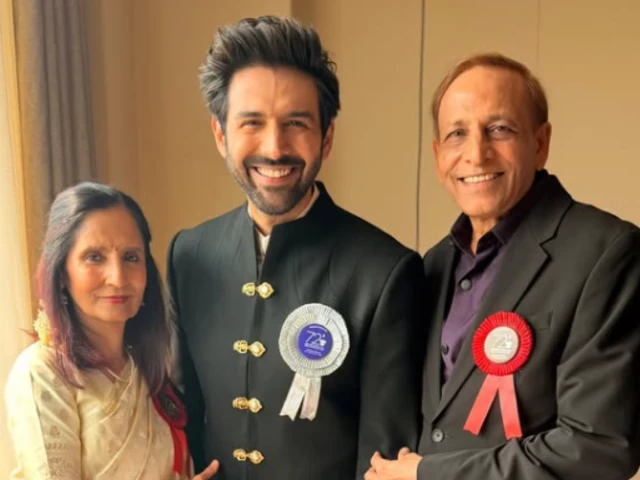
The narrative of Kartik Aaryan’s ascent cannot be fully understood without examining his formative years in Gwalior, Madhya Pradesh. Far removed from the networking corridors of Mumbai’s film fraternity, Aaryan was raised in a traditional household where artistic ambitions were frequently viewed through a lens of skepticism rather than encouragement. In candid reflections following his win, Aaryan openly embraced his identity as a "mumma’s boy," crediting his mother’s steadfast presence as a counterweight to the prevailing regional narrative that viewed cinematic dreams as fanciful and impractical.
While studying engineering in Navi Mumbai—a tactical compromise to satisfy familial expectations while quietly pursuing auditions—Aaryan navigated the grueling labyrinth of the Indian casting circuit. His breakthrough arrived in 2011 with Luv Ranjan’s sleeper hit Pyaar Ka Punchnama, propelled into the cultural lexicon by his blistering, single-take monologue on modern relationships. However, despite early commercial success, transitioning from a breakout comic performer to a respected dramatic actor required a calculated deconstruction of his established screen persona.
The Chandu Champion Phenomenon
Released to critical acclaim in 2024, Chandu Champion represented the apex of this strategic pivot. Directed by Kabir Khan and produced under the banner of Nadiadwala Grandson Entertainment, the film chronicled the staggering, largely forgotten life of Murlikant Petkar. Petkar’s life story reads like a cinematic epic: a soldier in the Indian Army, a boxer, a war veteran wounded during the 1965 Indo-Pakistani War, and ultimately, India’s trailblazing Paralympic gold medalist.
For Aaryan, securing the role was only the beginning. The production demanded an unprecedented physical and psychological commitment. Over an intense preparation phase lasting more than a year, Aaryan shed body fat down to a staggering eight percent, undergoing rigorous training in freestyle swimming, wrestling, and boxing under the direct supervision of international fitness experts and military consultants.
When the film hit theaters, critics and audiences alike noted a distinct absence of the familiar "Bollywood star" swagger. In its place was a raw, bruising vulnerability that captured Petkar’s indomitable spirit. The actor’s performance resonated deeply with the National Film Award jury, culminating in the Best Actor in a Leading Role honor—a validation that elevated Aaryan from a commercially viable box-office anchor to an artist of profound dramatic gravity.
Supporting Context & Metrics: The Box Office, Physical Transformation, and Critical Reception
Production Metrics and Transformation Analytics
To appreciate the scale of Aaryan’s achievement in Chandu Champion, one must examine the rigorous physical and technical metrics that underpinned the production:
- Duration of Physical Transformation: 14 months of continuous, highly specialized athletic conditioning.
- Body Fat Percentage Reduction: Dropped from roughly 20% to an elite athletic baseline of 8%.
- Sporting Disciplines Mastered: Freestyle swimming, professional boxing, and amateur wrestling, with distinct instructional regimens for each.
- Dietary Restraints: Complete elimination of sugar, complex carbohydrates, and refined oils for over a year, replaced by a strict, high-protein regimen monitored by clinical nutritionists.
- Box Office and Critical Standing: While initial theatrical runs faced a competitive box-office climate, the film experienced sustained word-of-mouth momentum, eventually crossing significant domestic milestones and dominating streaming charts upon its digital release.
Evolution of a Commercial Star
Aaryan’s trajectory offers a fascinating case study in contemporary stardom. Before Chandu Champion, his commercial viability was anchored in the slapstick-adjacent romantic comedies and horror-comedies that define modern mainstream Indian cinema. Projects like Sonu Ke Titu Ki Sweety (2018) solidified his status as a reliable box-office draw, while his seamless entry into the multi-million-dollar Bhool Bhulaiyaa franchise—specifically installments 2 and 3—proved his capability to shoulder legacy intellectual property.
Yet, leading a biographical drama about a disabled war hero required an entirely different caliber of cultural capital. By choosing to collaborate with auteur-driven directors like Kabir Khan, Aaryan signaled a deliberate diversification of his portfolio. The National Film Award serves as industry validation that this diversification was not merely a commercial gamble, but an artistic triumph that successfully bridged the chasm between commercial stardom and high-art integrity.
Official Statements and Personal Reflections
In the wake of the announcement, Aaryan took to Instagram to share a lengthy, deeply emotional retrospective of his victory. Far from the polished, PR-vetted soundbites typical of modern celebrity culture, his statement laid bare the psychological toll of his journey and the overwhelming nature of the accolade.
"Still feeling numb with excitement and nerves even after living through the moment," Aaryan wrote, capturing the disorientation of a lifelong outsider achieving the highest institutional honor in Indian cinema.
Reflecting on his roots, the actor emphasized the improbable nature of his success:
"Growing up in Gwalior as a self-described ‘mumma’s boy,’ in an environment where such acting ambitions were often dismissed rather than encouraged, this dream felt impossibly distant. To stand here now is to realize a dream shared by every actor in our country."
Aaryan was quick to pivot the spotlight away from himself, anchoring his gratitude in the collaborative ecosystem that brought Chandu Champion to life. He expressed profound indebtedness to director Kabir Khan and producer Sajid Nadiadwala for entrusting him with the monumental responsibility of portraying Murlikant Petkar.
Furthermore, in a gesture that elevated the victory beyond personal vanity, Aaryan dedicated his award to the unsung heroes of Indian athletics:
"I dedicate this honour to every Paralympian in the country and to anyone who dares to chase what seems impossible. My parents’ blessings and unconditional support have been my constant anchor through every storm of doubt, matched only by the tireless work of my incredible team."
Future Outlook: Raising the Bar for Indian Cinema
The New Paradigm for Bollywood Leading Men
Kartik Aaryan’s National Film Award win signals a broader, much-needed shift within the Hindi film industry. For decades, the line between "commercial mass heroes" and "critically acclaimed serious actors" remained rigidly demarcated. Actors who specialized in high-energy comedies or romantic leads were rarely considered for premier institutional honors like the National Film Awards, which traditionally favored actors from parallel cinema or indie circuits.
By crossing this Rubicon, Aaryan has established a new blueprint for contemporary stardom. The modern Indian leading man is no longer permitted to rest on the laurels of charismatic screen presence alone; audiences and critics increasingly demand physical authenticity, emotional depth, and a willingness to subvert personal vanity in service of complex, marginalized narratives.
Anticipated Projects and Legacy Building
Looking forward, Aaryan’s career trajectory is poised at a fascinating crossroads. With the monumental success of Chandu Champion and his proven box-office dominance in franchise cinema (such as the Bhool Bhulaiyaa universe), the actor possesses the rare industry currency to greenlight ambitious, socially resonant projects on his own terms.
Industry analysts project that Aaryan will leverage this newfound critical clout to seek out complex character studies, historical dramas, and auteur-driven narratives that challenge traditional Bollywood archetypes. As he noted in the closing remarks of his victory statement, this milestone is not an endpoint, but a baseline—a launching pad for a second act defined by artistic fearlessness and a steadfast commitment to storytelling that leaves an indelible mark on the national consciousness.
In honoring Kartik Aaryan, the National Film Awards have not only recognized a transformative performance in Chandu Champion; they have celebrated the triumph of persistent ambition over systemic skepticism, cementing a new chapter for an actor who refused to let his geography define his destiny.





Comments
Facebook App ID not configured. Please add it in the Customizer.